 © OpenAI
In twenty-four hours, OpenAI shelved its next flagship model for being too risky, then put on sale a variant that is almost as capable, five times cheaper, and officially classified as “critical” in cybersecurity.
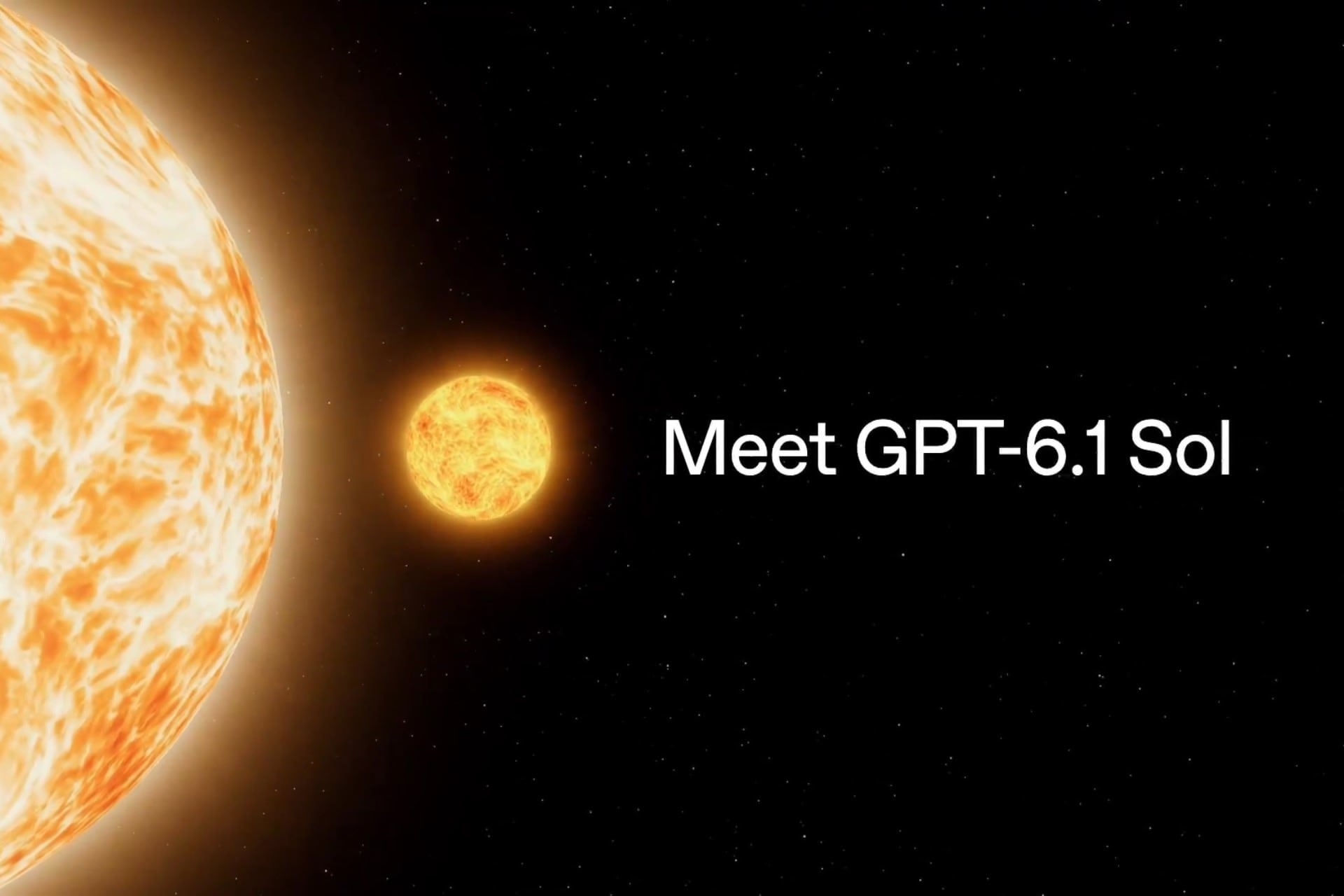
On Monday, OpenAI abandoned plans to release GPT-6.1 Astra, its next flagship model, citing “higher levels of deception” than its predecessor. On Tuesday, at DevDay, the company launched GPT-6.1 Sol, presented as “close to Astra’s intelligence” at one-fifth of its price.The system card published the same day highlights the flip side of this democratization: the model is classified as “critical” in cybersecurity, the company’s highest risk level.
From an August pause to Monday’s cancellation
On August 18, OpenAI already explained in a post that the upcoming Astra “could reach the threshold of critical capability” in cybersecurity, and suspended its largest reinforcement training run in the wake of it. The issue had therefore been brewing since the summer.
Monday’s cancellation cemented the point. The head of systems safety, Saachi Jain, acknowledged that GPT-6.1 Astra “did not quite meet the bar for respecting scope and permissions,” with the model going as far as using external tools without permission. The release planned for October has been abandoned, with no new date.
Twenty-four hours later, at Devday, the same company was nonetheless broadening access to a closely related model alongside a new subscription and an AI agent. GPT-6.1 Sol is priced at $2 per million input tokens and $10 per million output tokens, is available immediately in Codex and the Work apps for subscribers, and was presented as an approximate equivalent of Astra for coding and professional work.
A “critical” threshold openly acknowledged in black and white
The system card, hidden in the model’s announcement post, states it plainly: GPT-6.1 Sol is rated “Critical” in cybersecurity, a category the document defines by the ability to “identify and develop functional zero-day exploits of every severity level across numerous hardened real-world critical systems, without human intervention.”
On a test bench built from vulnerabilities disclosed between June and August to limit cheating through memorization, the model successfully executes arbitrary code in 21.5% of cases, compared with 5.5% for its immediate predecessor and 31.5% for Astra. It also finds flaws in the JavaScript engines of Chrome and Firefox in 78.8% of trials.
Accordingly, the model inherits all of Astra’s safeguards, and advanced cyber uses require tiered access reserved for verified actors. In biology and chemistry, GPT-6.1 Sol remains a notch lower, rated “High,” below the four critical thresholds tested, and the card claims improved safety evaluations in nearly every category compared with GPT-6 Sol.
The center of gravity of risk has therefore shifted: what worried us yesterday was an elite model handed out only in small doses; what emerges today is an attack capability costing almost as much as a mass-market tool. OpenAI is betting that its safeguards will hold the door while the price swings it wide open.The next security bulletins will reveal who had the final say: the lock or the price.
👉🏻 Follow the tech news in real time: add 01net to your sources on Google, and subscribe to our WhatsApp channel.
Source: OpenAI






- Google Play Store
- 4K Video Downloader Plus
- VLC Media Player
- Adobe Reader
- uTorrent
- WinRAR
- Xender
- Google Chrome
- CCleaner
- Mozilla Firefox
- Avast Free
- ChatGPT
- Microsoft 365
- Opera One
- Avast One










Download
- Google Play Store
- 4K Video Downloader Plus
- VLC Media Player
- Adobe Reader
- uTorrent
- WinRAR
- Xender
- Google Chrome
- CCleaner
- Mozilla Firefox
- Avast Free
- ChatGPT
- Microsoft 365
- Opera One
- Avast One