New Intelligence Yuan Report

On November 11, 2026, Volcano Engine and AMD jointly released a new generation of cloud server instances based on the sixth-generation AMD EPYC processor (codenamed "Venice") and opened up an invitation for testing to customers, further deepening their technical collaboration in the field of cloud computing infrastructure, and providing more powerful, efficient, and flexible cloud computing power support for enterprises' digital transformation and rapidly developing AI applications.
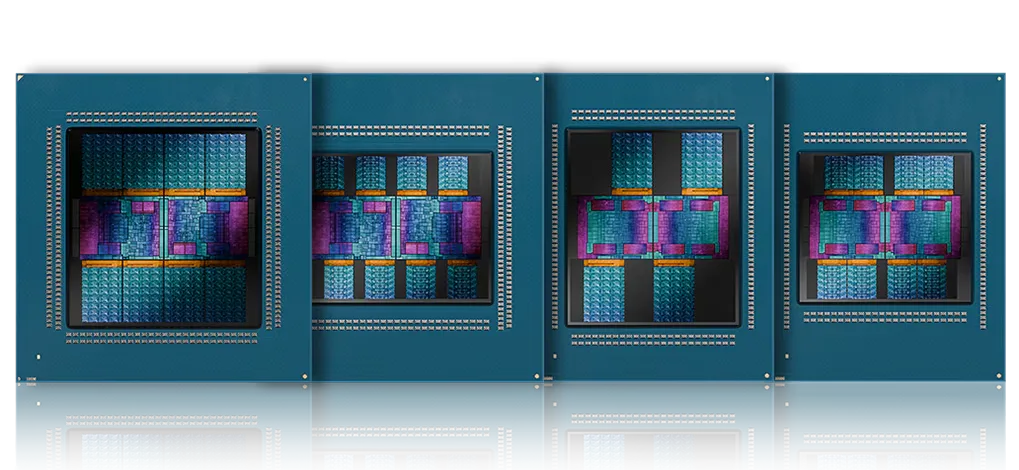
In a complete AI business architecture, the CPU and GPU play different roles.
With more and more enterprises choosing large models as the key to their AI transformation, a wide variety of large model applications are emerging. The computing power used by large model applications is not only limited to GPU computing power, and the CPU computing power also plays an important role in the application process. At the same time, cloud business is constantly evolving, and cloud-native services need to handle more concurrent tasks. Artificial intelligence applications are gradually expanding to data preprocessing, retrieval, and tool invocation stages, and high-performance computing and data analysis continue to increase the requirements for memory throughput and device interconnectivity.
In response to these changes, AMD launched the sixth-generation EPYC processor (Venice), which has been upgraded in terms of core density, memory bandwidth, and I/O capabilities, providing new options for cloud service platforms to plan new generation computing resources. Volcano Engine is working closely with AMD to carry out deep joint optimization in the areas of firmware, kernel, virtualization, and operating system.

Compute density and scenario performance have been significantly improved.
The sixth-generation EPYC™ processor from AMD provides up to 256 cores and 512 threads, and supports up to 16-channel DDR5 memory and PCIe® 6.0. Compared to the fifth-generation EPYC "Turin", the Venice platform can achieve up to 2.6 times higher memory bandwidth and up to 2 times higher I/O bandwidth.
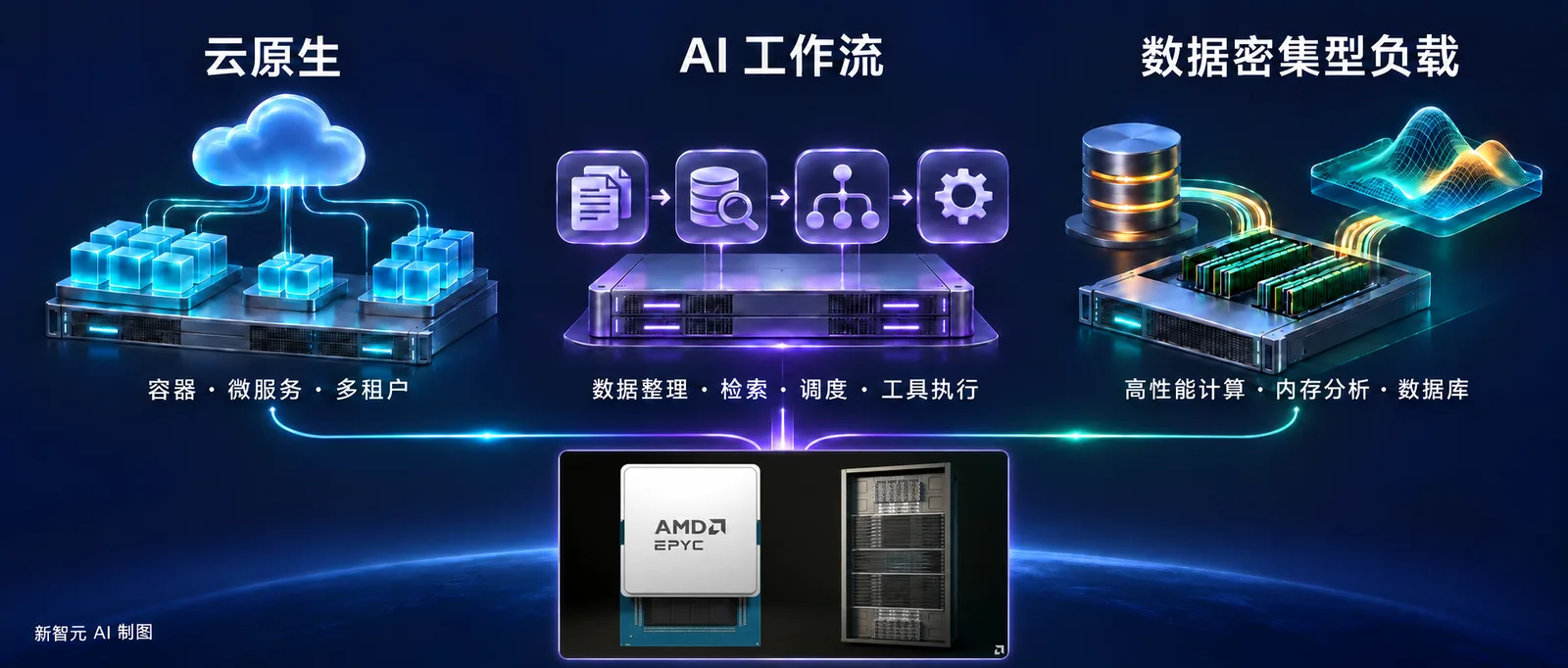
Cloud-native scenarios: higher core density provides greater parallel computing space for containers, microservices, and multi-tenant services. For platforms that run multiple types of services, work processes, or short-lived tasks, more cores help improve the flexibility of single-machine resource integration, offering more room for designing computing instances with different specifications and densities.
AI workflow scenarios: CPUs serve not only for model computation. Data preprocessing, request gateways, context building, retrieval, planning scheduling, and tool execution also consume computing, memory, and I/O resources. The increase in Venice's core count, memory bandwidth, and I/O capabilities provides a more abundant platform resource for these CPU-side tasks, making it a suitable hardware foundation for building AI host nodes and related cloud services.
High-performance computing, memory analysis, and database, etc., data-intensive workloads scenarios: memory bandwidth and I/O capabilities affect data supply, access, and transmission efficiency. Compared to the fifth-generation EPYC platform, Venice's maximum 16-channel memory design and PCIe 6.0 support provide platform capabilities for higher bandwidth memory and device connections, helping to enable more efficient resource planning with different workload combinations.
Through this collaboration, AMD and Huoshan Engine will further promote the synergistic optimization between the underlying processor capabilities and cloud platforms, allowing enterprises to obtain the computing power brought by the new generation of AMD EPYC platforms through cloud services without directly managing complex underlying hardware.
Editor: David
Seconds to ASI
⭐ Like, share, and mark as favorite with one click ⭐
Light up the star, lock in the fastest updates from New Intelligence Yuan!