When Facebook bought Instagram for US$1 billion in 2012, Brazilian Mike Krieger owned about 10% of the company he had created with American Kevin Systrom. More than a decade later, he is once again at the center of a multibillion-dollar technology battle, this time leading an Anthropic division dedicated to discovering what artificial intelligence (AI) can still offer.
Krieger’s story in Silicon Valley began a few years before that deal. In 2004, at 18, he, whose first name is Michel, left São Paulo to study at Stanford University in California, USA, where he acquired the nickname Mike.
The son of a beverage industry executive, he had spent part of his childhood and adolescence in different cities around the world, such as Lisbon, Buenos Aires and Miami, as well as Alphaville in Greater São Paulo. His schooling at a bilingual school made moving between countries easier.
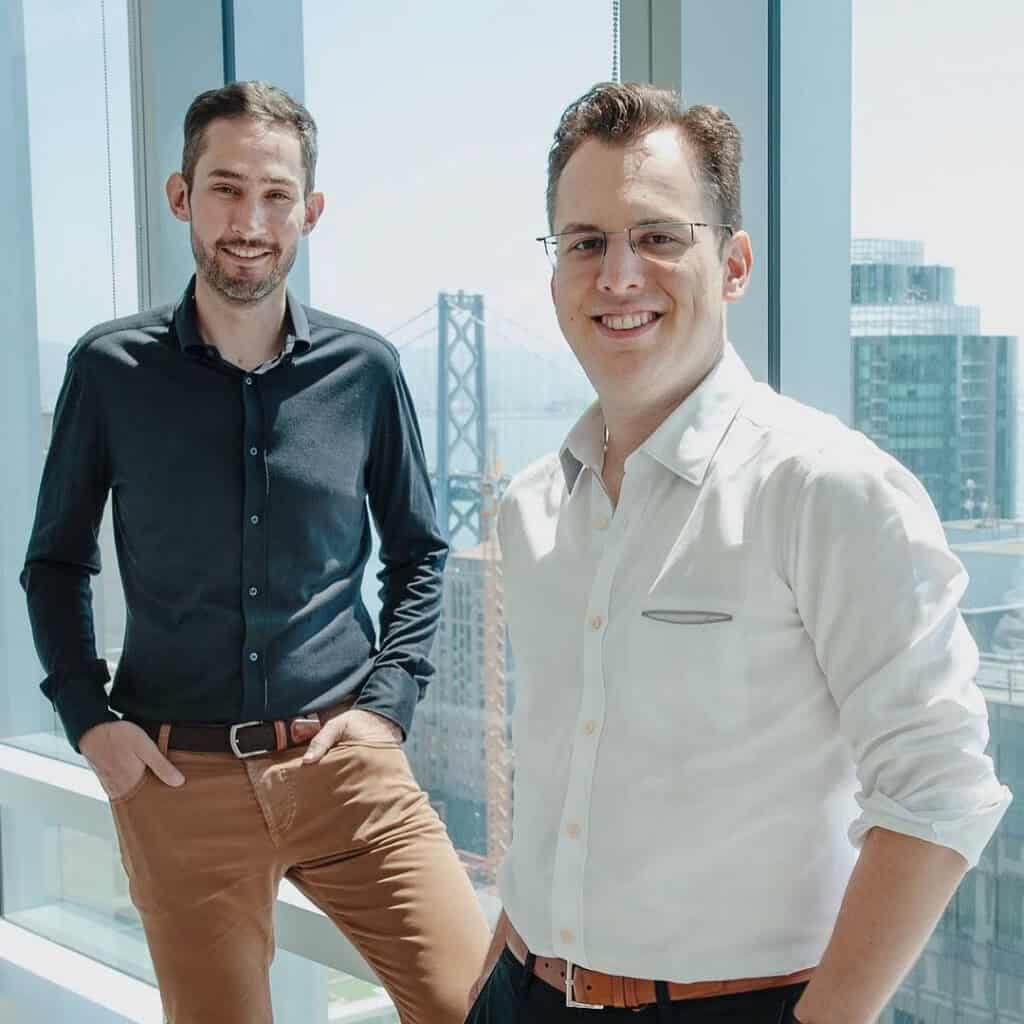 Mike Krieger and Kevin Systrom, in 2018. – Credit: Facebook reproduction
At university, he chose Symbolic Systems, a course that combines computer science, psychology, linguistics and philosophy. Later, he earned a master’s degree at the same institution, where he met Systrom, with whom he would develop the project that would change both their lives.
Before becoming an entrepreneur, Krieger worked as a software engineer at Meebo, a service that brought together different internet chat tools. Shortly afterward, he received an invitation from Systrom to create an application that allowed users to share their location, photographs, and comments.
Change of plans paid off
The duo’s first project was Burbn, a check-in platform that brought together various features. The proposal, however, proved too complex. During testing, the two realized that users showed more interest in a specific activity: posting and sharing photographs.
Instead of insisting on the original idea, they decided to focus development on this feature. The redesign gave rise to Instagram, a name combining the English words “instant” and “telegram“.
During September and October 2010, Krieger and Systrom spent nights programming the new platform. The application reached the Apple Store in October of that year, initially available for iPhones, and quickly gained users.
 Instagram’s interface at the beginning, when it was restricted to iPhones. – Credit: Reproduced from Reddit
While Systrom focused on the product vision and business development, Krieger took on a fundamental responsibility for the network’s growth: engineering and technological infrastructure. It was necessary to ensure that the service continued to work even as visits and posts increased rapidly.
The success attracted the attention of major technology companies.In April 2012, less than two years after its launch, Mark Zuckerberg announced Facebook’s purchase of Instagram in a deal valued at approximately US$1 billion.
Krieger owned about 10% of the company, a stake worth approximately US$100 million in the sale, according to his biography “The Billion-Dollar Click,” written by Filipe Vilicic. The deal turned the Brazilian into one of the best-known entrepreneurs of his generation in Silicon Valley.
The acquisition, however, did not mean his departure from the project. He remained as chief technology officer (CTO), while Systrom continued at the helm of the company. Under Facebook’s control, Instagram expanded its international presence and surpassed the one-billion mark in monthly users.
In 2015, Krieger was included on the Forbes Under 30 list, which highlights young entrepreneurs and professionals from different fields.
Three years later, in September 2018, he and Systrom decided to leave the company. They announced their departure after eight years of working together. On that occasion, they explained that they intended to explore new ideas again. “We are leaving to explore our curiosity and creativity anew,” they wrote in a post on Instagram.
The reunion with artificial intelligence
Away from Instagram, Krieger did not abandon entrepreneurship. During the Covid-19 pandemic, in 2020, he returned to work with Systrom on an initiative focused on monitoring the disease in the United States.
The two developed a website that used statistical models to monitor the progression of coronavirus cases across the different American states.The tool helped track the virus’s transmission rate during a period of great uncertainty about the progress of the health crisis.
In 2023, the two launched a new project, this time focused on artificial intelligence. Named Artifact, the app offered personalized news and used machine learning to select content according to each user’s interests.
The aim was to provide a reading experience tailored to individual preferences by bringing together news from different sources. But the project had a short life. Its shutdown was announced in January 2024, and the technology was ultimately acquired by Yahoo that April.
Artifact marked a more direct engagement between Krieger and artificial intelligence, the field in which he would go on to focus his career. His experience developing a service based on automated recommendations would add to the knowledge he had accumulated creating wide-reaching digital platforms.
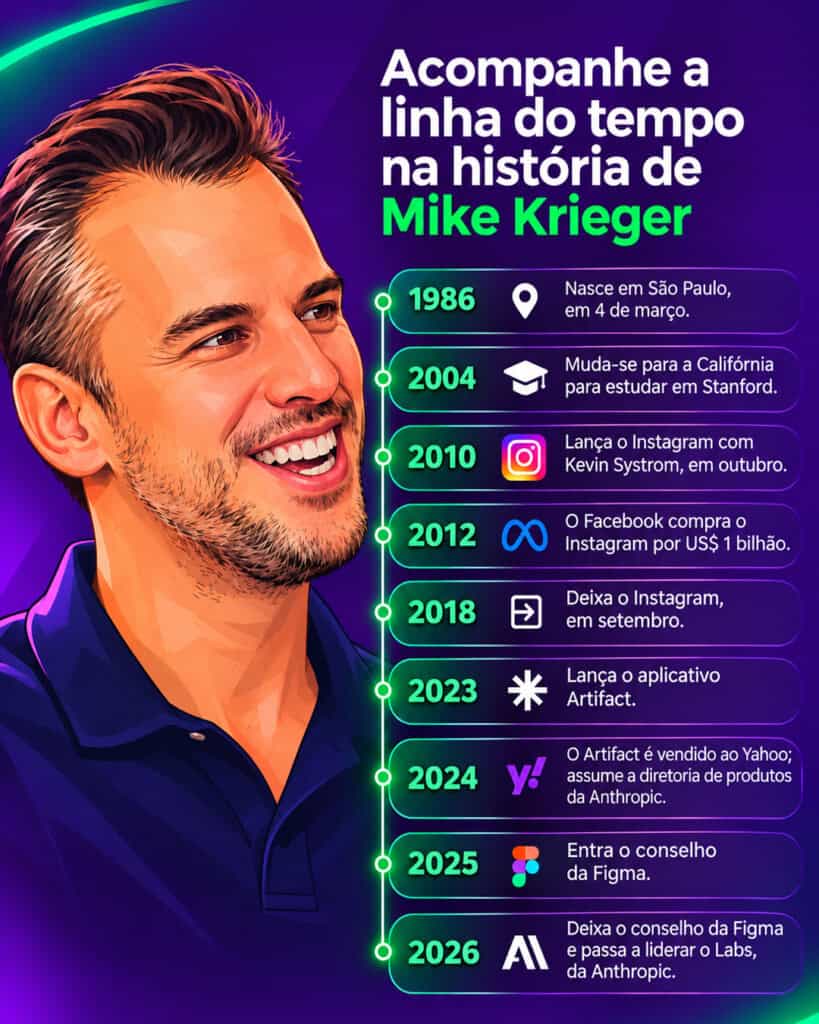 Before entering artificial intelligence, Mike Krieger took part in transformations that changed the way we use the internet. – Credit: AI-generated image
Joining Anthropic
TAG74@@On May 15, 2024, Anthropic announced the hiring of the Brazilian as its first Chief Product Officer (CPO).Founded in 2021 by former OpenAI members, including siblings Dario and Daniela Amodei, the company develops AI models and has Claude as its main product, a competitor to ChatGPT.Krieger’s arrival came during a period of expansion for the company, which received billions in investments from companies such as Amazon and Alphabet, Google’s parent company. His mission was to expand its product offering, strengthen Claude’s presence in the corporate market, and develop more intuitive ways to interact with AI systems.
In the hiring announcement, Dario Amodei specifically highlighted the Brazilian’s experience in building digital products. “Mike’s experience in developing intuitive products and user interfaces will be invaluable as we create new ways for people to interact with Claude.”
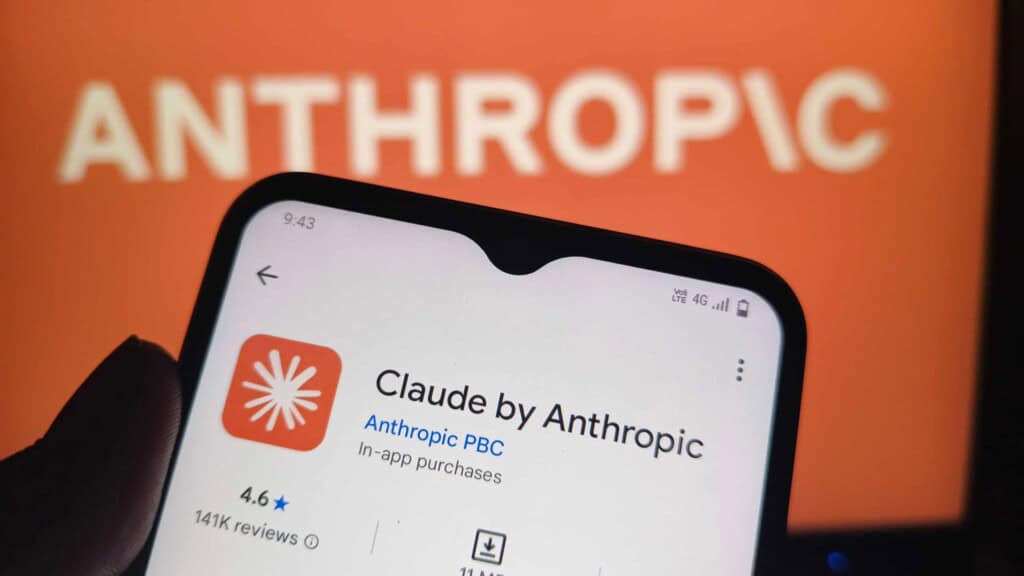 Mike Krieger joined Anthropic to expand Claude’s products, strengthen its presence in the corporate market, and make interaction with AI more intuitive. – Image: Mijansk786/Shutterstock
Krieger showed enthusiasm about the move. In a post on LinkedIn, he commented on the warm reception he received at the new company and his connection with the team’s culture. “The Anthropic team is exceptional; I felt at home from the very first conversations. Daniela, Dario, Jared, and the team embody the combination of talent, empathy, and pragmatism that I admired in the teams at Instagram and Artifact. I look forward to helping shape the future of AI-powered products.”
During his tenure in product leadership, the Brazilian helped oversee the expansion of Claude’s applications, which came to meet the different needs of users and companies.In July 2025, he was still on the board of directors of Figma, a company specializing in design tools, but he left the position in April 2026.
What comes after chatbots?
In January 2026, Krieger took on a new role within Anthropic: he began working at Labs, the division focused on experimenting with and developing products based on the company’s models’ latest capabilities. He shares leadership of the team with Ben Mann, one of the people responsible for creating the lab.
Among the team’s developments are Claude Code, a tool that helps with creating and editing programming code, and Claude Cowork, which brings similar capabilities to professional tasks that do not require programming knowledge. Another achievement is the Model Context Protocol (MCP), a protocol that makes it easier to connect AI models with applications, tools, and external data sources.
The division’s approach is to think not only about what the models can currently do, but also about what they may be able to do in the near future. In an interview with The Verge earlier this year, Krieger explained why he considers this an important moment for developing new applications. “We have reached a pivotal moment in AI: model capabilities are advancing so rapidly that the window of opportunity to define how they will be used is now. That is why I am going back into creator mode.”
The pace of development is one of the differences that stands out most to him when comparing the current moment with the time when he created Instagram.In April 2026, during the Brazil at Silicon Valley conference, held in Sunnyvale, California, Krieger recounted that he managed to recreate Burbn with the help of AI in “basically two hours.”
The exercise showed how current tools can turn ideas into functional prototypes in a much shorter period than would have been necessary years ago. However, this does not mean that the work of entrepreneurship has become an exclusively technical activity. On the same occasion, according to Exame magazine, the Brazilian emphasized that “there is still a lot of the human element in entrepreneurship.”
This observation helps explain the role he seeks to play at Anthropic. If AI makes programming, experimentation, and product development easier, it is still necessary to identify problems, understand people’s behavior, and find solutions that have real utility.
In an interview with the Big Technology podcast, Krieger explained how the team seeks to anticipate these opportunities by observing the gap between the models’ capabilities and the way people use technology.
“Imagine something that the models still lack today, but at which they will really be good in six months, and let’s make sure we have a product ready for it by then. Think about the gap between what the models are capable of doing today and the way most people use them. Can we fill that gap?”
This ability to identify opportunities has accompanied Krieger since the beginning of his career. On Instagram, his decision to abandon an app full of features and bet on photo sharing was decisive to the success of the business.No Artifact, the proposal was to reorganize news consumption using AI capabilities. Now, at Anthropic, the challenge is to explore applications for a technology whose possibilities are still being developed.
The trajectory that began with a move from São Paulo to study in the United States gained global prominence with one of the largest social networks on the planet and reached the leadership of a strategic artificial intelligence division, while remaining tied to the same activity: transforming technological possibilities into products that people want to use.

Flávia Correia is a journalist at Olhar Digital, covering Science and Space.