
China demanded that the United States lift the ban on DeepSeek on civilian federal agencies' systems. Beijing says the measure harms Chinese companies and disregards understandings reached between the leaders of the two countries.
The demand comes after an order from the U.S. Department of Homeland Security (DHS) prompted by data security concerns. China's reaction also extends to U.S. sanctions against five entities in the country accused of stealing trade secrets linked to artificial intelligence.
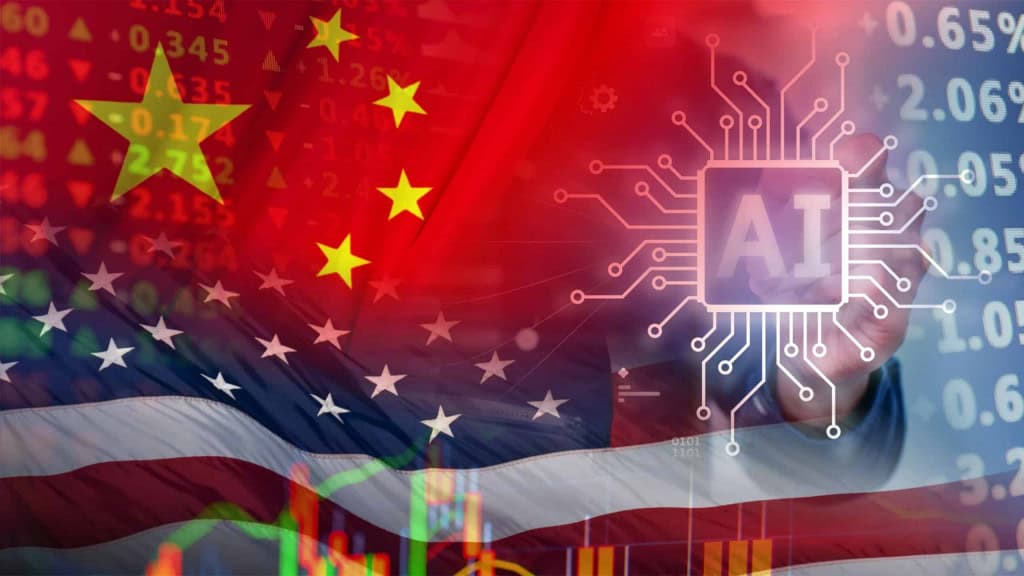 Beijing says the DeepSeek ban harms Chinese companies and disregards understandings between the two countries. – Image: QQMinh88/Shutterstock
Why did the United States ban DeepSeek?
On Monday (19), as we mentioned here at Olhar Digital, the DHS ordered the removal of DeepSeek products and third-party services that use its model from the information technology systems of civilian federal agencies.The order also prevents public bodies covered by the measure from acquiring these tools.
According to the U.S. department, the models present “multiple threat vectors.” The concern is that the use of the technology by public officials or government contractors could result in the transfer of confidential information to China.
The decision was criticized by China’s Ministry of Commerce, which demanded that Washington “immediately rectify wrongful practices… and revoke relevant discriminatory restrictive measures.”
Beijing said it would monitor developments and “take all necessary measures” to protect its interests. The government also called on the two countries to use the bilateral dialogue mechanism on artificial intelligence to address their differences.
 Beijing accused Washington of imposing discriminatory measures and violating agreements reached between the two countries. – Image: mundissima/Shutterstock
China also challenges sanctions against companies
The Chinese response includes sanctions announced on Monday by the U.S. Department of State against five Chinese entities for allegedly stealing trade secrets related to AI.
Among the targets is Shanghai Zhisuan Technology, founded by Linwei Ding, a former Google software engineer. A venture capital firm that financed the company and three other related entities were also sanctioned.
Ding was found guilty in January of stealing Google’s AI trade secrets to benefit two Chinese companies.In August, part of his conviction was overturned.
The Chinese Ministry of Commerce accused the United States of “exaggerating the issue of the so-called ‘trade secret theft’” and of defaming companies from the country.
The two disputes involve distinct issues: on the one hand, U.S. restrictions on the use of Chinese technology in government bodies; on the other, accusations of intellectual property theft. Beijing contests both measures and asks Washington to review its position.

Valdir Antonelli is a journalist specializing in digital marketing and consumption.

