 © 01net
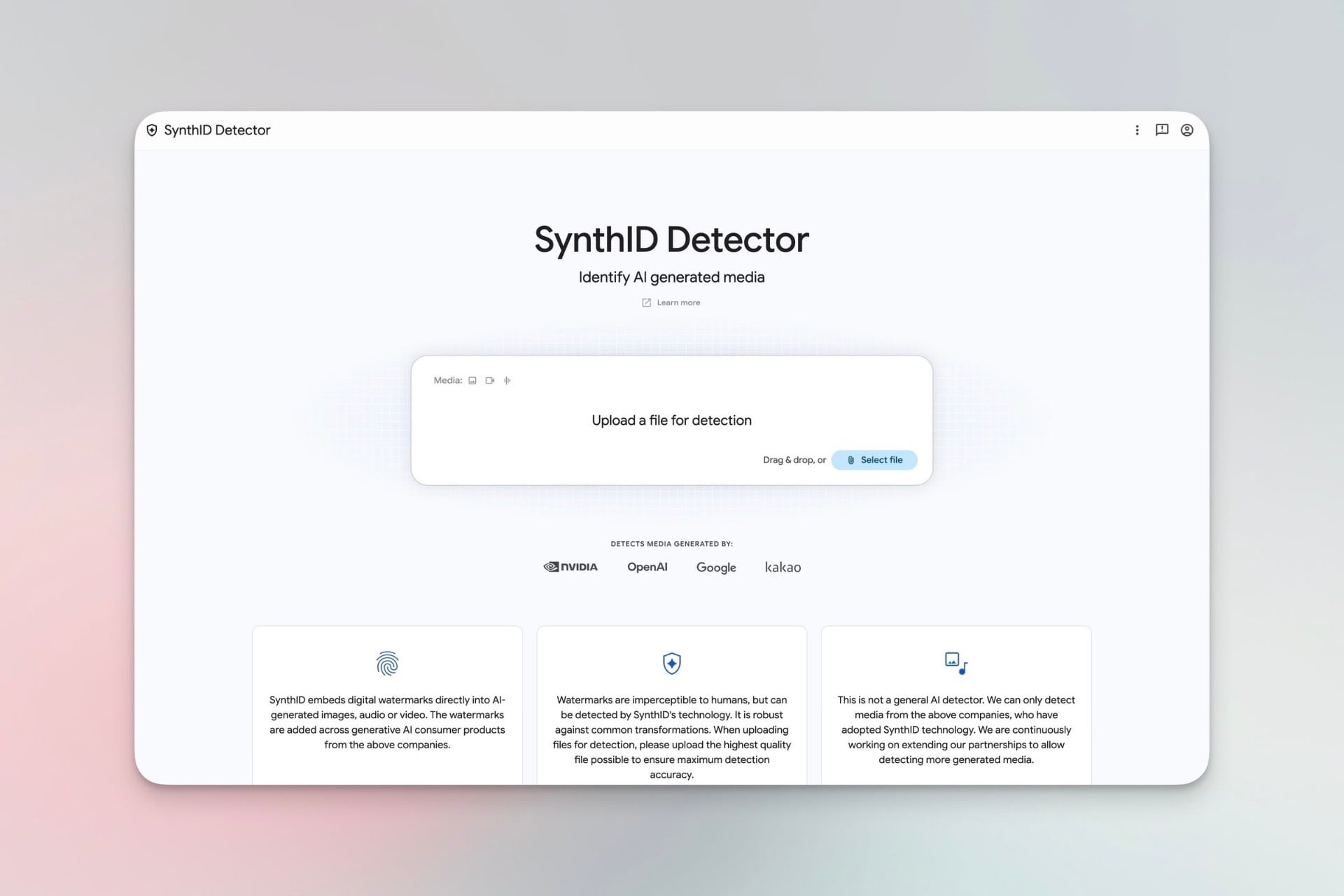
Everyone can now upload an image, video, or audio file to synthid.com to look for the watermark embedded by major AI systems. An open tool for the whole world, but it does not see everything.
Google is opening its AI-generated content detector, SynthID Detector, to the general public this Wednesday via synthid.com. A Google, Apple, or OpenAI account is all that is needed: upload the suspicious file, and the tool will indicate whether it carries the invisible SynthID watermark. Verification covers content produced by Google’s services and those of its partners, led by OpenAI, Nvidia, and Kakao, with Apple expected to join the list soon.In other words, all text or images generated by ChatGPT and Gemini are now detectable.
180 billion images already watermarked
Since 2023, Google has been embedding this imperceptible watermark in images, videos and audio produced by its AIs. 180 billion images and videos already bear the mark, plus the equivalent of 240,000 years of audio content, according to Pushmeet Kohli, Google DeepMind’s vice president, who is making the announcement. The watermark withstands common manipulations, and the service recommends uploading the file at the highest possible quality to ensure a reliable verdict. Last year, the verification tool was reserved for media professionals; it is now available to everyone, initially in English only.
Read also: Anthropic details the labeling of texts generated by Claude and promises a detector accessible to everyone
The tool does, however, have a blind spot, as its interface states outright: “This is not a general-purpose AI detector.” It can only recognize the SynthID watermark: an image coming from a service outside the system will slip through the cracks, and the absence of a watermark does not prove in any way that the content is authentic. These checks complement those already integrated into Search, Gemini and Chrome, which now exceed one million queries per day. Text, for its part, remains outside its scope.
OpenAI watermarks its texts while Brussels keeps watch on the clock
On Monday, OpenAI also stepped up to the plate: texts produced by ChatGPT and Codex will receive an invisible watermark, rolled out over several weeks to European users. The process subtly steers the model’s word choices using a secret key, and the mark survives copy-and-pasting. The proprietary method is called textGrain: although OpenAI has applied the SynthID watermark to its images since spring and to its audio since summer, it chose its own approach for text. Its detector, meanwhile, remains restricted to vetted researchers and organizations, far from the general availability announced today. “Watermarks may indicate that an OpenAI system generated or reworked part of a passage,” the company explains. It also acknowledges the limitations: replacing one word in ten causes detection rates to fall from 92% to 66%.
This rollout complies with the European Union’s AI regulation, or AI Act: Article 50, in force since August 2, 2026, requires AI-generated or AI-manipulated content to be labeled. Machine-readable marking—primarily watermarks and metadata—has a grace period until December 2 for systems already in service. The Commission also published a code of practice in June to provide guidance on the methodology.Google, for its part, presents its openness as a deliberate approach, pursued for a long time with its partners.
👉🏻 Follow the latest tech news in real time: add 01net to your Google feeds and subscribe to our WhatsApp channel.








- Google Play Store
- 4K Video Downloader Plus
- VLC Media Player
- Adobe Reader
- uTorrent
- WinRAR
- Xender
- Google Chrome
- CCleaner
- Mozilla Firefox
- Avast Free
- ChatGPT
- Microsoft 365
- Opera One
- Avast One










Download
- Google Play Store
- 4K Video Downloader Plus
- VLC Media Player
- Adobe Reader
- uTorrent
- WinRAR
- Xender
- Google Chrome
- CCleaner
- Mozilla Firefox
- Avast Free
- ChatGPT
- Microsoft 365
- Opera One
- Avast One


