
Zhidx (WeChat public account: zhidxcom)
Author | Chen Junda
Editor | Mo Ying
Zhidx reported on November 11. Late last night, MiniMax officially released its new-generation image generation model, H3-Image, and made the model weights available simultaneously.
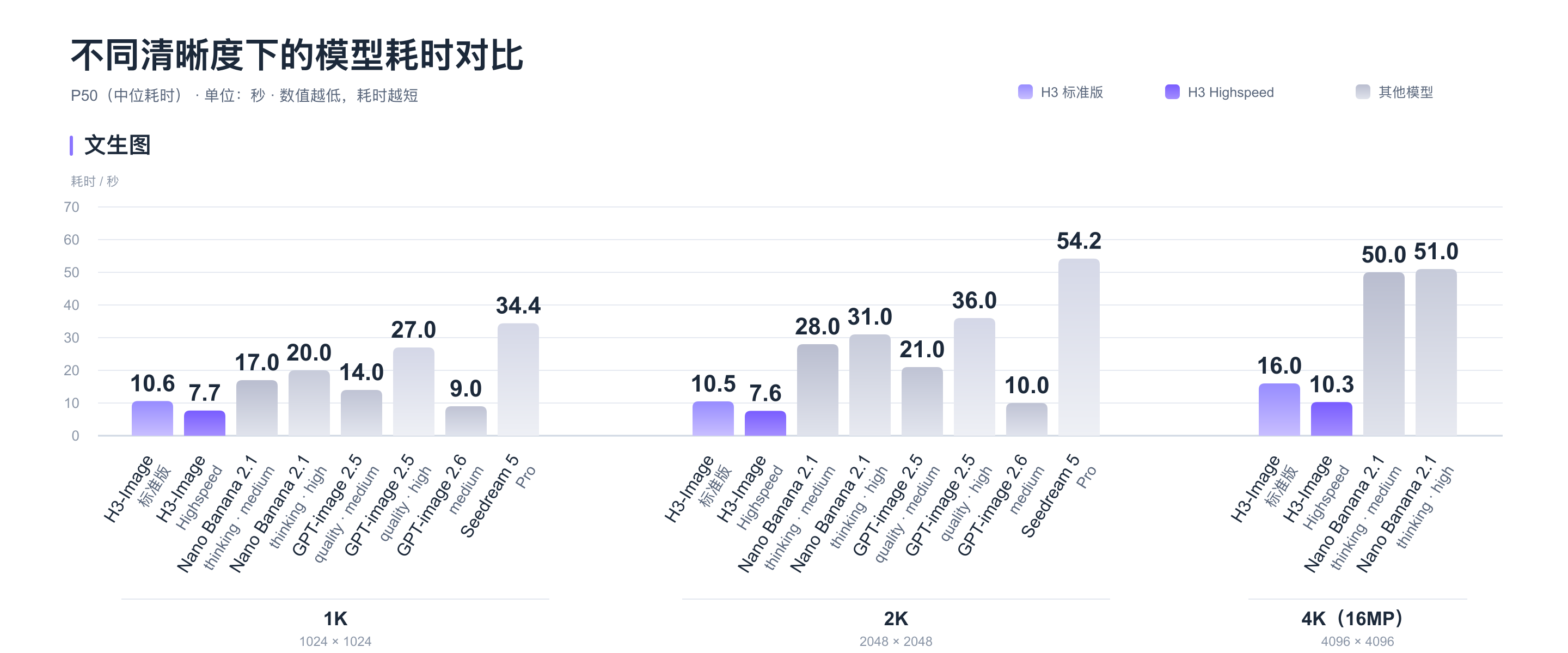
According to feedback from numerous users’ hands-on tests, H3-Image is already capable of competing head-to-head with the world’s top image generation models and hasreached state-of-the-art (SOTA) levels among open-source image models. In terms of speed, the H3-Image high-speed version cangenerate a high-resolution 4K image at 4096×4096 pixels (16MP) inaround 10 seconds, taking only one-fifth as long as mainstream models on the market.
In addition to improvements in generation speed and image quality, another change in H3-Image worth noting is the model’s ability to understand complex instructions and visual information. The model supports the fusion of up to 16 reference images, can process complex instructions and structured information, and possesses leading instruction-following capabilities among open-source models.
How many of these capabilities can withstand real-world testing? We promptly connected to H3-Image through MiniMax Hailuo and MiniMax Code and conducted an intensive round of hands-on testing focused on visual performance, complex task comprehension, and multi-asset reference fusion.
1. H3-Image Visual Performance Test: From Retro Comics to Realistic Photography
For the visual tests, we designed five groups in total, examining realistic texture, style conversion, video game scene recreation, poster text layout, and 16-image reference fusion, respectively.
H3-Image can generate images with the quality of hyperrealistic photography. If the images below had not been identified as AI-generated in advance, most people would probably mistake them for candid documentary photographs: the lighting and shadows look authentic, the subjects’ skin retains natural texture and subtle blemishes, and ambient light interacts realistically with the people and surrounding objects. Overall, they lack the plastic look commonly caused by excessive skin smoothing, sharpening, and highlight stacking in AI images.


 Generating architectural images is also challenging for AI. It requires straight, stable lines with no drift; reflections in glass curtain walls must conform to the physics of mirror imaging; and different materials need to display textures and reflective properties consistent with reality. H3-Image performs at a top-tier level on all of these challenging aspects. Particularly worth mentioning is that the transmission of light from the indoor ceiling lamps and the reflections of the outdoors coexist without contradiction, demonstrating the model’s understanding of light and shadow.
 In sports scenes, the “athletes” generated by H3-Image conform to real sports biomechanics in their body centers of gravity and exertion postures. Their arms spread naturally to maintain balance, their thighs tense with exertion, and the goalkeeper in a yellow jersey in the background dives sideways with their body extended, sending turf spraying into the air. In a sports genre that places the greatest demands on physical realism and human anatomical realism, H3-Image’s output still reaches professional photography standards.
 In the next set of tests, we used the same photo of an orange tabby and asked H3-Image to convert it into two different artistic styles: felt stop-motion animation and a surrealist oil painting, to evaluate the model’s stylization capabilities.
 This set of tests also included some specific production requirements. For example, in the felt style, we asked the model to convey the texture of interwoven fibers rather than simply adding a layer of blur. H3-Image applied the stylistic transformation to every element in the image. Looking closely at the details, even the leaves had a felted-fiber texture, and it faithfully followed the prompt’s requirements.

The surrealist style also performed well. We only mentioned a Dalí-inspired style in the prompt, yet H3-Image proactively added iconic elements such as melting clocks. In the image, combinations such as an interior with a desert and a windowsill with a floating staircase defied real-world spatial logic. It preserved the orange tabby as the main subject from the original image while creating a surreal atmosphere by recomposing the scene.

Today, games have become an important application area for image-generation models, so we also ran several practical tests in this setting. First, take a look at the open-world game image below, inspired by The Legend of Zelda: Breath of the Wild. The model reproduced the original game’s iconic low-poly art style. Its overall lighting and color were also well balanced, producing a visual effect close to an actual in-game screenshot.
 H3-Image can also produce a respectable reference design for a game UI. Using a hypothetical fantasy RPG as the brief, we asked it to generate a complete HUD interface containing a health bar, skill bar, inventory slots, minimap, and quest-tracking panel. As can be seen, the placement and layout of each functional module conform to the interaction logic of mainstream game UIs, and the design style is consistent, making it an effective reference for subsequent development.
 We also asked the model to design a fantasy steampunk weapon called the “Steam Core Ballista,” with the entire image divided into four sections: front, side, and rear views, plus a detailed close-up. H3-Image exceeded our expectations. The weapon’s silhouette was largely consistent across all four views, and the rivets and gears were rendered with fine detail. As a reference image for the concept design stage, this level of completion is already very impressive.
 Text generation has always been a problematic area for image models, especially when it comes to Chinese characters. As the number of characters increases, models often struggle with strokes running together, incorrect characters, missing characters, and similar issues.
For this test, we began with a relatively easy poster and asked the model to generate a poster titled “Come Have Some Coffee.” In the end, all the text was generated correctly, and the “less is more” design principle in our prompt was accurately executed.
 We then increased the difficulty. The image contained a title, six numbered steps, and approximately 100 Chinese characters, along with numbers and units such as 15 g, 92°C, 30 seconds, 2 minutes 30 seconds, and 1:15. H3-Image’s result exceeded our expectations: the title, the text for all six steps, and every number and unit were generated accurately. The text was clear and legible, and none of the icons were misaligned with their corresponding text.
 For scenarios that require simultaneously handling large amounts of Chinese text and graphic elements, this level of performance is already sufficient for commercial deployment and real design-production tasks.
We also tested H3-Image’s 16-image reference fusion capability by uploading 16 different types of reference assets at once to generate a concert tour poster. These included character, clothing, hairstyle-color, and pose references, as well as material images, a color palette, a font style, a logo placement diagram, and a layout wireframe.
 In the final poster, we checked each of the 16 specific requirements one by one, and H3-Image met every one of them. Specific visual elements such as the character, clothing, and props, as well as the background scene, lighting atmosphere, and even the abstract layout framework, were all accurately identified and broken down before being naturally recombined into a single poster.
 After running these tasks, H3-Image can be considered a top-tier open-source model in terms of visual expressiveness.
II. Complex Task Tests: Can It Disassemble Machines, Draw CAD, and Solve Logic Problems?
The previous tests mainly evaluated H3-Image’s visual expressiveness, but a visually appealing image does not necessarily mean that the model truly understands the information behind it. If the task is made more complex, can it still be completed accurately?
Next, let’s see how H3-Image performs in areas such as spatial relationships and logical reasoning.
In tests involving complex task scenarios, we integrated H3-Image into a Harness such as MiniMax Code, where an Agent with stronger reasoning capabilities handled task decomposition and orchestration, while H3-Image focused on the final image generation. This combination better leverages H3-Image’s strengths in knowledge understanding and complex multimodal information input.
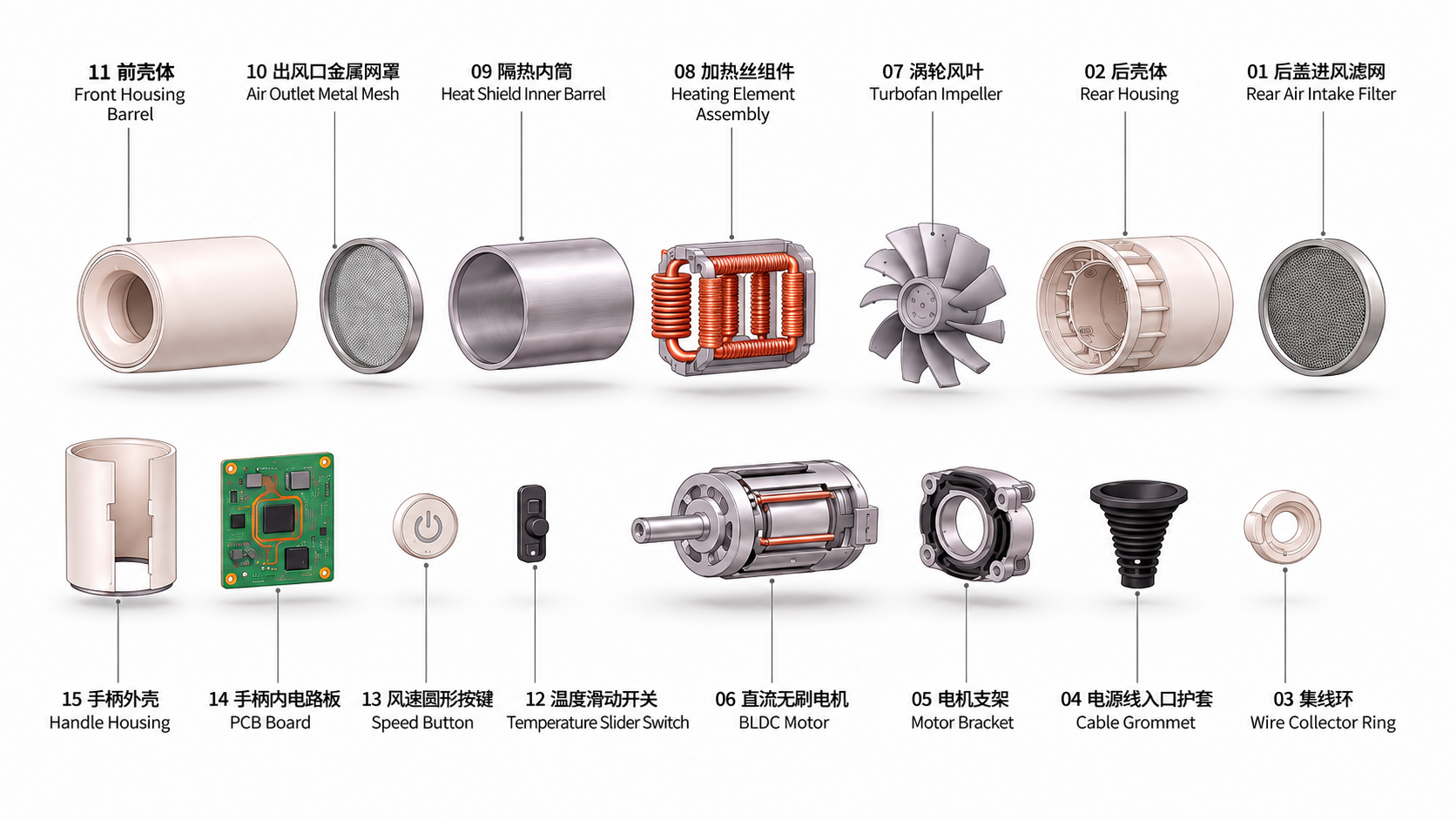
Our first test was the generation of a mechanical exploded view. The difficulty in this type of test lies in the model needing to convert a two-dimensional image into three-dimensional space. MiniMax Code can use a vision model to locate errors in the image and ultimately output more precise modification instructions.
After several iterations, the exploded view generated by H3-Image achieved good results. The casing and internal components of a hair dryer were separated into multiple distinct layers, with each component unfolded along the direction of assembly. The overall structural relationships were clear at a glance, and the correspondence between the text and individual parts became significantly clearer.
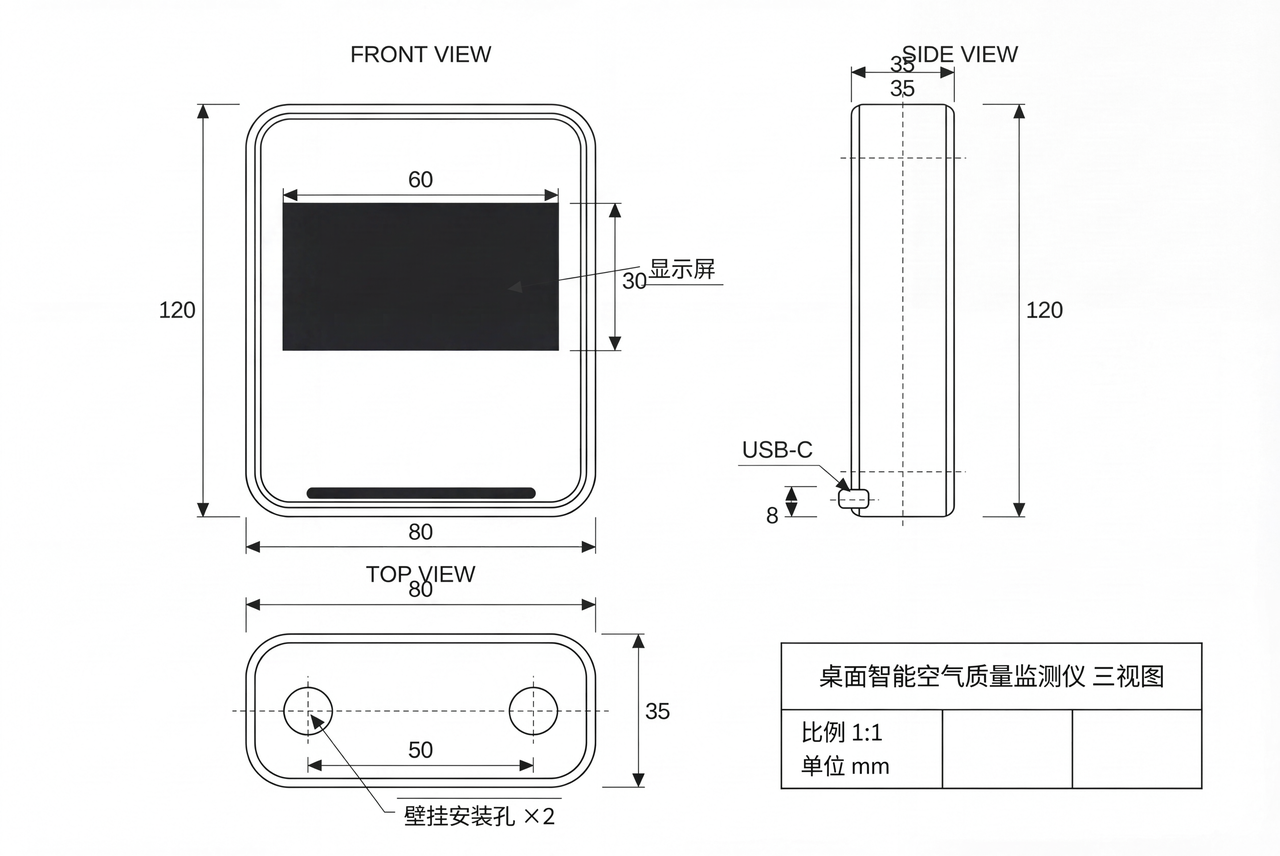
For the second round of testing, we increased the difficulty further, directly assigning the model a complete industrial design task.This time, the prompt included multiple requirements at once, such as product dimensions, casing material, display size, interface placement, and internal module layout. The model needed to translate these requirements into a concrete product form.
After receiving the task, MiniMax Code did not directly invoke H3-Image’s image-generation capabilities. Instead, it first reasoned through the task and further refined the requirements in the prompt.

This type of task has one aspect that readily exposes problems: generating a single product rendering is not difficult, but when the model needs to output multiple viewpoints simultaneously, it is easy for dimensions to mismatch, interface positions to change, and even the product structure to differ between views.
In the three-view drawing below, H3-Image avoided most such problems. Its only mistake was a slight error in the width of the display, causing the proportions to deviate from the actual product.

To fix this issue, MiniMax Code invoked the model to write a pixel-measurement script that precisely located the area requiring modification, ultimately delivering a more accurate result.
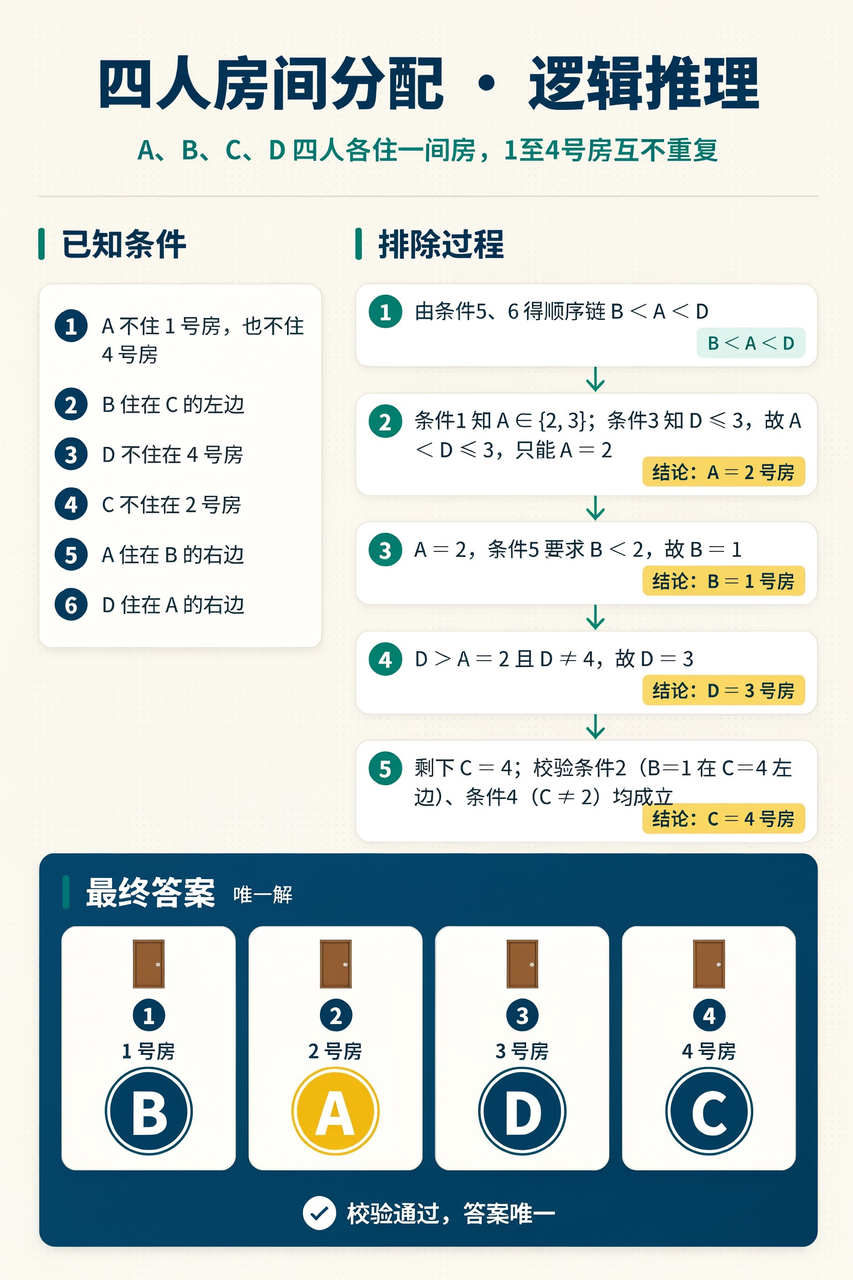
Finally, we also tested H3-Image’s ability to transform complex information into visual content. We submitted a logical-reasoning problem containing multiple constraints. The model first needed to understand the people, positions, and constraints described in the problem, and then present the result as an infographic.
As can be seen, the model did not simply place the question and answer in a single image. Instead, it proactively divided the content into multiple sections, including explanations of the conditions, step-by-step elimination, and the final answer, linking the entire reasoning process together and creating a clear hierarchy of information across the image.
III. A Breakthrough in Generation Speed as MiniMax’s Open-Source Efforts Extend to Images
As can be seen from the hands-on tests above, H3-Image’s capabilities are no longer limited to generating an aesthetically pleasing image. From reproducing complex visual styles and processing large amounts of text and reference material to understanding mechanical structures and mapping spatial relationships, it is attempting to extend image generation beyond purely visual creation into more complex information processing and support for specialized tasks.
At the same time, H3-Image is improving the generation efficiency of high-specification images. H3-Image can generate a 4096×4096-pixel, approximately 16-megapixel 4K image in 10–20 seconds. In our hands-on tests, the wait time to generate four 4K images on Hailuo’s official website was also only around one minute.By comparison, many comparable models currently still require tens of seconds to generate a single image of similar specifications, with some taking close to one minute.

Resolution determines how much detail an image can accommodate, while generation speed affects whether these capabilities can be incorporated into everyday workflows. In scenarios such as product showcases, commercial visuals, and game assets, designers often need to repeatedly adjust compositions, refine details, and compare different options.
H3-Image cuts the waiting time for high-resolution generation to around ten seconds, meaning that high-end AI visual creation has the opportunity to evolve from premium assets produced occasionally into a production tool that can be used frequently.
Beyond technical capabilities, MiniMax’s strategy of continued open sourcing is also creating more room for these models to be applied.
Since H3 was open-sourced, developers from different fields have participated in building its ecosystem, driving continual improvements in memory optimization, hardware compatibility, and inference efficiency.Now that H3-Image has released its weights, it has also given developers a foundation for building new tools around image generation, editing, and multi-asset fusion.
It can be envisioned that H3-Image will eventually be integrated into various workflow tools, used as the foundation image model for harnesses in agent environments, and combined with other image and video models. It can also be customized for use cases such as e-commerce product images, game art, and industrial design. By further combining image understanding, localized editing, and video generation, developers may also be able to build multimodal creative workflows covering asset analysis, content generation, and post-production revisions.
For model vendors, however, turning the usage needs of developers and enterprises into commercial returns is also a practical challenge.
MiniMax’s earlier exploration of H3 offers one possible approach: under its community license agreement, MiniMax reserves the right to require additional authorization for commercial use above a certain scale, as well as for users in certain regions.
For large enterprises, obtaining model weights does not necessarily mean that all their needs have been met.Commercial usage rights, custom development, technical support, and deployment compatibility could all become reasons for further cooperation..NVIDIA, Pika, fal.ai, and other companies have already entered into licensing partnerships with MiniMax for the H3 video generation model, demonstrating that the commercial value of MiniMax’s open-source models can extend to licensing and technical collaboration.

From H3 video to H3-Image, MiniMax’s continued release of multimodal model weights represents an effort to establish a longer-term ecosystem: developers build on the models, research teams optimize their efficiency and adaptability, enterprises pursue customization and licensing partnerships around specific business needs, and APIs and product services accommodate broader demand for model usage.
Conclusion: The image models’ “all-around competition” has begun
In the current AI field, the capabilities of different types of models remain clearly differentiated. Text models excel at logical reasoning, information organization, and complex task execution, but still have room for improvement in visual aesthetics and artistic expression. Visual generation models deliver outstanding image quality and artistic expression, but often have to trade off content accuracy against visual results.
From this perspective, the value demonstrated by H3-Image lies in its attempt to combine logical understanding with visual generation. In our hands-on testing, it did complete some tasks that single-type models could not previously handle simultaneously.
Of course, there are still many technical challenges the industry must overcome before it can truly connect professional information processing with high-quality visual creation. What is certain, however, is that the focus of competition among image models has become a comprehensive contest of aesthetics, understanding, generation, and execution. And this time, the open-source camp is not absent.


