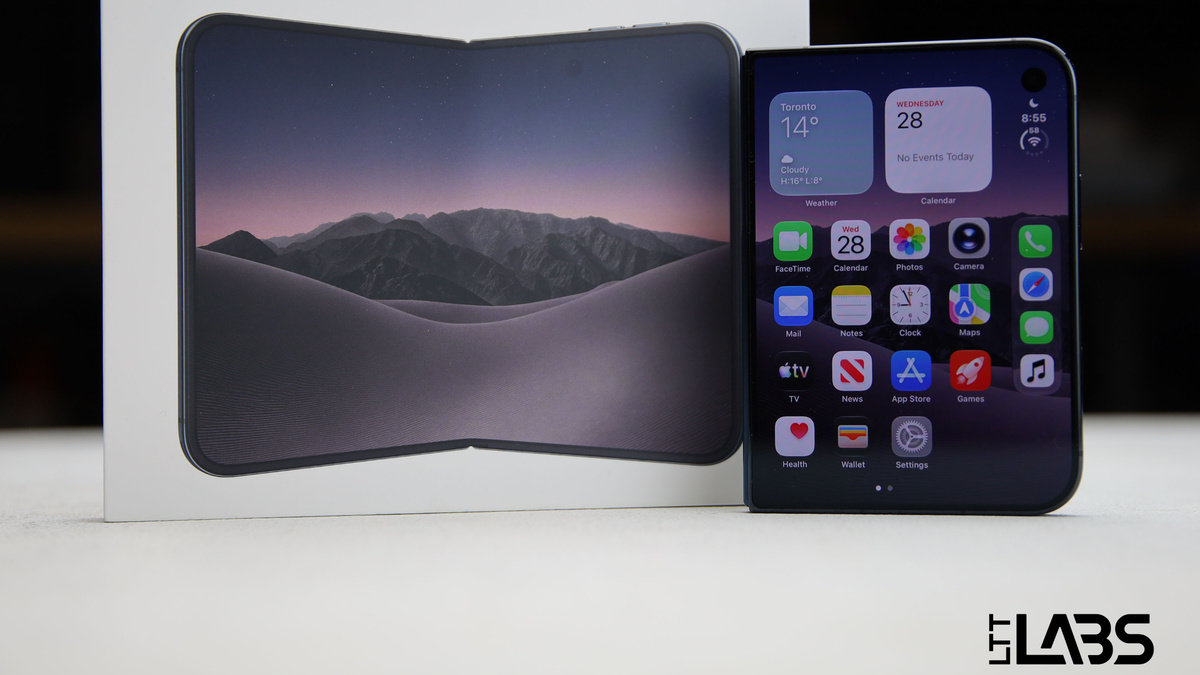
LTT Labs, which conducts hardware testing, has published the results of its comparison between Apple’s foldable smartphone, the “iPhone Duo,” and the iPhone 18 Pro and a Samsung smartphone. In addition to CPU and GPU performance, it also examined heat generation and performance degradation under heavy load, as well as differences in battery life depending on the screen used.
iPhone Launch 2026 Testing - Round Duo | LTT Labs
https://www.lttlabs.com/articles/2026/10/29/iphone-duo
iPhone 18 Pro Test Results | LTT Labs
https://www.lttlabs.com/articles/2026/09/24/iphone-18-pro-series-test-results
For this testing, LTT Labs compared the performance of the iPhone Duo equipped with the “A20 Pro” chip and the iPhone 18 Pro, as well as Samsung’s “Galaxy Z Fold8,” “Galaxy Z Fold8 Ultra,” and “Galaxy S26 Ultra.” All of the foldable smartphones’ performance tests were reportedly conducted with the devices unfolded.
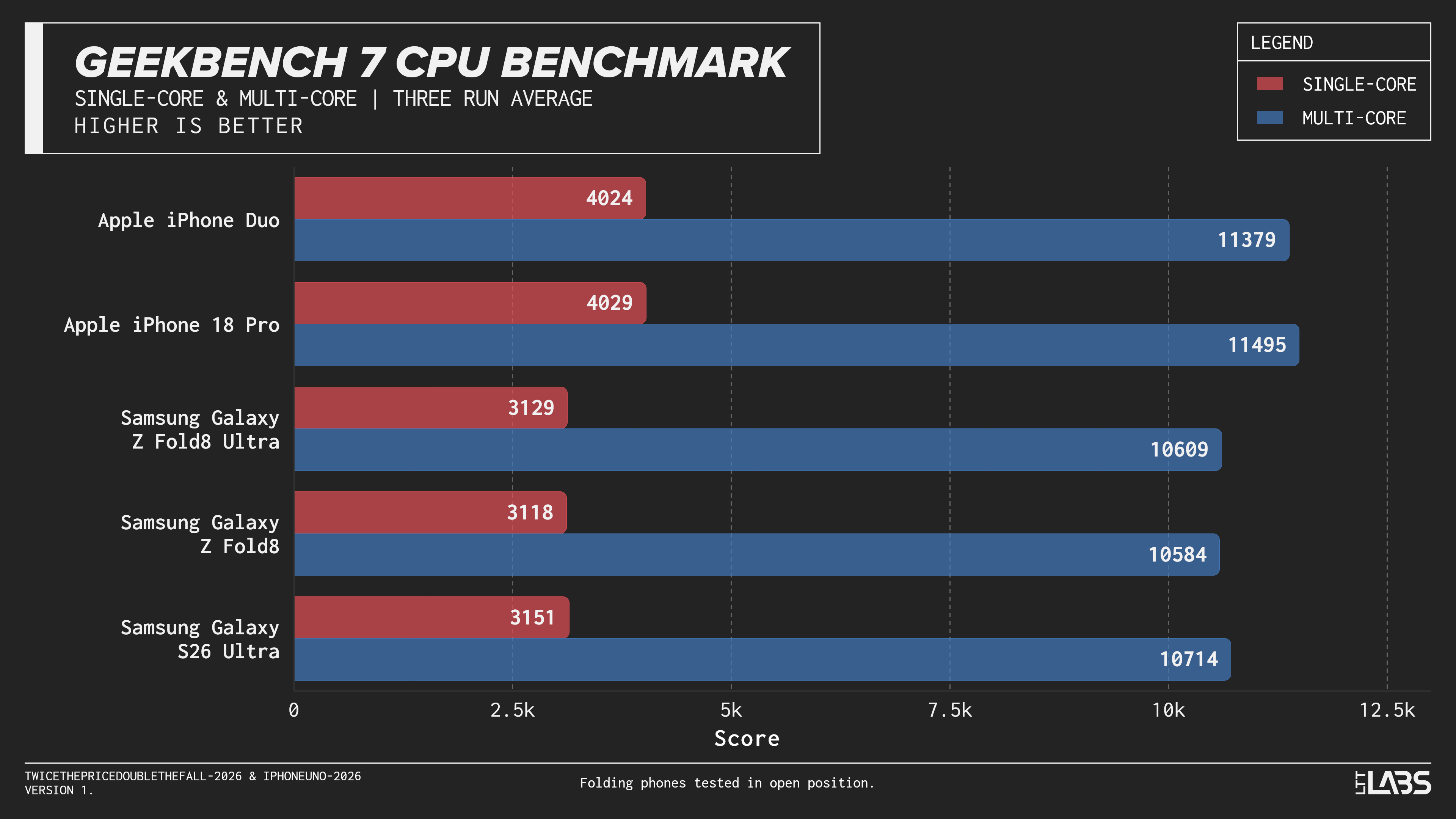
First, in “Geekbench 7,” which measures CPU performance, the iPhone Duo scored 4,024 in single-core and 11,379 in multi-core tests, while the iPhone 18 Pro scored 4,029 and 11,495, respectively, leaving little difference between the two devices. In the graph below, red represents the test using one CPU core, while blue represents the test using multiple cores; both are averages of three measurements.
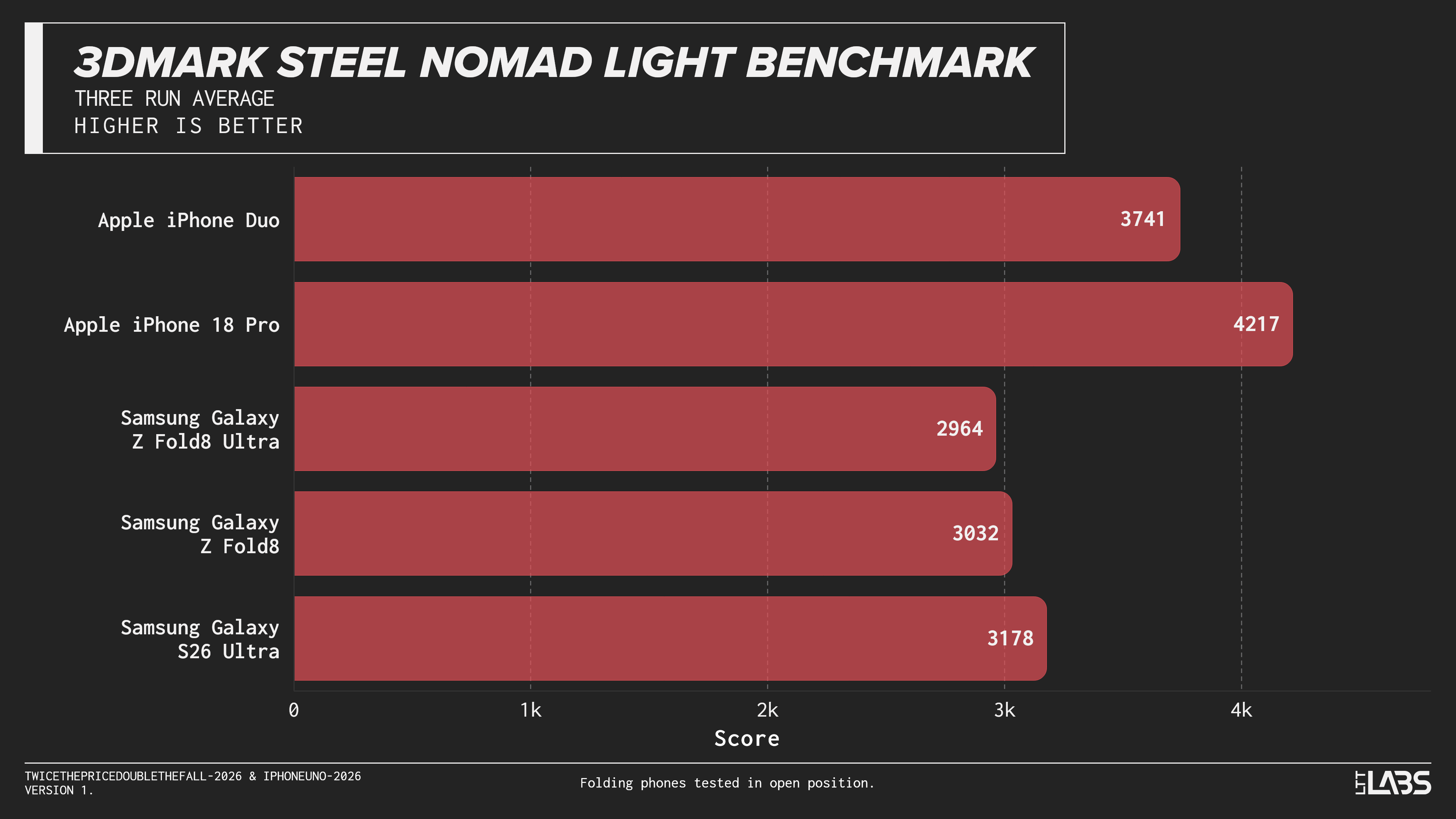
Meanwhile, in “3DMark Steel Nomad Light,” which stresses the GPU to simulate game rendering, the iPhone Duo scored 3,741, while the iPhone 18 Pro scored 4,217. The iPhone Duo’s score was approximately 11% lower than the iPhone 18 Pro’s, but it exceeded those of all three Galaxy models compared.
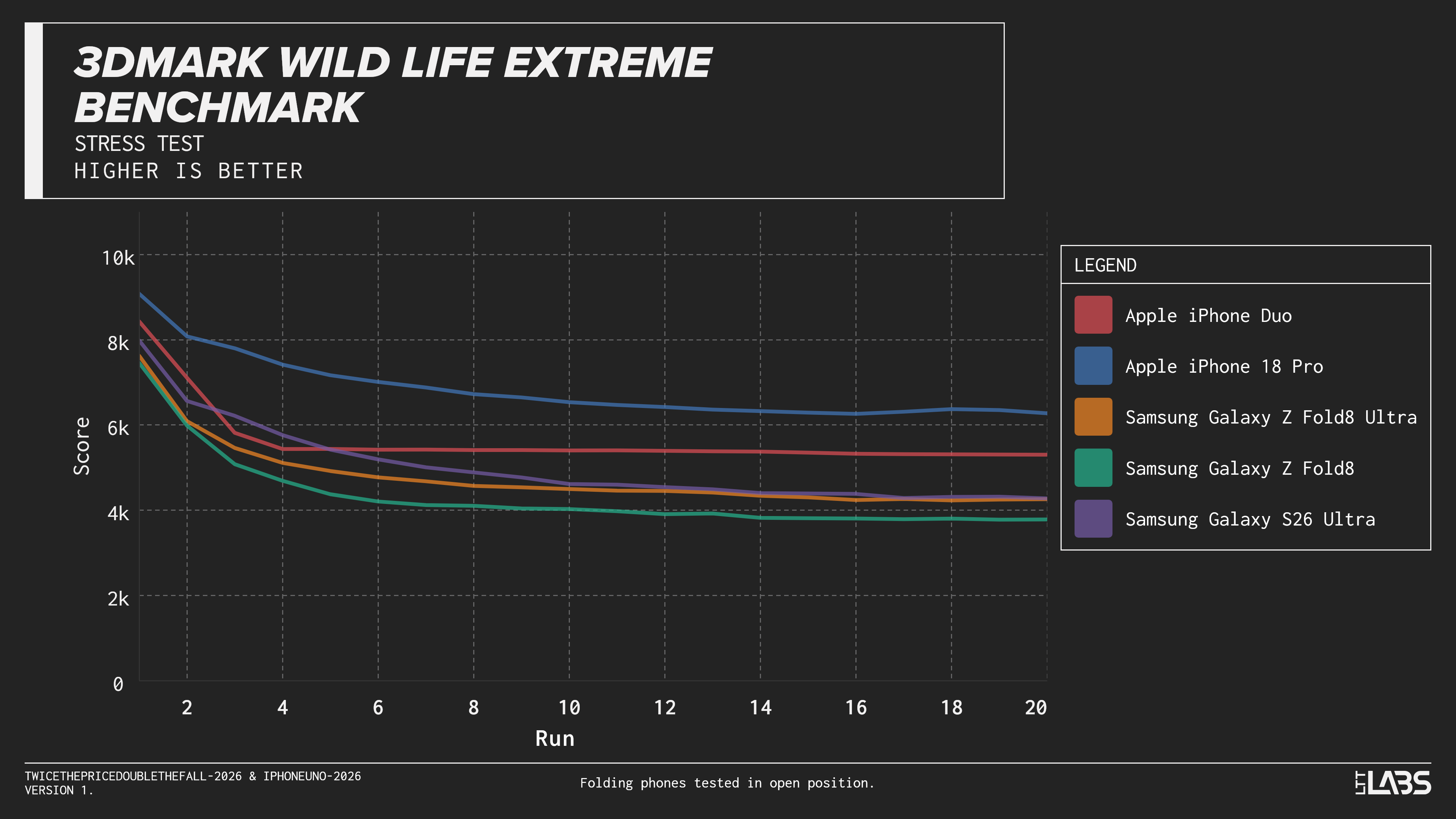
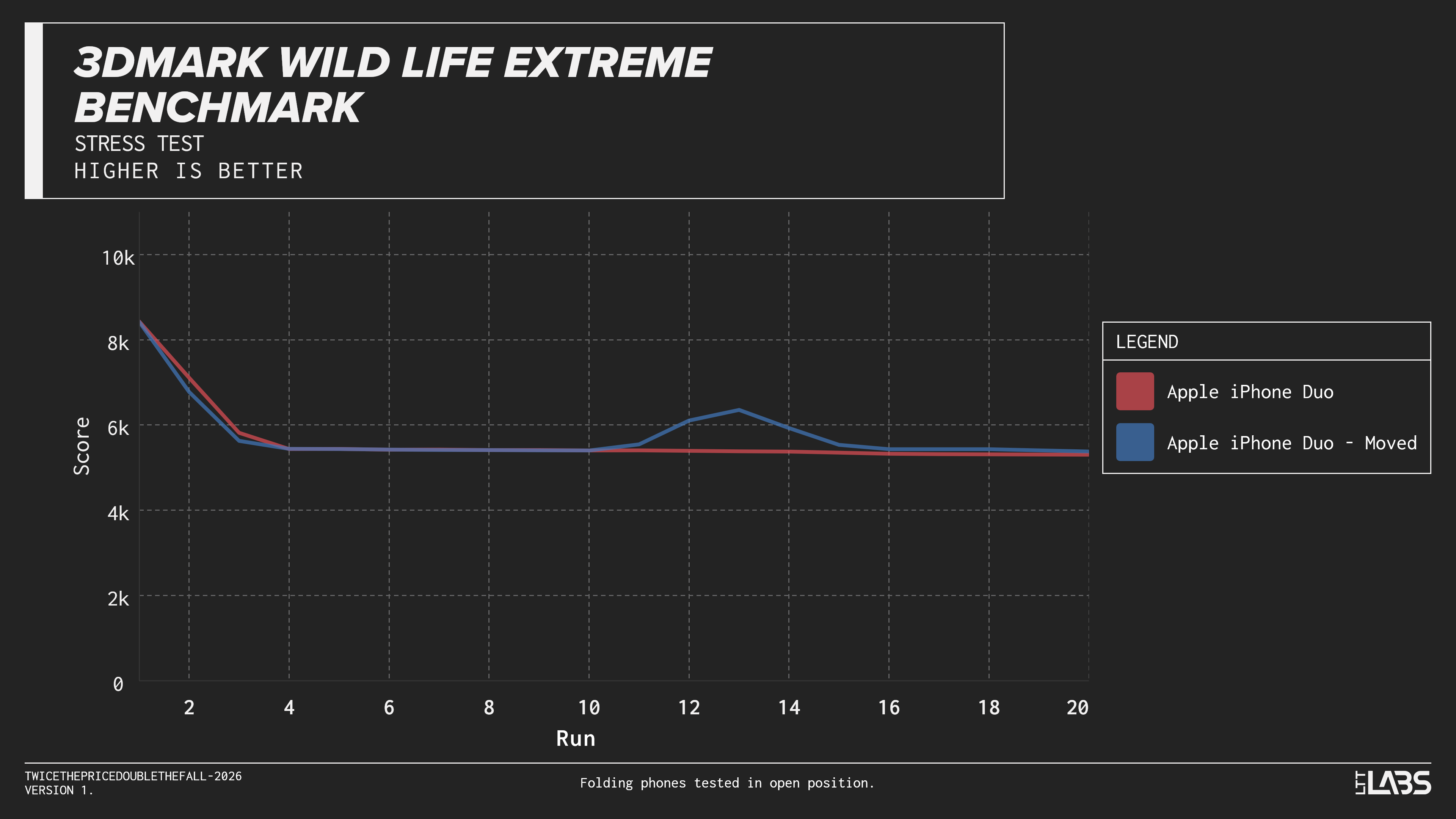
Furthermore, in the “3DMark Wild Life Extreme Stress Test,” which continuously places load on the GPU for 20 minutes, the iPhone Duo’s score dropped sharply after the test began and remained nearly flat from the fourth run onward. Even after stabilizing, its score remained below that of the iPhone 18 Pro, while exceeding the scores of all three Galaxy models compared. In the graph below, the horizontal axis shows the number of test runs, and the vertical axis shows the score, with red representing the iPhone Duo and blue representing the iPhone 18 Pro.
Regarding the difference in GPU performance, LTT Labs believes that although the iPhone Duo also features a “vapor chamber” cooling mechanism that dissipates heat, it cannot distribute heat over as wide an area as the iPhone 18 Pro and therefore cannot fully utilize the GPU’s performance. In the image below, which shows temperatures measured on the back of the device under heavy load, the measurement point on the camera side registered 43.0°C, while the point on the opposite side registered 26.1°C, indicating that heat is concentrated on one side.While heat generation is generally not an issue during light everyday use, LTT Labs says that the area around the camera becomes warm when high-load processing continues.

Also, when the iPhone Duo was moved to another desk during a stress test to check the device’s temperature, even the slight airflow caused by moving it accelerated heat dissipation and temporarily restored performance. In the graph below, red represents the normal test, while blue represents the test in which the device was moved midway through.
The iPhone Duo has a battery capacity of 4,883mAh, approximately 14% larger than the 4,288mAh eSIM-only iPhone 18 Pro.
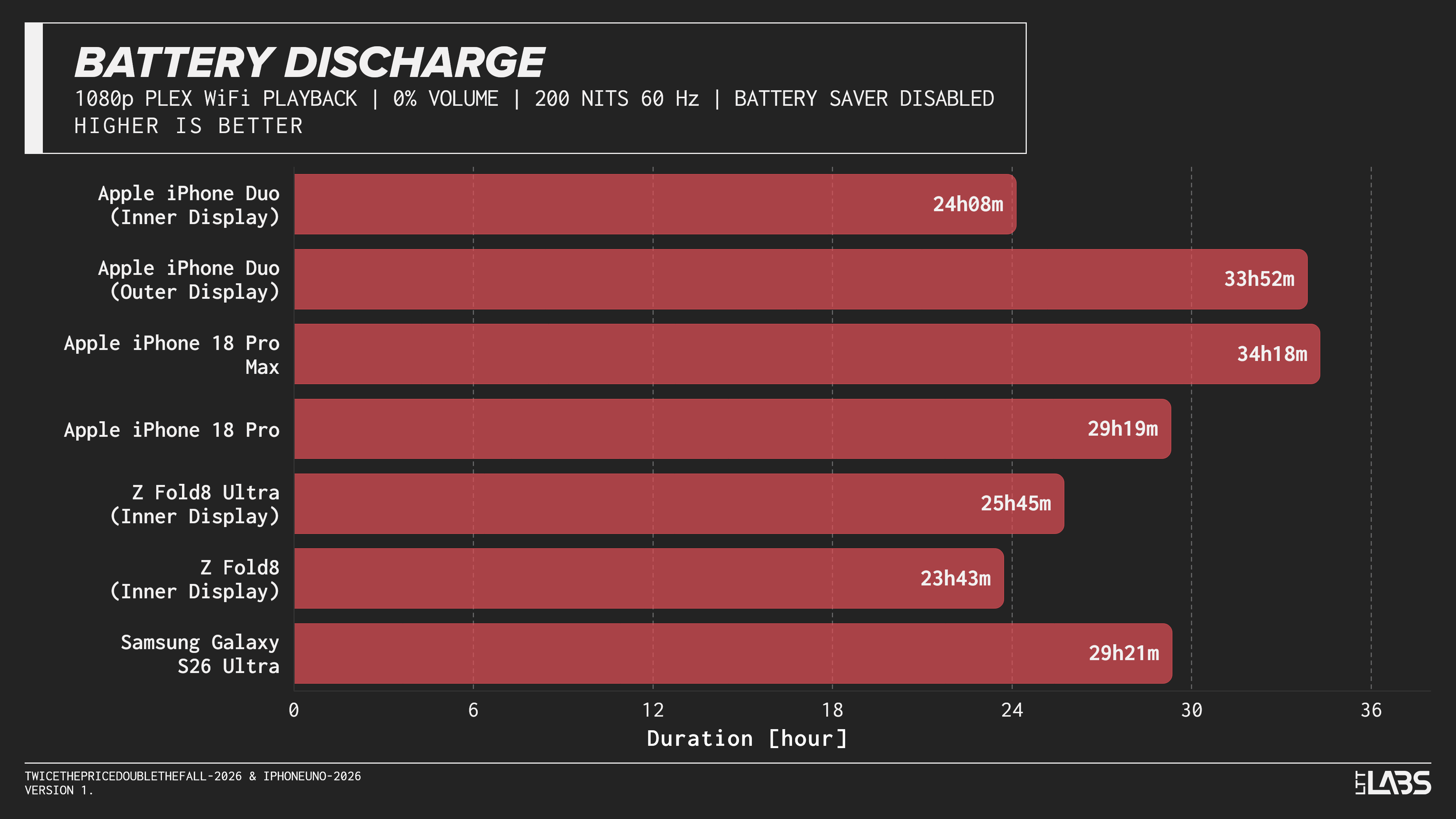
Battery life was tested by continuously playing 1080p video over Wi-Fi using the video playback app “Plex” and measuring how long it took for the battery to run out. With screen brightness fixed at 200 nits, refresh rate at 60Hz, and volume at 0%, and with power-saving mode disabled, the iPhone Duo’s video playback lasted 24 hours and 8 minutes on the inner display with the device open, and 33 hours and 52 minutes on the outer display while folded—a difference of approximately 10 hours depending on the screen used. The iPhone 18 Pro lasted 29 hours and 19 minutes, while the iPhone 18 Pro Max lasted 34 hours and 18 minutes.
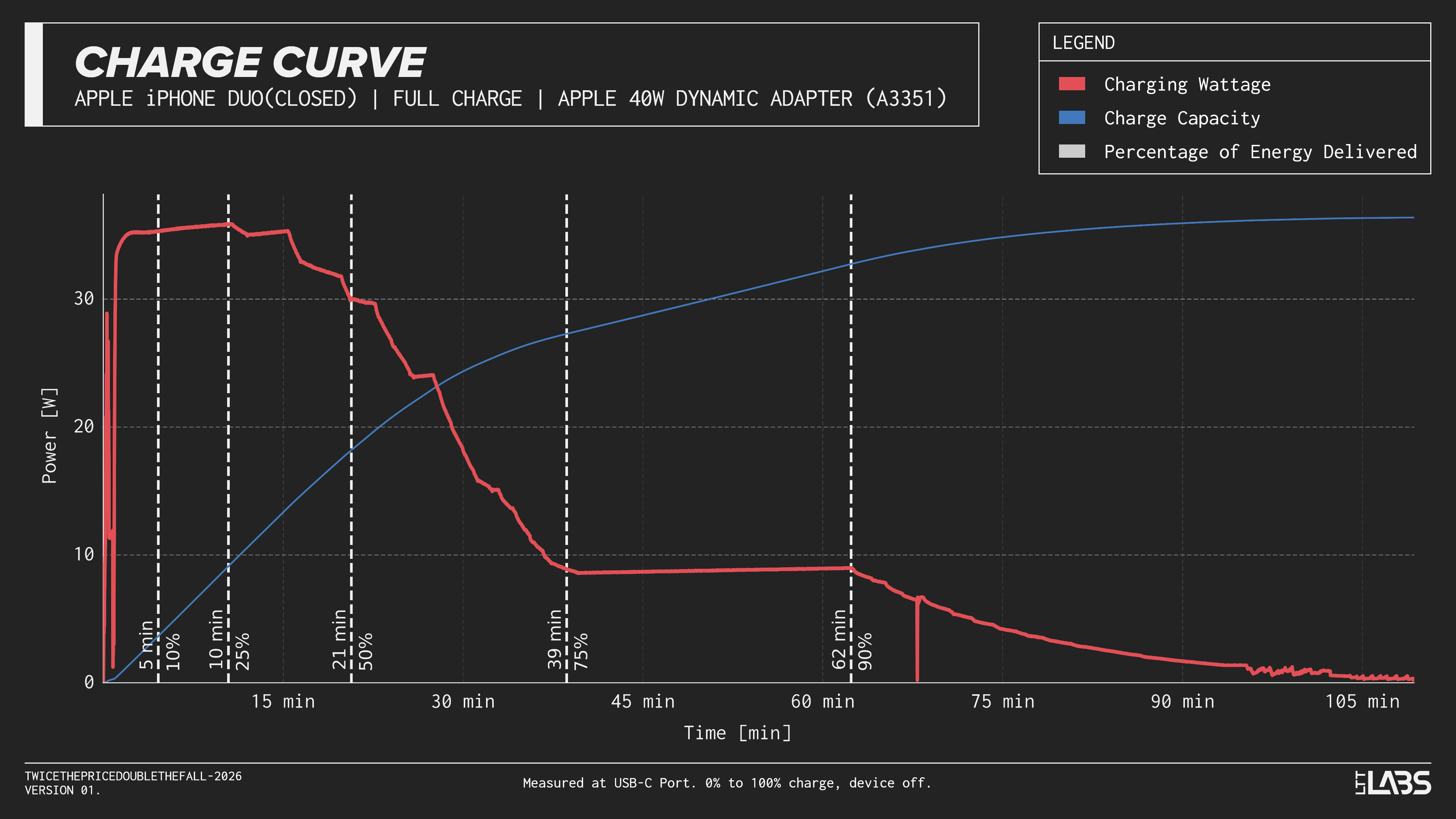
LTT Labs also measured charging speed using Apple’s 40W Dynamic Power Adapter. When charging the iPhone Duo while it was folded and powered off, power output initially reached approximately 36W, with the battery reaching 50% of its total charge in 21 minutes and 90% in 62 minutes. In the graph below, the horizontal axis represents elapsed time, the red line represents charging power, and the blue line represents the total amount of power supplied up to that point.
The iPhone 18 Pro, measured in the same way, reached 50% of its total charge in 15 minutes, six minutes faster than the iPhone Duo.



