OpenAI expanded ChatGPT's image-generation capabilities, which had focused on still images, into the realm of moving animation. It increased image-generation speed by 50% and improved editing precision, broadening the range of applications for content creation.
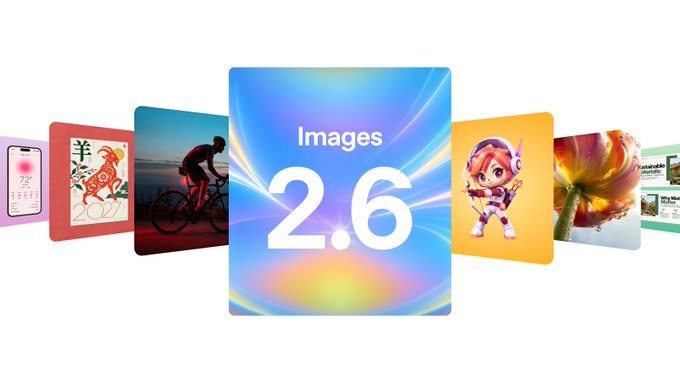
OpenAI said on the 4th (local time), via its official blog, that it had unveiled the image-generation model “Images 2.6” and added a feature that allows users to directly create and edit animated GIFs in ChatGPT.
Starting with this release, the product name will use “Images” instead of the existing “GPT Image.” However, the developer-facing API models will retain the GPT Image name.
The key feature of this update is that animated GIFs can be created using only natural-language commands, without a separate production tool. Users can describe a desired scene and motion or upload an existing photo to generate a GIF. For example, asking for a dancing cat generates a moving image. It is also possible to turn a simple sketch into an animated character that can be used in videos or games.
Generated GIFs allow users to adjust playback speed and edit individual frames. The feature also supports reviewing each scene that makes up an animation and sharing the result. This enables the creation of brand mascots, social media memes, animations for advertisements, and more.
Image-generation performance has also improved. According to OpenAI, Images 2.6 generates images 50% faster than version 2.5, which was released last September. It has also strengthened its ability to consistently maintain a character's appearance, product designs, and a brand's distinctive visual features even after multiple rounds of editing. The layout quality of professional visual content, such as posters and product images, has also improved.
Version 2.5 continues to rank among the top performers in external evaluations. In Artificial Analysis's image-generation evaluation, “GPT Image 2.5 Sunburst” took first place with 1,223 points, while “GPT Image 2.5 Flare” took second place with 1,207 points. In the image-editing evaluation, Sunburst also took first place with 1,199 points.
The newly unveiled 2.6 model has not yet been included in these evaluations.
Images, upgraded—introducing ChatGPT Images 2.6.
Now with GIFs and reference images.
Plus, two new models are coming to the API with 50% faster image generation. pic.twitter.com/kcuOhTipYR
— OpenAI (@OpenAI) November 4, 2026
The developer-facing API offers two models that can be selected according to the use case. “GPT Image 2.6 Flare,” which focuses on fast image generation, can generate an image in as little as six seconds at the lowest-quality setting.“GPT Image 2.6 Sunburst” specializes in high image quality and precise editing, and is designed to consistently preserve image details even through repeated revisions.
Features that allow developers to exercise greater control over the image-editing process have also been added. It supports a markup feature that enables users to directly mark areas on an image in the API to specify what to edit, and allows the output to be exported in SVG format for use on websites, apps, printed materials, and elsewhere. A “Complexity” setting has also been introduced to adjust the level of planning performed by the model before generating an image.
OpenAI said that more than 4 billion images are currently being generated each week through ChatGPT, Codex, and the API. That is about 1 billion more than the weekly 3 billion reported in September and represents total image generation, including GIFs.
Image 2.6 was released for ChatGPT and Codex users across web, desktop, and mobile on all subscription tiers, including the free tier. However, the GIF-generation feature is being rolled out gradually and is reportedly still unavailable on some accounts.
Developers can access the Flare and Sunburst models through the API.
Park Chan, Reporter cpark@aitimes.com


