
AI technology is developing rapidly, and in recent years, its use in academic research has become commonplace. Pietro Miotti, an AI researcher from Italy, reported a case in which he “re-discovered a Maya civilization site that had been missing from official registries using AI agents.”
“My AI agents re-discovered a Maya site in just 72 hours.”
https://pietromiotti.com/latest/maya-site/
On October 18, 2026, while researching Peru, Miotti came across a person named Hyram Bingham III, who had discovered the Inca Empire site “Machu Picchu” in that country. Bingham III learned about Machu Picchu from local residents; Miotti wondered what would have happened if Bingham III had had modern tools at his disposal.
Miotti conducted brainstorming sessions with AI agents such as Gemini, ChatGPT, and Claude Grok, and all of them recommended using LiDAR (Light Detection and Ranging) technology, which uses lasers and light to measure distances. While aerial photographs cannot reveal the traces of ancient sites hidden in the jungle, LiDAR can detect the terrain and elevation differences beneath the trees, making it possible to uncover hidden ruins.
Cases of discovering ancient sites using LiDAR data have been reported frequently.
The discovery of the Maya civilization site was偶然, when Miotti “stumbled upon the data on page 16 of a Google search.”
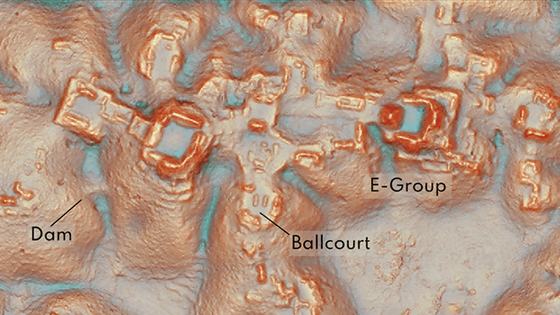
An “ancient city” previously unknown in the depths of the Amazon was discovered through aerial LiDAR surveys.
Miotti found that the LiDAR data available for research in Peru was insufficient, so he focused on Central and South America, where there was more LiDAR data. He instructed the AI agents to analyze whether there were any Maya civilization ruins in that region and then went to bed.
The next day, on October 19, Miotti checked the reports from the AI agents. They had identified numerous villages and structures within a 1200 km2 area. The AI agents had processed LiDAR data, identifying pyramids, buildings, and plazas, and then eliminated natural hills and roads from the analysis.
Miotti then asked the AI agents to review literature and archives to determine whether any of the identified structures were previously unknown. Within just a few hours, they reported that the structures seemed to be previously undiscovered.
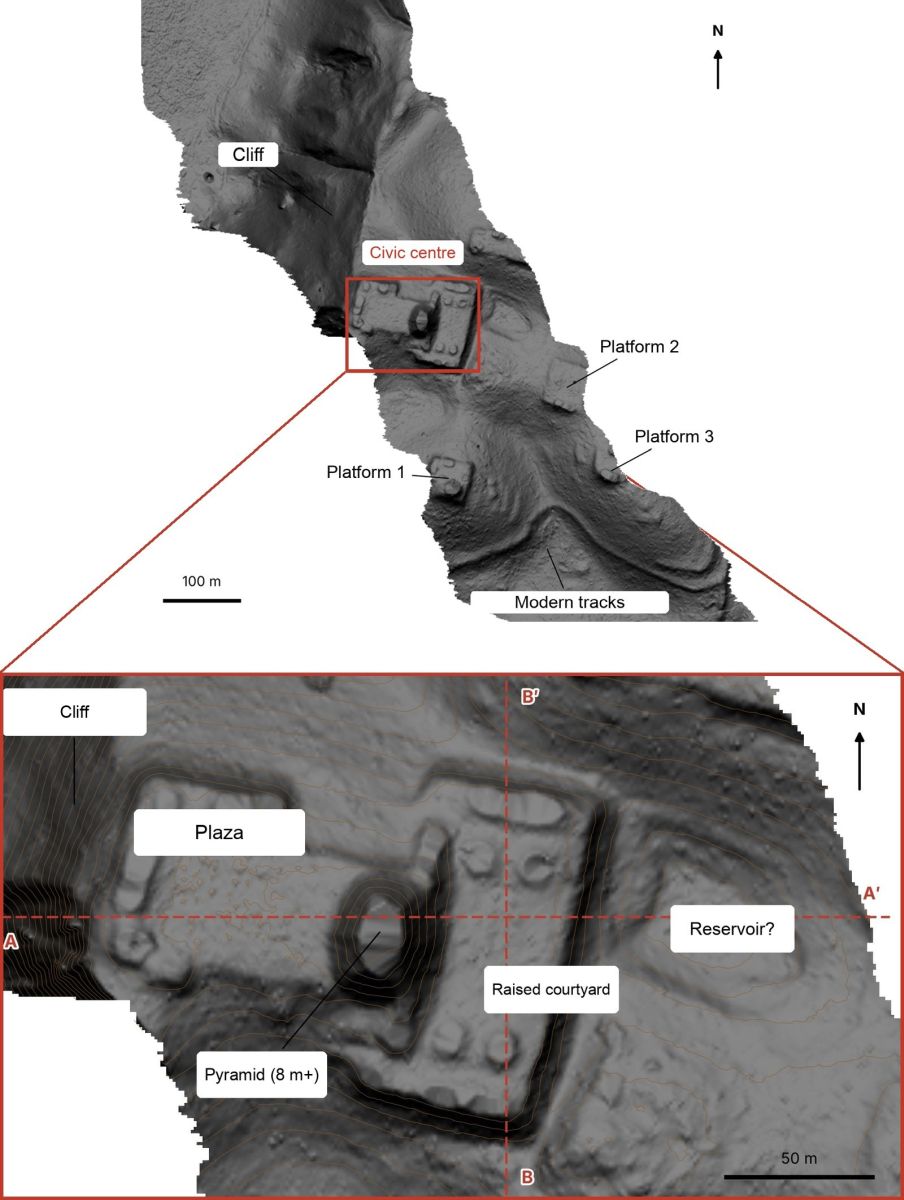
Below are the LiDAR images of the structures that the AI agents reported as being undiscovered.In the center, there appears to be an elliptical-shaped structure resembling a pyramid, surrounded by what appear to be plazas and courtyards. At the right end, a depression that may be a reservoir can be identified.
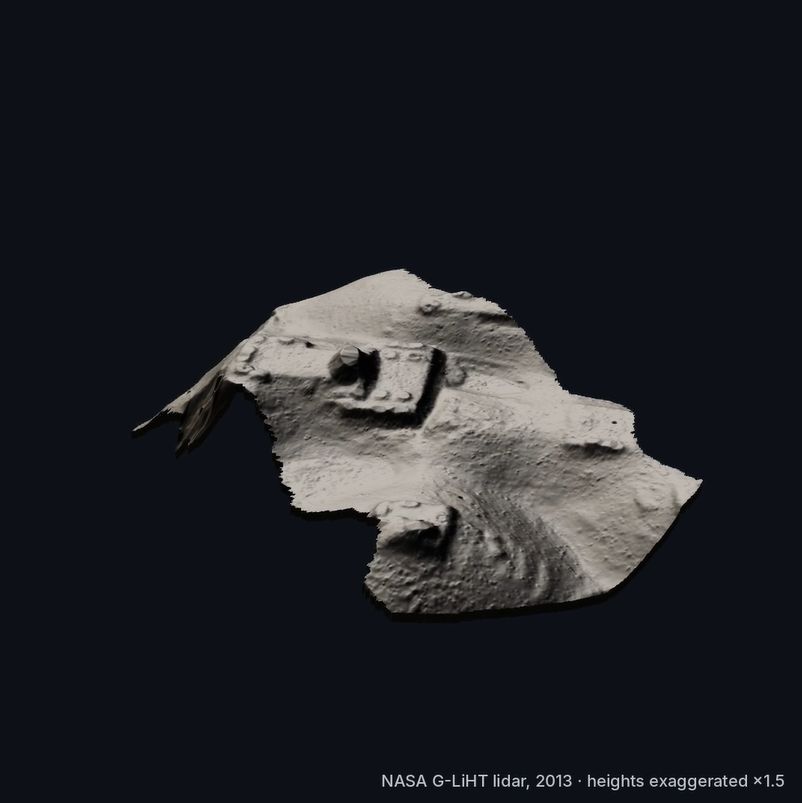
When the LiDAR data is 3D-processed, it looks something like this.
After Mr. Miotti consulted about what to do next, the AI agent prepared a report on the discovery and advised him to contact the Mexican National Institute of Anthropology and History (INAH) to inquire whether the site had already been found. Mr. Miotti then instructed the AI agent to compile the report and went to bed that same day.
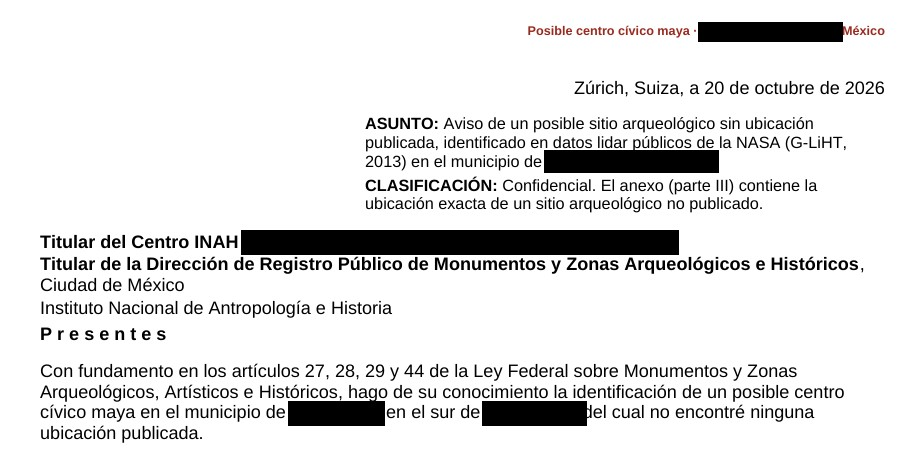
On the following day, October 20th, Mr. Miotti revised the report prepared by the AI agent, translated it into Spanish, and sent it to INAH. The following is the beginning of the email sent to INAH; the exact coordinates have been blacked out.
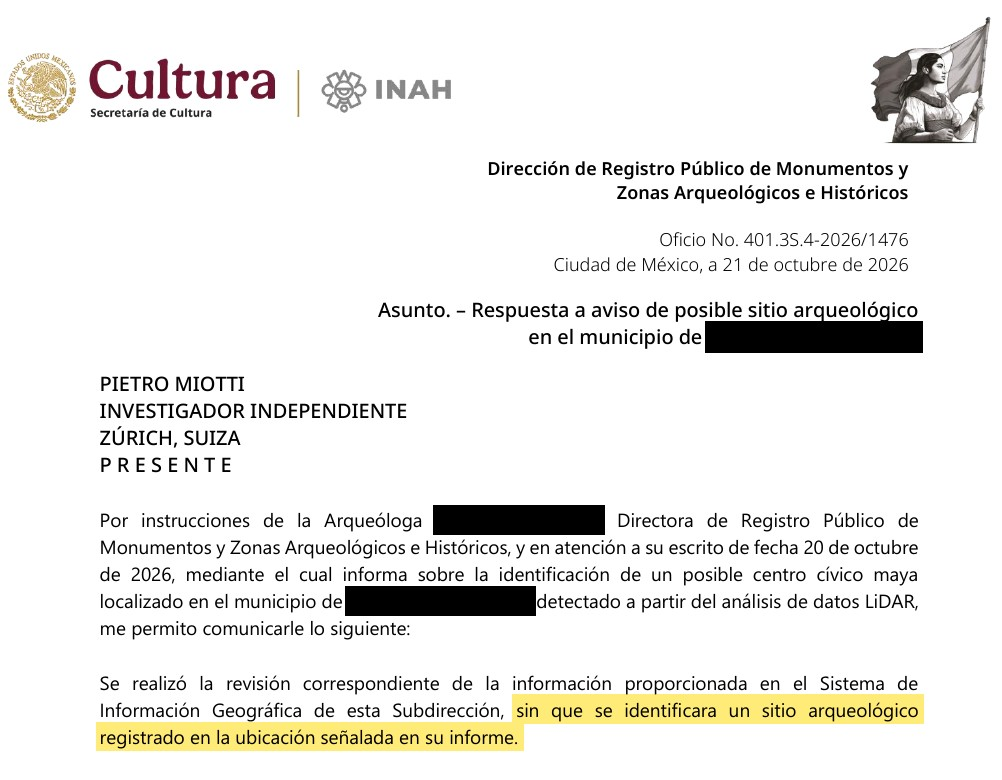
On October 21st, INAH replied to Mr. Miotti, stating, “Upon checking the records, no archaeological site registered at that location was found.” The following is the beginning of the email from INAH. It was reported that these events had all occurred within just 72 hours since Mr. Miotti became interested in exploring the site.
It was later discovered that the site actually had been found in 2025 using LiDAR technology. Although it had not been included in INAH’s official registry, this discovery could be considered a “re-discovery.”
“New regional-scale estimates of the population density and settlement distribution of the Classic Maya period using airborne LiDAR scanning” – ScienceDirect
https://www.sciencedirect.com/science/article/pii/S2352409X25003219

Mr. Miotti commented, “It turns out that professional archaeologists had already mapped the same location. This is a good sign, indicating that an outsider using an AI agent was able to find the same site as experts would have.” He argued that autonomous AI has the potential to be useful in a much broader range of fields, not just in specific areas such as programming, mathematics, and physics.