Overseas, there is a growing movement to regulate “AI glasses (AI eyewear).” AI glasses are glasses equipped with a camera, an AI conversation function, and a display. They offer features such as real-time text translation and navigation while walking. Since around 2023, they have rapidly spread worldwide, primarily for personal use. In Japan, however, they have not become as widespread.
Because AI glasses look like ordinary glasses, those nearby may find it difficult to recognize when they are being used for illegal purposes. The Norwegian government is planning to regulate them through legislation. In Japan, there have previously been arrests for covert filming using glasses-mounted cameras. In South Korea, there have been a series of cheating incidents involving AI glasses at examination venues. Although misuse is widely anticipated worldwide, is there a prospect of AI glasses becoming widespread?
First, we will explain the background to the regulation of AI glasses, which is a topic of discussion worldwide, and then consider the possibility of their adoption in Japan.
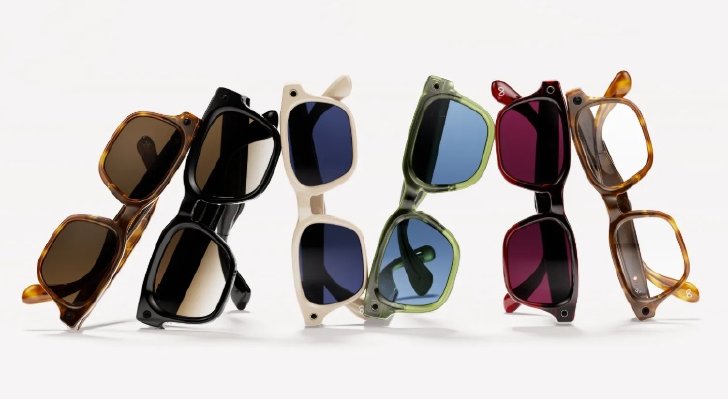 Meta Glasses (Source: Meta’s official website)
What can AI glasses do?
First, let’s look at how AI glasses have evolved.
The forerunner of today’s AI glasses was “Google Glass,” released by Google in 2013, which is widely regarded as the pioneer of smart glasses. It had a display mounted on the outside of ordinary glasses, making it immediately clear that it was different from standard glasses. It had 1GB of memory and 16GB of storage. Its main functions included taking photos and performing searches. It could also be operated by voice commands and display search results for specific keywords on the display.
Meta has been focusing on AI glasses for the consumer market. The company has released products developed in collaboration with eyewear brands such as Ray-Ban and Oakley. It began selling Ray-Ban-style smart glasses in 2021. In 2023, it released a product equipped with the conversational AI “Meta AI,” beginning its expansion into AI glasses. On August 26 of this year, it began selling “Meta Glasses” in Japan. Prices start at ¥42,680. It offers 26 combinations of colors, lenses, and frames. The glasses support photo and video capture, live streaming on social media, calls, and other functions. Users can converse with “Meta AI,” and the glasses also offer AI-powered simultaneous interpretation and translation.
Although their introduction has been slow in Japan, sales of Meta’s AI glasses exceeded 7 million units in 2025. Consumers appear to be attracted by features such as photography and hands-free operation using AI. Their sale through Ray-Ban stores also suggests that the brand power of the eyewear itself is playing a role. For general use, people might ask the AI the names of buildings or objects they see while walking or have it translate text at their travel destination.
Regulation is advancing overseas
However, as mentioned at the beginning, there is a growing movement to regulate AI glasses overseas. On October 5, the Norwegian government announced plans to submit a bill regulating the use of AI glasses in public places such as parks and beaches. It cited the risks of covert filming and audio recording. In the Netherlands, a consumer advocacy group has called for a ban on sales due to privacy concerns, and in response to this trend, the country’s major eyewear chain “Hans Anders” temporarily suspended sales of Meta glasses.
Unlike Google’s product, the Meta product takes the form of ordinary glasses themselves. There is no separate display, and information is displayed on the lenses of the glasses. Because the camera is built into the frame, people nearby are unlikely to notice its presence. When taking photos or recording video, an LED lights up and a sound is emitted, but these may be difficult to notice in brightly lit places.
In South Korea, a person was arrested for secretly filming a date partner with AI glasses and posting the footage to social media without permission. Such voyeurism incidents involving glasses-style cameras are frequent both domestically and abroad, not only with AI glasses. In South Korea, cheating using AI glasses has also been detected during TOEIC and university entrance exams. In addition to voyeurism and exam cheating, AI glasses could also be used for espionage. They would make it easy for employees and outsiders to take confidential information out of the company.
The examples introduced so far have mainly involved glasses equipped with cameras. Meanwhile, in business settings, the use of AI glasses with displays is advancing. Let’s look at some specific examples.