An American startup, Atomic Machines, is using artificial intelligence to design and manufacture microscopic devices. The company created a system called "matter compiler," which transforms digital projects into physical components.
According to The New York Times, the first application is a small electrical switch for data center equipment. Atomic Machines aims to apply the technology to micro-robots, motors, and devices capable of performing medical exams with just a few drops of blood.
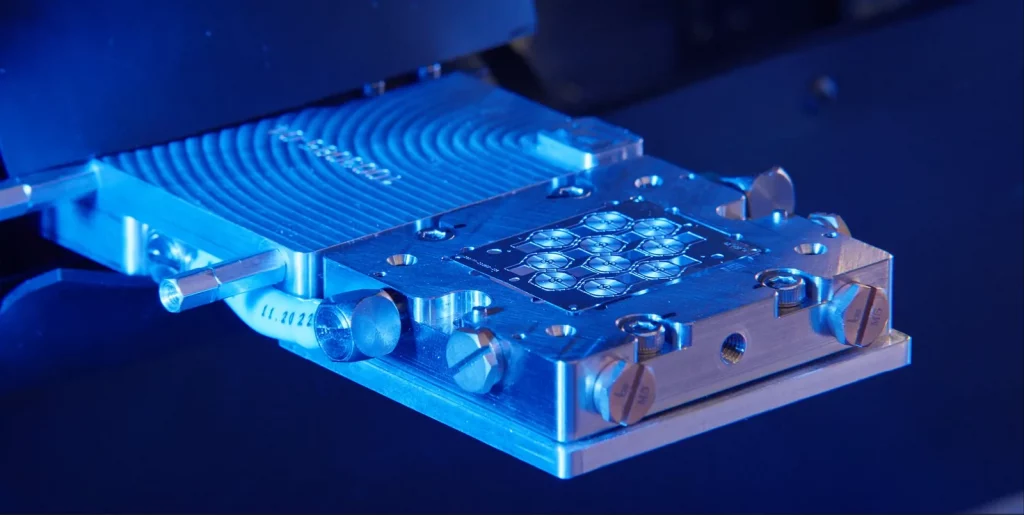 In Atomic Machines' technology, each new device also generates data to refine future projects. – Image: Reproduction by Atomic Machines
The AI that manufactures objects
The process begins with thousands of experiments. Artificial intelligence analyzes how different materials behave when they are mixed, heated, combined, and subjected to tests.
From these data, the system creates a project that proceeds to the so-called "matter compiler": a sequence of 13 automated machines responsible for manufacturing and testing the components.
"A software compiler provides a digital output. A matter compiler provides a physical output," said Jeff Holden, founder of Atomic Machines.
However, automation still does not cover all steps. Engineers need to transport the components between the machines and assist in assembling the final device. The company wants that, in the future, the equipment itself can reproduce the project more autonomously.
A smaller and more efficient switch
The technology began to take shape from a concrete need. Mickael Mauger, who works with power supply equipment for data centers, needed a switch capable of detecting dangerous peaks and quickly interrupting the current.
The problem is that the available options required some kind of compromise. The mechanical models were larger and slower. The silicon-based ones could quickly turn off the current, but wasted more energy and generated a lot of heat.
Read more:
- Ex-DeepMind Google researchers create startup valued at R$19.1 billion
- Nvidia under pressure? Samsung backs startup aiming to change AI chip architecture
- Brazilian AI for judicial processes already worth $1.2 billion
It was in this scenario that the component from Atomic Machines emerged. Small enough to fit on a fingertip, it combines speed and efficiency and supports up to 150 amperes of direct current, sufficient capacity to charge three Tesla cars at the same time. Its pieces are so small they need to be observed under a microscope.
This type of technology is already present in everyday products, such as sensors that help smartphones detect movements and microphones in hearing aids.
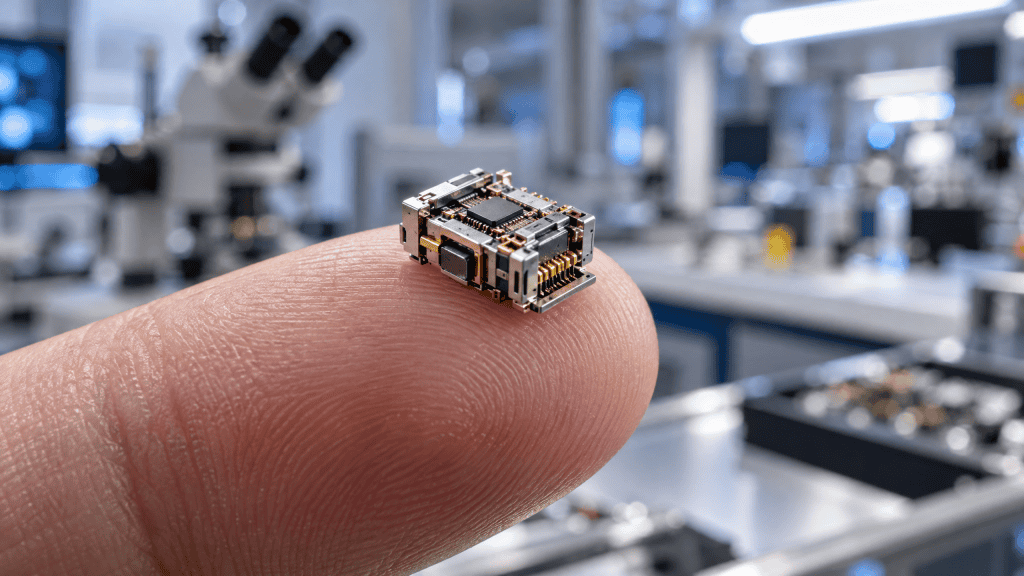 Atomic Machines created a microscopic switch for data center equipment, combining speed and efficiency. – Image created by artificial intelligence: Manus/Olhar Digital
What lies ahead
The next step is linked to the ability to manufacture even smaller and more complex structures. Jeff Holden imagines gears and motors capable of moving "microrobots." Among the applications cited by the company are:
- assistance in surgical procedures;
- improvement of manufacturing techniques;
- conducting medical tests from a few drops of blood;
- development of devices with new combinations of materials.
For Eric Meshot, director of process engineering at Atomic Machines, each new device also represents an opportunity to expand the database used in the process. "We are building real devices. And along the way, we are collecting data that can improve this process," he said.
For now, human participation continues to be necessary. The company's bet is to use the data accumulated through the manufacturing of new devices to improve the technology until machines can carry out an increasingly larger portion of the work on their own.

Valdir Antonelli is a journalist with specialization in digital marketing and consumption.





