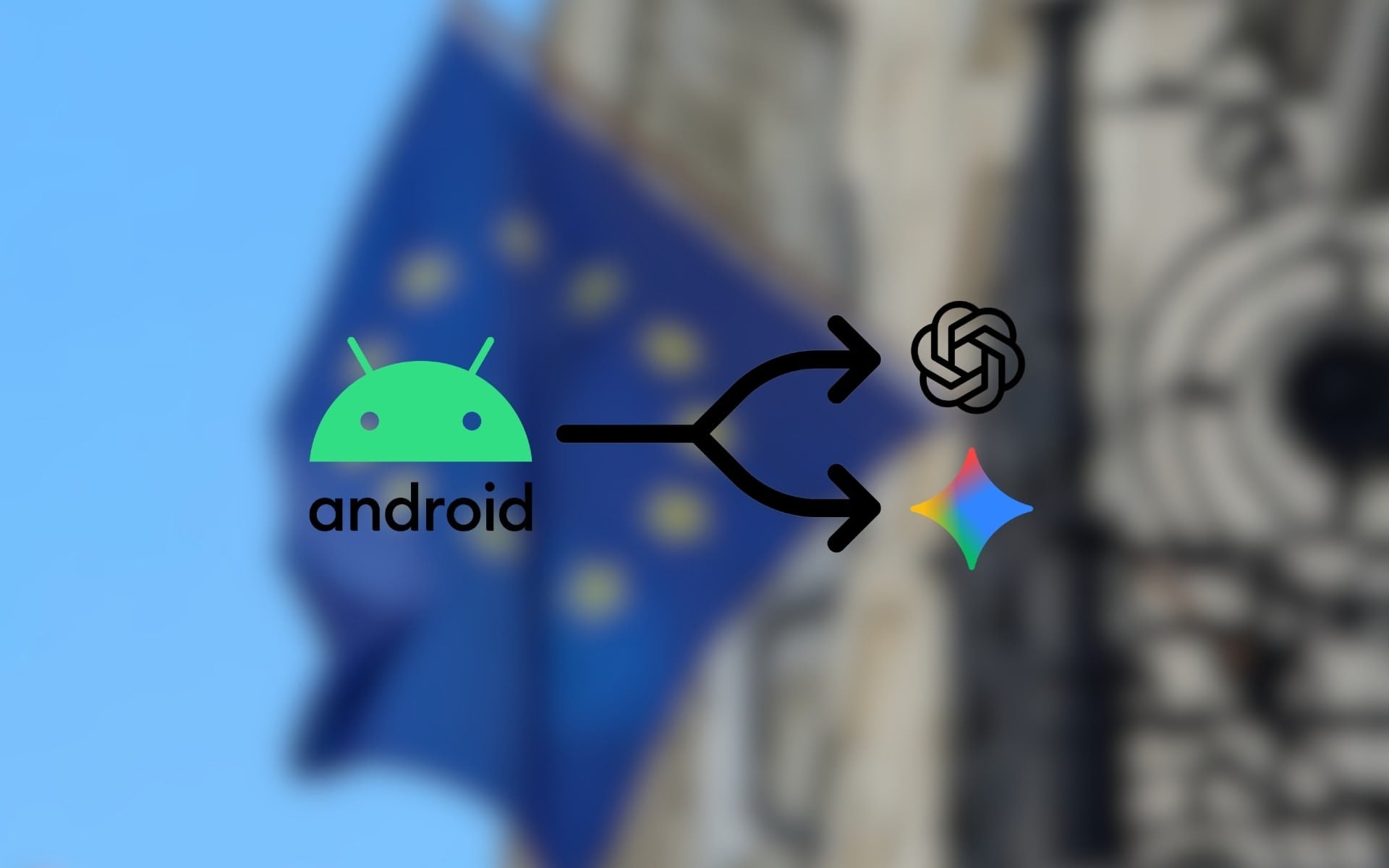
 © Naïm Bada pour 01net
The Europe wants your voice assistant to no longer be chosen by Google or Apple, but by you. The two giants have completely different answers.
On an Android phone, try asking ChatGPT to read what is displayed on the screen, to send an email on your behalf, or to trigger when you say its name. None of this works. Gemini, Google's in-house assistant, can do that. The difference between the two isn't a matter of technology, but of privileges: Gemini has the system keys, others knock on the door.
It is precisely this asymmetry that the European Commission has just highlighted in black and white, by sending Google a detailed terms of reference under the Digital Markets Act.
Read more: Gemini will radically change on Android: here are the first images of the update
The measures that Brussels is imposing on Google
In simple terms, the Commission wants any AI assistant to be able to do on Android what Gemini already does. Specifically, the measures require that a competing AI can be triggered by a dedicated activation word (today, only "Hey Google" works at the system level), interact with installed apps, and access the same hardware resources as the built-in assistant. All of this is governed by Article 6(7) of the DMA, which prohibits an access controller from favoring its own services. Google had already been targeted in January with the opening of these procedures, but without the details of the obligations. This time, the document is precise, and the public consultation is open until May 13th. The binding decision, however, will come no later than July 27th.
Google's response did not take long: the company denounces an "unjustified intervention" that "would compromise the privacy of European users". The kind of statement that sounds as much like a substantive argument as a legal defense line. In case of non-compliance, the fine could reach 10% of Alphabet's global revenue, which is more than 30 billion dollars.
For once, Apple is the model student of the DMA
The catch for Google is that Apple demonstrates in real time that another response is possible. Subject to the same DMA obligations, the Cupertino firm has started as of iOS 26.2 to prepare the replacement of Siri with a third-party assistant via the iPhone's side button. Japan served as a test ground, Europe will follow. Bloomberg reported at the end of March that Apple plans to go further with iOS 27, deploying a system of « Extensions » that would connect Siri to multiple AI at the same time (Claude, Gemini, Perplexity).
Apple is not acting out of generosity, of course. Its engineers are still struggling to deliver the new Siri promised since 2024, and the deployment of Apple Intelligence in Europe has been delayed precisely because of the DMA. Opening the door to competitors is both saving time and avoiding a regulatory showdown that could cost billions.
The two calendars, by the way, overlap in a rather clear manner. Google completed in March the transition of Google Assistant to Gemini, locking its AI as the default assistant on over two billion devices. In the same month, the Commission launched its procedures. While Mountain View is cementing, Cupertino is dismantling (admittedly against their will, but methodically).
👉🏻 Follow tech news in real time: add 01net to your Google sources, and subscribe to our WhatsApp channel.
Source : European Commission







- Google Play Store
- 4K Video Downloader Plus Anthropic offers a free reset of Claude's limits to its subscribers, here's how to take advantage of it