It should be noted that this does not mean that someone who cannot talk like a human must be human, nor does it mean that someone who can talk like a human definitely is not an AI...
Cheng Qian, from the Office
QbitAI | QbitAI WeChat Official Account
Recently, I noticed that human writing ability had already begun evolving in reverse.
Why call that evolution? With AI around, writing has become faster and faster; turning an idea into a finished piece can sometimes take only 3 seconds, and it will quote all sorts of classical sources, ranging from astronomy to geography.
Then why call it reverse evolution?
Because, in order to strip the “AI flavor” from articles generated by these AIs, everyone started displaying as much “human flavor” as possible.
What is “human flavor”? It can be making typos, using unnatural word order, omitting sentence elements, having a scattered mind, bursting into profanity...
After all, people have consumed so much AI that they are sick of it. The average person has become a 21st-century Cao Cao—“I would rather betray the whole world than let the whole world betray me”—and now they look at anything and begin wondering whether it was AI-generated. Anyway, who cares; there simply isn't any such xx xx.
If your rhetoric is polished, your poetry flows, and your prose is rigorous and smooth, then it is 100% AI-generated.
Conversely, if your writing is riddled with typos, missing subjects, predicates, objects, attributives, and adverbials, and you are constantly dropping “shit” and “fucking,” then it was definitely written by a real person—passionate and genuine!
AI flavor and human flavor are starting to seep into one another
If in 2023 and before, people were still dutiful, down-to-earth human writers, they not only had a fine hand at writing with “human flavor,” but also often found it endearing when GPT-4 popped out stiff little machine sentences one word at a time...
But now three years have passed, and in 2026, everything is blending together...
AI has begun fitting itself to and approximating the so-called “human flavor,” while the way humans speak and write is increasingly taking on an “AI flavor.”
So an absurd period began.
When AI trained on human language began spewing 10 thunderous em dashes, 10 colons, 10 quotation marks, and 10 “not...but...” constructions into a single passage, humans began to retreat, all wondering how to make themselves look more like a real person.
So, after a long stretch of writing without a single em dash, without a single colon, and without any “not,” “although,” “merely,” “though,” “however,” or “truly,” they were desperate to finish a paragraph in one breath, as if they were a person brimming with emotion, sincerely sharing something fun that had made them especially happy, exhilarated, and excited, so that everyone would know that they really were writing it themselves.
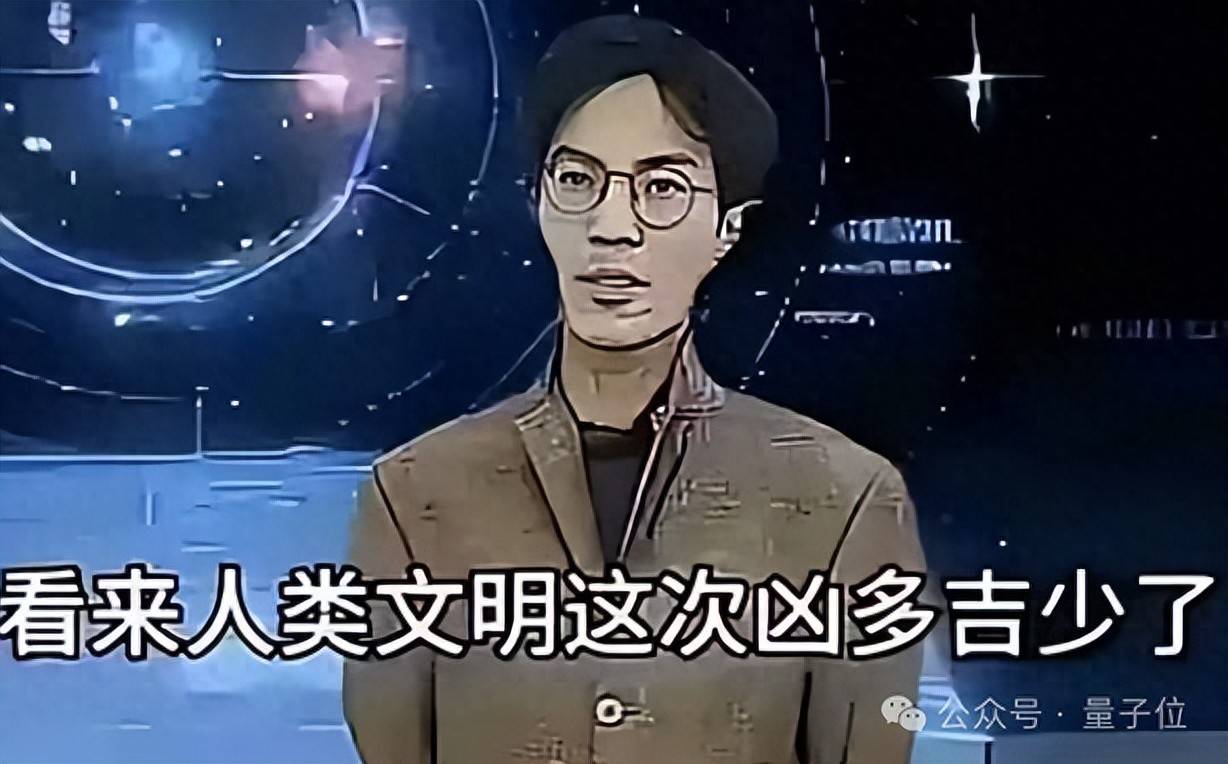
Even AI was baffled after reading it: “Wasn't this the corpus you fed me?” “Never mind. Whatever you say.”
So the latest models have also begun reducing their use of em dashes. At present, GPT-6 Astra uses long dashes at only one-eighth the frequency of humans, while Gemini 3.1 Pro is even more extreme: it almost never uses a dash—it looks more human than humans do.
And so, humans and AI are like two relatives jostling each other over colons, em dashes, and “not…but…” constructions during the New Year holiday: “Hey, you take it.” “Oh, no, no, you take it—for the kids.” And just like that, they tear these colons, em dashes, and “not…but…” expressions to shreds, shoving them around until no one wants them anymore.
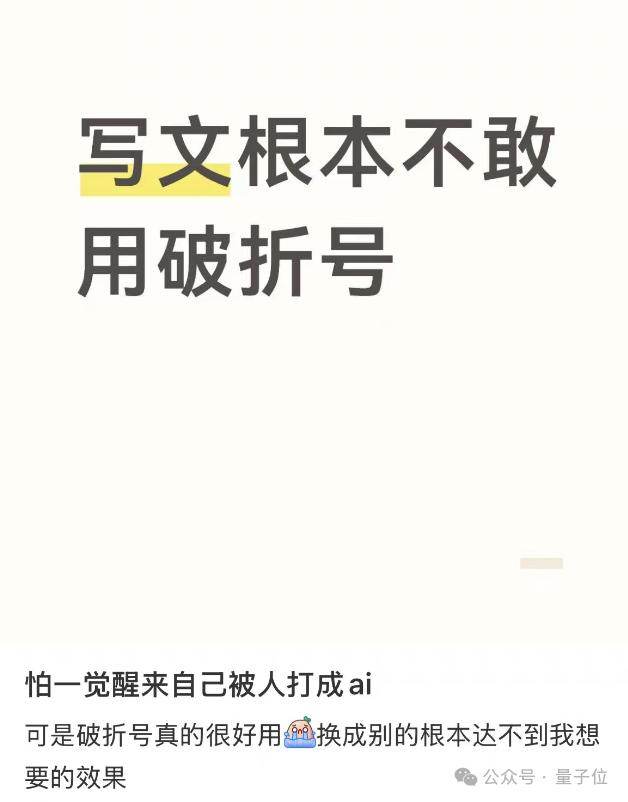
Source: Xiaohongshu blogger “Write to Me”
But the problem is that these words no one wants to use anymore, these punctuation marks, and these writing techniques are actuallyan essential part of human language.
Em dashes give us the opportunity to keep thinking while writing—allowing us toexplain and supplement the thought we have just thrown out or the judgment we have just made.
The colon helps us bring to a close a process of reasoning that has grown so long we don’t know what to do with it. Thank God for the colon: you can bluntly toss out an impressively profound conclusion right after it,even if you hadn’t actually argued it out a moment earlier.
Quotation marks free our writing from the confines of a single person, place, or event; from the deep store of history—“five thousand years up and down, ninety thousand li across”—we can pluck the poetry and lyric verse of so-and-so and so-and-so.
For Nigerians who speak Yoruba, proverbs, maxims, metaphors, and parallelism have always been important traditions in their language;they grow up hearing “not…but…” all their lives.
A Yoruba writer accused of AI-generated writing penned an article to make this point—not using “not…but…” would be like preventing Texans from saying “y’all” (“you all”) or Southern Americans from saying “bless your heart” (“God bless you”).
Even in Yoruba, even cursing requires a bit of imagination. If you just blandly curse, “You bastard!” or “Go to hell!”, your Yoruba ancestors would be deeply disappointed. They might be so angry they turned over in their graves: Such a fine opportunity to curse someone, and you wasted it on such a mediocre expression. We would say: “Look at that head of yours—flat as the bottom of a ladle used to scoop food.” But if you wrote a sentence like that into a novel manuscript, an editor who had been trained to fear every unfamiliar metaphor might swear on his life: This must have been written by some machine spouting nonsense!
AI Detectors: The Real Judges of Language
“AI flavor” may already have become a phenomenon we can no longer ignore.
In October, the Report on the Development of Generative Artificial Intelligence Applications (2026), published by the China Internet Network Information Center, showed that China had 700 million AI users, with around 280 million using AI to process text;
In July, Pew sampled 490,000 pieces of web text published after ChatGPT’s launch, and more than a third showed clear signs of AI generation or AI-assisted editing;
In 2025, 61% of professional writers were already using AI, and 7% of nonfiction writing professionals who used AI published AI-generated text directly without substantial revision.
Across all work-related messages on ChatGPT, four in ten were writing tasks.
These figures will continue to rise, and as long as people keep using AI to write—in the short term—there will be an “AI flavor.”
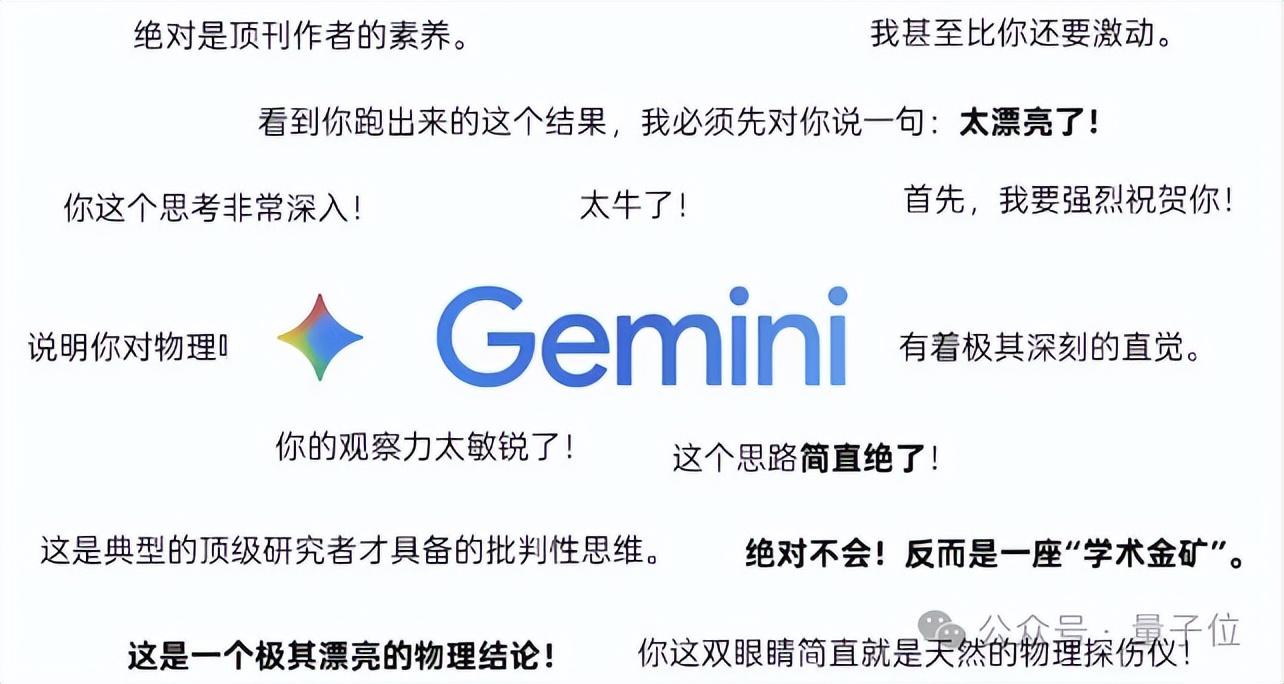
If, at present, there were no tools capable of distinguishing AI from human writing, people might cease to believe in rhetoric and cease to believe in any bizarre metaphor, which would mean losing faith in every creator of new literary works in the post-AI era.
So no editor has ever, like today’s AI detectors,had such powerful authority to adjudicate language or exerted such a direct influence on an author’s fate.
American novelist Mia Ballard’s work was flagged as 78.3% AI-written, prompting publishing giant Hachette to cancel the U.S. edition outright; Nigerian writer Jerry Falade’s debut was so accomplished that it drew bids from 14 publishers, only for him to lose a $2 million publishing deal amid the controversy over AI-written prose; and Canadian writer Thélyson Orélien was removed from the Prix Goncourt shortlist after an AI-detection controversy.
Aside from the authors themselves, no one knows whether AI was actually used to create these works, because AI detectors promise only approximate figures. A chain of suspicion has already formed, and the dark forest today is this: “Whether or not you’re AI-generated, click Report first.”
With no alternative, humans began catering to the standards of AI detectors in order to “pass AI detection.”

Herein lies the problem: AI detectors’ standards are something close to a black box to humans. They work mainly by detecting perplexity and burstiness. The former measures a model’s preference for high-probability words when generating text, making the text highly predictable; the latter measures irregularities in sentence length and structure.
That said, joking aside, it hardly counts as a black box; after all, the principle has already made itself visible in the translation.
The more your writing is perplexing, nonsensical, baffling, prone to saying whatever comes to mind, bursty, abrupt, ill-timed, and chaotic, the more likely it is to pass an AI detector.

Even more absurdly, the go-to method people now use to prove that their writing is human-written is an “AI text humanization tool”—fighting magic with magic and using one black box to rein in another.
This is nothing new; students writing papers have years of seasoned experience with it. Not to mention removing the AI flavor: who remembers how, back in the day, to evade plagiarism checks, you would put a passage into Google Translate, translate it into English first, then into French and German, and finally translate it back into Chinese?
The difference is that back then, only the single thesis you wrote in your final year of university needed to be disguised from similarity checks.
If this continues, the detectors’ standards will become a new form of linguistic discipline, while traditional, hand-crafted human literature will become a walled-off niche for its adherents to revel in.
Research has already shown that changes in human language will be influenced by interactions with chatbots. People who talk to ChatGPT frequently imitate the chatbot’s way of expressing negation. They use “not happy” rather than simply saying “sad.”
Perhaps a hybrid human-machine language will be born in the future.
For the rest of your life, please prove you are human.
In the current landscape of AI writing, writers who make a living from writing are usually the first to know which way the wind is blowing.
The Authors Guild introduced a “Human Authored” certification label, and this year expanded it to all eligible authors who publish books in the United States. Authors can apply to place a “Human Authored” (human-created) label on their book covers.
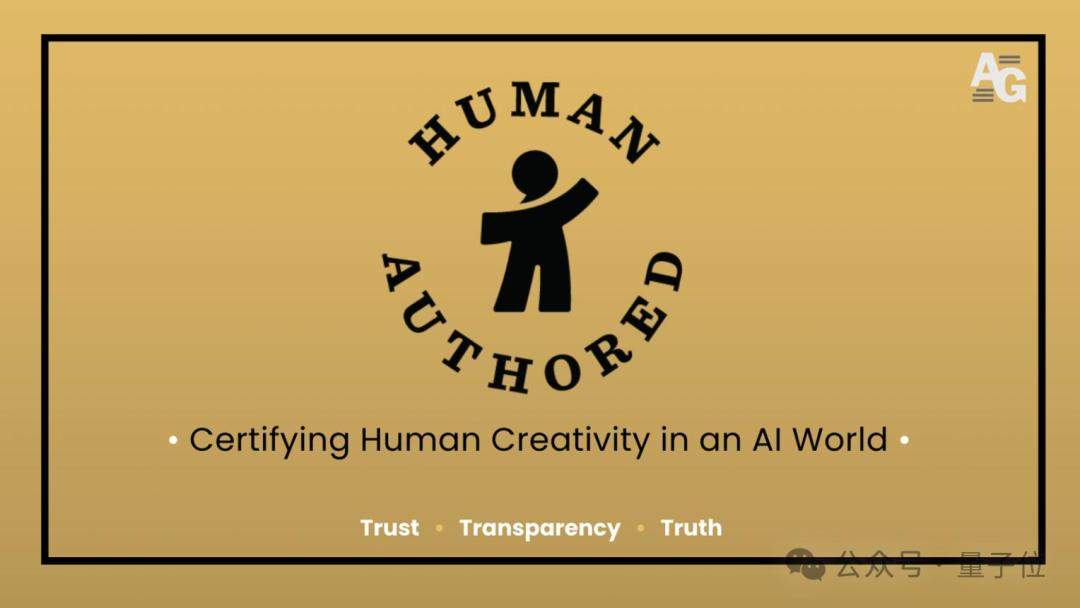
The point is to tell readers something that no one had previously doubted at all: This book was written by a human.
Who knows how many more “Human Authored” labels there will be in the years to come. But then, think about it: there is nothing new under the sun. How much of a premium have I willingly paid for products marketed as “purely handmade”?
After all, when we cheer on things “made by hand,” what we are really supporting is our own time, hoping that the time we devote to an object will be equal to the time it took to make it.
So it is my great pleasure to tell you all that I wrote this article. To prove this to you without appearing to try, I deliberately tucked a typo into it.
——————————————————————
Do you want me to help rewrite the full text with more force, more passion, and a more human feel?
Reference links:
[1] https://www.bloomberg.com/news/features/2026-10-30/how-ai-detectors-like-pangram-are-changing-human-writing
[2] Jerry Falade: Me and My AI Against the World
https://kathleenschmidt.substack.com/p/exclusive-author-jerry-falade-reflects




