
U.S. President Donald Trump said on Friday (6) that he intends to support states interested in expanding artificial intelligence (AI). In a post on social media, he described the technology as a source of wealth and said he was in favor of developing artificial superintelligence.
The statement comes after a wave of tech stock sales and amid investor concerns over heavy investment in AI and possible restrictions on building data centers.
Trump promised to work with state governments interested in betting on the technology and criticized leaders opposed to the expansion of the sector.
“As president, I am 100% in favor of Superintelligence (SI) and will work with the many US states that want to become RICH by having it. They are GOLD, and only foolish leadership will say ‘NO’ to the riches it brings!,” he wrote.
The president did not specify which measures he intends to adopt. The statement also comes after the Democrats’ victory in the midterm elections, held on Tuesday (3), which broadened discussions about possible rules for the sector.
 Investors showed concern about the amount of investment required and the infrastructure costs of operating superintelligences. Image created by artificial intelligence: Dall-E/Olhar Digital
Democratic victory increases concerns about data centers
The election result added uncertainty to technology companies’ expansion plans. Investors fear that greater resistance to building data centers will make new projects in the United States more difficult.
These facilities house the equipment responsible for storing and processing large volumes of information. Although they are essential to the operation of artificial intelligence systems, they face resistance from communities in some regions of the United States because of their high consumption of energy and water.
For Celso Camilo, a PhD in artificial intelligence and professor at the Federal University of Goiás (UFG), the Democratic victory did not cause stock prices to fall, but it added a risk to a market that was already showing signs of fragility.
“The American election is not the cause of the decline. It was the trigger. The AI market was already fragile,” he told g1.
According to the expert, the most immediate risks are at the state level, where decisions about permits, power supply, and possible moratoria could affect the construction of data centers. He also points to possible changes in tax incentives.
Camilo emphasizes that significant legislative changes usually take time and that the U.S. president retains the power of veto. In the professor’s assessment, the market’s most intense reaction is likely to be short-lived, but companies linked to AI may continue to see their valuation expectations revised.
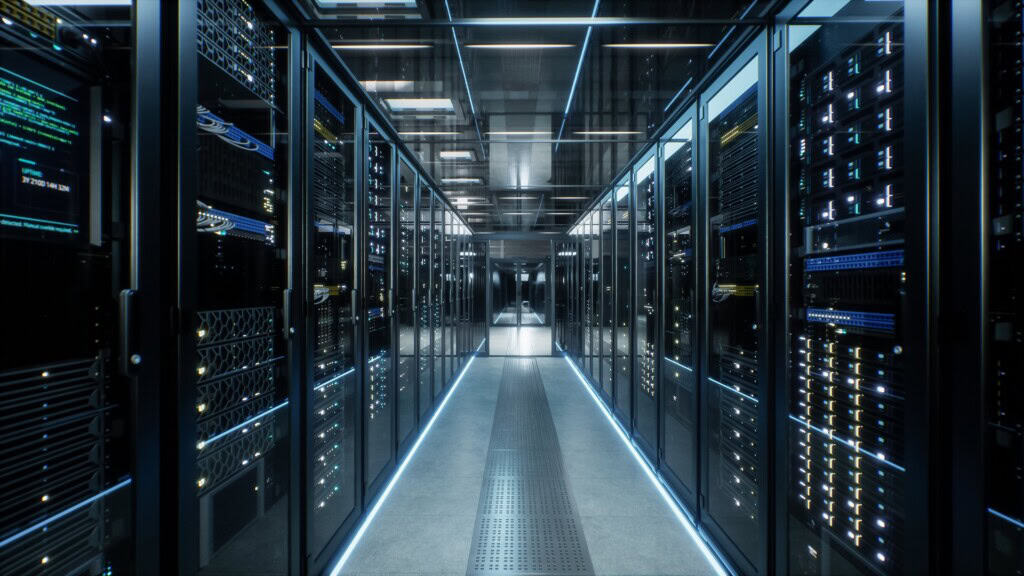 The high consumption of energy and water by data centers has prompted resistance from communities in some regions of the United States.– Image: Gorodenkoff/Shutterstock
Stock decline hits Asian markets
Pressure on technology companies also reached Asian markets this Friday (6). In Japan, the Nikkei index fell 5.96%, while South Korea’s Kospi declined 6.02%. During trading, the South Korean index fell as much as 8.55%, prompting trading to be suspended for 20 minutes.
Among the affected chipmakers, South Korea’s SK Hynix lost 10.4%, while Samsung Electronics declined 6.4%. In Japan, SoftBank fell about 11%. Taiwan’s TSMC closed down 4.7%.
In the United States, losses also hit the largest technology companies. The seven giants known as the Magnificent Seven all ended the trading session lower. Tesla declined 10.8%, Nvidia lost 9.3%, and AMD fell 17.3%. The Philadelphia Semiconductor Index registered a decline of 12.2%.
The performance of these markets also has an impact on Asia’s technology industry. The region is home to some of the world’s leading chipmakers, which supply essential components for the development of artificial intelligence. A possible slowdown in investment in technology infrastructure could directly affect these companies.

Valdir Antonelli is a journalist specializing in digital marketing and consumer topics.

