Software developer Simon Willison has published an account of developing a system that uses AI to pinpoint the location of a sound, in order to track down the mysterious electronic "beep" heard from somewhere in the room. The system makes use of microphones on devices such as smartphones and tablets, and reportedly succeeded in narrowing down the source of the sound to within about 40 cm.
Locating the source of a mysterious beep with Claude
https://simonwillison.net/2026/Nov/9/mysterious-beeps/
At Willison's home, there is a room filled with numerous cardboard boxes that were left unopened when he moved. In late October 2026, an electronic beep began sounding intermittently somewhere in the room, but because the intervals between beeps were long, it was difficult to locate the source by ear.
Willison therefore used Anthropic's AI coding tool, Claude Code, to develop Beep Locator, which records sounds using multiple devices and estimates where they originated.
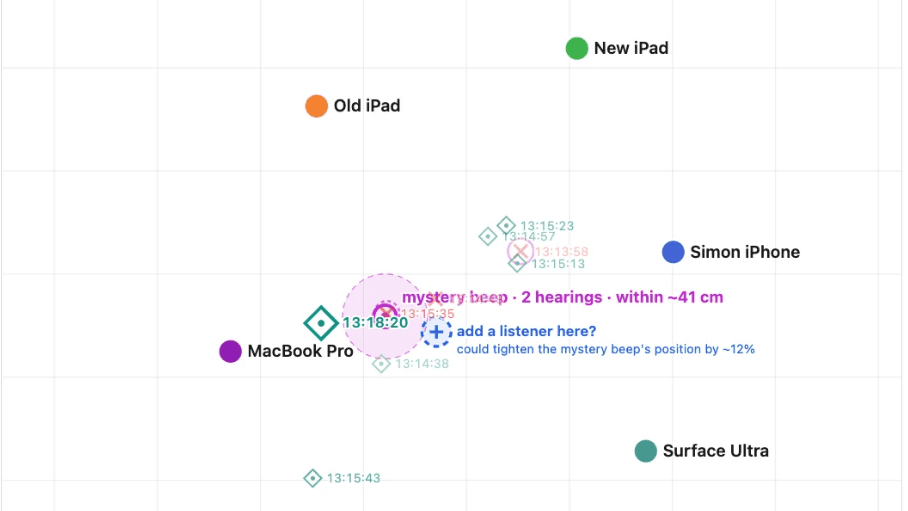
Beep Locator is a system that uses the microphones of devices placed in various locations around the room to infer the source of the sound based on differences in the timing of when the sound reaches each device. Willison used five devices in total: two iPads, an iPhone, a MacBook Pro, and a Surface Ultra. The setup allows the microphones to be used for sound detection by accessing a dedicated web page on each device.
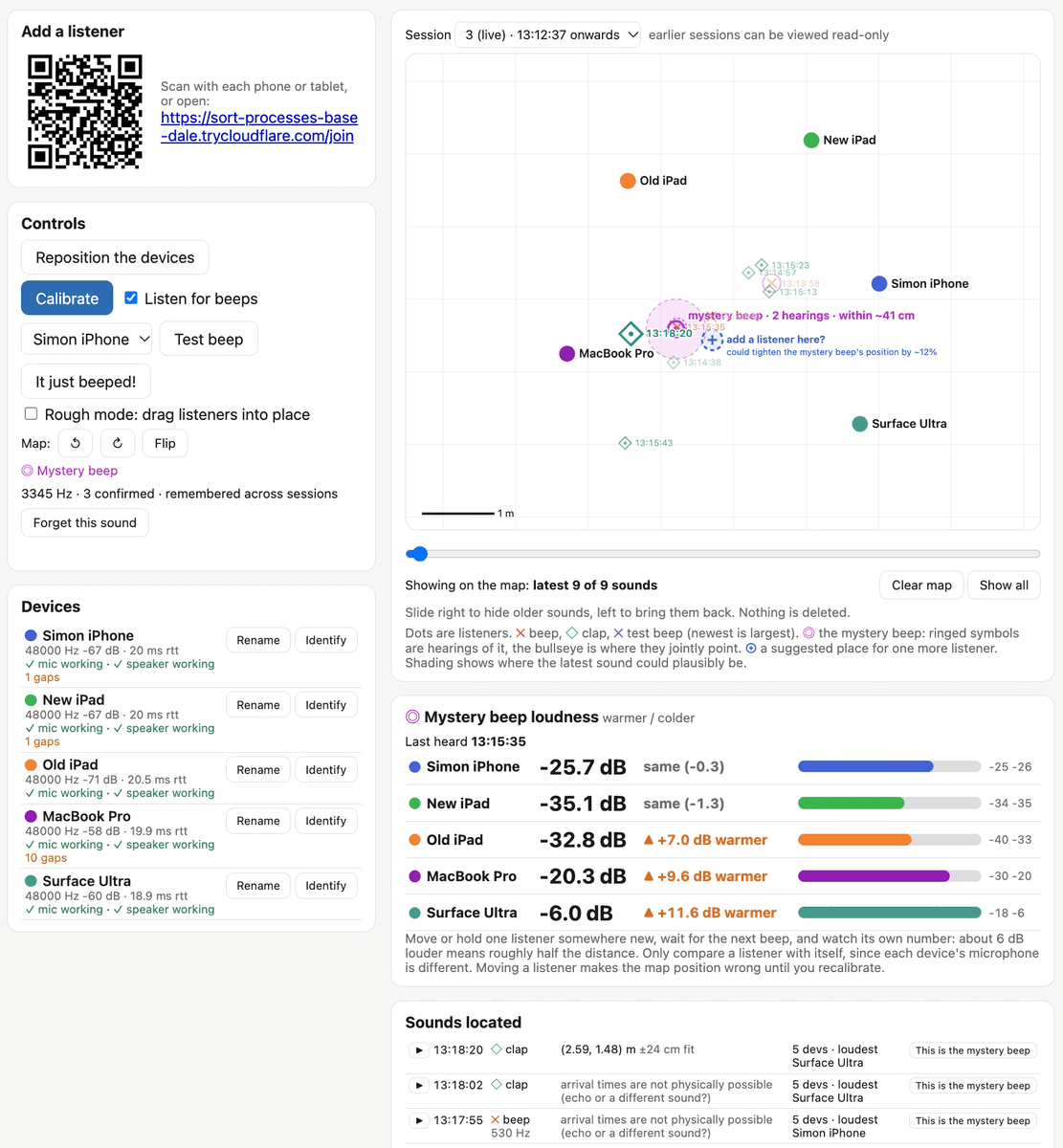
To compare the times at which the sound arrives, the position of each device must also be known. Willison initially tried to determine the devices' relative positions automatically using sound, but because the accuracy was insufficient, he added a feature that allows the user to move an icon on a map to specify an approximate position.
He also implemented a feature that plays back recorded audio to specify the target electronic beep. It uses a technique called fast Fourier transform to examine the frequencies contained in the sound and detect the electronic beep amid surrounding noise. When the electronic beep is detected, one device plays a short sound, synchronizing the recordings on all the devices so that the times at which the sound arrives can be compared.
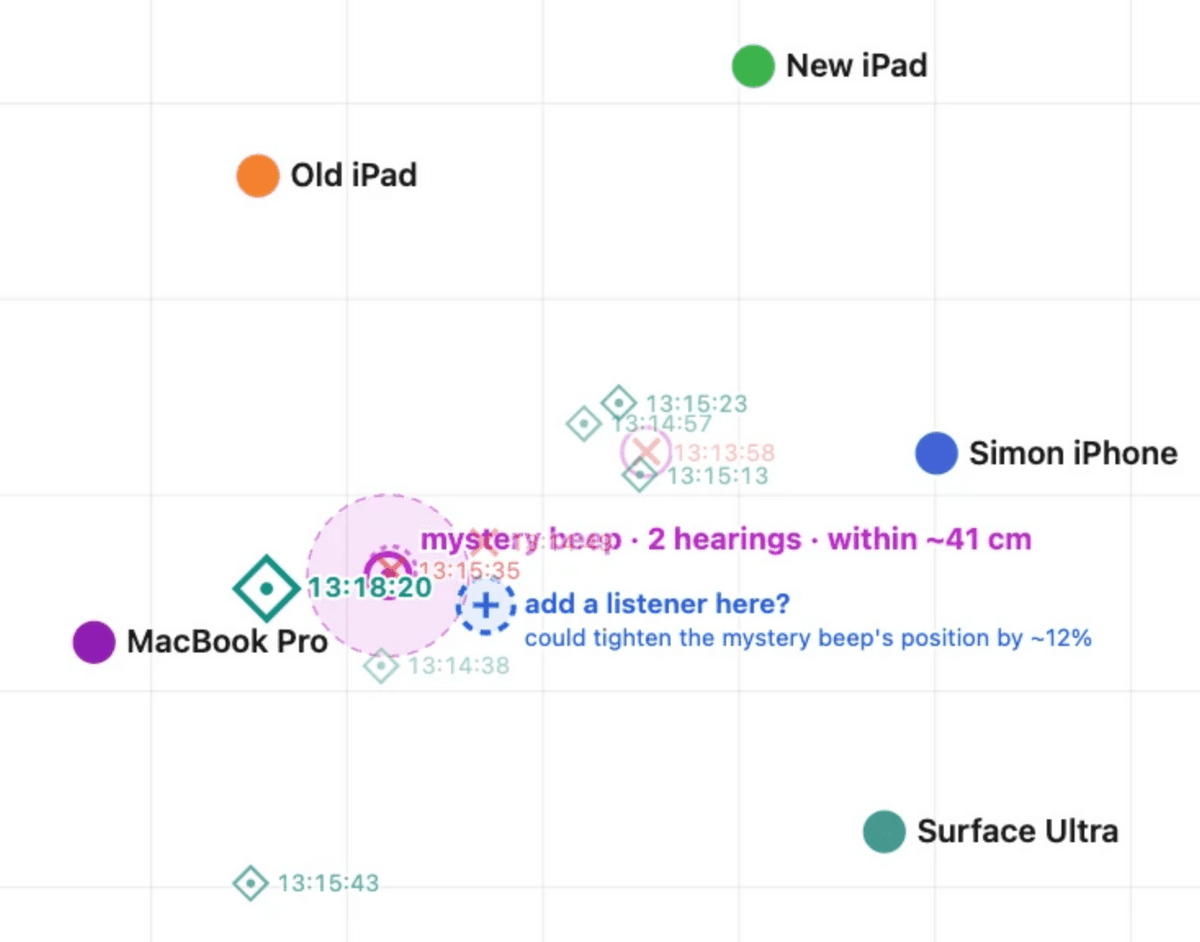
Willison used Claude Code during development, adding and modifying features each time he gave instructions in natural language. He also implemented features such as one that suggests where to place additional devices in order to narrow down the sound's source further.
Eventually, Beep Locator succeeded in narrowing down the source of the mysterious electronic beep to within about 40 cm. When Willison examined the cardboard boxes in the suspected location, he found an old carbon monoxide detector that was emitting a warning tone indicating that the battery needed replacing.
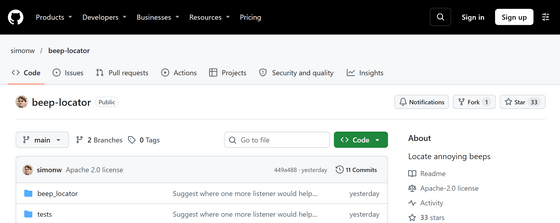
Willison said that the interesting aspect of this project was that it demonstrated giving Claude Code "ears." Meanwhile, the source code for Beep Locator has been made publicly available on GitHub.
GitHub - simonw/beep-locator: Locate annoying beeps · GitHub
https://github.com/simonw/beep-locator