

China announced new guidelines to accelerate the development of advanced technologies, including artificial intelligence (AI). Among the measures are the monitoring of technological risks and holding accountable those who cause major losses due to reckless investments.
The strategy, presented by the Central Committee of the Communist Party of China and the State Council, also includes drones, aerial taxis, and small aircraft. The proposal aims to stimulate new economic activities and innovation without neglecting safety.
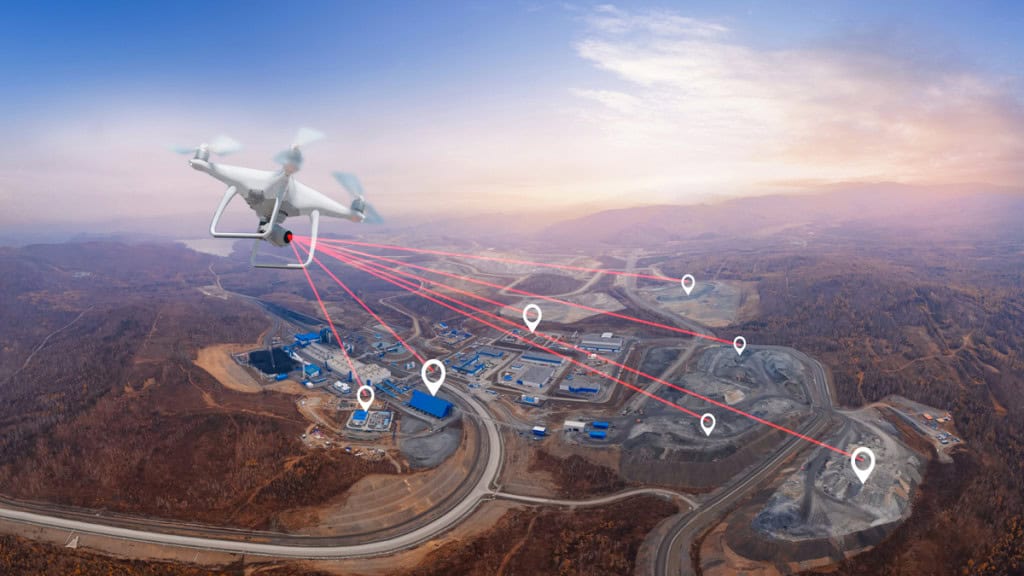 Civil drones, aerial taxis, and small aircraft are part of the so-called low-altitude economy, covered by the new Chinese guidelines. – Image: Parilov/Shutterstock
China wants to expand control over AI risks
The guidelines provide for the creation of systems to track technological advances, issue warnings about potential risks, and respond to emergencies related to artificial intelligence. According to the state agency Xinhua, the goal is to ensure that the technology is safe, reliable, and controllable.
Read more:
- Huawei and Qualcomm close a patent agreement involving 5G and AI Chinese state funds financed the purchase of restricted Nvidia AI chips
- China creates rules to prevent advanced AI from escaping control
The government also intends to hold strictly accountable those involved in major losses caused by investments deemed reckless in cutting-edge technologies. The initiative signals a concern about the use of resources allocated to emerging sectors, as well as the pursuit of scientific and economic advances.
The plan includes 19 measures organized into five areas of action, focusing on scientific innovation, industrial development, institutional changes, and vocational training. The orientation is to bring research closer to practical applications and create conditions for new technologies to drive the economy.
 Executives and managers who cause major losses due to irresponsible investments in technology will be punished. – Image: Summit Art Creations/Shutterstock
Drones and aerial taxis enter the strategy
Another sector covered is the so-called low-altitude economy, which includes businesses based on the use of aircraft operating close to the ground. Among the activities are civil drone services, aerial taxis, small aircraft, and related operations.
China aims to promote the orderly growth of this market, taking into account the safety of operations. However, the guidelines do not specify deadlines, expansion targets, or investment values for the sector.
The five fronts defined by the government cover different stages of technological development:
-
Research and innovation: advancement of science and technology.
- Integration with industry: bridging between scientific discoveries and production.
- New development models: seeking ways to boost the economy.
- Institutional reforms: improvement of structures that support innovation.
- Professional training: qualification of talents to meet new demands.
The strategy also advocates for a balance between government and market actions, technological autonomy, and economic openness. The measures should take into account the conditions of each region, with attention to the relationship between development and security.
Although it establishes these priorities, the initiative still does not present a detailed timeline for implementing the measures.

Valdir Antonelli is a journalist with specialization in digital marketing and consumer behavior.


