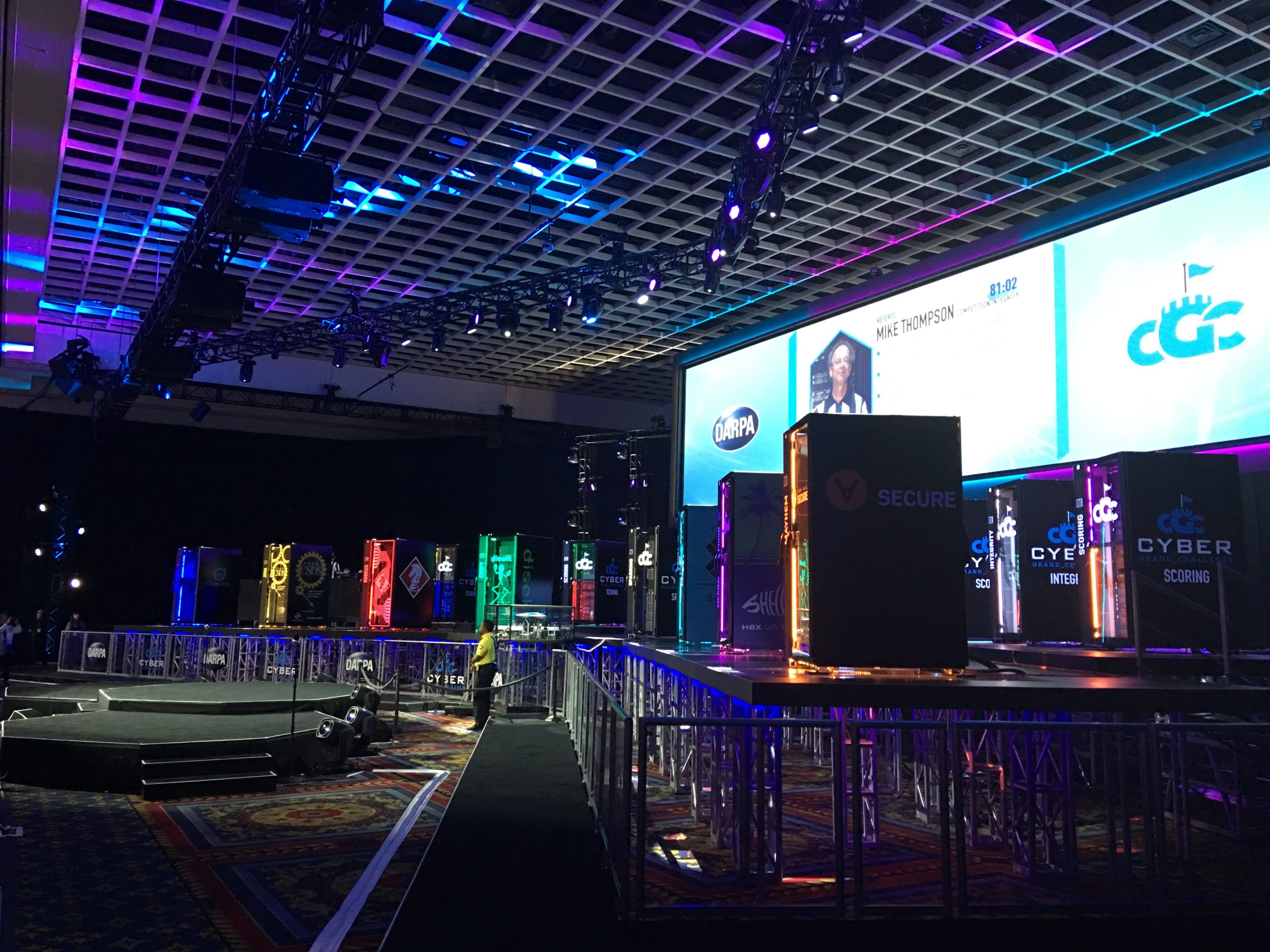
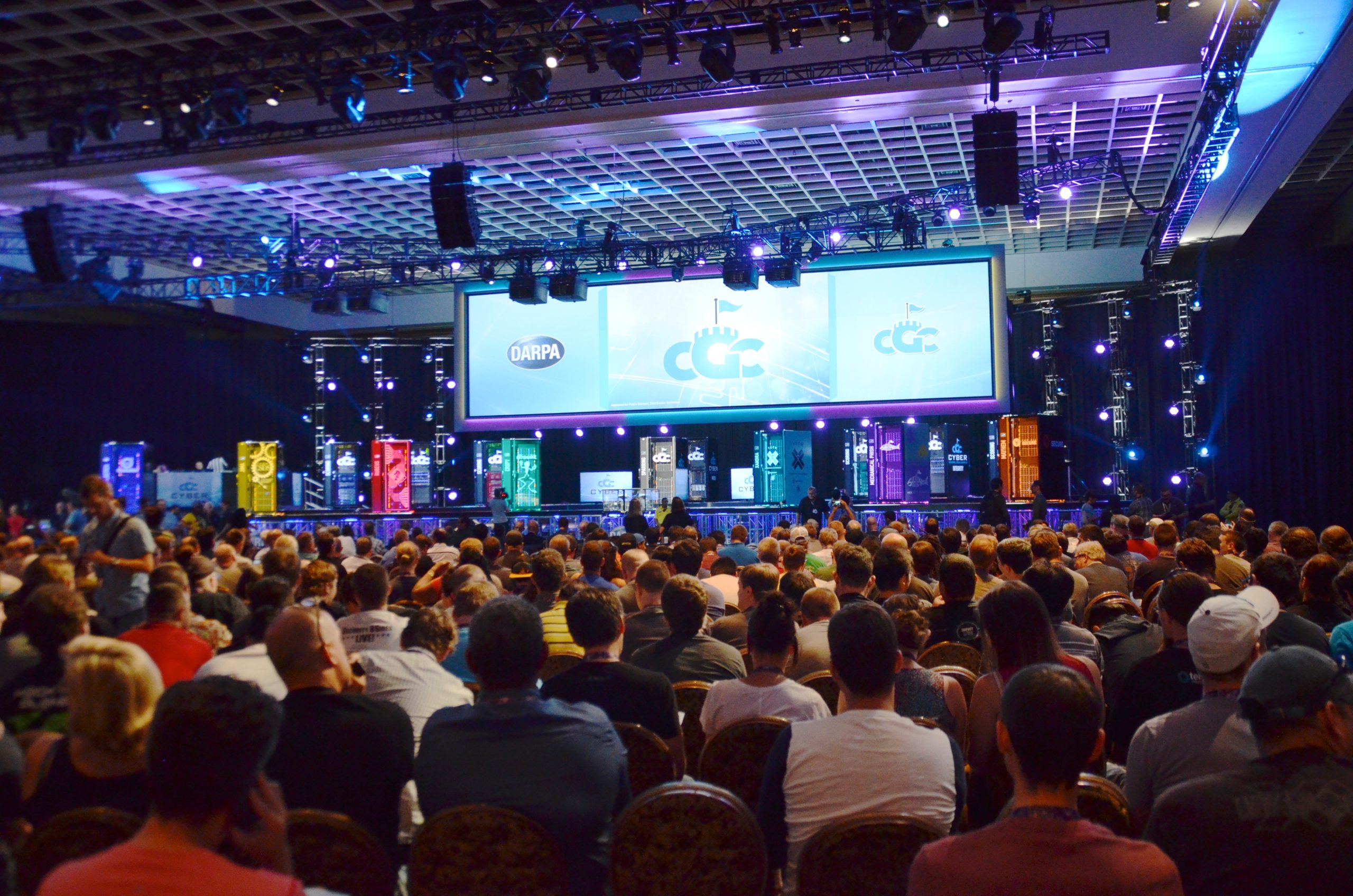
LAS VEGAS—On a raised floor in a ballroom at the Paris Hotel, seven competitors stood silently. These combatants had fought since 9:00am, and nearly $4 million in prize money loomed over all the proceedings. Now some 10 hours later, their final rounds were being accompanied by all the play-by-play and color commentary you’d expect from an episode of American Ninja Warrior. Yet, no one in the competition showed signs of nerves.
To observers, this all likely came across as odd—especially because the competitors weren’t hackers, they were identical racks of high-performance computing and network gear. The finale of the Defense Advanced Research Projects Agency’s Cyber Grand Challenge, a DEFCON game of “Capture the Flag,” is all about the “Cyber Reasoning Systems"(CRSs). And these collections of artificial intelligence software armed with code and network analysis tools were ready to do battle.
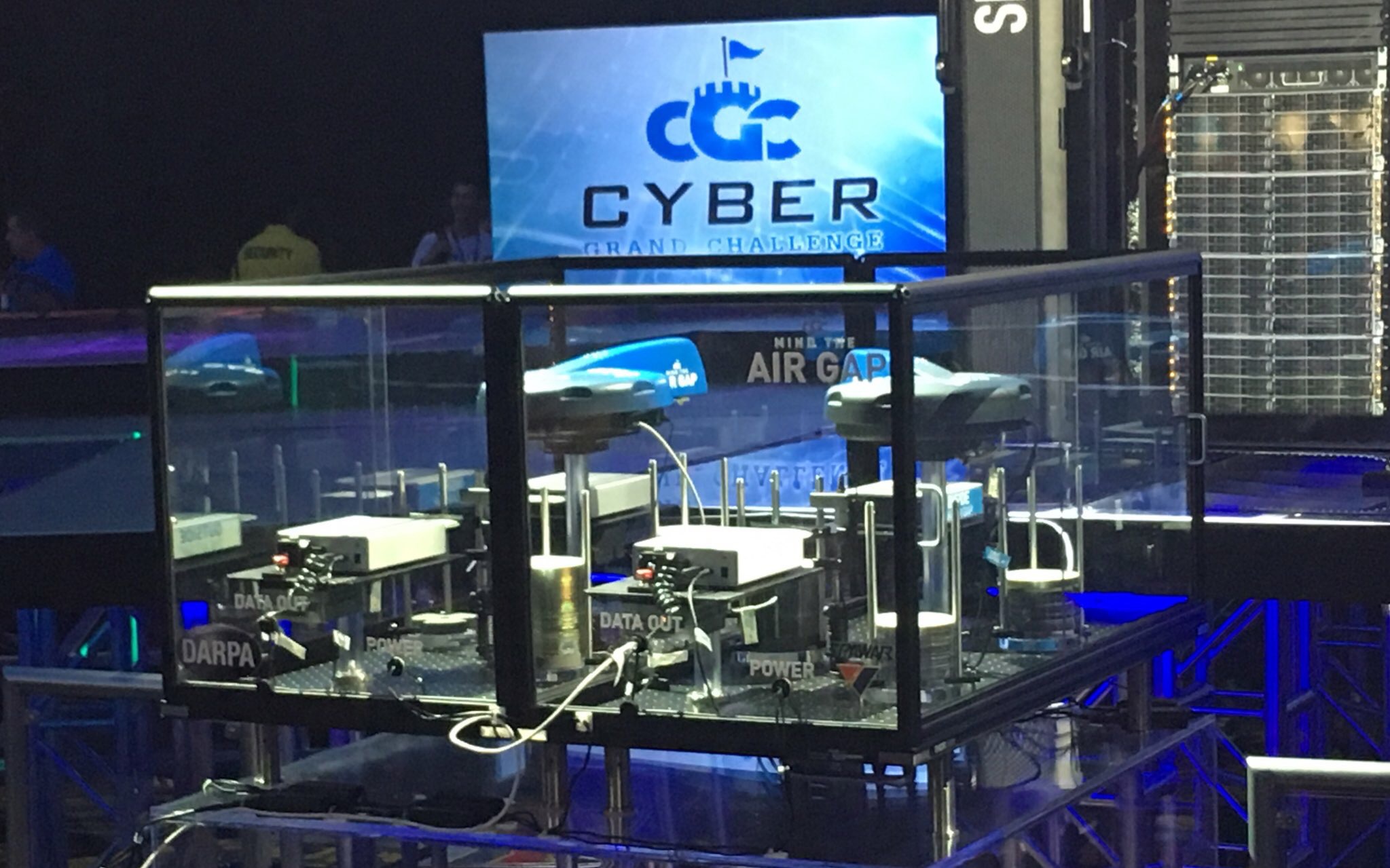
Inside the temporary data center arena, referees unleashed a succession of “challenge” software packages. The CRSs would vie to find vulnerabilities in the code, use those vulnerabilities to score points against competitors, and deploy patches to fix the vulnerabilities. Throughout the whole thing, each system had to also keep the services defined by the challenge packages up and running as much as possible. And aside from the team of judges running the game from a command center nestled amongst all the compute hardware, the whole competition was untouched by human hands.
Greetings, Professor Falken


The Cyber Grand Challenge (CGC) was based on the formula behind the successful Grand Challenges that DARPA has funded in areas such as driverless vehicles and robotics. The intent is to accelerate development of artificial intelligence as a tool to fundamentally change how organizations do information security. Yes, in the wrong hands such systems could be applied to industrial-scale discovery and weaponization of zero-days, giving intelligence and military cyber-operators a way to quickly exploit known systems to gain access or bring them down. But alternatively, systems that can scan for vulnerabilities in software and fix them automatically could, in the eyes of DARPA Director Arati Prabhakar, create a future free from the threat of zero-day software exploits. In such a dream world, “we can get on with the business of enjoying the fruits of this phenomenal information revolution we’re living through today,” she said.

