 © Shift/MicroAGI
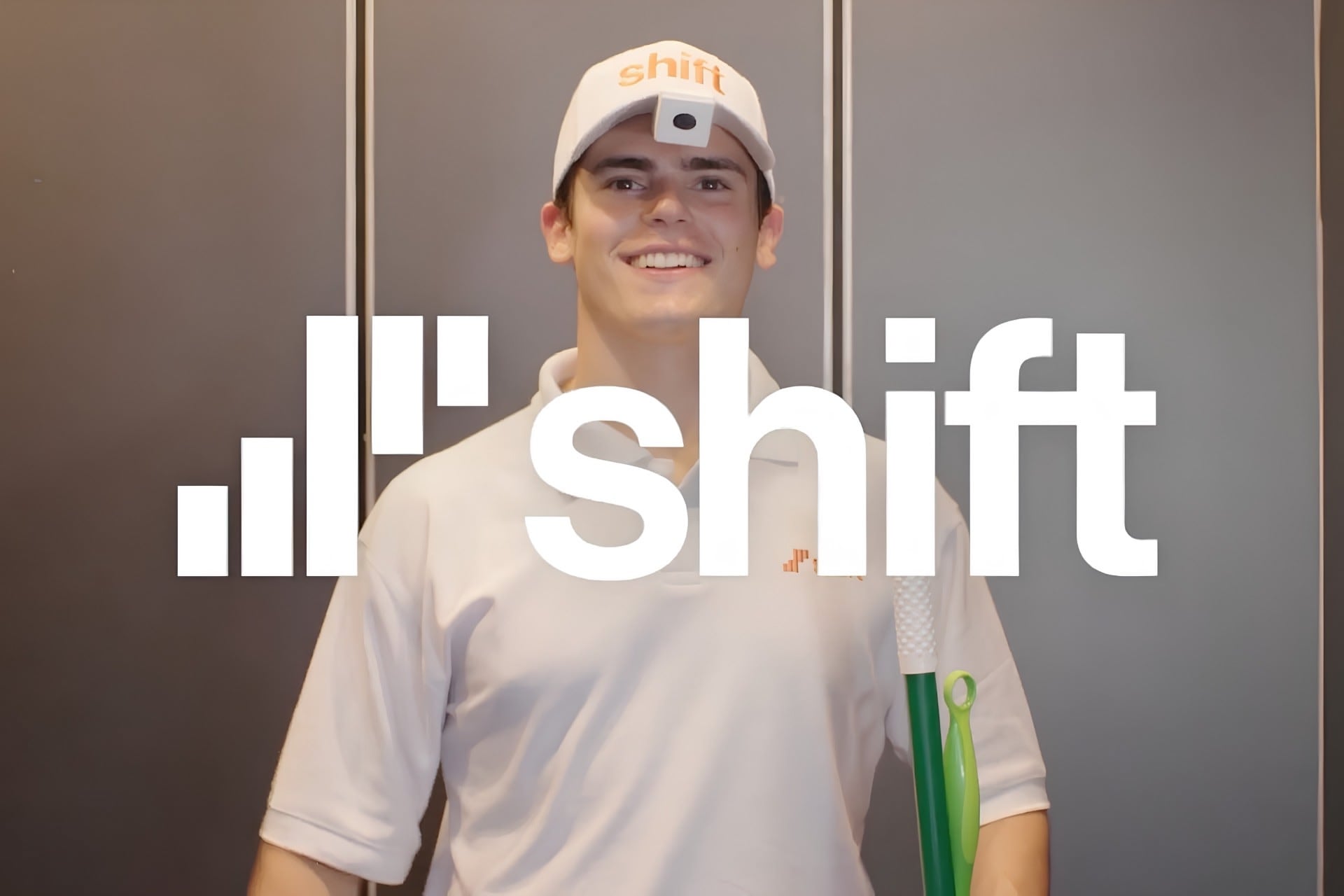
Shift sends agents to clean your home, for free. The catch: every move is filmed to train the robots that will do the same work tomorrow. Without the agents.
Launched a few days ago by German start-up Microagi, the Shift app offers a free two-hour cleaning service at home. The offer has generated “thousands upon thousands of bookings” in just a few days. In return for the service, an “operator” equipped with a camera hidden in a headband films the entire service from a first-person perspective.Once the faces and personal information in the videos have been blurred by machine learning models, the videos are sent to cloud servers and then resold to AI laboratories. The goal: to build the datasets that will enable future home robots to learn to put away, clean, and manipulate objects in real-world environments.
shift by microagi https://t.co/gZSCW7yJtO
— microagi (@microagi) May 28, 2026
The Uberization of housekeeping takes on an unprecedented form
The system, which Shift nicknames the “magic hat”, records everything that comes into the frame during the two hours of cleaning: furniture, personal belongings, room layouts, but above all the precise gestures involved in cleaning. These so-called “egocentric” data (filmed from a first-person perspective) are considered the main bottleneck in home robotics. Robots already know how to move around a space. What they lack is millions of demonstrations of manual tasks performed by humans in varied environments.
Read also: A robot works an 8-hour shift on a factory floor at Siemens: this is the real breakthrough in robotics
The business model has two revenue streams. On the customer side, cleaning is free. On the operator side, Shift pays $20 per hour plus bonuses to the person doing the cleaning and wearing the camera. Anyone can sign up.Microagi, the parent company, claims to have more than 10,000 operators in 15 countries and says it paid them more than $5 million in the first quarter of 2026. These figures have not been independently audited. Expansion is planned in San Francisco, London, Zurich, and Munich, with expansion into other services: plumbing, cooking, and repairs.
Why does the European expansion pose a major problem?
Munich means GDPR jurisdiction. The problem: no regulatory framework specifically covers video recording inside private homes for artificial intelligence training purposes. The CNIL itself acknowledged this in its guidance on augmented cameras, published in 2024: the document explicitly excludes “devices implemented in private spaces”. In December 2024, the EDPB (the European data protection body) published an opinion on personal data in AI models, but it concerns anonymization criteria, not the recording itself. In other words, the home being filmed falls into a regulatory blind spot.
Read also: Ray-Ban Meta: everything your eyes see may be seen by the multinational or its partners, including your sex life
The most embarrassing precedent dates back to2022. Images captured by the cameras of iRobot’s Roomba vacuum cleaners, including photos of users in private moments, had been sent to human annotators to label training data.Shift's privacy policy does not specify whether owners can request the removal of their videos from the datasets once those datasets have been compiled.
The deal, summarized in one sentence: you get a clean apartment, Shift gets the data to charge you for the next cleaning (and, by the way, automate the job of the person who just cleaned it).
👉🏻 Follow tech news in real time: add 01net to your Google sources, and subscribe to our WhatsApp channel.







- Google Play Store
- 4K Video Downloader Plus
- VLC Media Player
- Adobe Reader
- uTorrent
- WinRAR
- Xender
- Google Chrome
- CCleaner
- Mozilla Firefox
- Avast Free
- ChatGPT
- Microsoft 365
- Opera One
- Avast One










Download
- Google Play Store
- 4K Video Downloader Plus
- VLC Media Player
- Adobe Reader
- uTorrent
- WinRAR
- Xender
- Google Chrome
- CCleaner
- Mozilla Firefox
- Avast Free
- ChatGPT
- Microsoft 365
- Opera One
- Avast One