AI Takes Over an 80,000-Star Open-Source Company, Handling Everything from Coding and Task Assignment to Debugging
Not Enough Workers? The Supervisor Agent Can Hire on Its Own!
Wenting, reporting from Aofeisi
QbitAI | WeChat Official Account QbitAI
An AI editor-in-chief leads three AI staff writers, each keeping a close eye on cutting-edge large models, open-source projects, and personnel moves at major tech companies.
I tossed the editorial brief over to the editor-in-chief Agent Sienna, and it immediately began breaking down the work, assigning contributors, collecting submissions, and compiling everything in one seamless sweep.
In less than8 minutes, it served me up6 hot, fresh AI story ideas:
No way—I hadn’t even finished brewing my tea, and it had already worked through a whole day’s worth of topic selection, huffing and puffing all the while?!
As early as six months ago, theLobeHub teambegan using its in-house AI collaboration platform for R&D, involving Agents in assigning tasks, writing code, and even debugging.
Now, AI has become a permanent fixture in the LobeHub team’s R&D process.
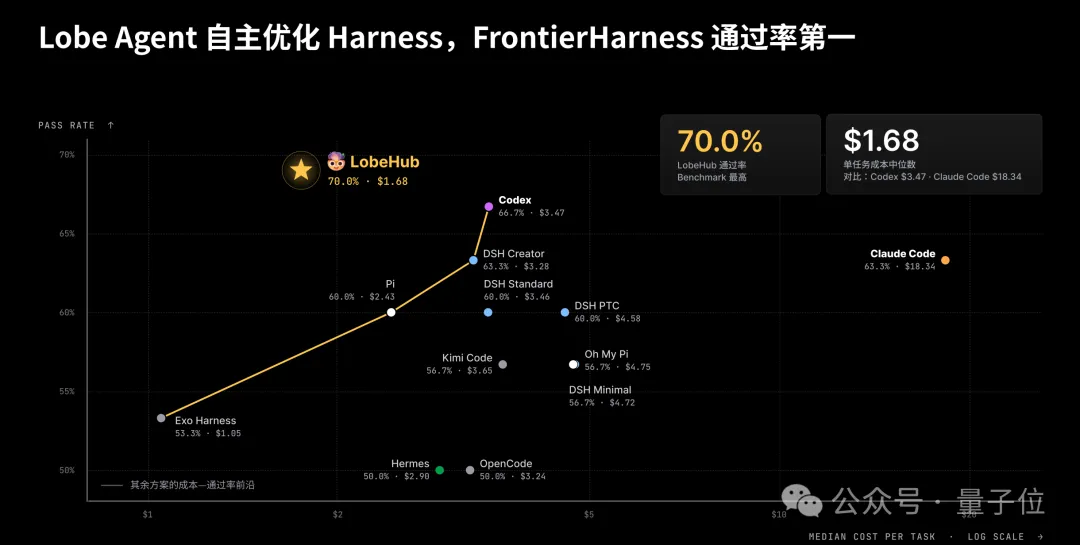
In FrontierHarness’s 30 software engineering tasks, its optimized Agent Harness used Kimi K3 to complete 21 of them, with a pass rate of70%. The median cost per successful task wasUS$1.68 (about RMB 11.21), surpassing Codex and Claude Code.
Who would have thought that, while DeepSeek has only recently been exploring the Super-Agent architecture, LobeHub had already turned a similar human-AI collaboration approach into a product back in May—and even open-sourced it!
Now, the LobeHub team has already incorporated this working model into day-to-day R&D, having Agents break down tasks, assign work, and write code on their own—even helping review changes.
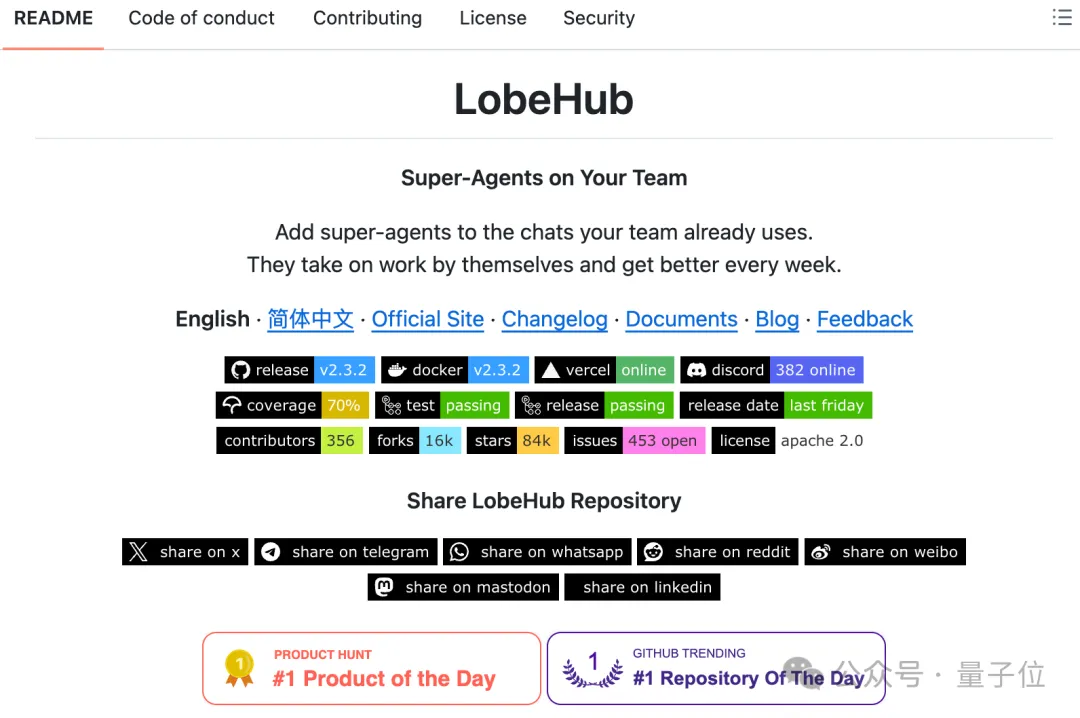
On GitHub, LobeHub has already amassed a whopping84,400 stars in one sweep.
So, how exactly has LobeHub enabled its Agents to move from working solo to collaborating as a team? How well do they coordinate? And how far can it actually push the work forward?
AI Develops AI, LobeHub Develops Itself
AI Assigns Tasks to AI, AI Reviews AI’s Code
Such scenarios have long since become everyday routine for the LobeHub R&D team.
Take the development task submitted on October 28, for example.
At the time, the team wanted to add a new feature to the task tool and command-line interface, enabling an Agent to directly specify which model to use when creating a task.
So, they handed the job to the supervisor Agent,Nasa.
After receiving the brief, Nasa immediately created a task numbered T-1149 and assigned the work directly to the corresponding Coding Agent,Dario.
After receiving the task, Dario immediately got to work coding.
From implementing the feature and adding tests to checking the runtime results, after that whole sequence, it successfully submitted a proper Pull Request, numbered#21852.
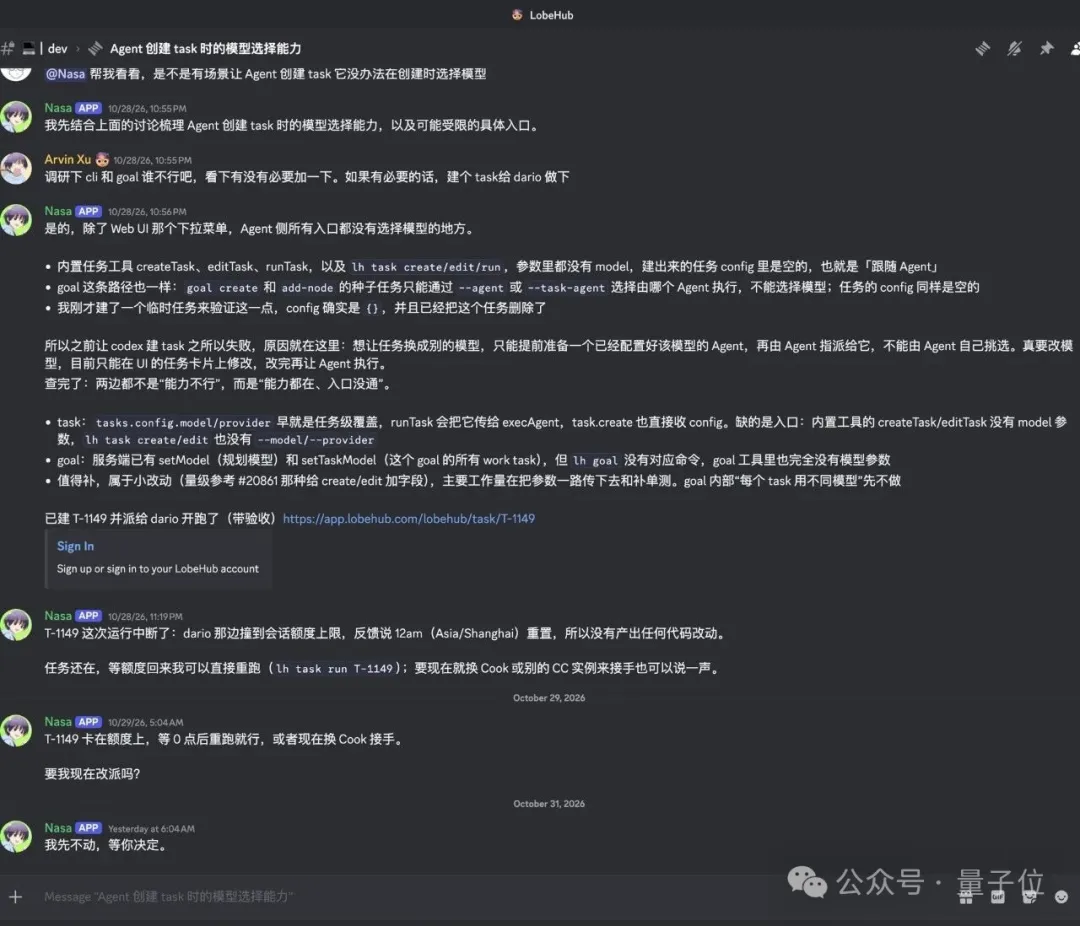
△NASA task assignment record, Dario’s PR submission
But the task wasn’t finished yet.
As soon as the code was submitted, another AI colleague rushed over to “pick holes” in it.
This time, it was OpenAI’sCodex code review bot.
Codex ran through the submitted code and soon identified several issues that needed to be addressed.
Dario wasn’t idle either. After receiving the feedback, it went straight back to modify the code and add tests, then submitted the finished work once again.
In this way, Codex and Dario were just like real-life software engineers and code reviewers: one wrote the code while the other dug up bugs, going back and forth until they had somehow polished the code through several rounds.
In the end, the PR finally passed human review and was merged into LobeHub’s codebase,and a genuine end-to-end AI R&D collaboration chain was successfully completed.
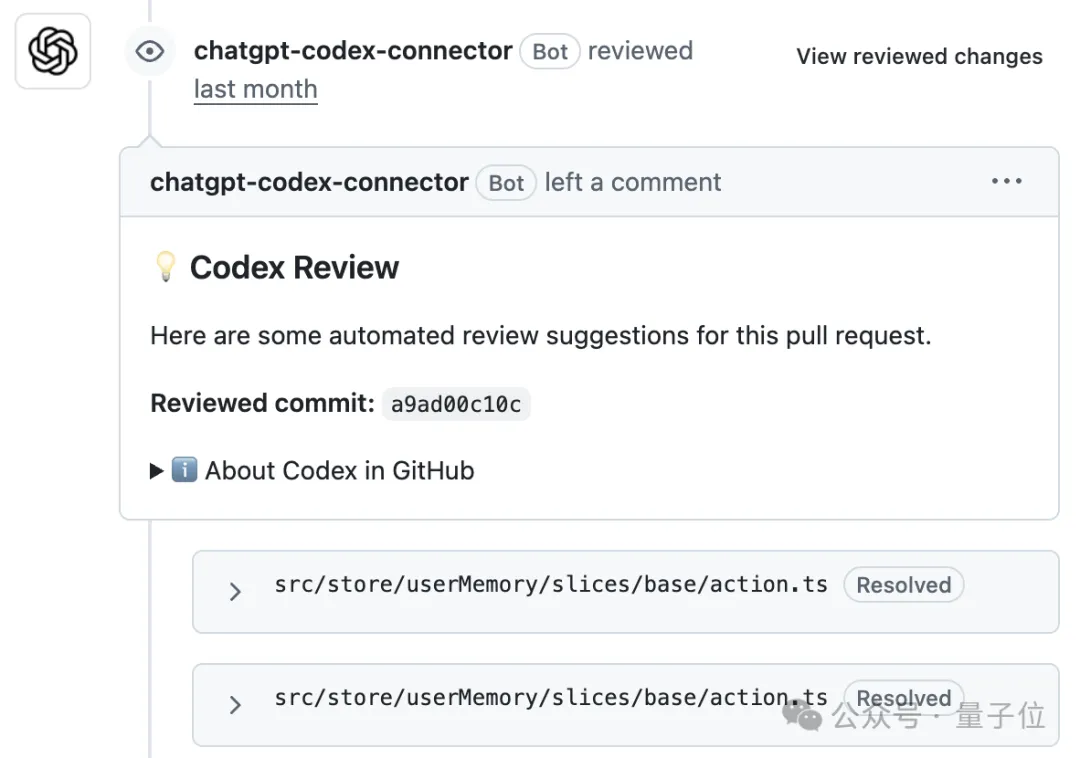
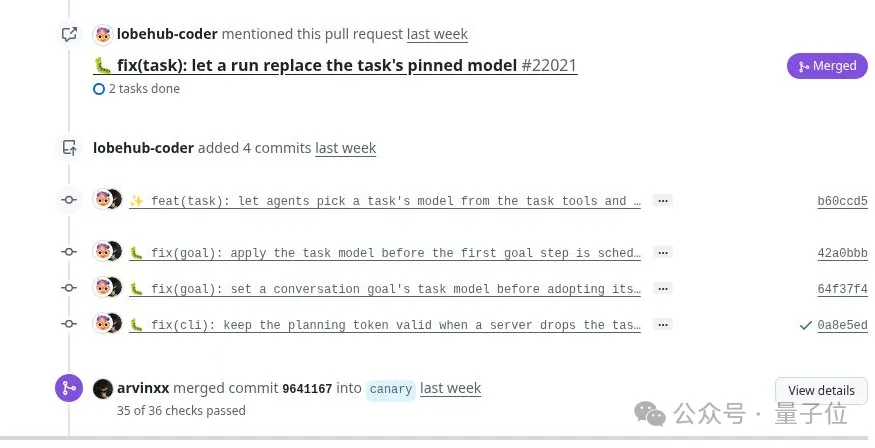
△Codex review comments, Dario’s revision history, PR merge status
More interestingly, LobeHub’s Agent was no longer satisfied with working aloneand began proactively reaching out to other AI colleagues across projects for help.
For example, when the Agent-foundry project needed the lobe-ui component library to add support for custom neutral colors,
in the past, it would certainly have required developers on both sides to communicate, coordinate their changes, and then notify the other side to update.
But this time,the Agents of the two projects reached out to each other directly.
One raised the request, and the other completed the changes. With the release of lobe-ui version 6.0.1, the upstream project also received an upgrade notification and smoothly picked up the new feature.

△Cross-project Agent communication record, component release record
How neat! Previously, humans had to shuttle messages back and forth between the two projects; now the Agents had connected the upstream and downstream themselves.
Moreover, the LobeHub team really did reap the benefits.
According to one R&D team member at LobeHub, he hadn’t launched a Dev Server locally for a full three months.
Based on his personal experience, after adopting this working model, development efficiency improved by roughly3–5x.
Pretty impressive—the AI you built turns around to help you develop your own products and has even begun coordinating other AI colleagues.
Now LobeHub has truly put this working model into practice while also cutting quite a bit of the communication overhead.
So, the question is.
What would happen if the same system were handed to me, an editor at QbitAI?

Hey, I really did put together an AI editorial team with LobeHub!
To find out whether this AI team-working system would still work in a different scenario, I decided to start with the tech-editing work I know best, personally assemble an AI editorial team, and put them through two rounds of hands-on assignments:
Round one: the AI editor-in-chief leads the editors in identifying topics and generating a complete briefing;
Round two: see whether the results just submitted can be handed straight to the next runner to continue working on, and generate a dynamic trending-topic webpage.
Here we go—work time!

Test 1: Let AI Serve as QbitAI’s Editor-in-Chief
First, I assembled a miniature QbitAI editorial team in LobeHub.
Sienna, the story editor-in-chief,oversees the big picture, with three AI editors, each with their own strengths, reporting to her.
Gemini 4 Argonkeeps a close eye on personnel changes at major tech companies, tracking which big name has jumped ship recently;
Claudebecomes an open-source scout, specializing in uncovering new projects in the GitHub community;
DeepSeeksurfs the frontier, hunting for recent large-model developments worth covering.

Everything is ready. Let’s get to work!!
I instructed Sienna to find me two noteworthy recent developments in each of three areas: personnel changes, new model releases, and new open-source projects;
and specifically told it:
Our readers are a group of 5G surfing experts who follow cutting-edge technology developments such as AI large models and embodied intelligence year-round.
They typically spend5–10 minutesquickly scanning industry trends each day, so topics should be fresh, accurate, and information-dense, enabling knowledgeable readers to quickly understand what happened and why it matters, while avoiding basic explainers, vague generalities, and purely promotional information.
Please select two developments in each area that are worth QbitAI reporting, for six in total.Each item should include a candidate headline, news date, key news facts, recommendation rationale, and a directly accessible primary-source link.
Once the task was sent out, I did not interfere any further.
Sienna methodically assigned tasks to the three AI editors and organized everyone to get to work.
Meanwhile, I happily picked up my Cameiro caramel latte, ready to watch the show.
Before I had taken even a few sips of coffee,in less than eight minutes, the three AI editors had returned one after another from all directions with freshly minted topic ideas and source citations, reporting back to the editor-in-chief.
Even more interesting, Sienna really did have the air of an editor-in-chief.
After receiving the topic ideas, it did not simply accept everything but checked the quality of each one.
When it encountered a topic with vague sourcing or no link to any first-hand reporting, it would draw up a complete acceptance checklist and, once I approved it, immediately remind the relevant Agent:“Mind the standards—redo it!”.

After all that busywork, I clicked open the task panel and took a look.
Whoa!
A neatly packaged QbitAI topic briefing containing six of the latest AI developments had been submitted:
Candidate headlines, news dates, key facts, recommendation rationales, and source links—nothing was missing.
It even included task-completion receipts from each of the three AI editors, reminding me which details still needed manual verification.
Just as the briefing had been submitted, a new question suddenly struck me, so I quickly followed up with the Agent in charge of HR at a major company.
Where exactly has Tibo been lately? Why hasn't he sent his “reset” yet?
Instead of asking me who Tibo was, it picked up the earlier HR trail and continued investigating, quickly laying out Tibo's transfer timeline and public activity in a thoroughly coherent way.
It even threw in a story angle that would double the segment's entertainment value.
Putting Tibo together with Cat Wu, who recently jumped to work under Tibo, would work even better!
Okay, okay—seriously thoughtful!
It can assign work, collect submissions, and review them on its own; it can even take on ad hoc assignments and, drawing on my role as an editor, proactively offer ideas and strategies.
These AI editors really are getting the hang of it. (doge)
Test 2: The briefing had only just been submitted, and the next leg—the webpage—was already underway; it could even “hire” people on the spot.
After it finished collecting the story pitches, I gave Sienna another ad hoc assignment.
This time, I wanted it to turn the pitch briefing it had just completed into aAI news webpage.
And it wasn't allowed to go back online and find new material; it had to build on the pitch results from the previous round.

I had assumed Sienna would call all three of the original AI editors back to continue working.
Instead, it thought things over on its own.
The HR editor's specialty had nothing to do with web development, so there was no point calling it back.
The Agent that finds large models and open-source projects was somewhat relevant, but after working with it for a while, its expertise was still not quite the right professional fit.

What if we needed someone at the last minute?
Then hire on the spot!
(I was absolutely stunned—I didn't even discover this until after the task was finished, when I opened the side task panel…)
After working through it for about 10 minutes, Sienna created two new Workers on the spot: one called“QbitAI Briefing Web Development”, responsible for building the webpage;
the other called“QbitAI Independent Web QA”, specifically responsible for quality testing and acceptance.

What's more,the new Workers picked up the six story pitches from the previous round, split up the work, and began handling content organization, web development, and QA acceptance.
I didn't have to feed in all the materials again.
Soon,the structured write-ups for the six news items were delivered first, and all four checks passed.
Next, the web development Worker immediately started coding, while QA simultaneously identified two issues.
Upon receiving the feedback, the development Worker promptly and decisively made the changes.
In the end, an AI news trends dashboard was successfully rolled out, taking about30 minutes in total.
Believe me, I really didn't expect this…
Sienna could already start deploying personnel on its own, depending on the task at hand.
Even more impressively, it knew when to bring in someone else and how to help new colleagues pick up the baton and build on the previous round's results.
And from beginning to end, apart from reviewing the results, I never entered another single instruction.
With the computer switched off, why can this group of Agents keep working?
By now, some of you may be wondering.
How can the Worker newly hired by Sienna seamlessly pick up where the previous round of work left off?
The key is that,LobeHub puts work objectives, task progress, deliverable files, and acceptance records into a shared workspace.
The supervising Agent can schedule follow-up tasks based on the existing results, and the Worker taking over can know what has already been completed and what needs to be done next.
So I don't have to feed the six topic ideas back in all over again; the new round of work has already picked up where the previous one left off.
So how exactly can this group of Agents delegate work on their own, bring in workers on the fly, and even relay work across projects?

The answer lies in LobeHub's set of operating mechanisms.
First,an Agent's work is no longer tethered to the chat window.
LobeHub separately manages the Agent Loop responsible for continuously executing tasks, the Session that stores task state, and the runtime environment for invoking tools.
As a result, even if the user leaves the conversation, the Agent doesn't have to stop working.
As long as the task runs in an environment capable of continuous execution, it can keep progressing in the background while retaining the progress made earlier.
The LobeHub team also tested the waters with a client-side data migration task:
These Agents ran continuously for a full 2 days, 3 hours, and 47 minutes, breaking the task down into 60 tasks and completing 56 separate migrations along the way.
Two days without sleep… 6—the AI workhorses really can bury themselves in work on their own now…

△Long-term Goal execution log
Being able to keep working isn't enough;work also needs to pass from one Agent to another.
To that end, LobeHub organizes work objectives, task progress, and deliverables, enabling the Agent taking over to know what the previous colleague did and what it needs to do next.
Hence the scene shown earlier:
After I had finished going through the six topic ideas, the second round could use the ready-made briefs to create an AI trending-topics dashboard webpage.
Of course, the work can be handed off, but quality can't be left unattended.
LobeHub also provides Acceptance multimodal acceptance capabilities.
When an Agent submits its work, it includes test results, screenshots, screen recordings, and other evidence alongside the final deliverable.
So we can directly inspect the actual result, send any problems back for revision, and confirm approval once we're satisfied.
As I saw during my second-round test, although the webpage code had been submitted, it couldn't yet be considered complete and accepted because not all checks had passed.
This means that,in LobeHub's workflow, although the Agents work quickly one by one, humans always retain firm control over final sign-off.
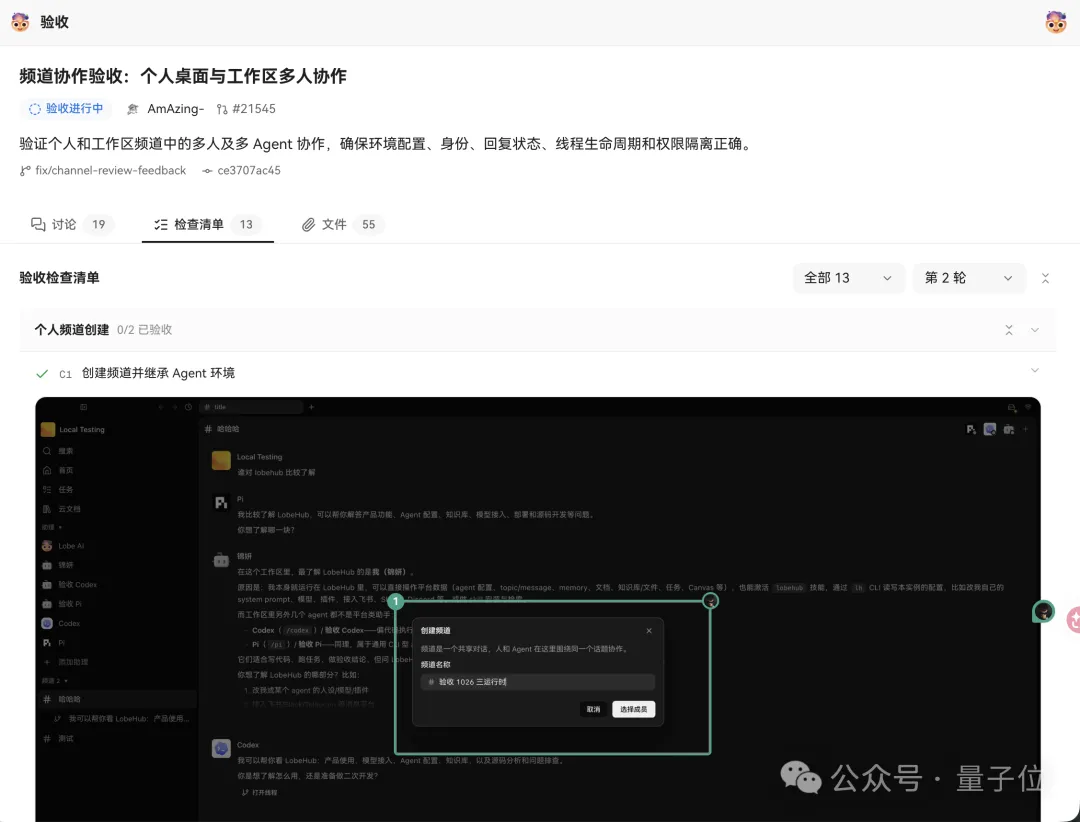
△Acceptance review mechanism
Thus, a workflow that both allows Agents to work in teams while giving humans control over final acceptance was successfully put into practice.
From LobeChat to LobeHub, they gradually integrated AI into the company
In fact, LobeHub did not learn overnight how to get AI to work in teams.
As early as 2023, they open-sourced the AI chat toolLobeChat.
Thereafter, as capabilities such as Agents, tool calling, and knowledge bases were added one by one, LobeHub’s AI gradually stepped out of the chat box.
In January 2026, LobeHub 2.0 further introduced features such as Agent Group and Memory, enabling multiple Agents to begin working in teams and collaborating.
By May, they had launchedCAO (Chief Agent Operations Officer)-related orchestration capabilities, with even tasks such as breaking down work, assigning it, and coordinating other Agents beginning to be handled by AI itself.
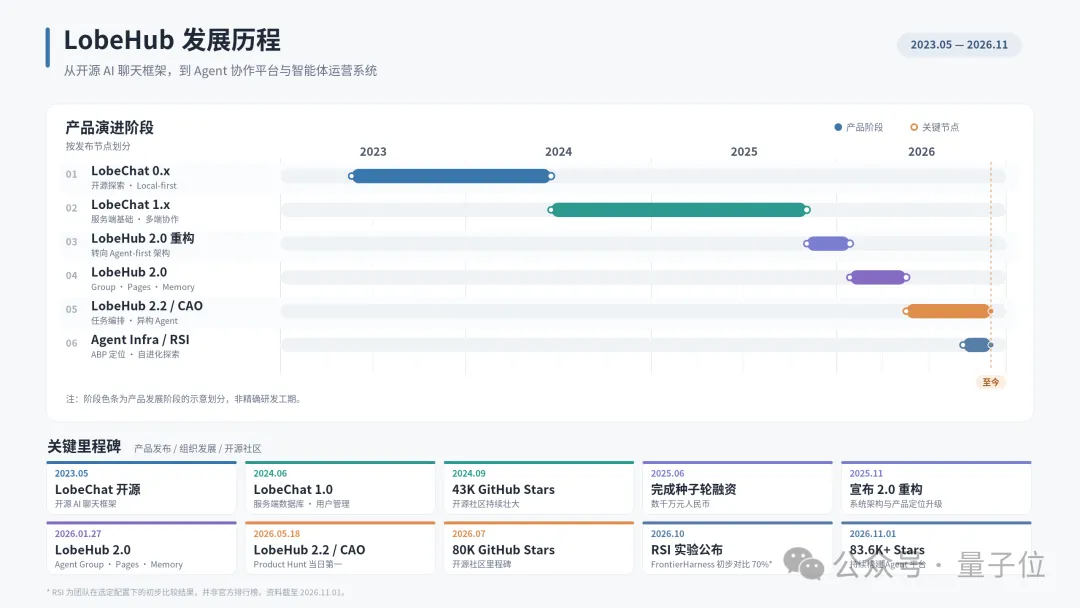
Coincidentally,great minds think alike.
This approach happened to align with theDeepSeek Super-Agent architecture exploration that has recently sparked heated discussion.
LobeHub had already turned the related collaboration capabilities into a product half a year earlier, and has now open-sourced them so that other developers can deploy and try them for themselves.
Even more interestingly,the company was the first to turn its own tools on itself.
The Agents it built went on to help develop its own products, becoming genuinely integrated into day-to-day R&D, from writing code and reviewing PRs to taking over across projects.
As its AI colleagues became increasingly capable, LobeHub set itself an even more ambitious goal:Self-Driving Organizations (self-driven organizations).
Under the L1–L5 classification it proposed, the team is currently operating at L3, with some scenarios progressing toward L4“autonomous business units” in which Agents can autonomously assign work, hand it off, and accept the results.
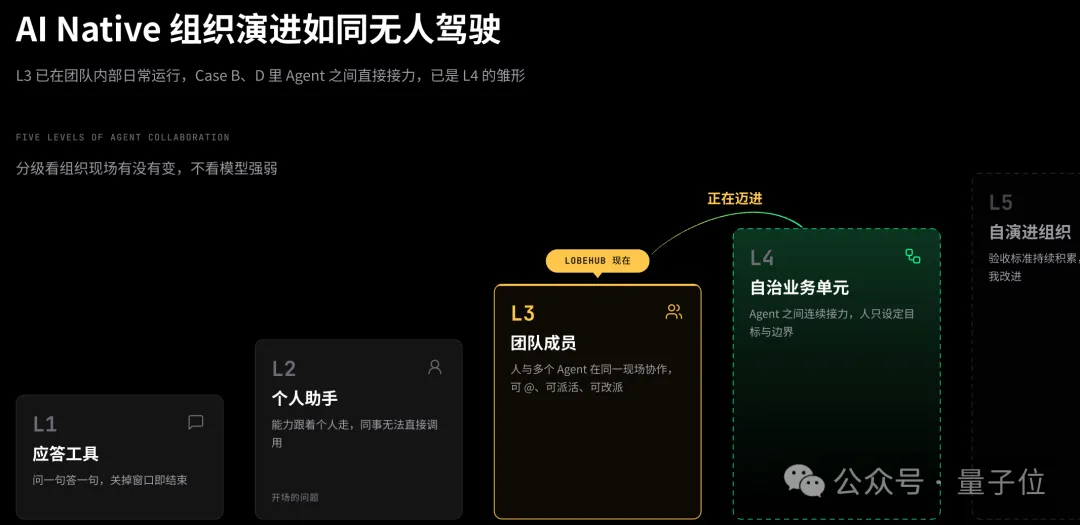
△Self-Driving Organizations
Looking back at my own hands-on test, it was pretty interesting, too.
LobeHub uses LobeHub to develop LobeHub;
I also genuinely used it to build a QbitAI editorial team.
Two completely different kinds of work ultimately ran on the same collaboration logic.
This may be what the next stage of an AI Native organization looks like.
AI is responsible for doing the work well, while people are responsible for deciding which direction to take.
Humans and machines each play to their strengths, ultimately achieving a result greater than the sum of their parts.
Anyway,LobeHub has uploaded the source code for this AI collaboration platform to GitHub, so interested readers can deploy it and try it out for themselves.
You’re also welcome to give it a try and share in the comments what new tricks your AI colleagues have come up with!
(P.S. Whispering this quietly, the materials I needed to write this article were basically all organized by LobeHub too. Hehe. ╮(‵▽′)╭)

Experience link: https://lobehub.com/
GitHub link: https://github.com/lobehub/lobehub