Zhidongxi (WeChat official account: zhidxcom)
Author | Yang Jingli
Editor | Li Shuiqing
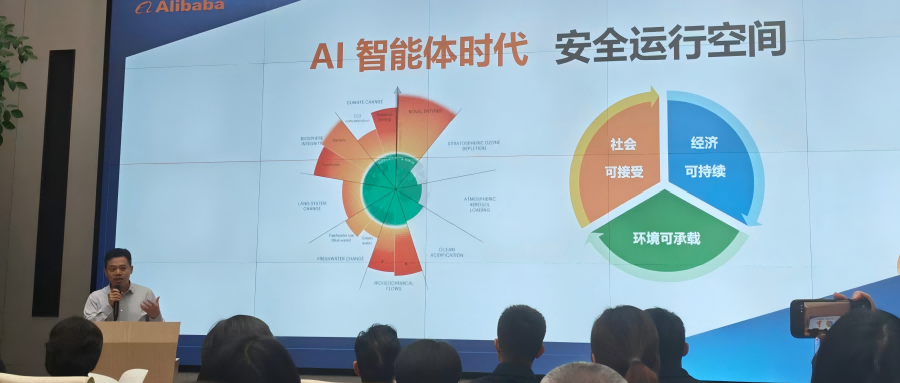
Zhidongxi reported on November 5 that Alibaba released the “Alibaba AI for Good Action Report 2026” today. The report centers on “Full-stack AI, collaborating for good” and proposes that AI development must simultaneously meet three conditions: “socially acceptable, environmentally sustainable, and economically sustainable”.
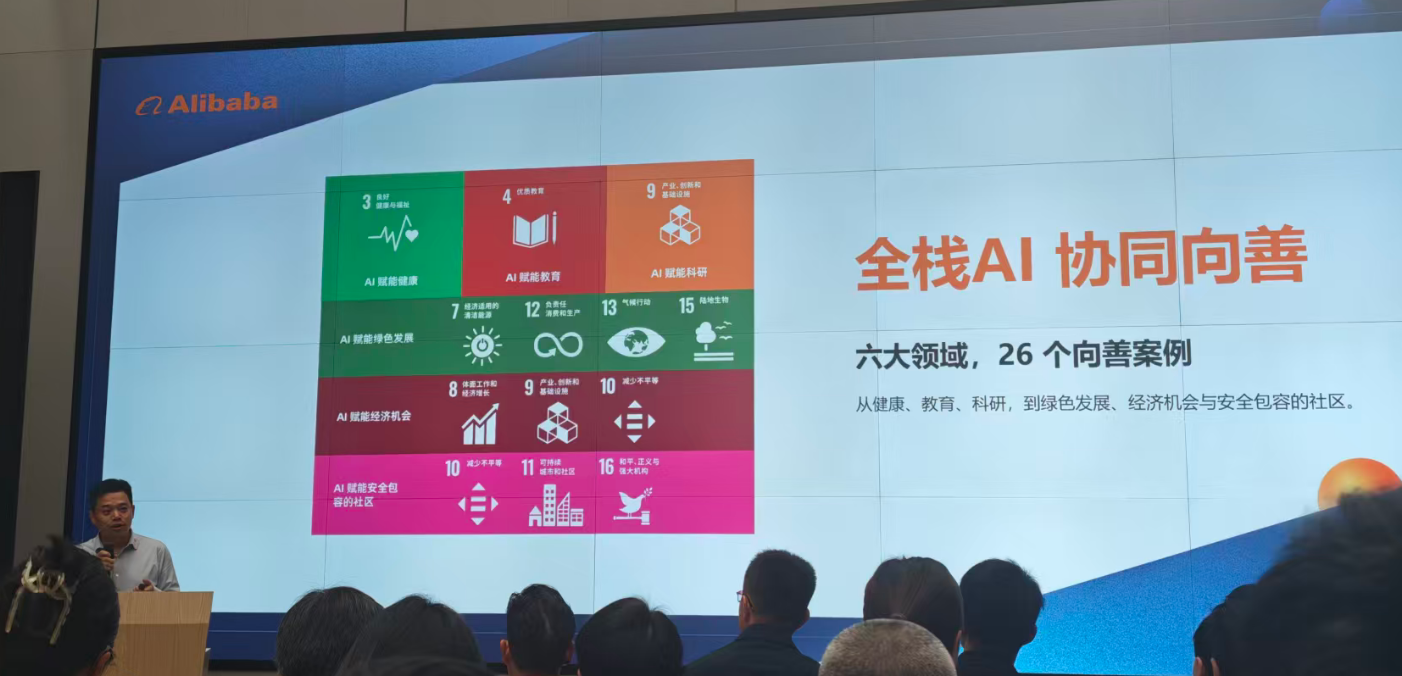
The report’s AI-for-Good initiatives cover health, education, scientific research, green development, economic opportunity, and safe and inclusive communities, including 26 use cases.
At the launch event, Alibaba also shared its work on the sustainable development of AI data centers and introduced medical AI practices such as multi-cancer early screening and evidence-based medicine assistance. Among them, the cancer screening modelhad expanded from a single cancer type to multi-cancer screening, further advancing to general-purpose imaging diagnosis.The “Hydrogen Ion Medical AI Assistant”incorporated medical literature, clinical guidelines, and evidence grading systems into the model’s analysis workflow.
The report emphasized that, alongside the rapid development of AI technology, the question of how AI can truly serve society and ordinary people must also be addressed.
I. AI development must cross three boundaries: social, environmental, and economic
This is the second consecutive year that Alibaba has released an AI-for-Good Action Report. Liu Wei, head of ESG strategy at Alibaba Group, said that as AI moves from laboratories into all walks of life, public attention has also shifted from model capabilities and computing power scale to what technology can bring to ordinary people and which things are worth doing with AI.
Liu Wei believes that, in the era of AI agents, AI development needs to operate within a “safe operating space” and meet three conditions: social acceptability, environmental carrying capacity, and economic sustainability. Social acceptability means that technology must serve human well-being; environmental carrying capacity requires attention to energy, water resources, and carbon emissions; and economic sustainability requires technological investments to be translated into long-term social and industrial value.
Wang Chaoyang, general manager of Global Data Centers at Alibaba Cloud Intelligence Group, said that as demand for AI computing power grows, the industry’s demand for talent is rapidly expanding.
In terms of social acceptability, Alibaba Cloud is advancing the standardization of talent standards, training materials, and assessment mechanisms. Over the past year, more than 70% of the talent brought into Alibaba Cloud teams came from outside traditional industries, including sectors such as manufacturing and energy.
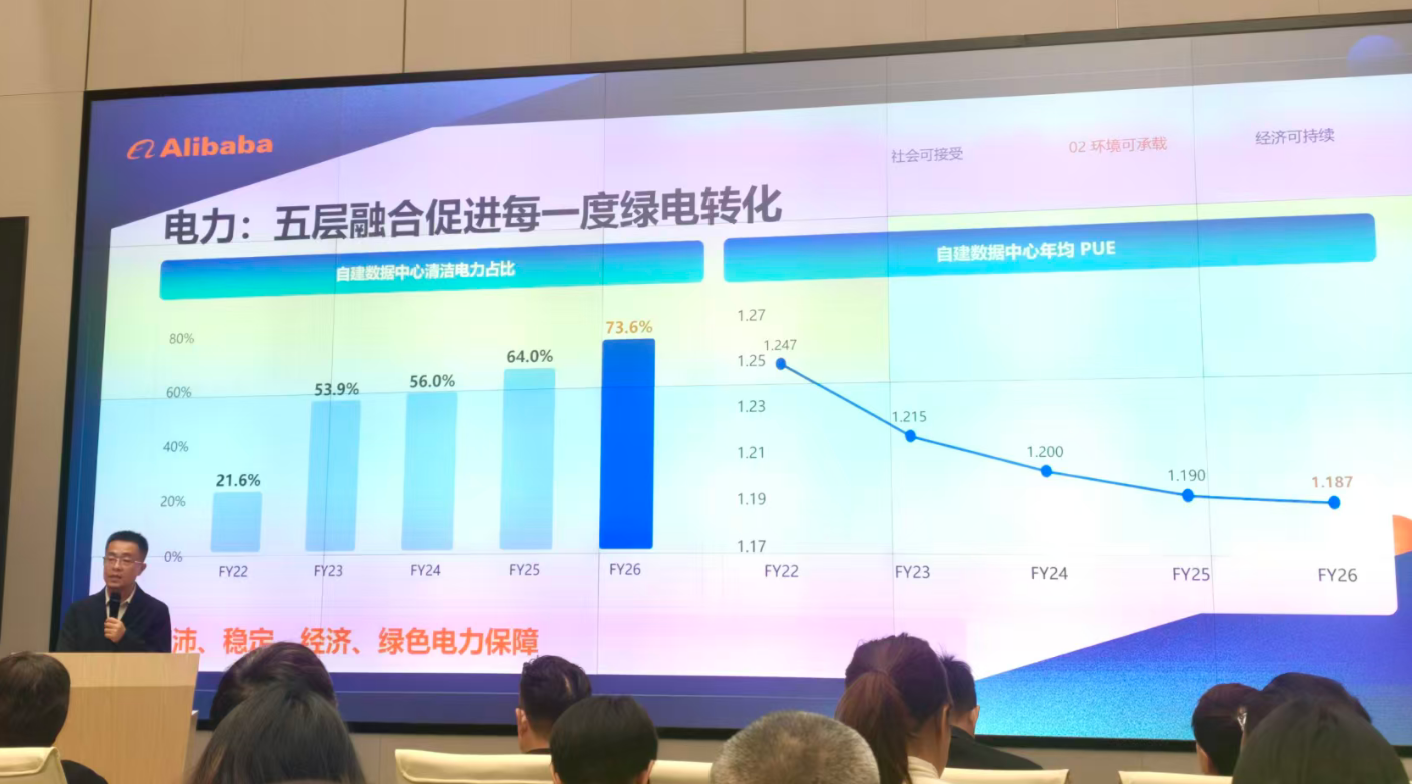
In terms of environmental carrying capacity, the computing density of Alibaba Cloud’s data centers has increased from approximately 0.8 kW/m² two years ago to 4.5 kW/m² and is expected to reach 9 kW/m² by the end of March 2027. Over the past year, the share of clean electricity at Alibaba Cloud’s self-built data centers reached 73.6%.
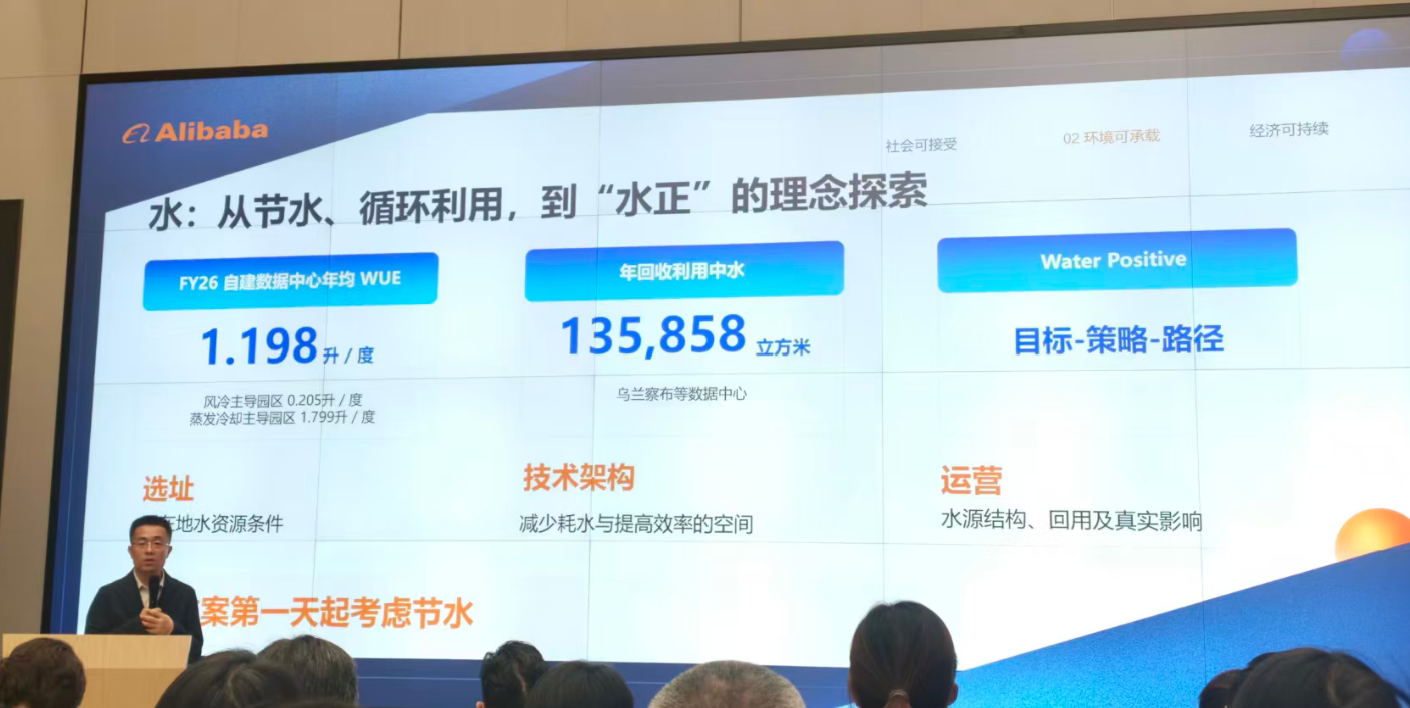
In terms of water resources, Alibaba Cloud has upheld water conservation since the beginning of data center construction. This year, the average WUE (water use efficiency) of its self-built data centers was 1.198 liters/kWh, while air-cooled-dominant campuses recorded 0.205 liters/kWh. Meanwhile, Alibaba Cloud recycled and reused 135,858 cubic meters of reclaimed water throughout the year. Going forward, it will promote water conservation in three areas—data center site selection, technical architecture, and operations management—to improve water use efficiency.
In terms of economic sustainability, Alibaba Cloud builds data centers using a modular approach, shortening project delivery cycles to 100 days, including 30 days for design and production, 50 days for on-site installation, and 20 days for joint commissioning, greatly improving data center delivery efficiency.
II. From Risk Screening to Assisted Diagnosis and Treatment, Medical AI Enters Clinical Practice
After the report was released, Alibaba spotlighted medical AI-for-good use cases, focusing primarily on three areas: multi-cancer imaging screening, evidence-based medicine assistance, and voice-based early screening for cognitive impairment.
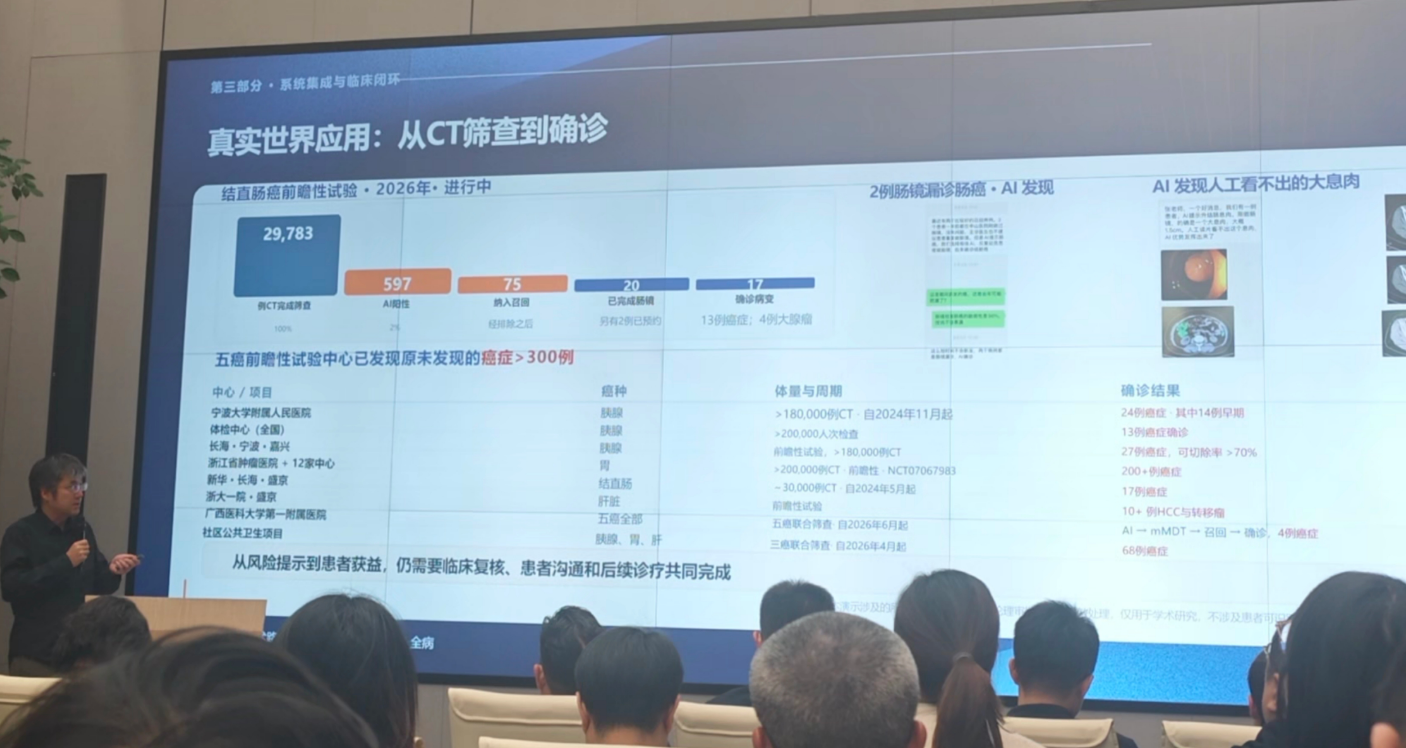
Zhang Ling, a senior algorithm expert at the DAMO Academy and project lead for multi-cancer early screening, shared that Alibaba had expanded the coverage of its cancer screening model from a single cancer type to common digestive-system cancers such as pancreatic, gastric, liver, and colorectal cancers, and had further extended it to general imaging diagnostics. The team uses AI to reanalyze information in CT images already obtained by patients, identifying potential signs of disease without additional examinations or radiation exposure.
Zhang Ling said Alibaba’s multi-cancer early screening model was being used in real-world clinical settings. Taking a prospective colorectal cancer trial as an example, among 29,783 CT screenings, 597 were judged positive by AI, 75 proceeded to clinical review, and 17 were confirmed as having lesions. The model also identified some cancer cases that the existing standard workflow had missed.
Beyond disease screening, Alibaba has also extended the application of AI to areas such as clinical diagnosis and disease treatment. Wang Xiangzhi, Alibaba Health’s CTO and head of Hydrogen Ion, said that the key to bringing healthcare large models into clinical use is whether they can provide reliable answers supported by medical evidence. Alibaba therefore launched the Hydrogen Ion Medical AI Assistant, which incorporates medical literature, clinical guidelines, and evidence-grading systems into the model’s workflow, enabling the model to understand the evidence first and then organize its answers.
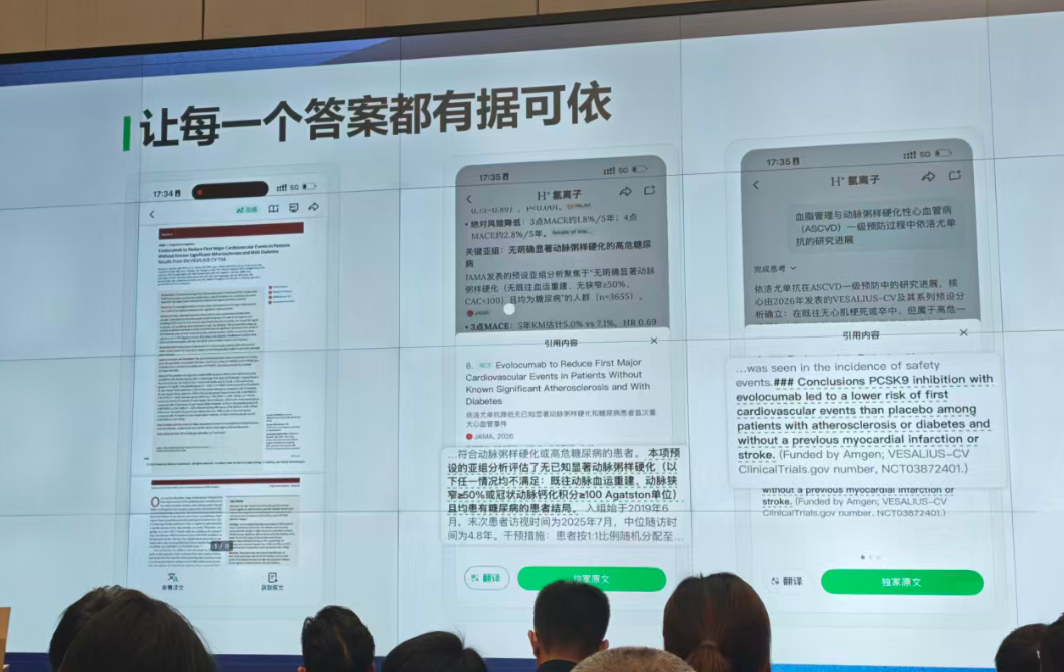
Hydrogen Ion has assembled an expert team of approximately 300 doctors to develop evaluation standards, review model outputs, and continuously improve the product. The platform generates hundreds of thousands of queries every day from users including doctors at major tertiary hospitals and personnel at primary care institutions.
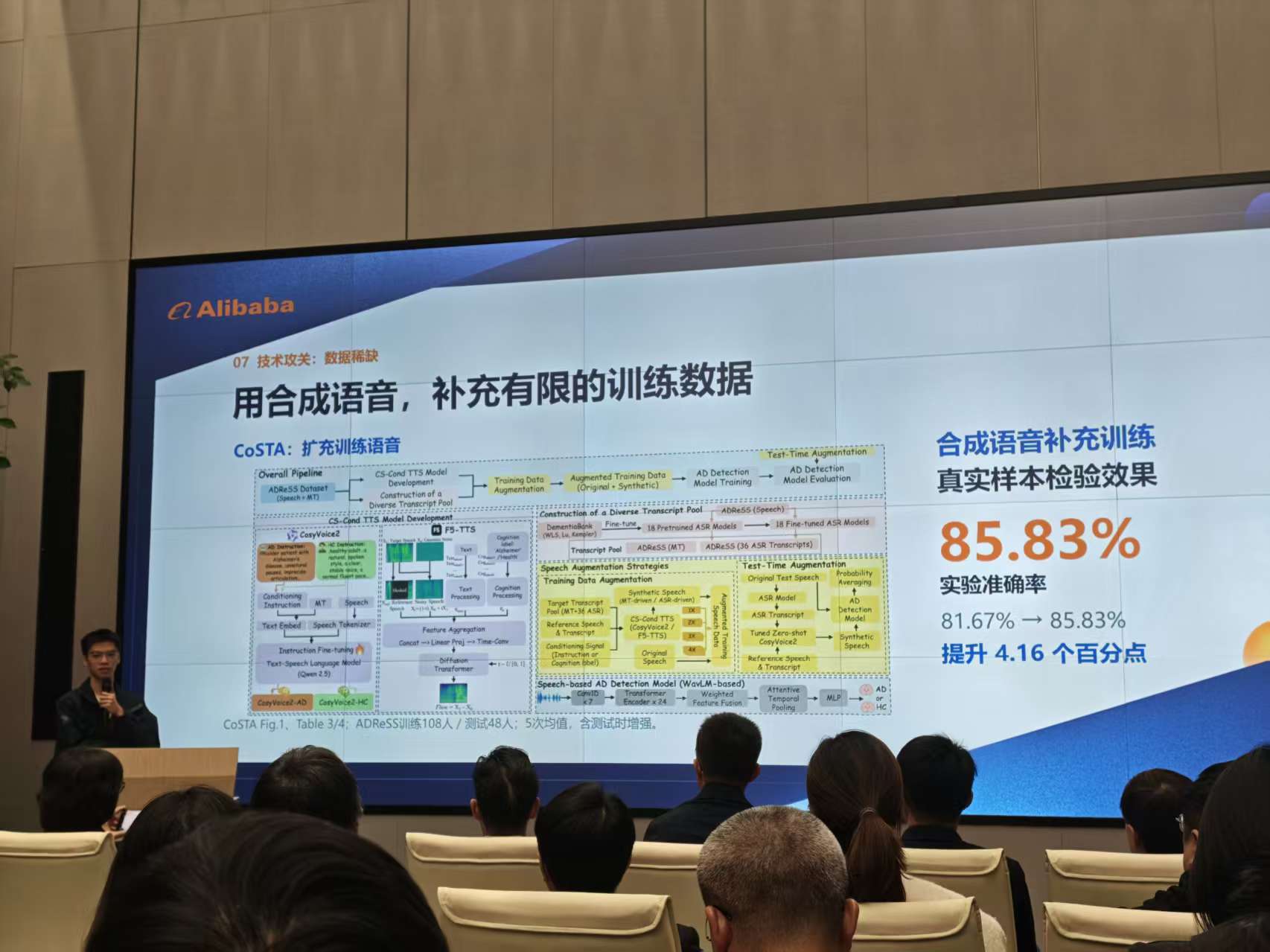
In addition, Liu Sizhe, a student from the University of Science and Technology of China’s Youth Innovation Class and CEO of Shouyi Technology, shared an AI voice-based early screening project for cognitive impairment. The project assesses cognitive impairment risk by speaking with elderly people over the phone and analyzing features such as pauses, word choice, and coherence of expression. Liu Sizhe said that by using synthetic speech to supplement the training data, the model’s experimental accuracy on real-world samples increased from 81.67% to 85.83%, a rise of 4.16 percentage points.
The project has identified more than 30 people in the community as potentially at risk. One elderly participant was flagged as being at medium risk during screening and was subsequently diagnosed with Alzheimer’s-related cognitive impairment following a hospital follow-up. The early detection of risk helped the participant receive treatment sooner.
Conclusion: AI Implementation Must Serve People’s Needs
From the energy, water, and talent challenges facing data centers to the screening, diagnosis, and evidence-based applications of medical AI, Alibaba’s AI for Good Report examines how AI can enter real-world society and serve the general public.
Whether it is reducing the resource consumption of computing infrastructure or helping doctors and patients detect diseases earlier, AI for good ultimately must be translated into verifiable outcomes and sustainable applications.