At the November 9 earnings briefing, SoftBank President Junichi Miyakawa apologized for the unauthorized access suffered by subsidiary IDC Frontier in October, saying, “It is deeply regrettable, and we are filled with remorse.” He also spoke about the continual discovery of new vulnerabilities as AI advances, saying, “Honestly, I am completely exhausted,” revealing his struggle to respond to cyberattacks.
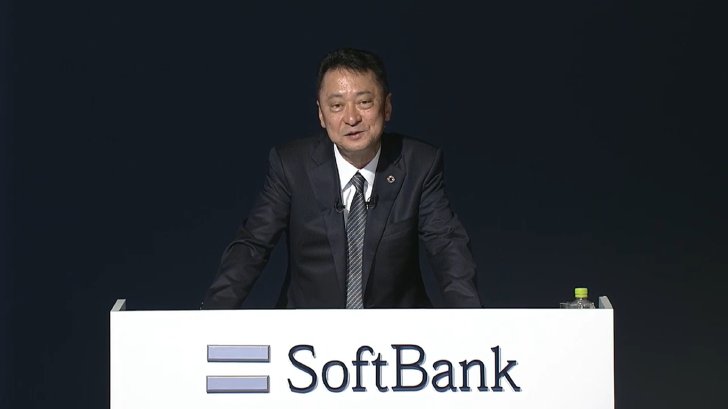 President Miyakawa speaking at the SoftBank Group earnings briefing
At IDC Frontier, on October 7, a vulnerability in the open-source software (OSS) used in the authentication system of the cloud service “IDCF Cloud” was exploited, allowing a third party to intrude into the system. As a result, some servers used by 495 companies and local governments were shut down and encrypted.
SoftBank had conducted vulnerability assessments of applications it had developed in-house and completed applying corrective patches, but it had not assessed the OSS targeted in this attack.
President Miyakawa stated, “It is deeply regrettable, and we are filled with remorse,” acknowledging shortcomings in the response. The company has now expanded the scope of inspections at group companies to include OSS and is conducting emergency checks across more than the approximately 1,800 systems previously inspected.
Vulnerabilities continue to be discovered as AI advances | Reconnaissance activity reaches 600–700 million per month
According to the company, reconnaissance activity, which precedes cyberattacks, has surged in recent months. It has doubled to between 600 million and 700 million per month, compared with an average of approximately 300 million per month in 2025, and has increased by roughly 100 million each month since August. President Miyakawa indicated the view that AI is being used in such cyberattacks.
The company cited advances in AI models as the background to the increase in attacks. It noted that latest models such as “Kimi,” developed by China’s Moonshot AI, and “Qwen,” developed by Alibaba, began appearing one after another around July, and explained, “We have a genuine sense that cyberattacks have surged all at once whenever open-weight models like that emerge.” He also said, regarding the frequency with which new AI models appear, “We understand that it is now on a weekly basis.”
New problems are also being found one after another through AI-based vulnerability assessments. In June, the company used AI to assess approximately 700 of its own systems and discovered around 15,000 vulnerabilities. It then took about three months to apply patches to all of them. However, when it conducted another assessment using OpenAI’s AI model “GPT-6 Astra,” around 35,000 vulnerabilities were found.
President Miyakawa explained, “We test every time a new model is released, and we virtually always find new vulnerabilities.” Revealing the difficult situation, he said, “Honestly, we are utterly exhausted, but even so, we are now continuing to apply patches one after another.” He is braced for the likelihood that additional vulnerabilities will be found through assessments using new AI models.
President Miyakawa also expressed a sense of crisis over the accelerating speed of attacks. “The speed of attacks has become extremely fast, and I wonder whether we can keep up by human effort,” he said. Previously, when an anomaly was detected, the responsible team would investigate it and hold a meeting to decide how to respond. The company has now switched to first blocking communications and then taking countermeasures, he said.
Although vulnerability assessments and the application of corrective patches have been automated, human labor is still required to confirm whether systems operate normally after the patches are applied. President Miyagawa expressed his intention to automate this verification work by the end of the current fiscal term.

