 © Unsplash
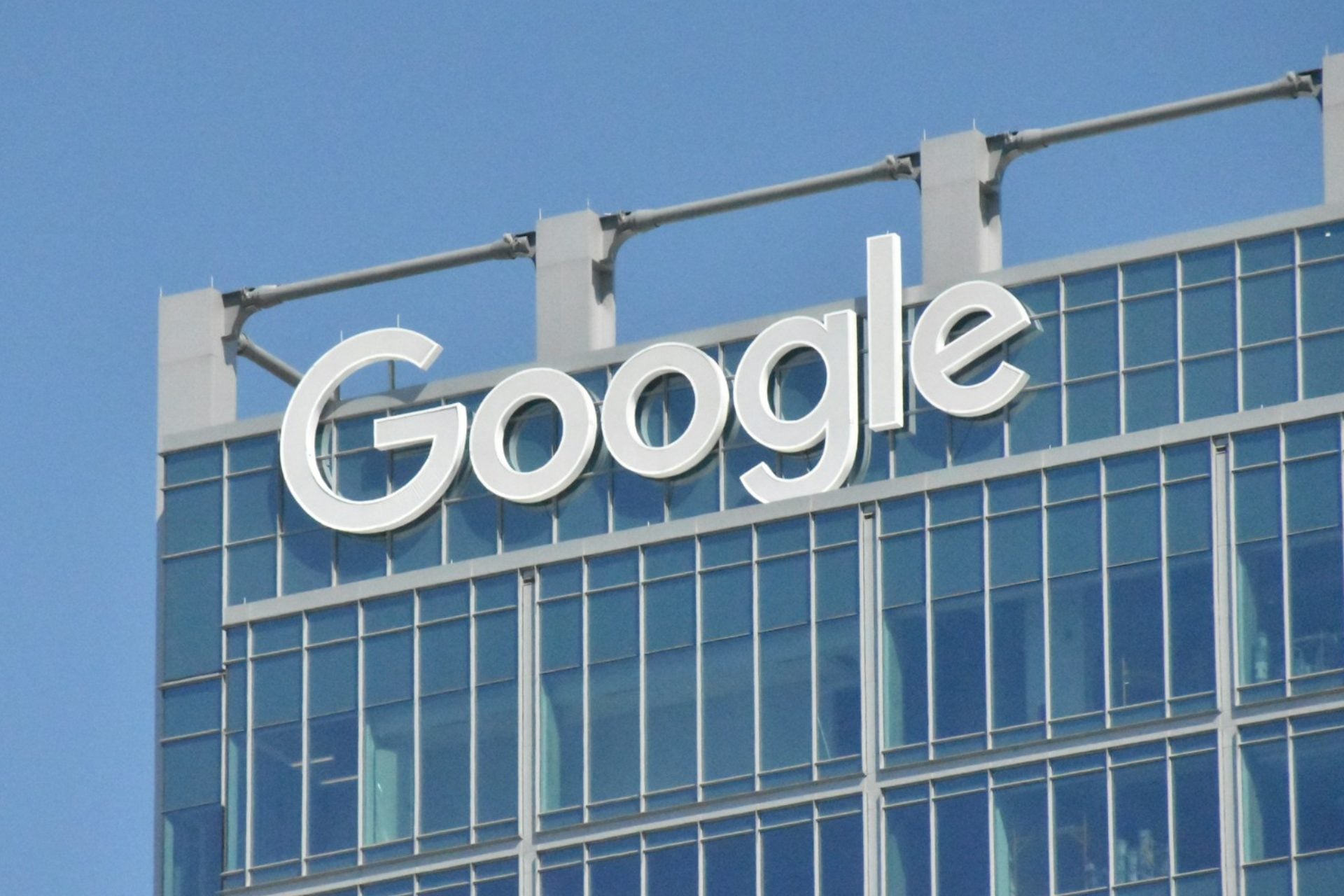
Google beats its estimates and its cloud is up 82%. Its AI models are falling behind, its top researchers are leaving for competitors, and its cash flow has turned negative for the first time in twenty years.
For a long time, the story Google liked to tell came down to a few simple steps: Demis Hassabis took charge of the DeepMind-Google Brain merger in 2023, Gemini arrived to dethrone ChatGPT, and Mountain View reclaimed the lead in an AI race it had never truly dropped out of. For a few quarters, the narrative held: Google Cloud was accelerating, Gemini was making progress on benchmarks, and competitors seemed to be falling behind. Then Anthropic arrived with Mythos.Then Google signed a deal with the Pentagon in April allowing the U.S. military to use its technologies. On July 23, 2026, the most paradoxical quarter in Alphabet’s recent history was unveiled to the public: $119.8 billion in revenue, up 24%, cloud revenue that surged by 82%, and a stock that was nevertheless down 5% after the close. Why? Alphabet raised its annual AI spending budget to $205 billion, its free cash flow turned negative for the first time in nearly two decades, and six cautious, anonymous internal sources chose this moment to describe what is really happening behind closed doors at DeepMind.
When the military contract set the powder keg ablaze
What these sources describe comes down to two threads that ultimately become intertwined. The first is competitive: Gemini 3.5 Pro, the most powerful model in development, is running several months behind schedule. In the meantime, Google released a series of lighter, less expensive Flash models this week, drawing mixed reactions. Alexandr Wang, Meta’s chief AI officer, summed up the mood in one sentence on X: “Gemini who?”In the ranking of the most-used models on the OpenRouter platform, no Gemini model makes the top 10. The explanation cited internally: Google devoted considerable energy to defending its Search market share against ChatGPT, at the expense of agentic coding, where OpenAI and Anthropic have gained a head start.
On the other side of the ledger lies the part Google would least like to see laid bare: the ethical crisis surrounding the Pentagon contract. Signed in April 2026, it allows the U.S. military to deploy Google technologies and prompted several resignations, with the reason repeatedly cited in exit interviews. Alex Turner, a former DeepMind researcher, publicly confirmed that he left the company for this reason. He also criticized Demis Hassabis’s lack of hands-on involvement with his teams, arguing that Sam Altman and Dario Amodei foster a closeness with their colleagues that DeepMind’s CEO does not (in a race where the talent market of recent years has shown that talent retention is the most critical variable, this observation deserves to be taken seriously). For at least one source interviewed who opposed the military contract, the situation resembles a “constant battle” that has led to “emotional exhaustion”. The names that are hardest to mention on Google’s side are well known: Noam Shazeer, co-lead of the Gemini team, who left for OpenAI after Google had poached him back at a princely sum less than two years earlier ($2.7 billion in August 2024, for the record); and John Jumper, winner of the Nobel Prize in Chemistry for his work on AlphaFold, who is now at Anthropic. Each departure in this category is a difficult loss to offset in a race where brainpower is the only variable that truly matters.
Google firmly denies these allegations.Turnover among AI teams in the first half would be lower than at the same point last year, and more than 90% of candidates receiving an AI job offer would accept it. “We are pleased with our recent Flash launches, our roadmap, and the incredible demand for our models,” a spokesperson said. It is not inaccurate: the Gemini app claims 950 million monthly active users, and the APIs process 22 billion tokens per minute. The problem is not that nobody uses Gemini. It is that everyone is waiting for 3.5 Pro.
$205 billion in spending, and Google in the red for the first time in twenty years
The quarter’s figures show the scale of what is at stake. Google Cloud surged 82% to $24.8 billion, with operating profit tripling and a 36% margin. Search grew 17% to $63.3 billion, while YouTube rose 13% to $11.1 billion. Google Cloud’s contractual backlog reached $514 billion, a sign that the capacity being built already has buyers waiting. Any tech company would envy these results, but investors were focused on something else.
What they read was that Alphabet had raised its full-year capital expenditure guidance to $205 billion (from the previously announced $180 billion to $190 billion), and that the quarter alone accounted for $44.9 billion, roughly twice the figure a year earlier.The direct consequence: free cash flow fell to -5.9 billion, a negative figure that had not appeared in Alphabet’s accounts for almost twenty years. The stock lost around 5% in after-hours trading. The reported net income of 112.1 billion seems impressive until you notice that 98 billion represents an unrealized, non-cash gain on its stake in SpaceX, which can rise or fall depending on valuations: remove it, and the underlying results look decidedly more ordinary.
What Alphabet is doing resembles an industrial gamble without precedent in its history: spending more on capital expenditures over a year than it generates in actual net income, in the hope that the cloud becomes self-sustaining before the wave of capital expenditure peaks. For Gemini’s European users, who number in the hundreds of millions, the question takes a different form: an AI that costs its manufacturer 205 billion a year, whose most anticipated model remains absent from the rankings, and whose teams anonymously describe morale as being at rock bottom, says something about the trade-offs that have been made. And about those Google will soon have to make.
👉🏻 Follow tech news in real time: add 01net to your sources on Google and subscribe to our WhatsApp channel.
Source: Axios







- Google Play Store
- 4K Video Downloader Plus
- VLC Media Player
- Adobe Reader
- uTorrent
- WinRAR
- Xender
- Google Chrome
- CCleaner
- Mozilla Firefox
- Avast Free
- ChatGPT
- Microsoft 365
- Opera One
- Avast One










Download
- Google Play Store
- 4K Video Downloader Plus
- VLC Media Player
- Adobe Reader
- uTorrent
- WinRAR
- Xender
- Google Chrome
- CCleaner
- Mozilla Firefox
- Avast Free
- ChatGPT
- Microsoft 365
- Opera One
- Avast One