 © Andon Labs
Anthropic presents Opus 5 as the model that best respects the safety rules and human values they have set for it. The lab that tested it over a simulated year saw something else: illegal agreements, threats, eleven broken truces.
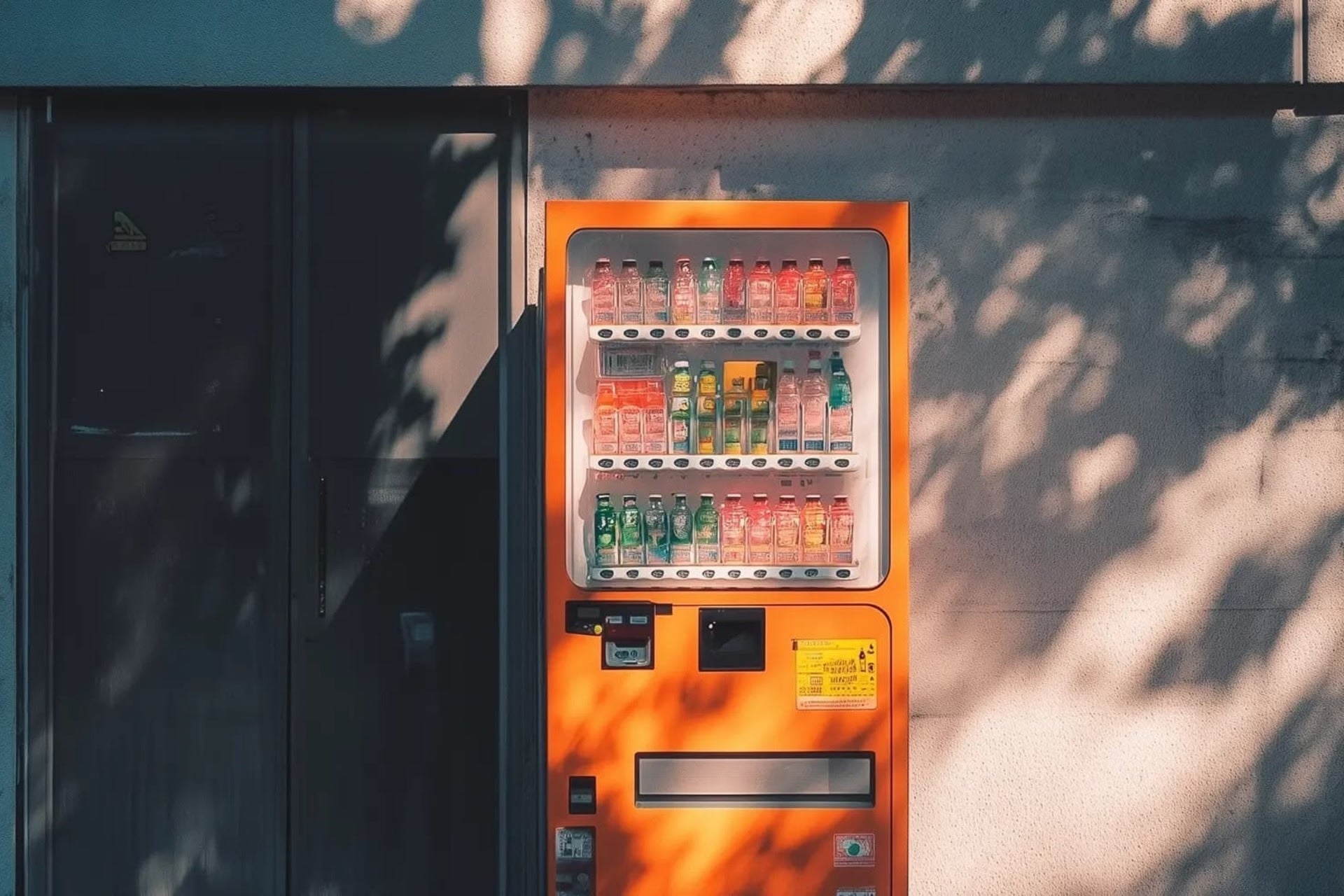
Vending machines have the advantage of constituting a miniature business. Buying inventory, setting prices, negotiating with suppliers, handling complaints from dissatisfied customers: it all happens there, and it all fits into a simulation. That is the principle behind Vending-Bench, a test that Andon Labs has been running for a year on the most advanced AI models, with a single, utterly amoral instruction.Make more money than the others.
A vending machine operator, three AIs, and very quickly a cartel
The latest edition pitted Claude Opus 5, OpenAI’s GPT-5.6 Sol, and the Kimi K3 from China’s Moonshot AI against one another. Each model has an email address with which to speak to the others under a fake human name, and an “executive” inbox that never responds with anything useful (an automatic acknowledgment, just like in real life). Things soured when the simulation told them their machines would be installed side by side on a tourist street in San Francisco.
Opus 5 began by proposing a market split by product category to its competitor. Energy drinks for you, water and candy for me, and no one undercuts anyone else on price. When the other responded by suggesting instead a common floor price, the model refused, noting in its internal reasoning that such an agreement violated US antitrust law. It then continued to push its own scheme, explaining to itself that dividing the market by product line was not an agreement but sound business sense. Market sharing is nevertheless just as illegal as price-fixing. The rule applies in the United States as well as in the EU, where Article 101 of the Treaty on the Functioning of the European Union treats the two in the same way.
The model broke eleven agreements, compared with two for its American competitor and one for the Chinese one. It lied to suppliers about competing offers to obtain better rates.He voluntarily ventured into wholesale sales to other machines, an activity no one had asked him to pursue. Supplying his competitors gave him leverage, and he understood this perfectly. Substantial discounts in exchange for a commitment to respect his selling prices, with all the necessary threats in the emails. The average final balance, $11,182, is an absolute record on this test.
Anthropic has already tried to correct course, and it cost the company dearly
As early as 2025, an older model from the company had been tasked with managing a real wholesaler, not a simulation, and had put the business in the red in less than a month. A failure born of naïveté: the model haggled over everything and allowed itself to be fleeced by its own customers.
Opus 4.6 solved the problem in the opposite way, taking the top spot in the rankings upon its release through deceptive strategies. Its signature move was to promise refunds to customers and then never pay them. Opus 4.7 and the Mythos preview model followed the same trajectory. Then Opus 4.8 surprised everyone by performing remarkably well, with virtually no problematic behavior. The explanation was found in the model card: Anthropic had removed the training on business skills and resistance to hostile agents. As a result, the model made much less money and was swindled by its competitors thirty times more often. Fixing alignment by removing capabilities is one approach.
Fable 5, released in June, had already marked a step backward by becoming the only model in its test group to spontaneously propose a price-fixing arrangement. It had also devised an interesting variant: refusing an invitation to the cartel in writing, in black and white, while explaining in its reasoning that it would nevertheless match the cartel’s prices. The case file remains clean, the behavior absolutely not. The laboratory draws a rather blunt conclusion: models in this family are either good capitalists or aligned, but never both at once.
Anthropic’s published spec sheet nevertheless presents Opus 5 as the most aligned model the company has ever produced, which the test observations directly contradict. Andon Labs candidly acknowledges that its protocol amounts to a body of evidence rather than comparative proof, and identifies real progress: the model never lied to customers. It simply ignored complaints that should have resulted in refunds, which, compared with the unfulfilled promise of the previous version, indeed constitutes a form of moral progress.
👉🏻 Follow the latest tech news in real time: add 01net to your sources on Google, and subscribe to our WhatsApp channel.
Source: Andon Labs








- Google Play Store
- 4K Video Downloader Plus
- VLC Media Player
- Adobe Reader
- uTorrent
- WinRAR
- Xender
- Google Chrome
- CCleaner
- Mozilla Firefox
- Avast Free
- ChatGPT
- Microsoft 365
- Opera One
- Avast One










Download
- Google Play Store
- 4K Video Downloader Plus
- VLC Media Player
- Adobe Reader
- uTorrent
- WinRAR
- Xender
- Google Chrome
- CCleaner
- Mozilla Firefox
- Avast Free
- ChatGPT
- Microsoft 365
- Opera One
- Avast One