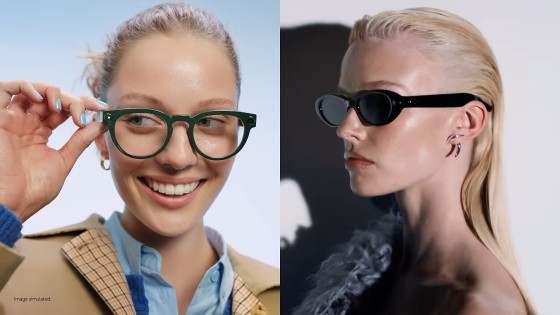
However, wearing a camera as part of daily life can pose a risk to the privacy of people around. According to Sharam Izadi, vice president of the XR division and general manager at Google, during the development of the smart glasses, they listened to opinions from wearers, people around them, and privacy experts, and it was noted that there was particular concern about being photographed without their knowledge.
To address these concerns, Google has equipped all Intelligent Eyewear with an outward-facing LED indicator. When photos or videos are captured and saved to the gallery, the LED lights up to inform people around that the device is recording. The design also ensures that if the LED is covered or modified, the device will not be able to capture photos.
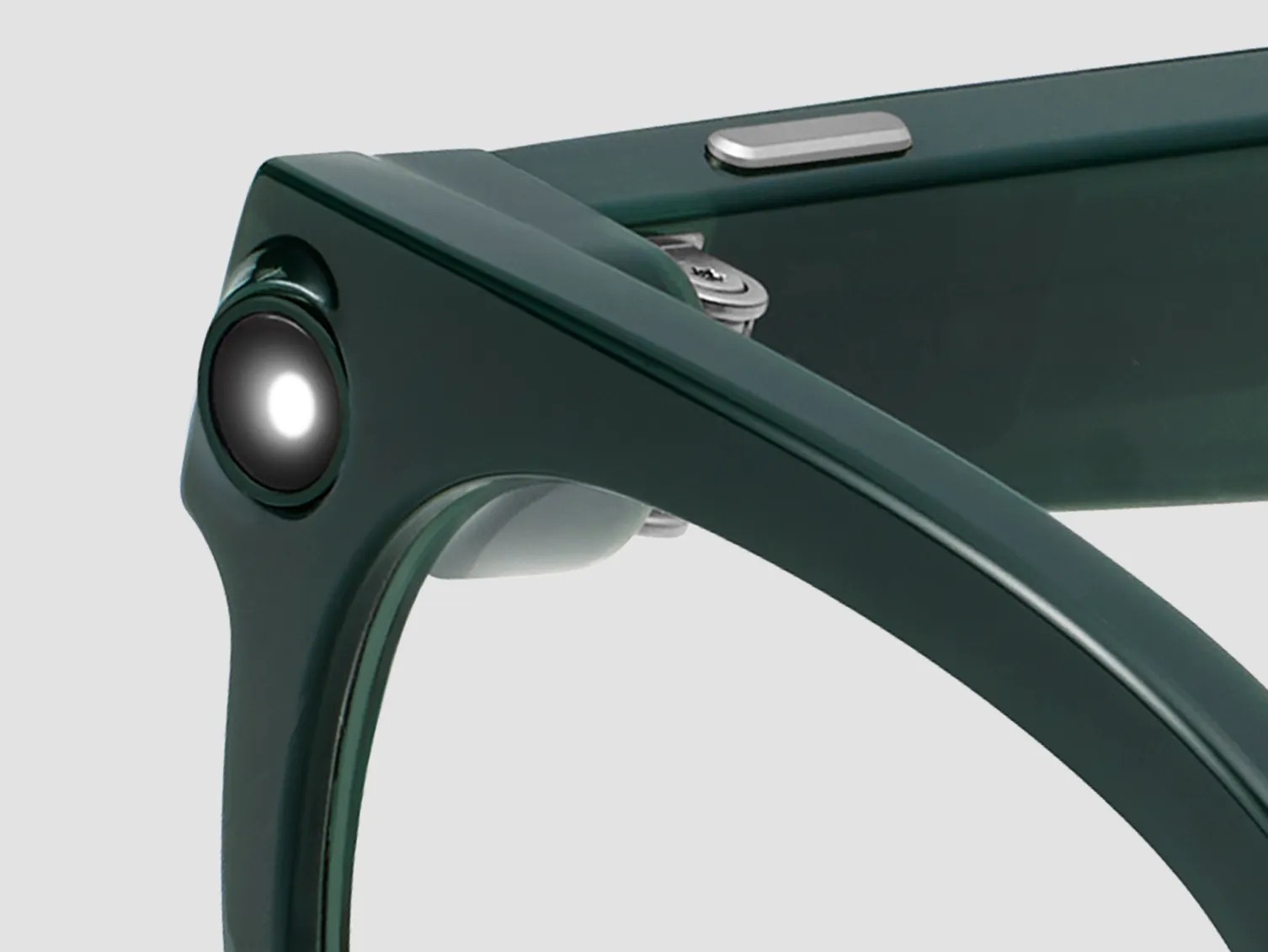
Additionally, when Gemini captures images to answer questions about objects in front of the user, the system automatically anonymizes the faces of people around before processing them with Gemini. The use of directional microphones also allows Gemini to focus on the wearer's voice by default, making it harder to capture the voices of people around.
Images captured by Gemini for answering questions are not saved in Gemini's usage history and are not used for AI model training or targeted advertising. However, if users explicitly instruct Gemini to take photos or videos, they will be saved to the gallery.
Also, text from conversations with Gemini is stored in the history, allowing users to delete the history or disable its use for improving AI models from the settings.
Data stored on the smart glasses is encrypted, and encryption is also applied when sending data to smartphones or the cloud. Google plans to introduce the "Private AI Compute" technology, which runs AI processing in a secure environment, to the smart glasses as well. Users can set access permissions for the camera and microphone per app, and a physical power switch is included on the frame.
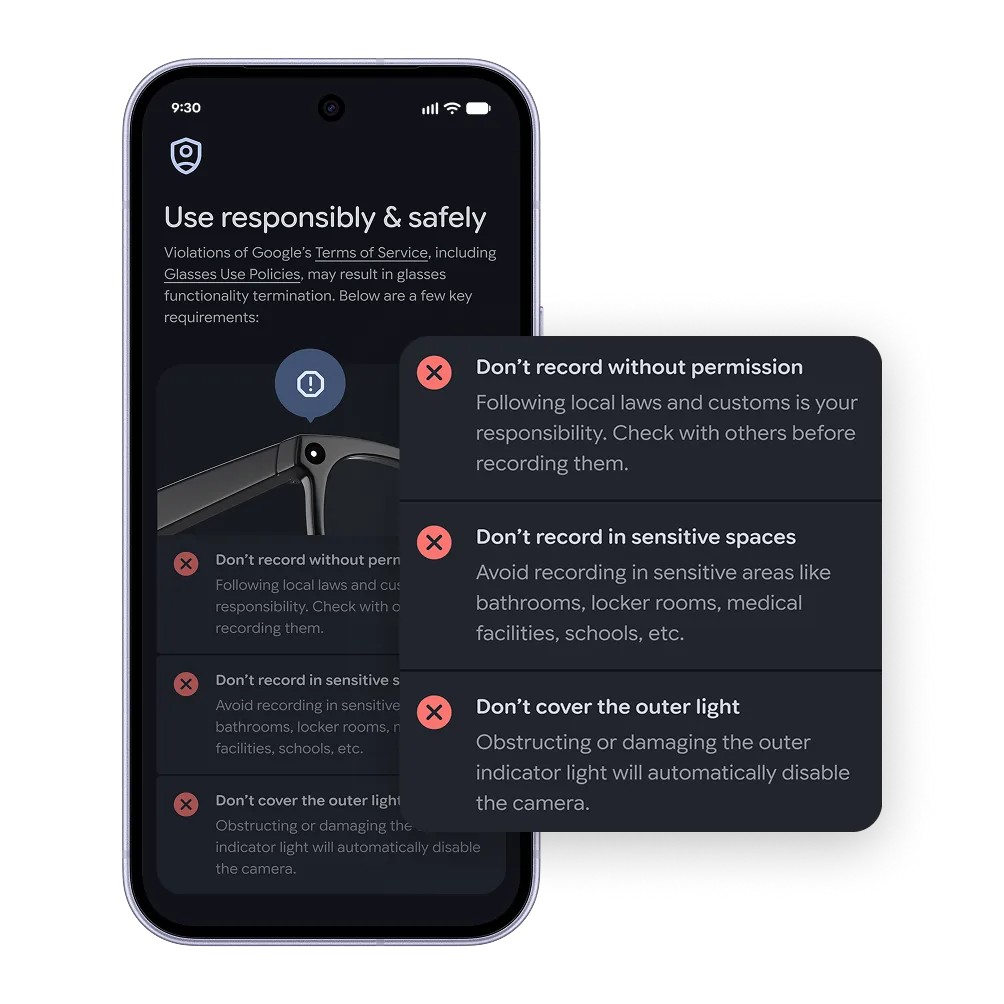
In addition to measures on the product itself, Google also imposes restrictions in the terms of service and policies for various services to prevent misuse of the smart glasses. During the initial setup of Intelligent Eyewear, users must agree to not capturing images of others without consent, not using the device in places where privacy considerations are necessary, and not covering the LED. If these agreements are violated, the use of the smart glasses may be suspended.
Google Play prohibits apps that use the smart glasses' camera for live streaming to social media platforms, real-time facial recognition of individuals, or modify the behavior of LED indicators. Google Shopping and Google Ads also ban advertisements promoting products or services that disable or hide the smart glasses' LED. Setup of Intelligent Eyewear is also limited to users with Google accounts aged 18 or older.
Mr. Izadi places privacy protection at the core of wearable technology design and development, and has indicated plans to continue strengthening protective measures in collaboration with privacy experts and others.

