 © Google
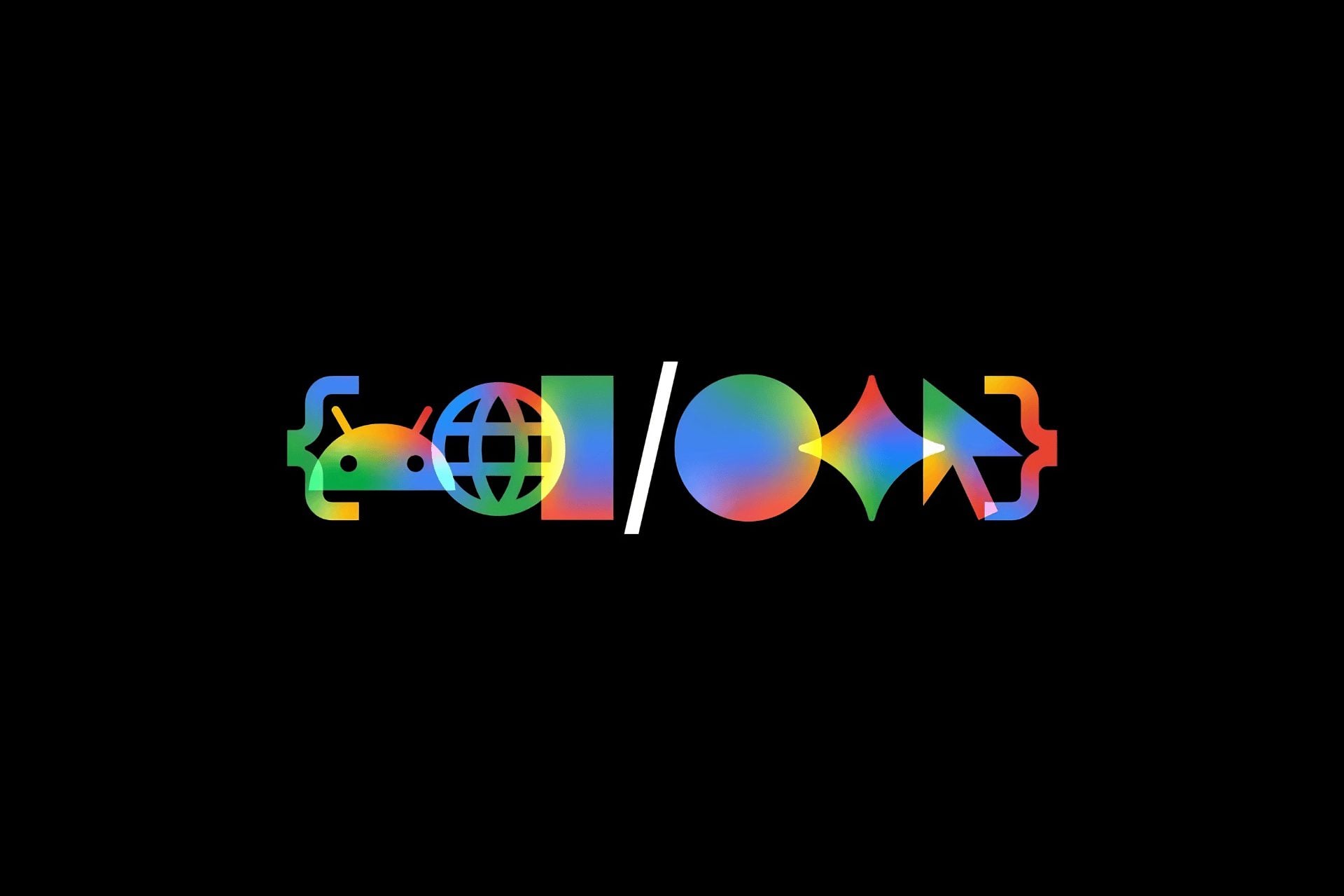
Google structured its entire I/O 2026 conference around agent AI. Behind the term, a paradigm shift: artificial intelligence no longer just generates, it pursues goals.
The Google I/O conference on May 19, 2026 had only one theme: the agent era. The term appears in almost every announcement, every demonstration, every slide of Sundar Pichai's keynote, from the performances of Gemini 3.5 Flash until the launch of Gemini Spark. Behind the term, a paradigm shift that Google considers as the next fundamental step in artificial intelligence, after content generation.
AI is no longer reactive, it pursues goals
Since the launch of ChatGPT at the end of 2022, AI models operate on a simple schema: you ask a question, the model generates a response. You rephrase, it adjusts. Each interaction is an isolated unit. The human pilots each step, the model executes punctually. This is what we can call reactive AI: powerful, but fundamentally passive. It waits for someone to talk to it.
Agent AI works differently. Instead of responding to a query, it receives an objective, breaks it down into subtasks, selects the necessary tools (navigate the web, write code, call an API, consult a document), executes each step autonomously, evaluates the result, and iterates until the objective is achieved. The human no longer pilots each move: they set the destination, and AI maps the path. This is the difference between asking someone to look up a word in a dictionary and entrusting them with writing a complete report while telling them to come back when it's done. Gemini Omni Flash, Google's new multimodal model capable of creating and editing videos by voice, illustrates this logic: you don't dictate each cut or transition, you describe the desired outcome, and it handles the rest.
Google goes further in its vision. The next step, which Gemini Spark already sketches, is proactive AI. An agent that doesn't just execute a goal that has been formulated for it, but anticipates needs before they are expressed. Spark, Google's personal agent that runs continuously in the cloud even when your device is off, can scan your bank statements to detect recurring charges you haven't noticed, or monitor your emails to alert you of an upcoming due date. The more you use it, the more it learns your habits and preferences. The shift from agent-based to proactive is not a sudden technological leap: it's a gradual transition, where the agent accumulates enough context about its user to start taking initiatives. Reactive, agent-based, proactive: Google presents these three phases as a continuum, and I/O 2026 marks the moment when the company officially transitions from the first to the second.
If 3.5 Flash and Omni Flash are already accessible via existing Google AI subscriptions, Spark takes a more restricted path. The agent is in testing this week for a first group of users, before a beta reserved for subscribers Google AI Ultra at $100 per month, only in the United States. No launch date has been communicated for Europe. An AI agent that accesses emails, files, and payment methods raises obvious questions regarding GDPR and the AI Act, whose transparency obligations come into effect on August 2, 2026. Google clearly prefers to clarify the regulatory framework before proceeding with a European rollout, which means that the key component of Google's agent strategy remains, for now, out of reach for French users. Let's hope it doesn't suffer the same fate as AI overviews, which are blocked at our borders due to neighboring rights.
👉🏻 Follow real-time tech news: add 01net to your Google sources, and subscribe to our WhatsApp channel.








- Google Play Store
- 4K Video Downloader Plus
- VLC Media Player
- Adobe Reader
- uTorrent
- WinRAR
- Xender
- Google Chrome
- CCleaner
- Mozilla Firefox
- Avast Free
- ChatGPT
- Microsoft 365
- Opera One
- Avast One











Download
- Google Play Store
- 4K Video Downloader Plus
- VLC Media Player
- Adobe Reader
- uTorrent
- WinRAR
- Xender
- Google Chrome
- CCleaner
- Mozilla Firefox
- Free Avast
- ChatGPT
- Microsoft 365
- Opera One
- Avast One
- AirPods Pro 3
- Google Pixel 9a
- Google Pixel 10
- Google Pixel 10 Pro XL
- iPhone 17
- iPhone 17 Pro
- iPhone 16e
- Samsung Galaxy S25
- Samsung Galaxy S25 Ultra
- Samsung Galaxy A56
- Samsung Galaxy A26
- Samsung Galaxy A17
- Starlink
- Xiaomi Redmi Note 14 4G
- Xiaomi Redmi Note 14 Pro
- Xiaomi 15T Pro