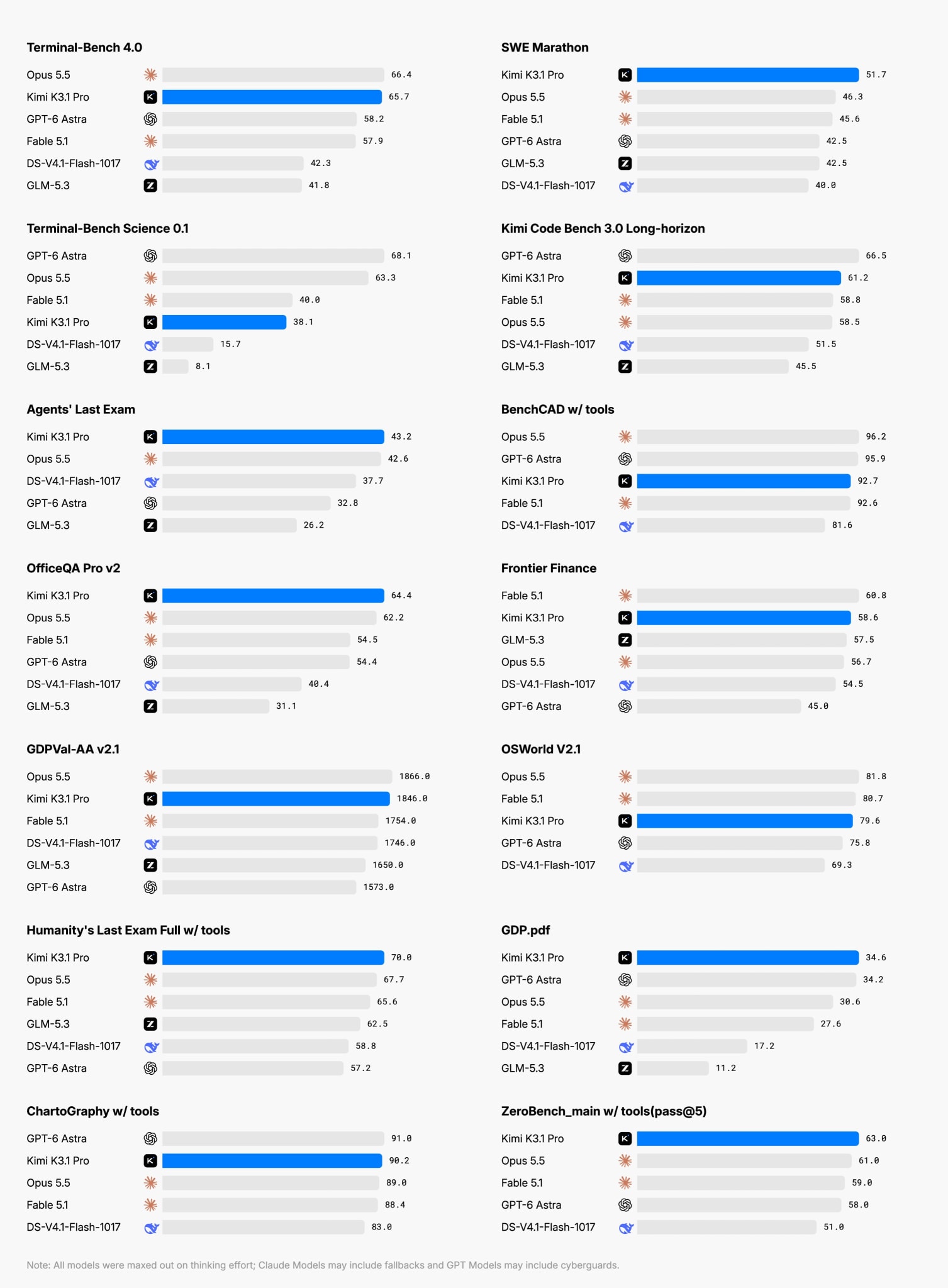
Moonshot released the Kimi K3.1 Pro weights, as promised by November 4. It is an MoE (a model in which only some experts run for each token) with 2.8 trillion parameters, of which 104 billion are active. There are 896 experts, with 16 active per token plus 2 shared experts. Of the 93 layers, 69 use KDA linear attention and 24 use sparse Gated DSA. These are the attention mechanisms the model uses to connect the current token to the preceding text. The context window is 1,048,576 tokens and accepts text and images. The weights are stored in MXFP4, a compact format using 4-bit numbers; the model was trained for this format from the outset. According to Moonshot’s own scorecard, Kimi significantly lags behind closed-source flagship models on HLE-Diamond (the hardest section of Humanity’s Last Exam, a set of expert-level questions), scoring 39.4 versus 55.1–65.8. In Arena’s agent ranking, it became the top open-weight model and ranked 13th overall.
The MIT-based license has two conditions: products with more than 100 million monthly active users or $20 million in monthly revenue must display “Kimi K3.1-Pro” in their interface, while services that sell access to the model as a service and have revenue of more than $20 million over 12 months require a separate agreement with Moonshot.
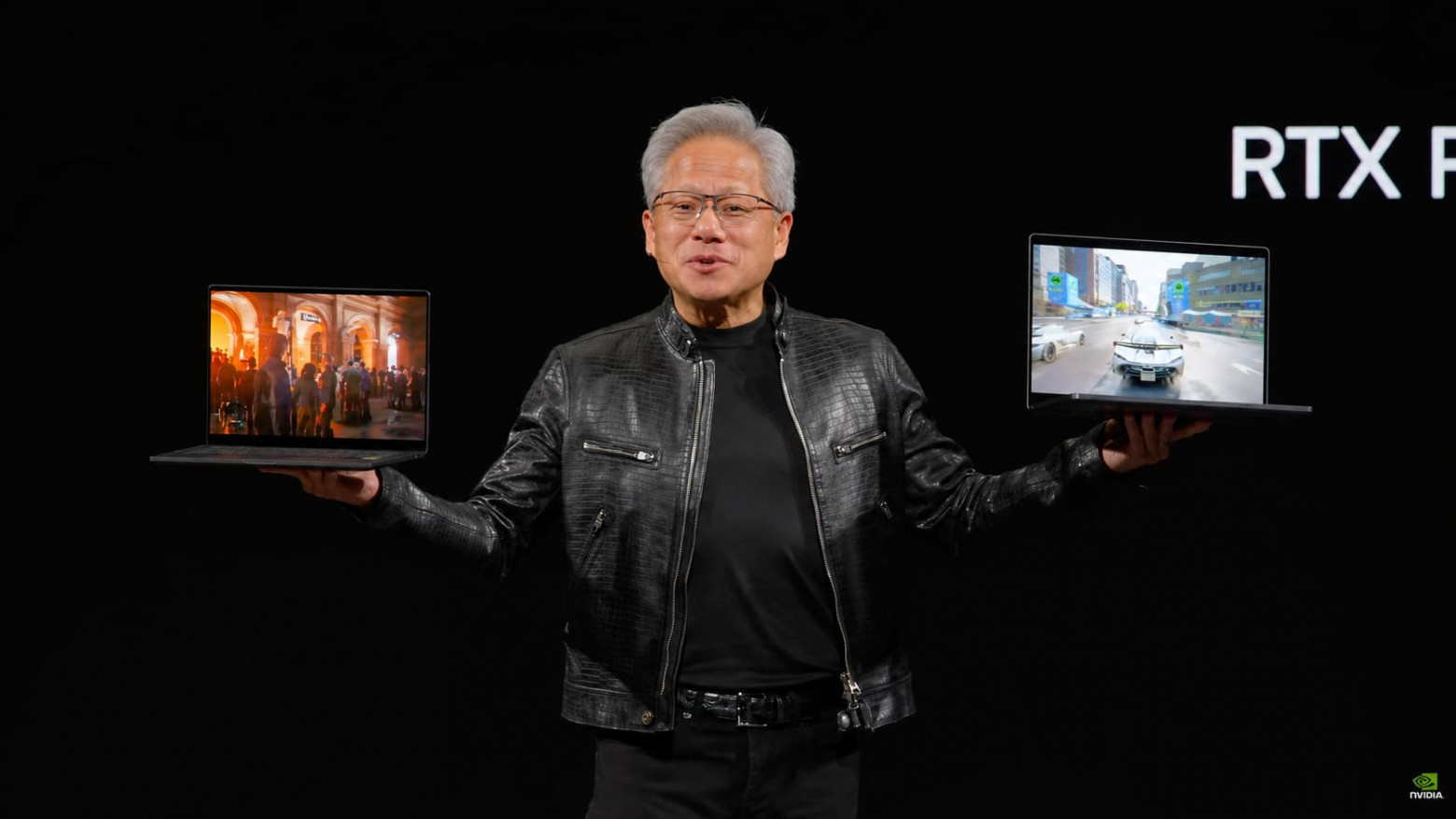
In a MindStudio blog post, the team examined why the MSI Prestige N16 Flip AI Plus laptop with Nvidia RTX Spark runs several times slower under Linux than under Windows. Power distribution between the CPU and GPU is managed by Nvidia Platform Controllers and Framework, but only the Windows driver can decode the power table. As a result, under Linux the GPU runs at around 780 MHz from mains power, compared with approximately 2.2 GHz under Windows.GPT‑OSS‑120B delivers 65.4 tokens per second on Windows, 65.1 in WSL (Linux inside Windows), and only 13.9 on native Linux, about 21% of the Windows speed. The strangest thing is that, on battery power, Linux delivers 61–67 tokens per second. Out of 128 GB of total memory, Linux initially saw only 28 GB until the memory reservation was reduced through Windows. Only Nvidia itself can fix this if it moves power management into its own Linux driver.
Google will allow schools to disable its AI tools, but with a catch. Starting next year, Gemini, NotebookLM, and Gemini in Classroom will be disabled by default for schoolchildren, and schools will have to enable them themselves. But if a school bans AI entirely, students will also lose Google Search. Chris Phillips, who is responsible for education at Google, explained to the New York Times that such students “will not have access to search and will see a message from the school saying that it is unavailable,” because search and AI are now “deeply integrated.” The announcement came alongside the launch of Guided Learning mode.
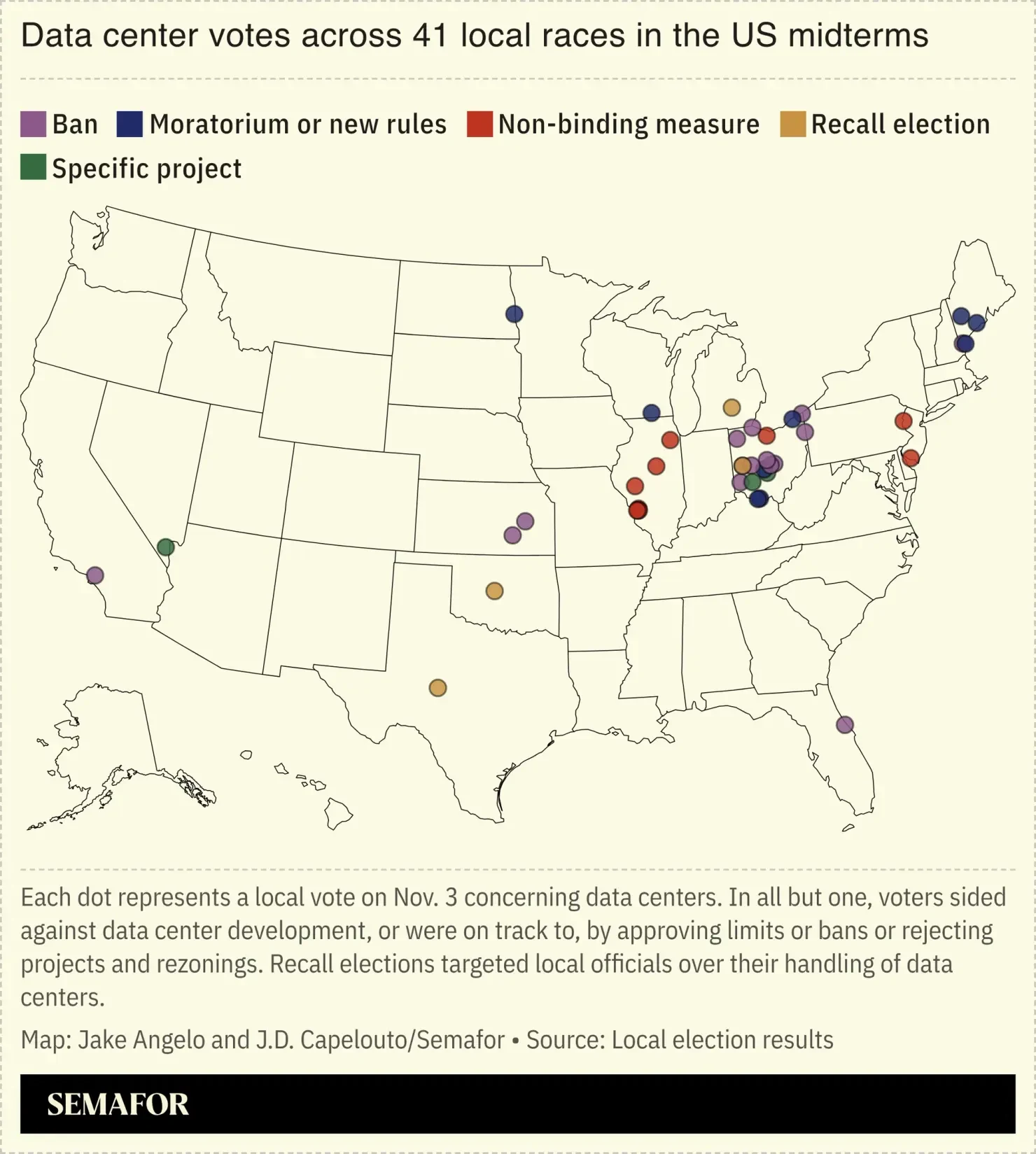
Data centers have made it onto the ballots in the US elections on November 3. Journalist J.D. Capelo counted roughly 40 municipalities in 13 states where people voted on bans, specific projects, and the recall of officials who supported development projects. According to Semafor, residents of more than 30 municipalities in nine states voted for a moratorium, a ban, or other restrictions. Edgewater, Florida, wrote a ban into its city charter, while Perry, Ohio, limited hyperscalers (the largest cloud operators) that seek tax breaks. Democrats in more than 130 races ran ads against tech companies and data centers.Adam Kovacevich, the head of the tech lobby Chamber of Progress, shared NBC exit polls showing that AI and data centers were the deciding issue for 23% of voters. Arizona Representative Yassamin Ansari proposed the Democrats’ agenda for the first day: pausing the development of advanced AI, regulating the industry, and banning artificial superintelligence. If you’re interested in what’s happening over there in America, take a look—some very interesting threads have come out.
Semafor notes that banks already view local opposition as a credit risk, which dovetails nicely with the news about Anthropic. In October, I wrote about its profitability on an adjusted metric, and now, according to the WSJ, its annualized revenue at the current rate exceeded $80 billion in October. But investors are skeptical of the valuation of $1.5 trillion at the IPO, and one of them thinks the fair value is closer to $1 trillion. Even earlier, the FT reported that Blackstone, the anchor investor in a $63 billion chip-financing deal, now expects Anthropic to have a BB credit rating, meaning the top rung of junk, although it previously expected an investment-grade rating through 2027.
And finally:
Stay curious.
I write about artificial intelligence, language models, and tools for developers.I test models and services on real-world tasks and share my findings on Telegram.


