The dance punk band YACHT has always felt like a somewhat techy act since debuting in the early 2000s. They famously recorded instrumental versions of two earlier albums and made them available for artists under a Creative Commons license at the Free Music Archive. Post-Snowden, they wrote a song called “Party at the NSA” and donated proceeds to the EFF. One album cover of theirs could only be accessed via fax initially (sent through a Web app YACHT developed to ID the nearest fax to groups of fans; OfficeMax must’ve loved it). Singer Claire L. Evans literally wrote the book (Broad Band) on female pioneers of the Internet.
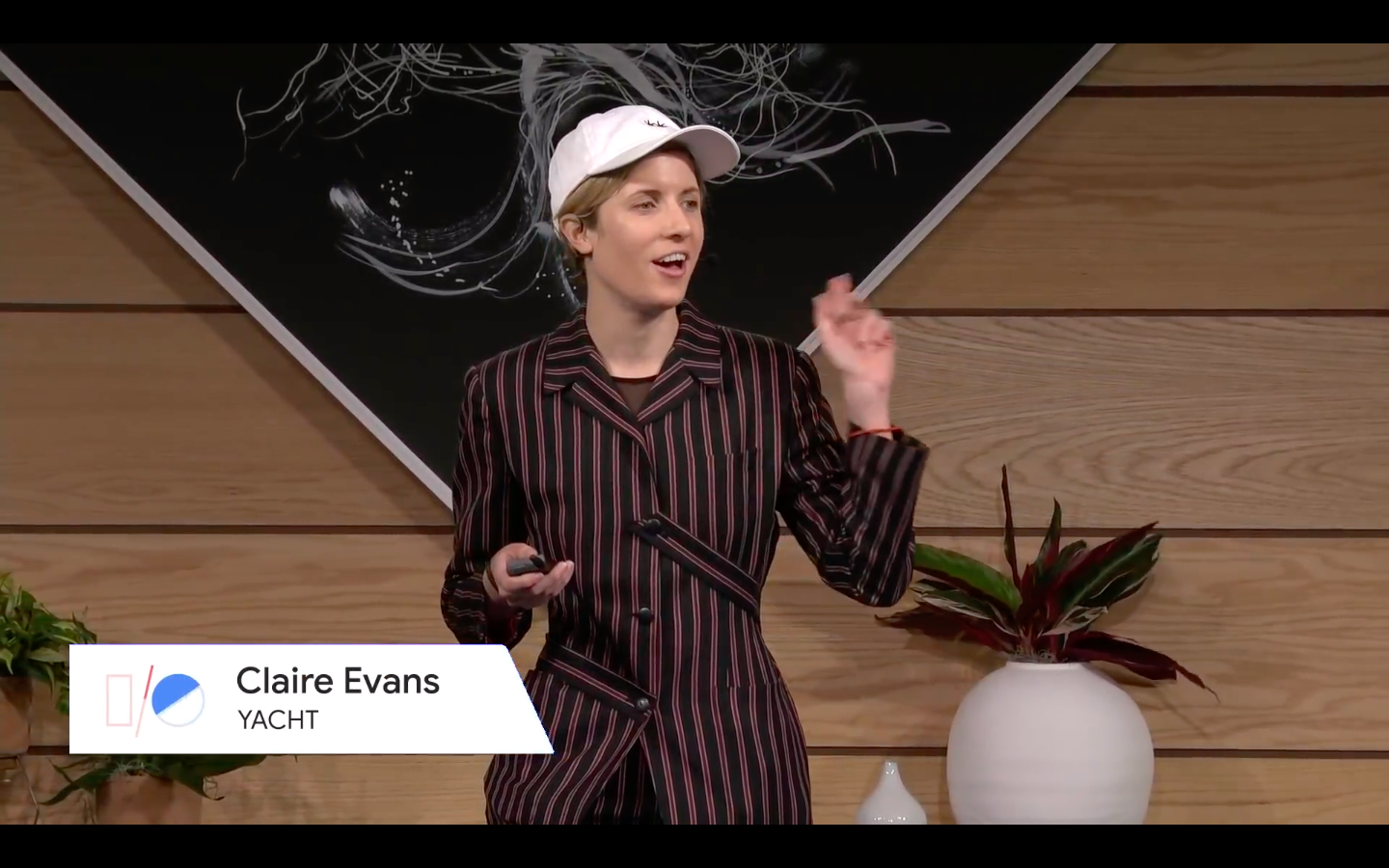
So when Evans showed up at Google I/O this summer, we knew she wasn’t merely making a marketing appearance ala Drake or The Foo Fighters. In a talk titled “Music and Machine Learning,” Evans instead walked a room full of developers through a pretty cool open secret that awaited music fans until this weekend: YACHT had been spending the last three years writing a new album called Chain Tripping (out yesterday, August 30). And the process took a minute because the band wanted to do it with what Evans called “a machine-learning generated composition process.”
“I know this isn’t the technical way to explain it, but this allowed us to find melodies hidden in between songs from our back catalog,” she said during her I/O talk. “Here’s what the user-facing side of the model looked like when we recorded the album last May—it’s a Colab Notebook, not the kind of thing musicians usually bring into the studio.”

YACHT had long possessed an interest in AI and its potential application in music. But the band tells Ars it wasn’t until recently, around 2016, that the concept of doing a full album using this approach seemed feasible. While research entities had long been experimenting with AI or machine learning and allowing computers to autonomously generate music, the results felt more science project than albums suitable for DFA Records (home to labelmates like Hot Chip or LCD Soundsystem). Ultimately, a slow trickle of simplified apps leveraging AI—face swap apps felt huge around then; Snapchat and its dynamic filters rose to prominence—finally gave the band the idea that now could be the time.

