
Artificial intelligence can help the global economy grow, but it can also increase inflation and inequality between countries. The warning was issued by Kristalina Georgieva, Managing Director of the International Monetary Fund (IMF), during an event in Singapore.
According to her, technological advancement occurs while governments deal with more expensive energy and high debt. The combination leaves less room in budgets to address new problems.
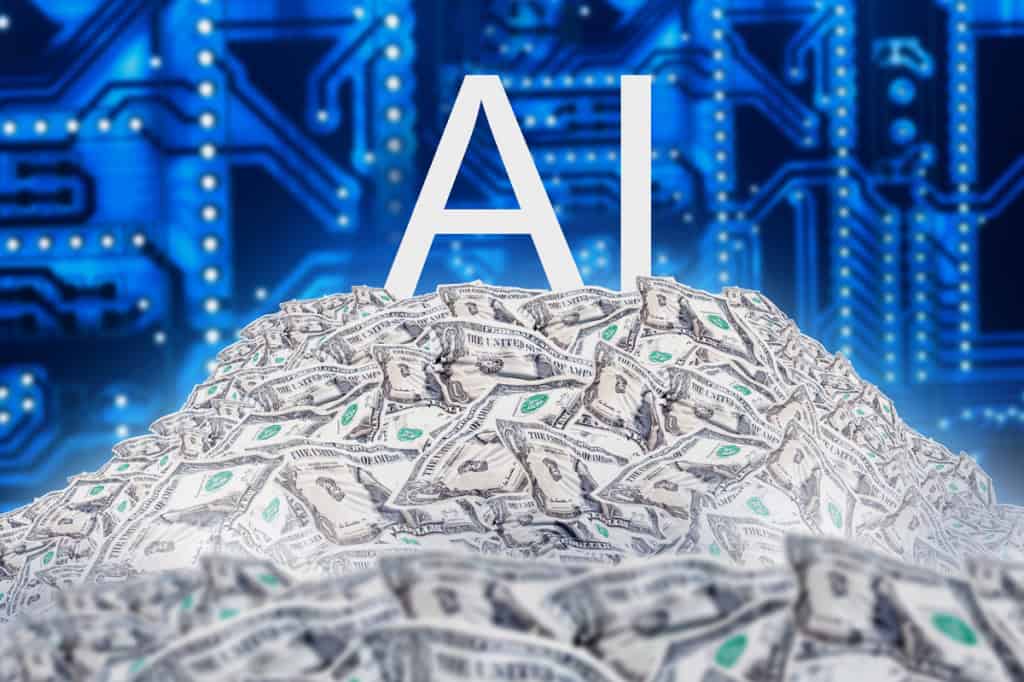 Investments in AI could reach levels comparable to those of major projects such as railways and power grids. – Image: FOTOGRIN/Shutterstock
The impact of the AI boom
Global investment in artificial intelligence, in relation to the size of the economy, should reach and likely surpass the levels previously allocated to major projects such as railways, power grids, and telecommunications systems.
The IMF estimates that AI could add up to 0.5 percentage points to the annual global economic growth if properly utilized. Georgieva compared a rise from 3% to 3.5% over a decade to adding an economy the size of the Association of Southeast Asian Nations (ASEAN) to the global market.
“Love it, hate it, or fear it, AI has arrived,” she stated.
However, growth is likely to be unequal. Less involved countries in the production and supply of technology for AI may benefit less from this expansion, widening the economic gap between nations.
The construction of the necessary infrastructure for AI also increases the demand for energy and other resources. This adds to higher prices for food and energy, tariffs, and defense spending, keeping inflation under pressure.
- Trade: hardware and AI-related technology products already account for more than 10% of global trade in goods.
- Growth: the IMF estimates that technology could add up to 0.5 percentage points to global economic growth each year.
- Inequality: countries less involved in the global AI supply chain may end up with a smaller share of the benefits.
- Capital: AI-related companies are competing for resources with governments in the bond market.
AI grows amid high debt
The potential for AI growth comes at a delicate time for governments. Global public debt is close to its highest level since World War II and is expected to surpass 100% of GDP.
This matters because the growth generated by AI does not occur in an economy with public finances free for new investments. For 17 years, governments had favorable conditions: interest rates were lower than the rate of economic growth. Now, with higher interest rates, it has become more difficult to manage debt.
For Georgieva, countries need to reorganize their accounts and regain space in their budgets. Thus, they can better benefit from economic growth and have room to face new problems without increasing debt further.
 The expansion of AI is happening as the global public debt approaches its highest level since World War II. Image: Bigc Studio/Shutterstock
What happens if the boom loses strength?
The expansion of AI also affects financial markets. The prices of shares of large technology companies are linked to the expectation of high profits. If results fall below expectations, the reaction could spread to other investments.
Read more:
- AI race could consume trillions before delivering expected returns
- Investments in AI may take years to yield returns, warns Goldman Sachs analysis
- Billions invested in self-learning AI bring the technology closer to the human mind and raise an ethical warning
Georgieva cited the Amara's Law, according to which a new technology is usually overestimated in the short term and underestimated in the long term. For her, the gap between the current increase in investments and the arrival of the economic benefits of AI could be the period of greatest instability.
"It could be a good moment for a more prudent and strict monetary stance in many countries," she said.
For the IMF, supervision and clear rules are important to follow this transformation. The challenge is to harness the potential of AI without further increasing pressure on prices, public accounts, and markets.

Valdir Antonelli is a journalist with specialization in digital marketing and consumer behavior.

