Author | Gao Yunyi
Editor | Cen Feng
One week after Anthropic filed for an IPO, the head of its most profitable product had already joined the other side.
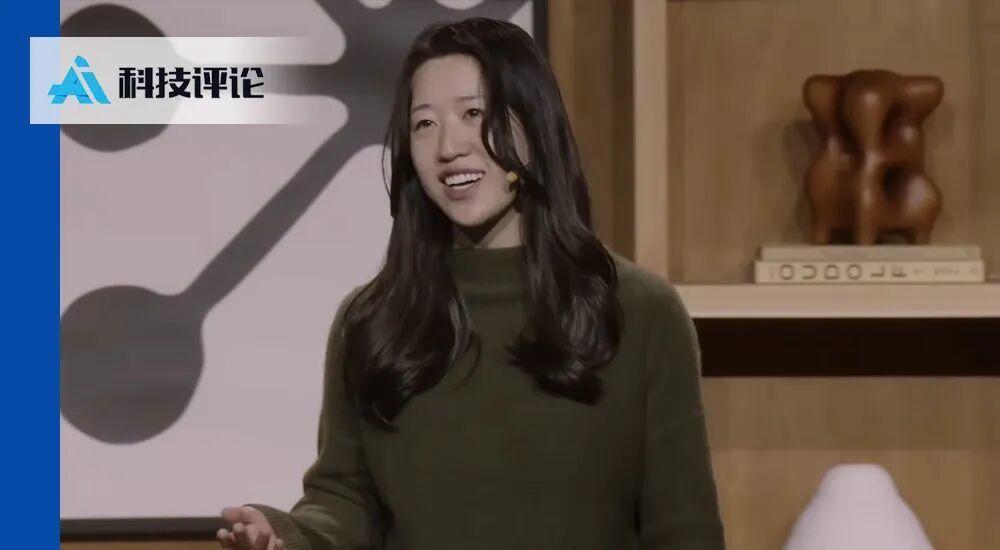
This morning, Cat Wu, the former head of product for Claude Code, announced on X that she was joining OpenAI as the head of product for the core product group.Just a day earlier, she had bid farewell to Anthropic—a virtually seamless transition. OpenAI President Greg Brockman immediately reposted her announcement to welcome her.
She is the third core member to leave the Claude Code team in just ten days. The two who left earlier were Anthony Morris, the father of the Claude Code desktop app, and Thariq Shihipar, a core Agent engineer. Meanwhile, Anthropic is at the critical juncture of its IPO.
Cat Wu’s departure shook Silicon Valley not merely because she switched sides, but because she took with her the complete methodology behind this most profitable product line.
01
Who is Cat Wu?
Cat Wu, whose real name is Catherine Wu, is a highly sought-after Chinese-American product manager in Silicon Valley’s AI scene.
As the head of product for Anthropic’s flagship AI coding tool Claude Code and office agent Cowork,she and Boris Cherny, the “father of Claude Code,” are known as the “Batman and Robin” of Anthropic. She is one of the key figures who personally transformed Claude Code from a small internal tool into a global blockbuster.
She was also a Princeton academic standout, co-developing the collaborative whiteboard software Scratchwork through the university’s incubator during her senior year. She gained experience at both a major technology company and a unicorn startup, writing code and studying data; she also spent three years as a venture capitalist, focusing on developer tools and AI infrastructure.Her extensive cross-disciplinary background has made her the rare person who can understand code, understand the business economics, and accurately gauge what developers want.
In August 2024, she joined Anthropic as a product manager focused on a research area.
At the time, Claude Code was still an inconspicuous experimental project within Anthropic. Cat Wu wanted to see what it could really do, so she used it to build a reinforcement-learning environment from scratch. She spent dozens of hours repeatedly describing requirements and adjusting the direction, without writing a single line of code herself from start to finish. When the environment finally ran successfully, the experience left her stunned, and she promptly applied to transfer into the fledgling team.
In that team, she and engineering lead Boris Cherny formed a golden partnership. Boris wrote the initial prototype code and focused on what could be achieved next, while Cat Wu turned ideas into products and mobilized resources across the board to bring them to market. Renowned for her execution, she pioneered an ultra-fast product iteration model that directly compressed R&D cycles from several months to a few weeks—or even days.
Later, her responsibilities expanded further to Claude Cowork, exploring AI in collaborative workplace settings.
Today, Claude Code is one of the world’s most popular AI coding agents and is used by a large number of developers. In February 2026, Anthropic disclosed in its Series G funding announcement that Claude Code’s annualized revenue run rate (ARR) had exceeded US$2.5 billion, doubling from the start of the year.
Across the entire history of technological development, this is one of the fastest-growing enterprise software (SaaS) products, yet it was only made available to the public in May 2025. The product line led by Cat Wu is the central growth driver behind this revenue curve.
Cat Wu is a contrarian. At Anthropic,she redefined “how product managers should work in the AI era”.She has publicly shared several methods on podcasts that peers still hold up as gospel:
For example, the long PRD is dead. In an era when model capabilities change every few months, a PM with an idea can quickly spin up a working prototype themselves—or ask AI to build one—and iterate on the product directly by running and evaluating it. There is also the “three-month shelf-life principle”: any product roadmap lasting more than six months will become obsolete, and if something can improve the experience today, it should ship immediately. She even cut 20% of the old prompt patches the team had painstakingly accumulated when upgrading to a new model; she encouraged engineers to take on “side quests” beyond the main path. In this atmosphere of free exploration, engineers spontaneously came up with many iconic features during casual conversations and afternoon-tea chats: the now globally popular Claude Code desktop app and the remarkably intuitive “Ask User Question (AskUserQuestion)” feature both emerged this way.
In her departure post, Cat Wu expressed pride in Claude Code. The product has gone from requiring users to manually approve each permission in its early days to being able to trust the model’s own judgment and automatically complete permission approvals, making a critical leap. And the insight she gained on this journey, as she had previously shared on a podcast, is that the most important thing in building an AI-native product is learning to let go.
02
On the eve of the IPO, is the timing of this departure too sensitive?
Some may ask: doesn’t her departure on the eve of Anthropic’s IPO mean she will lose out on a huge sum of money? Not necessarily.
One netizen pointed out that she had been at Anthropic for approximately 26 months. Under the standard four-year option vesting schedule commonly used in Silicon Valley, roughly half of her shares had already vested. Although those options were merely “paper wealth” before the company went public, once the company rang the bell, the vested portion in her hands could still be cashed out.
In other words,she had already secured her ticket to financial freedom and no longer needed to remain “tied” to the company.
In fact, she was not the only one choosing to step down at this moment. On October 24, two other key members of the team, Thariq and Anthony, also announced their departures ahead of everyone else. Two days later, Anthropic formally submitted its S-1 registration statement to the SEC, with plans to launch its roadshow on November 9. The figures in the prospectus were stunning: revenue exceeded $16.2 billion in the first half of 2026, and the valuation was headed for the trillion-dollar range.
The timing of Cat Wu’s departure coincided with the eve of the company’s transformation from a “startup legend” into a “public company.” For the employees who stayed, going public meant a windfall; but for Cat Wu, the “top executive” who had just taken the product from zero to $2.5 billion in ARR (annual recurring revenue), this was the peak of her professional stature. With such a stellar track record behind her, moving on to her next adventure was the natural next step.
Capital markets do not care how much money she personally left on the table; investors are far more concerned by the dangerous signal conveyed by this “collective departure”:
Claude Code is the main commercial engine of Anthropic and the company’s most important card against OpenAI’s coding products. In the span of just ten days, the head of product for this core business line, the lead for the desktop app, and a core Agent engineer all left one after another; even the top executive jumped ship to the biggest competitor. For any company racing toward an IPO, this is a governance issue investors will repeatedly weigh.
03
OpenAI’s move:
Talent came on board, and infrastructure was acquired
After joining OpenAI, Cat Wu reports directly to OpenAI’s “god of the reset,” Tibo.
Tibo is no ordinary figure. He was previously at Google DeepMind, and after joining OpenAI, he led the core product line from the development of early large language models through ChatGPT to Codex. Putting Claude Code’s product chief under him means Cat Wu is taking on no peripheral project; she is taking on the central product role across OpenAI’s entire agent product line.
She has already taken a product through the full cycle at Anthropic and knows how to turn model capabilities from the lab into products developers rely on. That is exactly what OpenAI needs most right now.
Next, she will work with Nick Turley, who is responsible for enterprise products, and Ashley Alexander, who is responsible for consumer products, to build team-level AI assistants.
Another noteworthy development: on the day before Cat Wu joined, OpenAI announced that it was acquiring Pierre Computer. Many people’s first reaction is that OpenAI is building yet another competitor to take on GitHub, but the two are not remotely the same thing.
The traditional Git architecture was designed from the outset for people to write code. With one developer committing code a dozen or more times a day, version management and access-control demarcation would be perfectly adequate. But if a team simultaneously has five or six agents—frontend, backend, testing, and so on—constantly writing code into the repository, the old Git architecture will soon capitulate amid repeated version conflicts and access-control violations.
Pierre solves precisely this problem. It focuses on code storage designed natively for AI agents, specifically addressing version management and concurrent read/write challenges when large numbers of agents write code rapidly and concurrently. Its two open-source repositories, Trees and Diffs, were integrated into Codex at an early stage. On top of that, Pando, OpenAI's internally developed Git system, has reduced code-push latency to a level that supports real-time collaboration.
Taken together, these moves make OpenAI's intentions unmistakable. It does not want to be merely an "AI that helps you write code"; it wants to connect the entire chain from ideation, coding, and code storage to version management and deployment, making Codex the primary platform for humans and AI to collaboratively develop software and directly challenging Microsoft's GitHub.The industry is now saying, "Team agents are the next battlefield," but why can agents still not break into enterprise production environments?
The root problem is not that their coding accuracy is insufficient; in team settings, no one dares actually use them. Would you let an agent directly touch a production directory? If it accidentally changes a core module written by a colleague and commits the changes without running tests, who takes responsibility if it causes a production incident?
In what scenarios can agents modify files directly? What operations must stop and bring in a human for approval? And when several agents are working at the same time, how should tasks be divided so they do not get in one another's way? These fine-grained judgments are all hard-won product instincts—and that is precisely the experience Cat has accumulated over two years of honing Claude Code from the ground up.
In the future, when an agent finishes writing code, another agent responsible for testing will automatically run checks and prechecks, and people will only need to make the final call at key milestones. OpenAI internally calls this new workflow, designed natively for agents, "Reset." Currently, OpenAI has 1 billion users, making team-level agents a natural next step.
By comparison, Anthropic has the best coding model, but its user base consists of only a few hundred thousand developers; Cursor built its momentum on developer word of mouth, but lacks underlying model capabilities and infrastructure.
Only with the people, technology, and infrastructure pieces of the puzzle now in place does OpenAI truly earn its ticket to enter the team-agent race.
Reference link: https://x.com/_catwu/status/2118137612577968402 (Leiphone (official WeChat account: Leiphone) report)
This article was originally published by Leiphone. Unauthorized reproduction is prohibited. For details, see the Reposting Notice.

