Zhidx (WeChat public account: zhidxcom)
Author | ZeR0
Editor | Moying
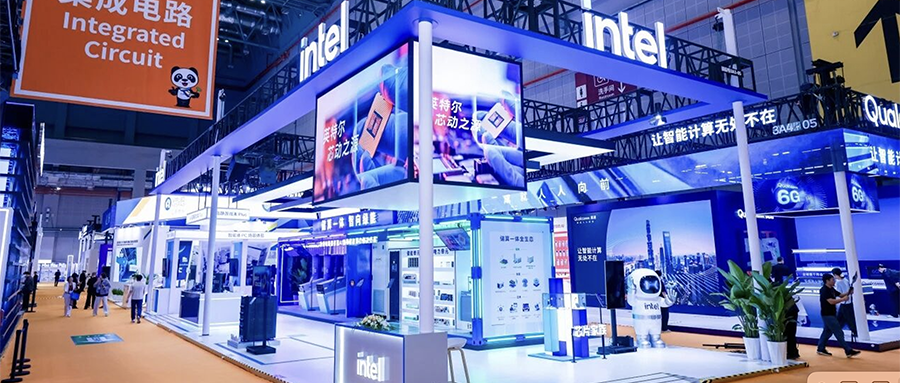
Zhidx reported on Nov. 5 that the ninth China International Import Expo (CIIE) opened in Shanghai today. Intel, together with its ecosystem partners, showcased at the Technical Equipment Exhibition Areacomputing products spanning data centers, the network edge and intelligent terminals; an integrated solution combining green electricity, energy storage and computing capacity; Token-in-a-Box appliances; and agentic PCs and gaming terminals, among others, demonstrating Intel and its partners’ collaborative achievements in driving intelligent applications into practical use and exploring green-computing infrastructure.
“In the agentic era, advances in computing power must be combined with industry needs, energy efficiency and commercial sustainability before they can be turned into lasting productivity. The CIIE is not only a window for showcasing new technologies and applications, but also an important platform for connecting diverse market needs and deepening long-term collaboration.” Intel China Chairman Wang Zhicong said, “Intel will leverage the strengths of its global product portfolio and open platforms to deepen collaboration with Chinese industry partners, drive global technologies to better serve local applications, and enable customized innovative products rooted in local needs to benefit China and global markets.”
On the morning of Nov. 6, Intel Vice President Ke Anping (Sarah Kemp) will attend the “The Power of Enterprises Amid Change: Building More Sustainable Industry Partnerships” subforum of the ninth Hongqiao International Economic Forum, where she will discuss the long-term value of industry partnerships with stakeholders from all sides.
1. Computing products for diverse needs, accelerating device-edge-cloud collaboration in the agentic era
As agentic applications place higher demands on system coordination and logical scheduling, the critical role of CPUs has been further strengthened, and deep device-edge-cloud collaboration has become a core path to reducing costs and improving efficiency. In response to this trend, Intel demonstrated multilayered computing capabilities spanning everything from underlying chips to system deployment.
With Intel 18A advanced process and packaging capabilities at its core, Intel turns advanced process technology into computing products tailored to diverse needs.
Its booth prominently showcased a full-stack computing matrix featuring third-generation Intel Core Ultra processors, Intel Xeon 6+ processors and next-generation network and edge (NEX) products. Covering diverse application needs across client, edge and data-center scenarios, this portfolio provides an energy-efficient foundation for device-edge-cloud collaboration.
The third-generation Intel Core Ultra processor (codename Panther Lake)is the first computing platform built on the Intel 18A process node, targeting multiple form factors, including laptops, handheld gaming consoles, robots and industrial edge devices. The product is scheduled for official release in January 2026.
The third-generation Intel Core processor (codename Wildcat Lake)is built on the Intel 18A process node, adopts next-generation CPU cores and integrates graphics capabilities based on the Xe3 architecture.
In data-center and enterprise applications, Intel Xeon 6+ processors use a high-density architecture to balance performance and energy consumption, meeting the high-concurrency scheduling needs of agents.
The Intel Xeon 6+ processor (codename Clearwater Forest)is the first data-center CPU built using the Intel 18A process, featuring up to 288 energy-efficient cores and 576 MB of L3 cache. A single processor can reliably support more than 1,000 agents, making it suitable for cloud-native, agentic AI and network-intensive workloads.
On one hand, Intel is working with partners to advance rack-scale solutions for large data centers. On the other, it is joining forces with ecosystem partners to launch Token-in-a-Box appliances for on-premises enterprise AI deployments, lowering the barriers to enterprise AI deployment.
Token Integrated SystemIntegrates high-density computing capacity with full-stack software into a system that can be deployed flexibly and works out of the box. A single Token Integrated System is an AI factory for an entire department. It can significantly reduce noise through advanced liquid-cooling technology, while its highly modular design simplifies installation and routine maintenance. It requires no dedicated server room and can be deployed directly in the workplace. A single system can run flagship-class, trillion-parameter large models and handle AI inference, AI Coding, digital employees, and other AI tasks across multiple scenarios.
In the smart-device sector, on-device AI is moving from “waiting for instructions” to “providing proactive services.” Leveraging its CPU, GPU, and NPU compute engines and a hybrid device-cloud deployment model, Intel is working with ecosystem partners to bring agent applications and systems such as Baidu Dazi, Doubao Work, Marvis, and WorkBuddy to PCs, deeply integrating agents into workflows for work and study, creative design, entertainment and everyday life, and PC setup.
AI High-Performance Quiet Gaming Laptop Plus and other gaming products in multiple form factors are combining AI gaming assistants with real-time AI interactions to deliver ultimate gaming experiences.
II. Building an AI-Integrated Energy Storage and Computing Solution to Support Green Intelligent Computing through Modular Design
Intel Integrated Solution for Green Power, Energy Storage, and Computinguses a standardized, modular container design that supports flexible configuration of computing and energy-storage modules according to customer needs.
The solution centers on an Intel-architecture CPU computing platform and combines full-stack technology capabilities to build computing pods. By partnering with China’s leading energy-storage and electric-power companies and drawing on the capabilities of Chinese IT-industry partners in equipment design and manufacturing, the open-source AI ecosystem, and computing optimization, it creates a new type of AI infrastructure that coordinates computing power with energy storage.
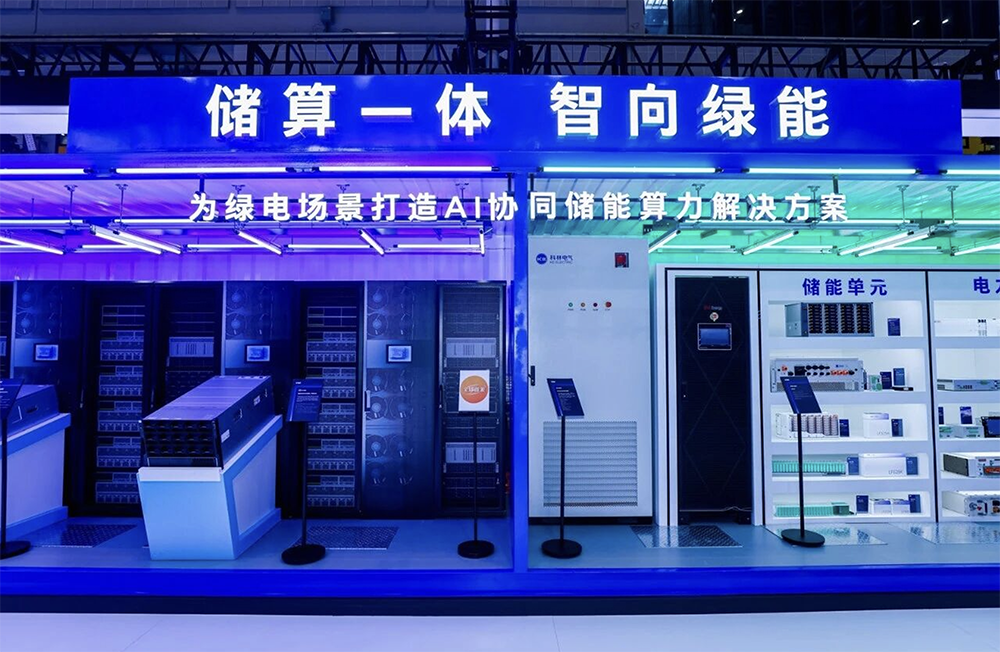
Its standardized, modular design helps shorten deployment and delivery cycles and enables customers to build in phases and scale on demand according to their actual business needs, reducing the risk that a large-scale, one-time buildout will not match actual computing demand.
The entire system can be customized at the factory, with a lead time of approximately 8–12 weeks; once the equipment arrives, it can be operational in as little as one week and can be relocated as a whole.For AI inference workloads, the solution can also improve system efficiency through computing optimization, helping reduce token costs.
A single containerized computing pod in the solution can accommodate 12 standard racks and support the deployment of computing infrastructure with power requirements ranging from 100 kilowatts (kW) to several megawatts (MW). The entire system can be customized at the factory, with a lead time of approximately 8–12 weeks; once the equipment arrives, it can be operational in as little as one week and supports relocation as a whole and phased modular expansion.
Conclusion: 41 Years of Operations in China, Building an Open Ecosystem with More Than 15,000 Partners
Intel believes sustainable industry partnerships are founded on complementary strengths, mutual learning, and the continual resolution of practical problems. The value of an open platform lies not only in supporting specific applications, but also in effectively connecting the professional expertise of different partners and gradually transforming project collaborations into shared technical and ecosystem capabilities for joint development.Intel combines its accumulated expertise in computing platforms, hardware-software synergy, and the global ecosystem with Chinese customers’ and partners’ understanding of local needs and industry experience. Through pragmatic collaboration, it improves application efficiency and deployment flexibility, allowing partner growth and business development to reinforce one another.
Throughout its 41 years of operations in China, Intel has remained rooted in the Chinese market and has developed alongside local industry. Today, backed by an extensive local business network, Intel is building an open ecosystem with more than 15,000 partners.For the agentic era, Intel plans to support partners in building products and solutions tailored to practical needs by providing efficient computing platforms, putting into practice the principle of “boosting efficiency through intelligent computing and advancing green development together” through industry collaboration.
jQuery(document).ready(function($) { $.post('https://www.zhidx.com/wp-admin/admin-ajax.php', {action: 'wpt_view_count', id: '607550'}); });