Latest AI News

AI-powered infostealer picks out the most profitable parts of your stolen data - Help Net Security

December 3, 2019 | HelpNetSecurity AI
AI-powered infostealer picks out the most profitable parts of your stolen data - Help Net Security
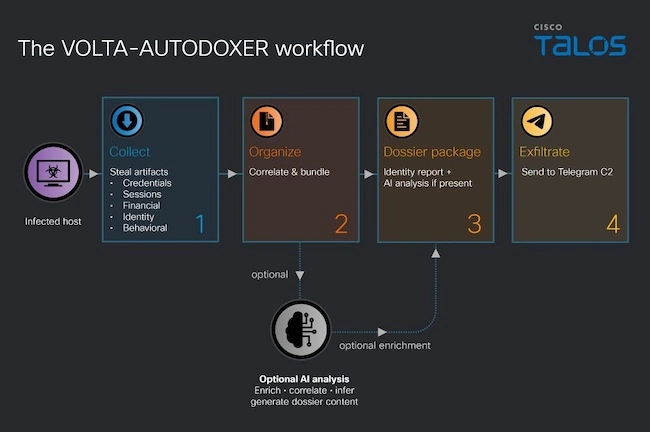
AI-powered infostealer picks out the most profitable parts of your stolen data A new Windows infostealer sends the data it steals to an AI model and asks it to rank the victim’s assets by how much money they could bring in, Cisco Talos has found. “There is a new idea in the cybercrime world — cast a wide net, steal everything, and let AI sort out the specifics,” said Ryan Fetterman, a security researcher at Cisco. The malware calls itself VOLTA-AUTODOXER a
OpenAI raises top bug bounty payout to $172,000 with bonuses - Help Net Security

November 9, 2020 | HelpNetSecurity AI
OpenAI raises top bug bounty payout to $172,000 with bonuses - Help Net Security
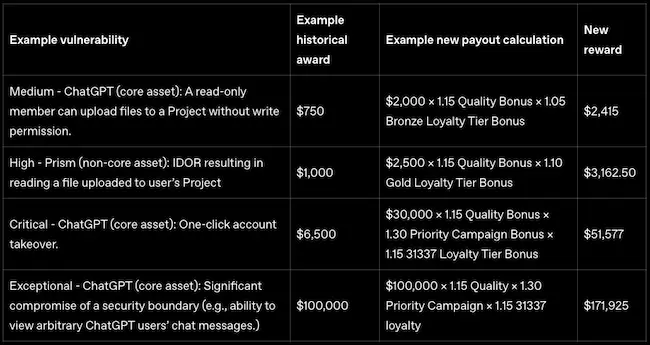
OpenAI raises top bug bounty payout to $172,000 with bonuses OpenAI increased its security bug bounties to encourage independent researchers to find vulnerabilities in its software. The program now offers bonuses for high-quality reports. The program encourages researchers to disclose vulnerabilities responsibly and complements OpenAI’s Defense Factory, where engineers use the company’s models to find and reproduce vulnerabilities and test fixes. New bount

Stolen AI access leaves companies with cloud bills of up to $1 million - Help Net Security

September 15, 2018 | HelpNetSecurity AI
Stolen AI access leaves companies with cloud bills of up to $1 million - Help Net Security
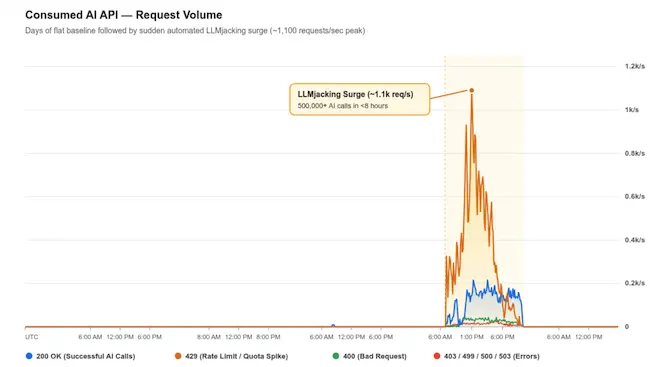
Stolen AI access leaves companies with cloud bills of up to $1 million Criminals who break into corporate cloud accounts are using the stolen access to run AI models at the victim’s expense, in some cases racking up more than $100,000 in charges in a single day, Google Threat Intelligence Group (GTIG) and Mandiant researchers have found. Usage chart showing LLMJacking generating a spike in API requests (Source: Google) In 2026, Mandiant responded to severa

Novee puts forgotten internet-facing assets through penetration testing - Help Net Security

December 9, 2020 | HelpNetSecurity AI
Novee puts forgotten internet-facing assets through penetration testing - Help Net Security
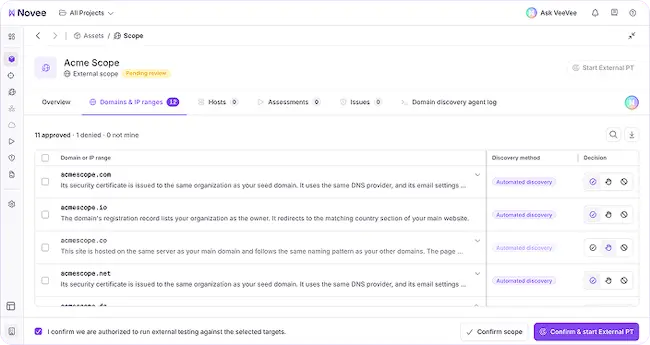
Novee puts forgotten internet-facing assets through penetration testing Novee’s External Surface Testing is a new capability in its AI penetration testing platform that helps security teams discover internet-facing assets and validate exploitable vulnerabilities. It tests newly disclosed CVEs and findings imported from third-party external attack surface management (EASM) tools. “Attackers don’t limit themselves to the applications you’re already testing.

Companies going all in on AI could see their strategy backfire - Help Net Security

November 20, 2017 | HelpNetSecurity AI
Companies going all in on AI could see their strategy backfire - Help Net Security
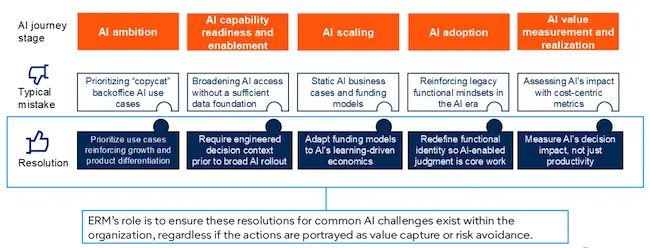
Companies going all in on AI could see their strategy backfire Four of the five highest-ranked enterprise risks in Gartner’s Quarterly Emerging Risk Report were AI-related. AI strategy miscalculation and AI-driven competitive displacement debuted at No. 3 and No. 4, respectively. The AI workforce preparedness gap held fifth place. AI discovery of cyber vulnerabilities and geopolitical energy supply shocks held the top two spots for the second consecutive q

What AI-generated malware looks like under the microscope - Help Net Security

December 14, 2018 | HelpNetSecurity AI
What AI-generated malware looks like under the microscope - Help Net Security
What AI-generated malware looks like under the microscope In this Help Net Security interview, Lindsay Kaye, VP of Threat Intelligence at HUMAN Security, talks about what AI-generated malware looks like on the bench. She points to tidy comments, uniform logging messages, and emojis as signs a script came from a model, and notes that decompiled code strips much of that away. Kaye also covers how AI is squeezing the time teams have to patch, where it helps c

Companies are spending more on AI governance and getting less control - Help Net Security

June 14, 2018 | HelpNetSecurity AI
Companies are spending more on AI governance and getting less control - Help Net Security
Companies are spending more on AI governance and getting less control Companies are increasing their cybersecurity budgets, with AI security and governance the top priority for additional spending, followed by cloud security, according to DNSFilter’s The Cost of Shadow AI report. Some 74.5% of respondents reported a larger cybersecurity budget than 12 months earlier. Asked where their next incremental security dollar would go, 40.3% named AI security and g

OpenAI’s upcoming AI model built 948 working Linux root exploits in a single run - Help Net Security

March 20, 2025 | HelpNetSecurity AI
OpenAI’s upcoming AI model built 948 working Linux root exploits in a single run - Help Net Security
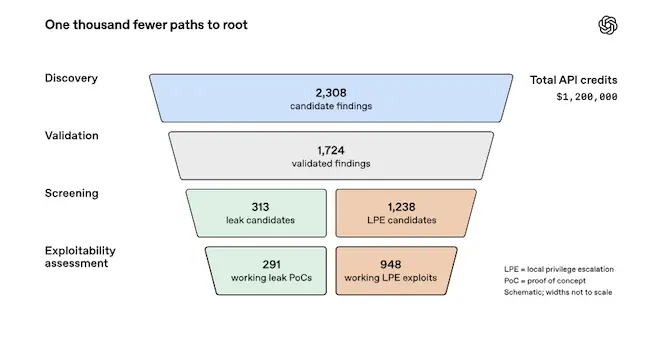
OpenAI’s upcoming AI model built 948 working Linux root exploits in a single run An automated system running on an upcoming AI model turned hundreds of Linux kernel bugs into working exploits that give an ordinary user root access, and wrote a patch for each underlying flaw, OpenAI revealed in a new research post. Source:OpenAI The company’s Cyber team ran the pipeline in mid-October 2026 against the latest Linux kernel, with target machines running a stoc

87% say their AI controls need to work better - Help Net Security

October 17, 2016 | HelpNetSecurity AI
87% say their AI controls need to work better - Help Net Security
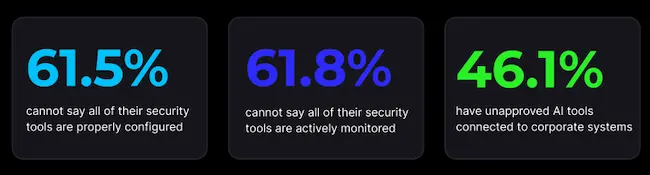
87% say their AI controls need to work better The AI running inside large companies has stopped waiting for permission. Across five categories of AI, from chatbots to process automation, more than half of 3,600 business decision-makers say the systems their teams use can act within defined rules without routine review, or finish whole processes with no human approval. 87% of those same respondents say their organization needs a better way to approve, monit

OpenAI’s GPT-6 Cyber found 81 Firefox flaws earlier AI testing missed - Help Net Security

July 15, 2023 | HelpNetSecurity AI
OpenAI’s GPT-6 Cyber found 81 Firefox flaws earlier AI testing missed - Help Net Security
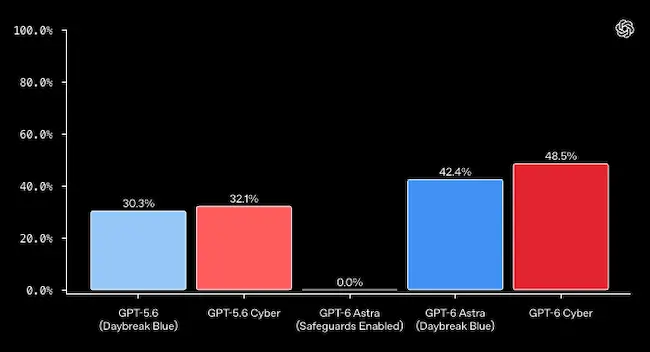
OpenAI’s GPT-6 Cyber found 81 Firefox flaws earlier AI testing missed OpenAI has introduced GPT-6 Cyber, a version of GPT-6 Astra trained to find software vulnerabilities, test how attackers could exploit them, and help develop fixes. The model is designed for authorized security testing of websites and applications. Vulnerability research and security testing OpenAI used GPT-6 Cyber to help secure its systems, including the infrastructure used to train it

AI Pioneers Gather at BAAI 2024: Unveiling Innovations in Large-Scaled AI Models for Language, Multimodal, Embodied, Bio-Computing, and FlagOpen 2.0 | Synced

October 8, 2018 | Synced
AI Pioneers Gather at BAAI 2024: Unveiling Innovations in Large-Scaled AI Models for Language, Multimodal, Embodied, Bio-Computing, and FlagOpen 2.0 | Synced
The 6th annual BAAI Conference hosted by Beijing Academy of Artificial Intelligence (BAAI), commenced today in Beijing, marking a significant gathering for global AI insiders. This premier event, themed “Global Vision, Ideas in Collision, Leading Cutting-Edge Innovations,” brings together top researchers and industry leaders from around the world to share their latest findings and discuss the future of artificial intelligence.This year’s BAAI 2024 conferen

Google’s Proofread: AI-Driven Typing Accuracy in One Tap | Synced

April 28, 2017 | Synced
Google’s Proofread: AI-Driven Typing Accuracy in One Tap | Synced
Gboard, Google’s keyboard for mobile devices, utilizes statistical decoding to offer a smooth typing experience. It features both automatic and manual error correction capabilities, ensuring user-friendly interactions. Leveraging the impressive capabilities of Large Language Models (LLMs), Gboard enhances sentence- and paragraph-level corrections, revolutionizing the typing experience. In a new paper Proofread: Fixes All Errors with One Tap, a Google resea

4.5x Performance Boost: University of Illinois’ Muti-Agent AI System Takes on Cyber Threats | Synced

June 13, 2017 | Synced
4.5x Performance Boost: University of Illinois’ Muti-Agent AI System Takes on Cyber Threats | Synced
Large Language Model (LLM) agents have become increasingly sophisticated, particularly in cybersecurity. Modern AI agents can autonomously hack mock “capture-the-flag” style websites and exploit real-world vulnerabilities when provided with descriptions. However, they struggle with real-world vulnerabilities that are unknown ahead of time, which also known as zero-day vulnerabilities. In a new paper Teams of LLM Agents can Exploit Zero-Day Vulnerabilities,

Overcoming Computational Challenges in Large Language Model Inference with MInference 1.0 | Synced

June 9, 2019 | Synced
Overcoming Computational Challenges in Large Language Model Inference with MInference 1.0 | Synced
The computational hurdles associated with Large Language Model (LLM) inference continue to impede their widespread deployment, particularly as prompt lengths increase. Current methods for speeding up pre-filling often struggle to maintain acceptable levels of accuracy or efficiency when applied to long-context LLMs. To address the abovementioned issue, in a new paper MInference 1.0: Accelerating Pre-filling for Long-Context LLMs via Dynamic Sparse Attentio

Revolutionizing Transformers: DeepMind’s PEER Layer and the Power of a Million Experts | Synced

December 3, 2022 | Synced
Revolutionizing Transformers: DeepMind’s PEER Layer and the Power of a Million Experts | Synced
The team highlights their main contributions as follows: Exploration of Extreme MoE Setting: Departing from the conventional focus on a small number of large experts, this work investigates the under-explored scenario of numerous tiny experts. Learned Index Structure for Routing: For the first time, the study demonstrates that a learned index structure (Kraska et al., 2018) can efficiently route to over a million experts. New Layer Design: By combining pro

Meta’s Sapiens: Revolutionizing Human Pose, Segmentation, and Depth Estimation with Vision Transformers | Synced

August 7, 2025 | Synced
Meta’s Sapiens: Revolutionizing Human Pose, Segmentation, and Depth Estimation with Vision Transformers | Synced
In recent years, substantial progress has been made in generating photorealistic human representations in both 2D and 3D, thanks to advancements in the precise estimation of various visual assets. Despite these improvements, achieving accurate and robust estimations remains a challenge, especially given the difficulties in scaling up ground-truth annotations for in-the-wild scenarios. In a new paper Sapiens: Foundation for Human Vision Models, a Meta resea

Outperforming Giants: TinyAgent’s Edge-Based Solution Surpasses GPT-4-Turbo | Synced

November 28, 2021 | Synced
Outperforming Giants: TinyAgent’s Edge-Based Solution Surpasses GPT-4-Turbo | Synced
Recent advancements in large language models (LLMs) have enabled the creation of sophisticated agentic systems that utilize tools and APIs to answer user queries through function calling. However, deploying these models on edge devices remains largely unexplored due to their significant size and high computational requirements, which generally necessitate cloud-based infrastructure. In a new paper TinyAgent: Function Calling at the Edge, a research team fr

Microsoft’s MarS: A Game-Changer in Financial Market Simulations Powered by Generative AI | Synced

March 1, 2016 | Synced
Microsoft’s MarS: A Game-Changer in Financial Market Simulations Powered by Generative AI | Synced
Generative models aim to replicate realistic outcomes across various contexts, from text generation to visual effects. While much progress has been made in creating real-world simulators, the application of generative models to virtual environments like financial markets remains relatively untapped. In a new paper MarS: a Financial Market Simulation Engine Powered by Generative Foundation Model, a Microsoft Research Asia research team introduces MarS, a fi

Google’s Zero-Shot Cross-Lingual Voice Transfer for Dysarthric Speakers | Synced

August 5, 2017 | Synced
Google’s Zero-Shot Cross-Lingual Voice Transfer for Dysarthric Speakers | Synced
In recent years, Voice Transfer (VT) technology has made notable strides, particularly in applications such as Text-to-Speech (TTS), Voice Conversion (VC), and Speech-to-Speech Translation. However, achieving high-quality zero-shot or one-shot voice transfer, especially for unseen speakers, remains a significant challenge. In a new paper Zero-shot Cross-lingual Voice Transfer for TTS, a Google research team presents a new VT module that seamlessly integrat

LTM Brings AI-Powered Quantum Error Mitigation to IBM Quantum Functions Catalog

November 29, 2017 | AIthority
LTM Brings AI-Powered Quantum Error Mitigation to IBM Quantum Functions Catalog