 © 01net
A national policy to regulate AI. Six invented academic quotes out of 67. The culprit is AI itself.
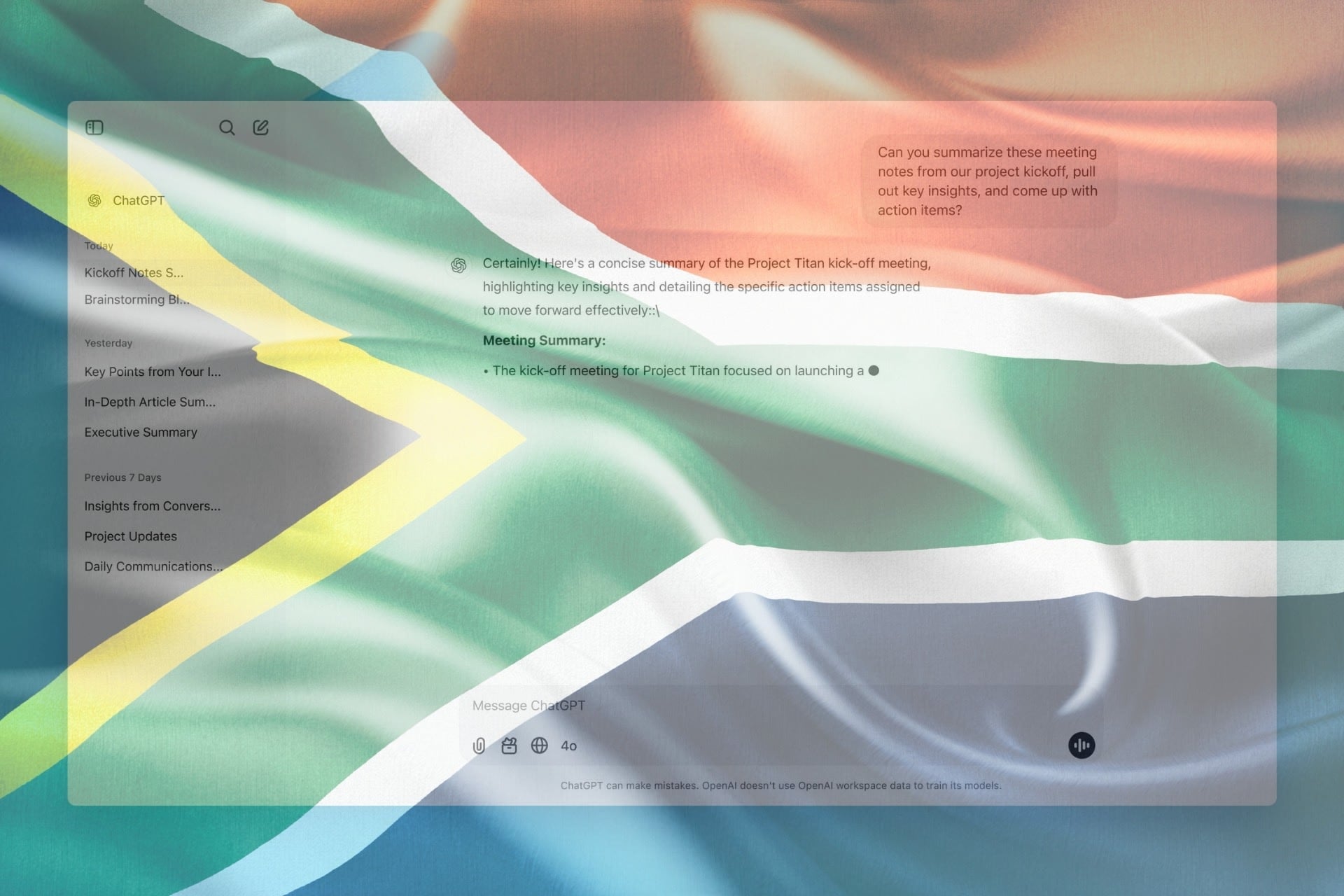
Everything was supposed to go faster than expected. South Africa wanted to become the first African country to establish a national framework to regulate artificial intelligence, modeled on our European AI Act. Cabinet secured on March 25, published in the Government Gazette on April 10, public comments open until June 10. It would take two weeks for News24 to derail everything.
Six quotes that don't exist, in a government document
On April 26, the South African daily publishes its investigation. On sixty-seven academic references cited in the policy, six concern articles that never existed. The journals, however, are real: South African Journal of Philosophy, AI & Society, Journal of Ethics and Social Philosophy. But the articles attributed to their columns have never appeared in them. The editors of the three journals confirmed this one by one. As for the authors credited with foundational work on AI governance, some have never written a single line on the subject attributed to them. The document of disagreement was prepared over months by the Department of Communications and Digital Technologies. It was validated by the Cabinet on March 25, then during an extraordinary session on April 1st. The project was not lacking in ambition: National AI Commission, AI Ethics Board, AI Regulatory Authority, Dedicated Ombudsperson, National AI Safety Institute, AI Insurance Superfund. An entire institutional ecosystem, built in part on sources that do not exist. I HAVE REQUESTED THE MINISTER OF FINANCE TO INVESTIGATE POSSIBLE IRREGULARITIES IN THE PROCUREMENT PROCESS OF TEXTBOOKS FOR FOUNDATION PHASE pic.twitter.com/pFNc8Qe5r9 — Siviwe Gwarube (@Siviwe_G) April 28, 2026 The Minister of Communications, Solly Malatsi, announced the withdrawal on Sunday, April 27, on X. The tone of the statement is not quite that of a technical correction. « This failure is not a simple technical issue. She compromised the integrity and credibility of the policy project», he wrote. The most plausible explanation, in his own words ? « Citations generated by AI were included without proper verification. » The minister promises « consequence management » for the involved officials.
Academic hallucinations : Pretoria is just the visible part
The South African case is not isolated, it's just more visible than others. The problem is structural : large language models don't consult a database to produce a citation. They predict its form, word by word, based on patterns seen during training. It's equivalent to a forger who doesn't copy any real checks but reproduces the general format : plausible signature, consistent amount, credible wording. When the prediction is sufficiently confident, the result resembles a real reference : authority of the journal's name, respected academic format. But it points to nothing. A hallucinated citation is neither a bug nor a slip-up, it's the model's nominal functioning mode.
What makes the South African case particular is not the hallucination itself. It's that a government document intended to regulate AI went through Cabinet, the official journal, and several rounds of proofreading. Without any single official taking the trouble to open a search engine to verify a single footnote. The president of the parliamentary committee presented his own summary, in six words addressed to the department: « the next time, avoid ChatGPT ».
👉🏻 Follow tech news in real-time: add 01net to your Google sources, and subscribe to our WhatsApp channel.








- Google Play Store
- 4K Video Downloader Plus
- VLC Media Player
- Adobe Reader
- uTorrent
- WinRAR
- Xender
- Google Chrome
- CCleaner
- Mozilla Firefox
- Avast Free
- ChatGPT
- Microsoft 365
- Opera One "
- Avast One









Download
- Google Play Store
- 4K Video Downloader Plus
- VLC Media Player
- Adobe Reader
- uTorrent
- WinRAR
- Xender
- Google Chrome
- CCleaner
- Mozilla Firefox
- Avast Free
- ChatGPT
- Microsoft 365
- Opera One
- Avast One


