 © Amazon / 01net
Amazon introduces an AI feature that generates images of fictional products from users’ descriptions. In other words, artificial intelligence highlights visually “perfect” items that no one sells. This new feature could create confusion among customers of the e-commerce giant.
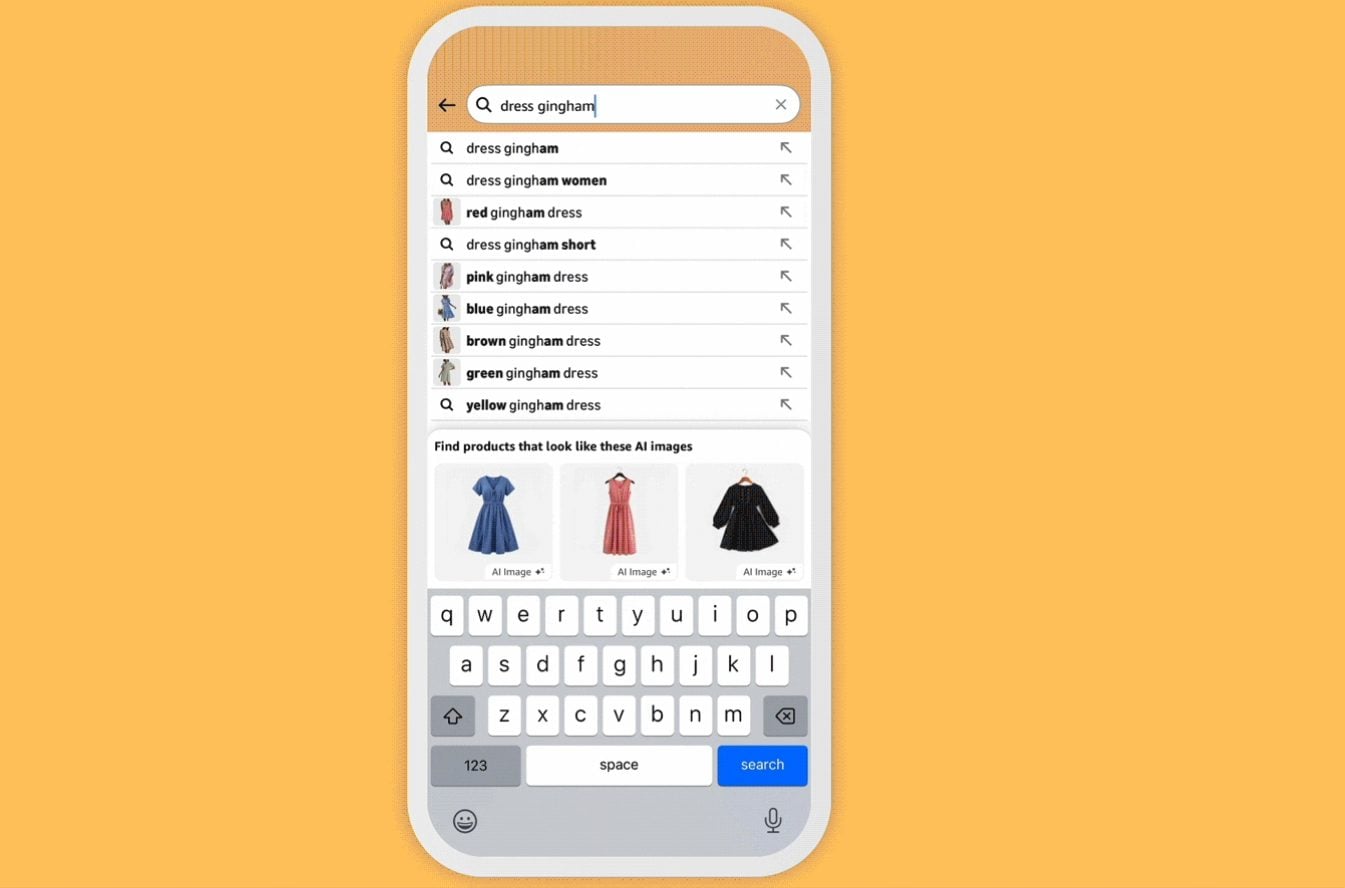
Generating fake products using artificial intelligence: this is Amazon’s new idea. This feature comes into play when you describe a product in the search bar of the Amazon Shopping app. The AI generates several images in real time based on the words you enter.Although these virtual products refer to real items, this feature may cause confusion and some frustration among customers.
Bridging the gap between “imagination” and “discovery”
Looking for a specific product on Amazon but can’t find it? The e-commerce giant has a solution: create it from scratch using artificial intelligence. You’ll never be able to buy it, but it exists virtually. More precisely, this is a new feature that kicks in when you describe a product in the search bar of the Amazon Shopping app. As you type words, the artificial intelligence generates images corresponding to the words entered. These images are refined and evolve with each word added or removed. For example, if you type “a blue sweater with a white collar,” the AI will instantly generate several images of a blue sweater with a white collar.
 © Amazon
The user is then presented with several products… that do not exist. However, these virtual products refer to other products intended to be visually similar. Amazon explains that this new feature aims to bridge the gap between “imagination” and “product discovery.”The company also specifies that this feature currently concerns only fashion and home décor, but that other categories will be added later.
A feature that could mislead customers?
Given that artificial intelligence tends to generate smooth, flawless images, Amazon is showcasing, with its tool, products that are smooth and flawless, but above all nonexistent. The display is attractive, but the products presented will never be available for purchase, or it will be possible to acquire alternatives that are, in most cases, likely to be less appealing. Hello, frustration. Since the rise of artificial intelligence, we have seen a proliferation of online stores showcasing products with a perfect appearance. In some cases, customers of these online stores receive items that bear no resemblance to the products displayed, or that even prove dangerous, even though the products appeared “perfect” on the website. In others, they are simply fraudulent stores. With this feature, Amazon risks confusing its customers by presenting (virtual) items that no one sells, even though they refer to real products. If Amazon has recently been accused of manipulating prices, the e-commerce giant could now be suspected of deceiving its users regarding the items offered for sale.
👉🏻 Follow tech news in real time: add 01net to your sources on Google, and subscribe to our WhatsApp channel.
Source: Amazon








- Google Play Store
- 4K Video Downloader Plus
- VLC Media Player
- Adobe Reader
- uTorrent
- WinRAR
- Xender
- Google Chrome
- CCleaner
- Mozilla Firefox
- Avast Free
- ChatGPT
- Microsoft 365
- Opera One
- Avast One










Download
- Google Play Store
- 4K Video Downloader Plus
- VLC Media Player
- Adobe Reader
- uTorrent
- WinRAR
- Xender
- Google Chrome
- CCleaner
- Mozilla Firefox
- Avast Free
- ChatGPT
- Microsoft 365
- Opera One
- Avast One


