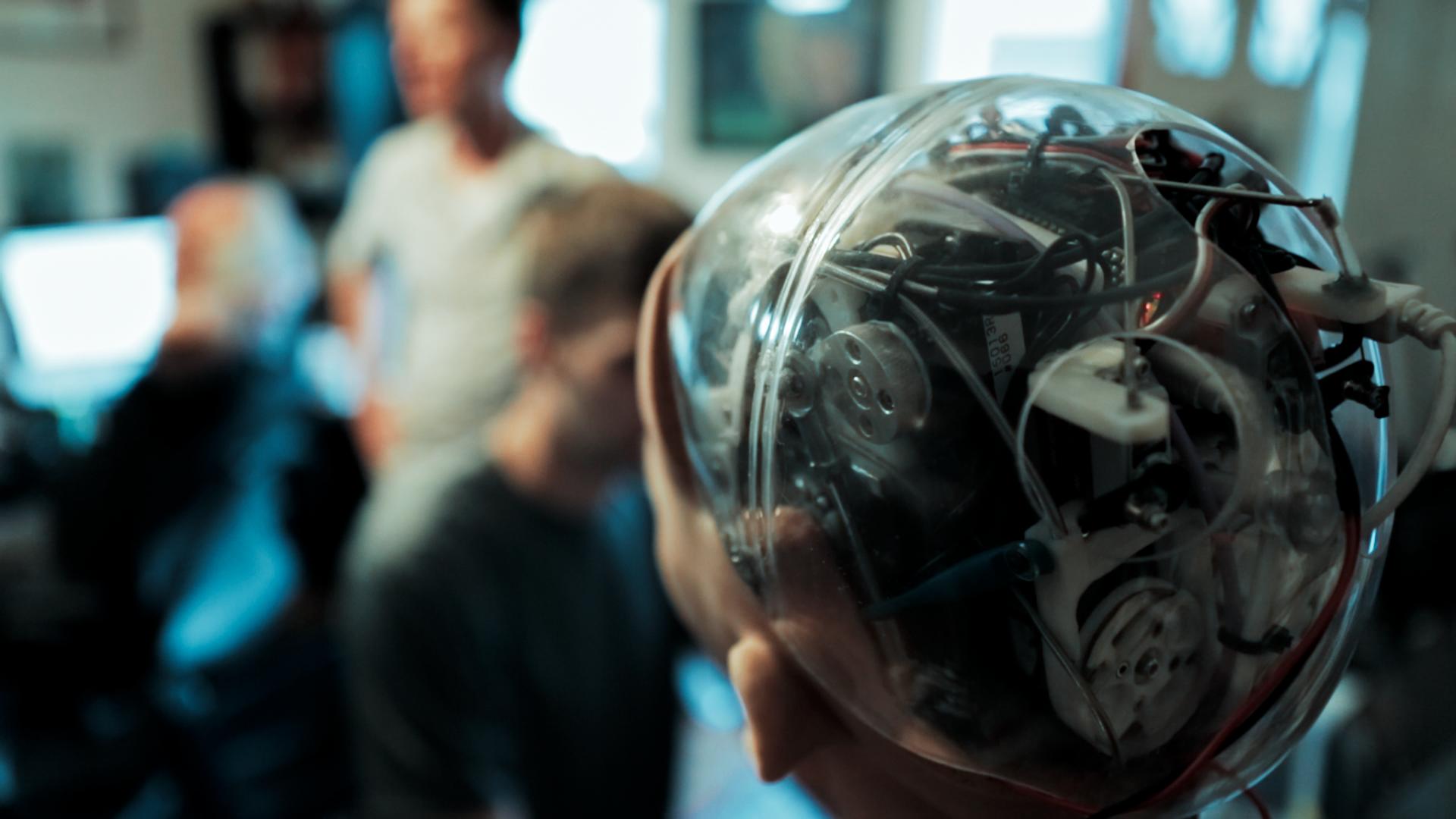

More Human Than Human comes along at a time when perhaps no reminder is necessary: leaving life to bots—whether that means machine learning, artificial intelligence, genuine human-like androids, etc.—might get messy for us humans. Westworld gives us one version of a sentient-machine uprising every Sunday, and news cycles like those involving Cambridge Analytica and Facebook provide gentler reminders that creating increasingly intelligent tech platforms can lead to unwanted manipulation and consequences right now.
But the new documentary (which debuted at South by Southwest and plays at the acclaimed Hot Docs Festival in Toronto this week) doesn’t set out to paint a picture of some futuristic hellscape. Instead, it wants viewers to pause for a second to consider the forever promise of technology. “We grew up in the shadow of the space program, really believing that tech was going to make our lives better,” co-director Tommy Pallotta told Ars. “For five decades, we’ve seen this promise that tech would create more leisure time for us [and] that it’ll make all our lives better. It’s kind of insane we’re still sold the same promise, but what do we really have to show for it?”
That’s a central question driving More Human Than Human throughout this fairly tight (roughly an hour and 20 minutes) documentary. In fact, the film packs in so many interesting AI applications—from the high-profile to the genuinely unexpected—that at times it leaves you wanting more time or reflection with certain examples. But More Human Than Human still works as its filmmakers intended even as an accelerated, macro-level catch-up on the state of artificial intelligence. Viewers will be hard-pressed to watch and not take a second look at everything, from their voice assistants to their sci-fi.
More thought than the Man in Black
More Human neither says the end is near nor that we should all become cyborgs. For every interviewee who says “Internest” (because we’re incubating evil) and for every chatbot good enough to catfish a Loebner prize judge, the film also finds small androids providing comfort to the elderly or children with social disorders who find a way to communicate through Siri. And with each portrayal presented, no matter what the easy audience assumption may be, shades of gray emerge.