
AI News

Google's TurboQuant AI-compression algorithm can reduce LLM memory usage by 6x - Ars Technica

May 28, 2026 | Ars Technica AI
Google's TurboQuant AI-compression algorithm can reduce LLM memory usage by 6x - Ars Technica
Even if you don’t know much about the inner workings of generative AI models, you probably know they need a lot of memory. Hence, it is currently almost impossible to buy a measly stick of RAM without getting fleeced. Google Research recently revealed TurboQuant, a compression algorithm that reduces the memory footprint of large language models (LLMs) while also boosting speed and maintaining accuracy. TurboQuant is aimed at reducing the size of the key-va
The debut of Gemini 3.1 Flash Live could make it harder to know if you're talking to a robot - Ars Technica

August 6, 2017 | Ars Technica AI
The debut of Gemini 3.1 Flash Live could make it harder to know if you're talking to a robot - Ars Technica
Text generated by artificial intelligence often has a particular vibe that gives it away as machine-generated, but it has become harder to pick out those idiosyncrasies as the tech has improved. We may be seeing a similar evolution of generative AI audio. Google has announced a new AI audio model called Gemini 3.1 Flash Live—as the name implies, it’s designed for real-time conversation. It’s rolling out in some Google products starting today, and developer

Hegseth, Trump had no authority to order Anthropic to be blacklisted, judge says - Ars Technica

March 20, 2022 | Ars Technica AI
Hegseth, Trump had no authority to order Anthropic to be blacklisted, judge says - Ars Technica
“Classic First Amendment retaliation.” That’s how US District Judge Rita Lin described the Department of War’s effort to blacklist Anthropic and designate it a supply-chain risk. By all appearances, “these measures appear designed to punish Anthropic,” Lin wrote in an order granting Anthropic’s request for a preliminary injunction. Officials seemingly had no authority to take such extreme actions without considering less restrictive alternatives or offerin

How did Anthropic measure AI's "theoretical capabilities" in the job market? - Ars Technica

August 8, 2020 | Ars Technica AI
How did Anthropic measure AI's "theoretical capabilities" in the job market? - Ars Technica
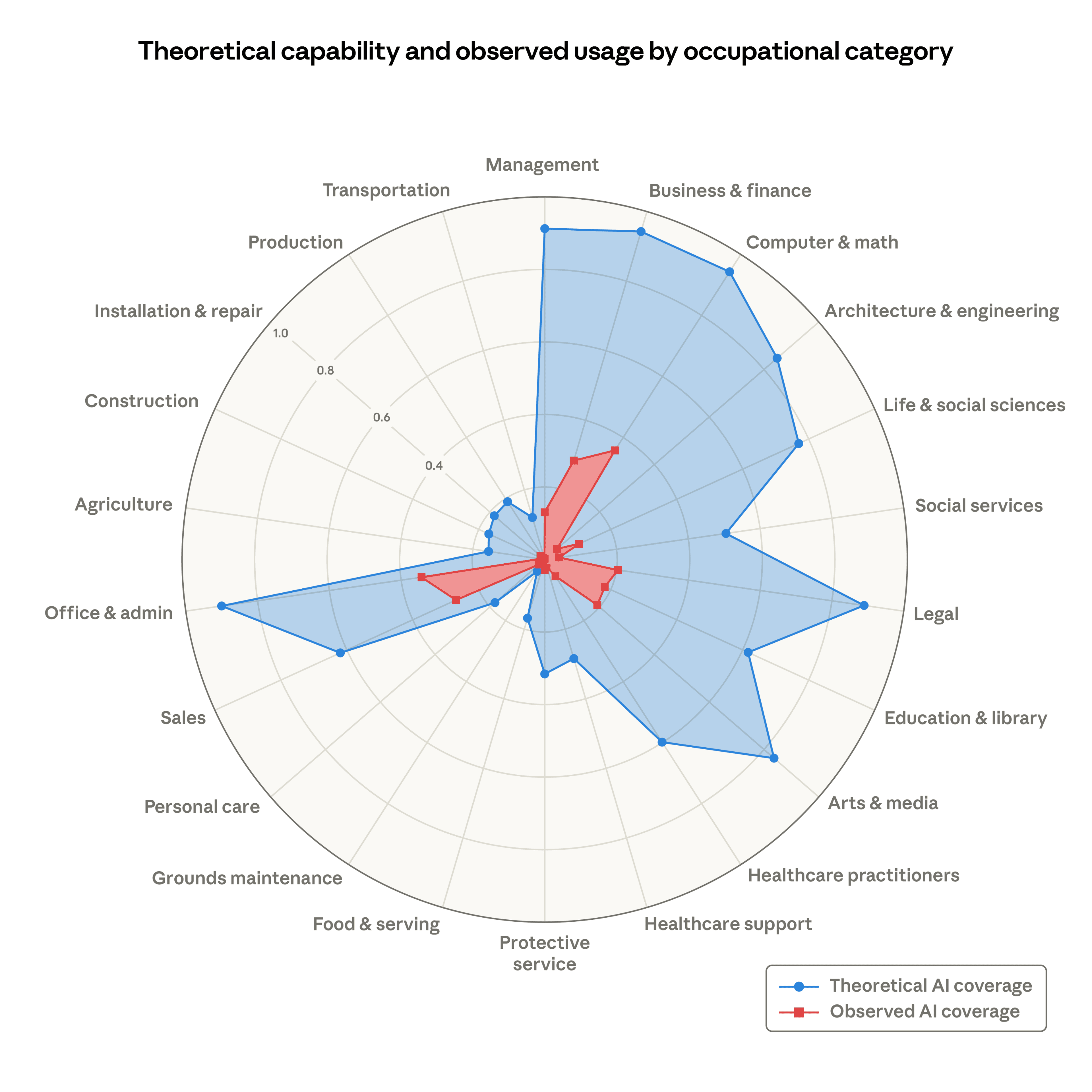
If you follow the ongoing debate over AI’s growing economic impact, you may have seen the graphic below floating around this month. It comes from an Anthropic report on the labor market impacts of AI and is meant to compare the current “observed exposure” of occupations to LLMs (in red) to the “theoretical capability” of those same LLMs (in blue) across 22 job categories. While the current “observed exposure” area is interesting in its own right, it’s the

Google announces Gemma 4 open AI models, switches to Apache 2.0 license - Ars Technica

October 11, 2025 | Ars Technica AI
Google announces Gemma 4 open AI models, switches to Apache 2.0 license - Ars Technica
Google’s Gemini AI models have improved by leaps and bounds over the past year, but you can only use Gemini on Google’s terms. The company’s Gemma open-weight models have provided more freedom, but Gemma 3, which launched over a year ago, is getting a bit long in the tooth. Starting today, developers can start working with Gemma 4, which comes in four sizes optimized for local usage. Google has also acknowledged developer frustrations with AI licensing, so

“The problem is Sam Altman”: OpenAI insiders don’t trust CEO - Ars Technica

December 23, 2025 | Ars Technica AI
“The problem is Sam Altman”: OpenAI insiders don’t trust CEO - Ars Technica
On the same day that OpenAI released policy recommendations to ensure that AI benefits humanity if superintelligence is ever achieved, The New Yorker dropped a massive investigation into whether CEO Sam Altman can be trusted to actually follow through on OpenAI’s biggest promises. Parsing the publications side by side can be disorienting. On the one hand, OpenAI said it plans to push for policies to “keep people first” as AI starts “outperforming the smart

Testing suggests Google's AI Overviews tell millions of lies per hour - Ars Technica

August 28, 2024 | Ars Technica AI
Testing suggests Google's AI Overviews tell millions of lies per hour - Ars Technica
The Times conducted this analysis with the help of a startup called Oumi, which itself is deeply involved in developing AI models. The company used AI tools to probe AI Overviews with the SimpleQA evaluation, a common test to rank the factuality of generative models like Gemini. Released by OpenAI in 2024, SimpleQA is essentially a list of more than 4,000 questions with verifiable answers that can be fed into an AI. Oumi began running its test last year wh

To beat Altman in court, Musk offers to give all damages to OpenAI nonprofit - Ars Technica

March 22, 2021 | Ars Technica AI
To beat Altman in court, Musk offers to give all damages to OpenAI nonprofit - Ars Technica
On Tuesday, Elon Musk amended his lawsuit that accuses OpenAI and its CEO, Sam Altman, of abandoning its mission, clarifying that any ill-gotten gains recovered should be returned to the AI firm’s charitable nonprofit arm, not to Musk. Musk “is not seeking a single dollar for himself,” according to his lawyer, Marc Toberoff. Toberoff told The Wall Street Journal that the new remedies that Musk is seeking strip away distracting claims from OpenAI that the l

First man convicted under Take It Down Act kept making AI nudes after arrest - Ars Technica

September 15, 2023 | Ars Technica AI
First man convicted under Take It Down Act kept making AI nudes after arrest - Ars Technica
An Ohio man became the first person convicted under the Take It Down Act after pleading guilty to creating and sharing both real and AI-generated explicit images of at least 10 victims without their consent. According to a Justice Department press release, 37-year-old James Strahler II used AI tools to create fake sexualized images to harass at least six women he knew. In some images, he depicted one victim engaged in sex with her father and shared that im

Google introduces "Skills" in Chrome to make Gemini prompts instantly reusable - Ars Technica

August 20, 2021 | Ars Technica AI
Google introduces "Skills" in Chrome to make Gemini prompts instantly reusable - Ars Technica
Saving a Gemini prompt as a reusable Skill Saving a Gemini prompt as a reusable Skill The desktop version of Chrome will remember your saved Skills across devices. As long as you’re logged in to your Google account, you can type forward slash ( / ) in Gemini or click the plus button to bring up your saved Skills. Simply click, and it will run in the current tab. You can also add additional tabs if it’s a skill that pulls from multiple sources. While Skills

Gemini can now create personalized AI images by digging around in Google Photos - Ars Technica

February 1, 2025 | Ars Technica AI
Gemini can now create personalized AI images by digging around in Google Photos - Ars Technica
Google began rolling out “personal intelligence” in Gemini early this year, giving AI subscribers the option of a more customized experience when using the company’s chatbot. Today, it’s using personal intelligence to tie its image-generation model to Google Photos. If you opt in, generated images will have access to your photos and associated labels to simplify prompts and produce more accurate AI images. This change essentially streamlines an existing wo

Deezer says 44% of new music uploads are AI-generated, most streams are fraudulent - Ars Technica

September 12, 2023 | Ars Technica AI
Deezer says 44% of new music uploads are AI-generated, most streams are fraudulent - Ars Technica

Google unveils two new TPUs designed for the "agentic era" - Ars Technica

January 7, 2026 | Ars Technica AI
Google unveils two new TPUs designed for the "agentic era" - Ars Technica
Most of the companies that have fully committed to building AI models are gobbling up every Nvidia AI accelerator they can get, but Google has taken a different approach. Most of its cloud AI infrastructure is based on its line of custom Tensor processing units (TPUs). After announcing the seventh-gen Ironwood TPU in 2025, the company has moved on to the eighth-gen version, but it’s not just a faster iteration of the same chip. The new TPUs come in two fla

Report: Samsung execs worried company could lose money on smartphones for the first time - Ars Technica

August 13, 2019 | Ars Technica AI
Report: Samsung execs worried company could lose money on smartphones for the first time - Ars Technica
Selling smartphones used to be easy—everyone wanted one, and every new phone was a lot better than the one that came before. Things are different now that smartphones are mature products. Plenty of manufacturers have thrown in the towel, leaving big players like Samsung to sell a new phone every couple of years. But even Samsung may find it tough to turn a profit in 2026 due to the ongoing race to build more AI capacity. According to Money Today (Korean),

EU tells Google to open up AI on Android; Google says that's "unwarranted intervention" - Ars Technica

May 24, 2023 | Ars Technica AI
EU tells Google to open up AI on Android; Google says that's "unwarranted intervention" - Ars Technica
This action stems from the continent’s Digital Markets Act (DMA), a sweeping law that designates seven dominant technology companies as “gatekeepers” that are subject to greater regulation to ensure fair competition. Google has consistently spoken against the regulations imposed under the DMA, but it and the other gatekeepers have been subject to the law for several years now, and there’s little chance the commission backs away from it. The issue before th

Musk and Altman face off in trial that will determine OpenAI's future - Ars Technica

April 19, 2018 | Ars Technica AI
Musk and Altman face off in trial that will determine OpenAI's future - Ars Technica
A hotly anticipated trial starts this week, where Elon Musk will attempt to prove that OpenAI, under Sam Altman, has abandoned its mission to remain a nonprofit in order to ensure that artificial intelligence serves humanity, and not just billionaires. Many view the lawsuit as a grudge match between Musk—who left OpenAI after serving as an early major donor and advisor—and Altman—who currently runs OpenAI, despite insiders’ allegedly growing distrust in hi

The hidden cost of Google's AI defaults and the illusion of choice - Ars Technica

February 13, 2023 | Ars Technica AI
The hidden cost of Google's AI defaults and the illusion of choice - Ars Technica
Many people are hoping—nay, praying—that the potential AI bubble will burst soon. But to hear Google tell it, generative AI is the future, and the company’s products have to change to keep up with the technical reality. As a result, Gemini is seeping into every nook and cranny of the Google ecosystem. Generative AI feeds on data, and Google has a lot of your data in products like Gmail and Drive. What does that mean for your privacy, and what happens if yo

Google's Gemma 4 AI models get 3x speed boost by predicting future tokens - Ars Technica

September 18, 2023 | Ars Technica AI
Google's Gemma 4 AI models get 3x speed boost by predicting future tokens - Ars Technica
The latest Gemma models are built on the same underlying technology that powers Google’s frontier Gemini AI, but they’re tuned to run locally. Gemini is optimized to run on Google’s custom TPU chips, which operate in enormous clusters with super-fast interconnects and memory. A single high-power AI accelerator can run the largest Gemma 4 model at full precision, and quantizing will let it run on a consumer GPU. Gemma allows users to tinker with AI on their

Google unveils screenless Fitbit Air and Google Health app to replace Fitbit - Ars Technica

January 26, 2017 | Ars Technica AI
Google unveils screenless Fitbit Air and Google Health app to replace Fitbit - Ars Technica
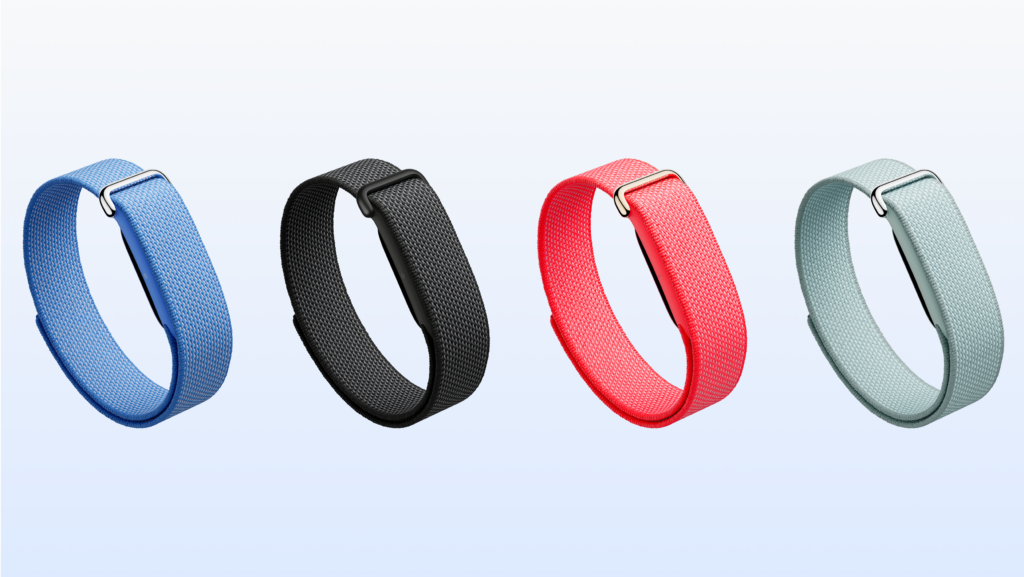
The Fitbit Air itself is a small plastic puck about 1.4 inches long and 0.7 inches wide. It slots into various bands that hold the bottom-mounted sensors against your wrist. There’s no display pointing upward, so the entire device is covered by the fabric or plastic of the band. It’s a streamlined and potentially stylish look—in uncharacteristic fashion, Google has plenty of colors and style options available, including a special-edition Steph Curry versio

Chrome's 4GB AI model isn't new, but you're not wrong for being confused - Ars Technica

October 19, 2024 | Ars Technica AI
Chrome's 4GB AI model isn't new, but you're not wrong for being confused - Ars Technica
All of Google’s products have been getting more AI features, including Chrome, which now offers split-screen Gemini chatbot support, the ability to automate web browsing, and more. Some desktop Chrome users have also noted that the browser appears to suddenly want more storage space for AI. This is true—Chrome does download a 4GB AI model for on-device processing. It’s been doing that for years, though. Google hasn’t actually changed anything about Chrome’