Prices and barriers blown wide open
Wen Le, from Aofeisi
QbitAI | WeChat Official Account QbitAI
Talk about living long enough to see this. The most technically impressive feat of this year's Double 11 was actually not figuring out how to hit the discount threshold.
After work, I was scrolling through livestreams, ready to shop, only to find the feeds increasingly familiar. When did AI start appearing on every major shopping platform?
First came the king of livestreaming, energetically selling 2 trillion tokens; the next thing I stumbled upon was Lao Luo's livestream—
Well, AI coding tools had even attached their own shopping-cart links.
The end-to-end AI development platformTRAE, known as the “Third Brother Cui” in Luo Yonghao's words, launched its first month at the irresistible price of just 9.9 yuan.
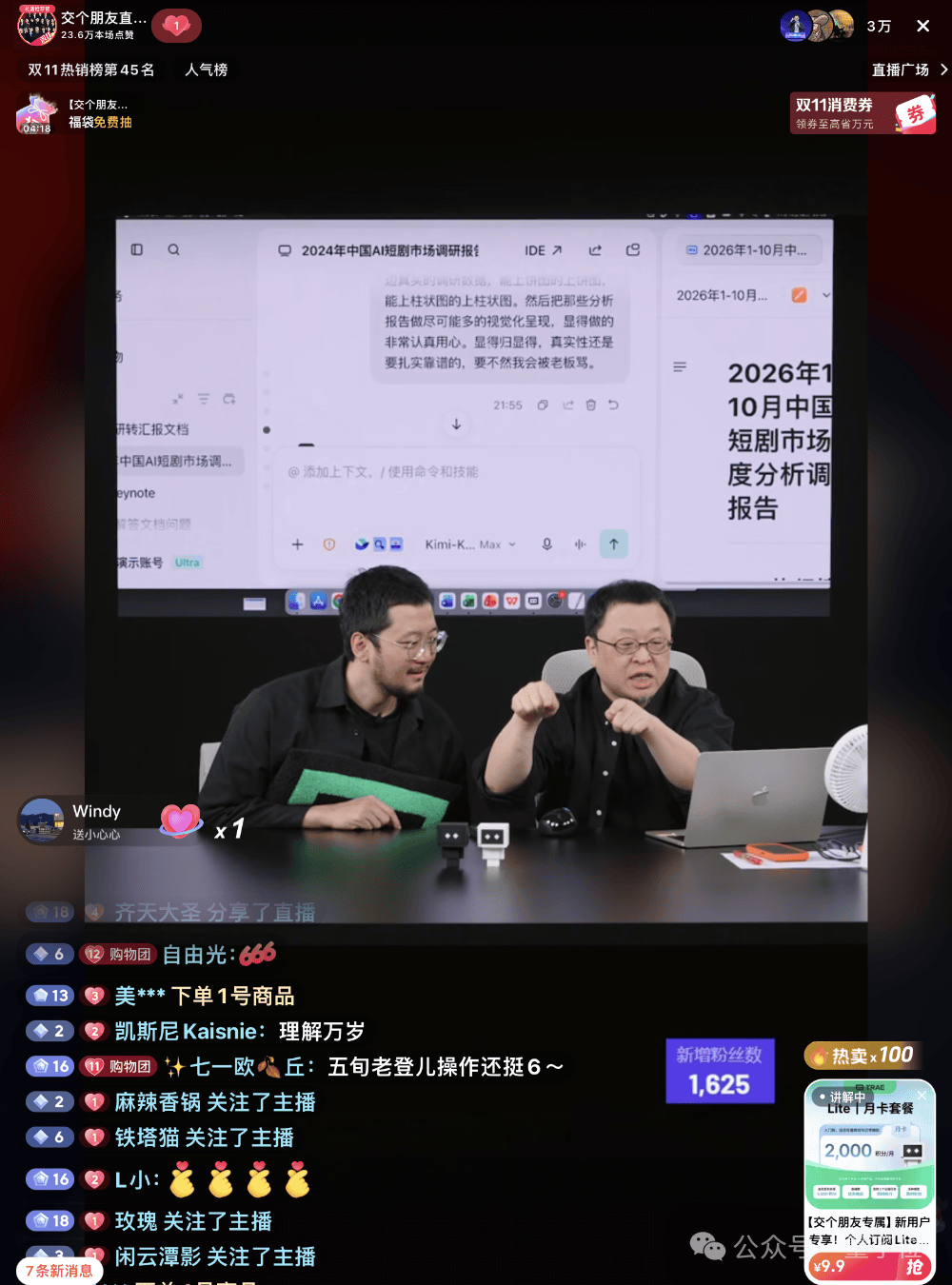
The man in his fifties, who claimed he “couldn't write a single line of code,” immediately set up his computer, projected the screen, and demonstrated it live before tens of thousands of viewers:
Generate a research report on short-form dramas with data charts in a matter of minutes;
Turn more than 50,000 words of obscure material into two conference-grade PPT presentations;
And from nothing more than a rough hand-drawn sketch, he somehow cobbled together a genuine voice-input app that worked across the entire system.
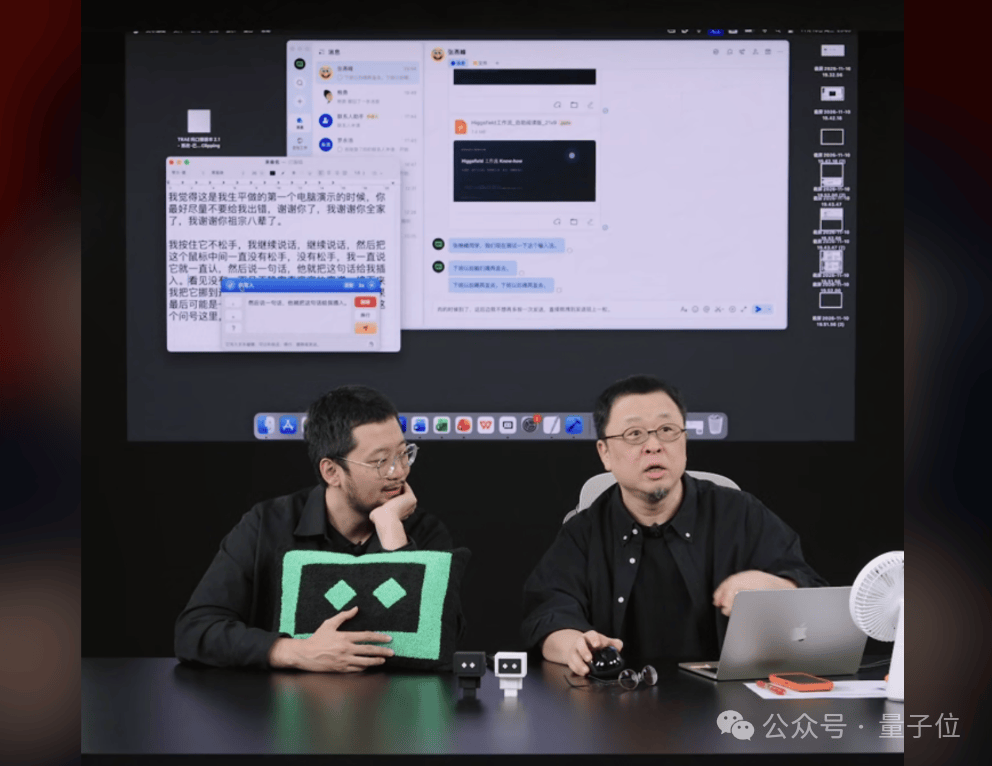
Amazing. Normally benchmarked repeatedly by programmers on tech forums and scrutinized over every performance metric,AI Coding was overnight thrust onto the livestream-sales stage and swept up in a consumer buying frenzy.
So? Why have the top streamers all taken to selling such arcane technical products this year?
Double 11 is being turned upside down
In past Double 11s, what we hoarded was little more than toilet paper by the case, skincare products whose discounts we couldn't work out, and digital hardware with every spec under the sun…
This year, the whole vibe is different.
The 2 trillion tokens in Li Jiaqi's livestream showed everyone for the first time that AI, too, could be “stockpiled by the jin”.

For all the excitement, many ordinary people who followed the trend and placed orders suddenly found a row of question marks popping up over their heads:
I bought a pile of cold, impersonal tokens. What exactly can I do with them in everyday life? Chat with a large language model and play idiom solitaire for fun? Or just search for random materials and cobble together a document?
The public becomes desensitized to pure technical specs and abstract numbers far too quickly. Once the spectators' curiosity wears off, there is only one thing people truly care about:
Can this thing become something I can actually put to use?
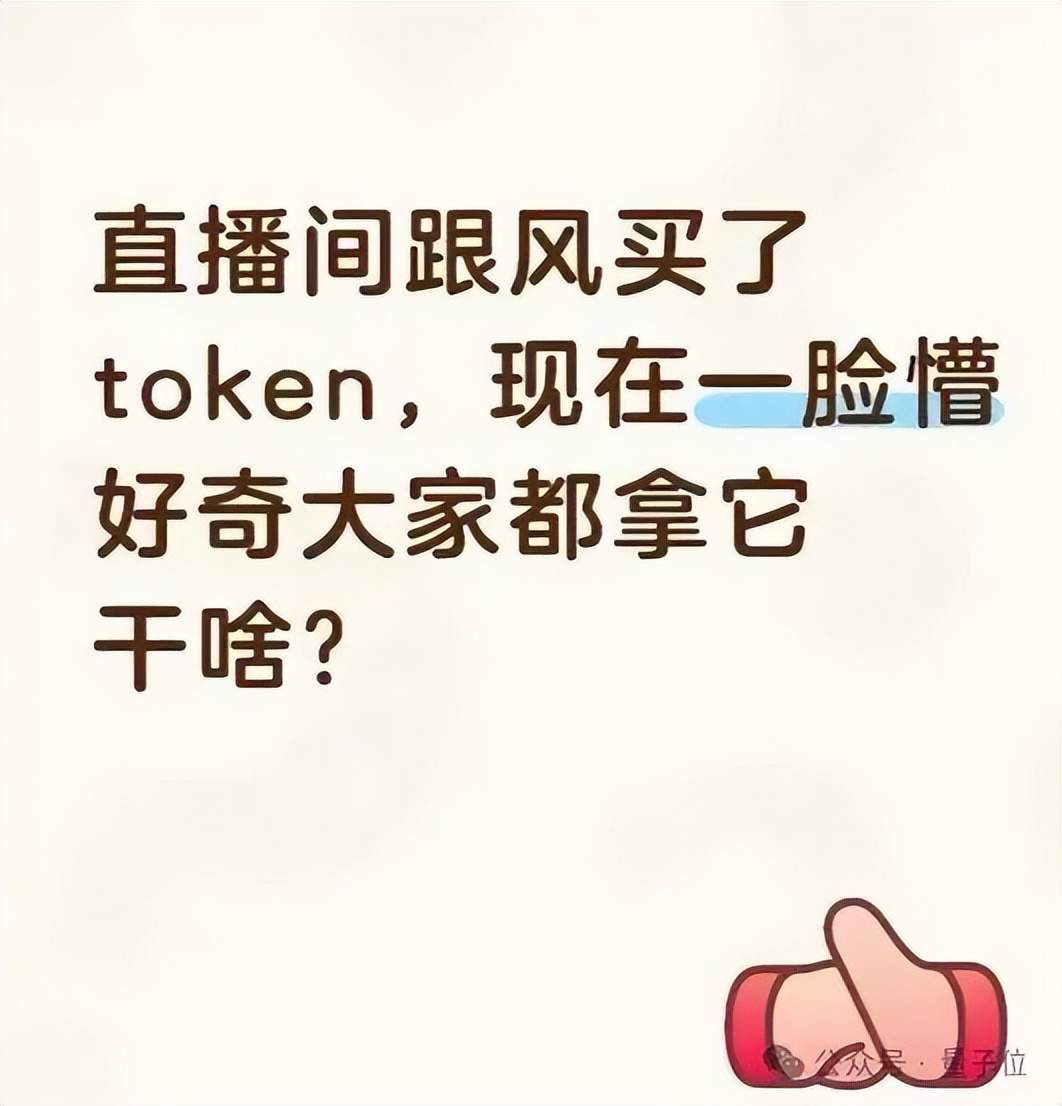
This shift in public sentiment happens to reflect the changes taking place in the AI sector today.
These two livestreams happened to capture a cross-section of the industry.
According to Gartner's 2026 Generative AI Maturity Curve:
The market has moved beyond the early phase of concept inflation and is accelerating toward a pragmatic stage focused on real-world implementation results.
Growth in large language models focused solely on chat and Q&A has plateaued, while capabilities closely tied to business use cases—such as code generation and application development—are receiving more attention.
The industry has even called 2026 theYear of AI Agents, and the Cyberspace Administration of China has drawn up dedicated rules for AI agents.

AI programming is precisely the fastest-moving track in this transition.
Anthropic's coding trends report from earlier this year also noted that software development is undergoing the biggest paradigm shift since the invention of the graphical interface:
Anyone Can Become a Developeris no longer just a slogan on a slide; programmers' roles are also gradually shifting from "writing code by hand" to "directing AI to do the work."
Besides businesses that sell raw materials, such as underlying computing power and chat interfaces, the industry is also beginning to deliver finished products—usable tools that can be handed over and put straight to work.
So look at these two livestreams again: Jia Liqi is selling raw materials—compute credits; Lao Luo is selling the finished product—a tool you can use right away.
The two livestreams converged precisely at this dividing line between selling conversations and selling results.
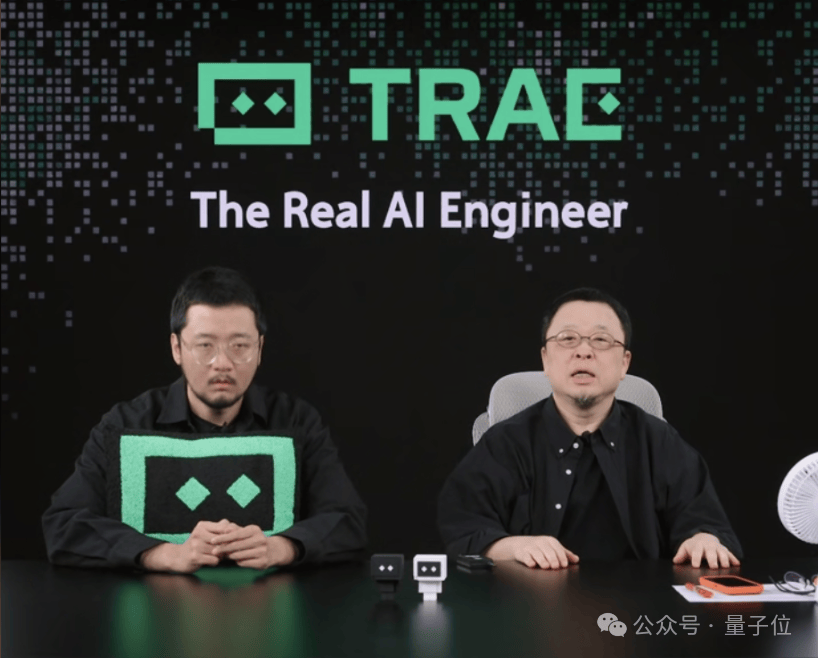
As a Coding Agent that builds on computing power and directly produces applications, it fills the gap between raw materials and finished products.
Software development, long regarded as an arcane mystery, was compressed, with the whole internet watching in the livestream, into a process as natural as typing out a chat.
The viewers understood it too:
What is being launched this time is not conversation credits that get used up as you go, but a digital productivity suite that can turn any wild idea into a real tool at any time.
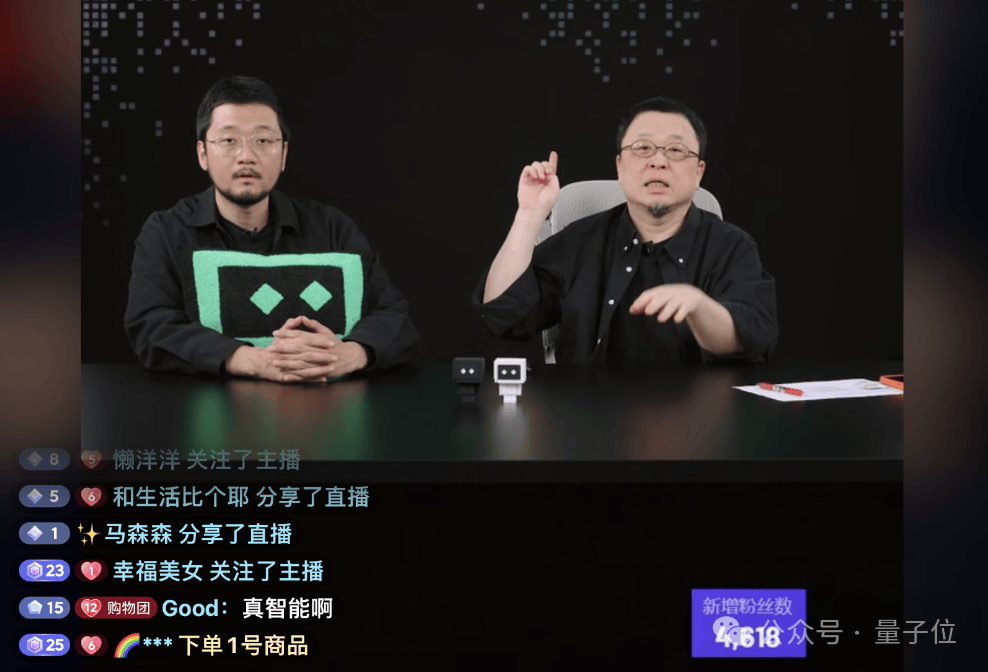
The public's psychological defenses against technology also visibly gave way.
Luo Yonghao Creates on the Spot
In the past, people learned code to accommodate computers. Now it is the other way around: humans describe their ideas, while AI tools turn those abstract intentions into lines of code and clickable interfaces.
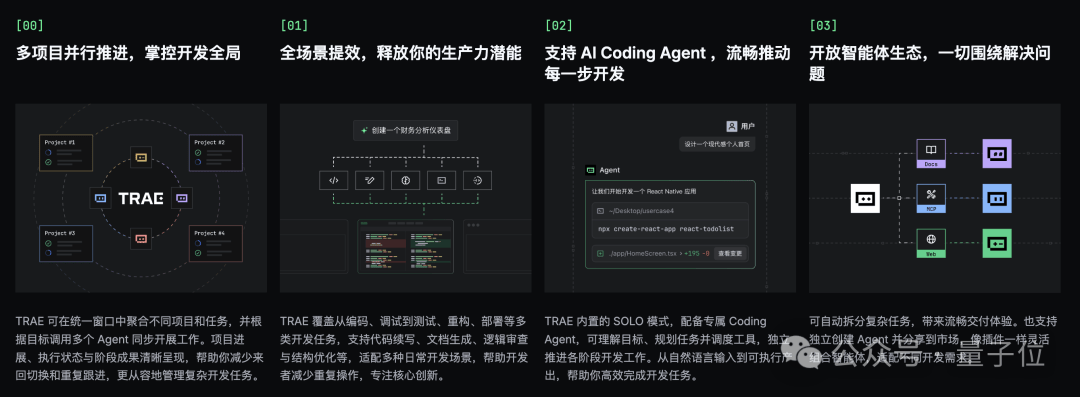
TRAE hasmulti-file awareness, automatic environment configuration, and underlying local code orchestration capabilities.
The most off-putting, tedious steps in software engineering for outsiders—
setting up environments, installing dependency packages, scaffolding project frameworks, fixing configuration-file errors… all that dirty, exhausting grunt work that made people's scalps tingle has been encapsulated beneath the system and quietly runs itself through.
Put bluntly, it lets you create software based on nothing more than your ideas.
And who, exactly, is Lao Luo?
His nitpicky persona is known throughout the internet, and with him onstage, the entire sales livestream became a high-pressure test.
And this fastidious outsider openly declared:
I can't write a single line of code. In the past, making software meant hiring designers, product managers, and a whole bunch of engineers, and you had to handle them like a grandson; now, with Cui Lao San, even if you make a hundred rounds of revisions, it won't so much as roll its eyes at me.
In the livestream, Lao Luo projected his screen to show the three major results he had cobbled together in just a few hours, each one squarely addressing the everyday pain points of office workers.
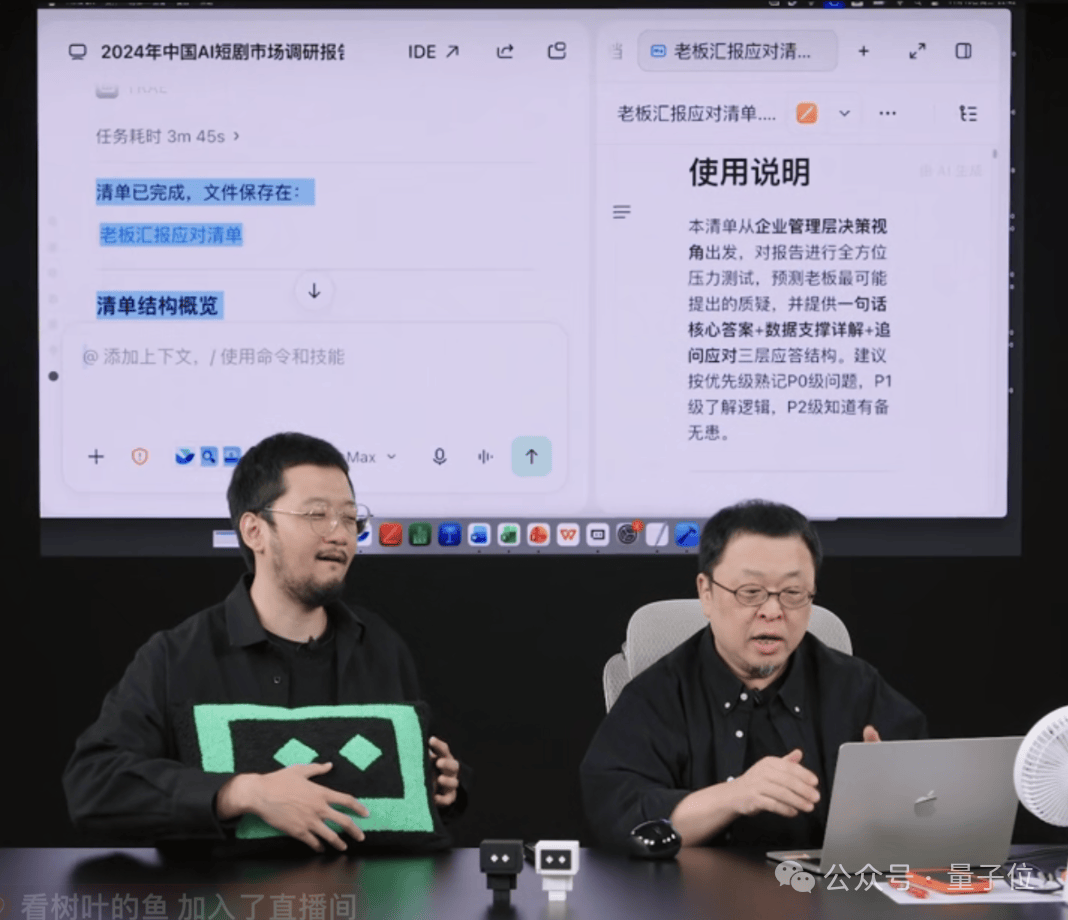
With the short-drama craze in the spotlight, Lao Luo directly instructed TRAE to analyze this year's short-drama market from January through October.
The AI spat out a plain-text draft report in less than four minutes. On the spot, Lao Luo turned into a picky boss and started nitpicking:
Words alone won't do. Import it straight into Feishu—use pie charts wherever you can and bar charts wherever you can. It needs to look as though you're earnestly fobbing off the boss, but without actually deceiving them; the data has to be solid and reliable!
Lao Luo's computer even unexpectedly froze once midway. After restarting it, he told the AI, "It just crashed; continue completing the task." TRAE not only refrained from mocking him with a sarcastic "Long live understanding!" but calmly picked up where it had left off and, within minutes, generated a richly illustrated Feishu document with both text and graphics.
Even more impressive was the workplace-survival combo that followed.
Lao Luo had it approach the task from management's perspective and conduct a stress test, then work backward to produce a response checklist, organizing all the anticipated scenarios into a three-tier structure: "a one-sentence core answer + detailed data support + follow-up Q&A."
Then, when you have your regular meeting on Monday, you can walk in feeling completely prepared, right~
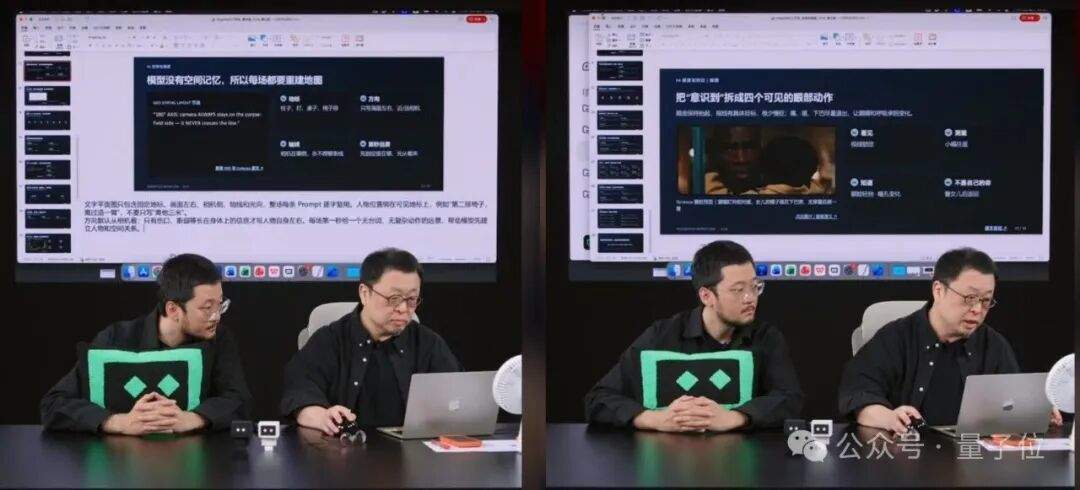
When faced with cutting-edge industry materials, Lao Luo fed TRAE a 50,000-plus-word in-depth document to read and digest, asking it to turn it into a PPT in two versions: a “Presenter Version” and a “Self-Guided Reading Version.”
The presenter version leaves only the core arguments, flowcharts, and examples on each slide, with all detailed derivations tucked into the speaker notes below; the reading version is complete with both text and visuals and forms a self-contained narrative, making it easy for others to read on their own.
Lao Luo also made some specific requests:
Do it quietly in the background for a while. Don’t take over the graphical interface in the foreground and keep me from doing other things. Change the aspect ratio to 21:9 to match our company’s widescreen format, and use a blue theme.
TRAE obediently accepted the entire assignment, and before long, it had neatly delivered two professionally formatted files.
Of course, the most entertaining thing was a tool Lao Luo came up with himself: Mantou Voice.
Because his Microsoft mouse was jokingly called the “Mantou Mouse,” he wanted to make use of its otherwise idle scroll-wheel middle button:
In any application, hold down the scroll-wheel middle button, and a small floating window pops up at the cursor and begins converting speech to text; drag it and release it over a punctuation mark or the send button, and you can complete the entire input in one smooth motion.
Lao Luo first hand-drew an extremely rough wireframe sketch and handed it to TRAE. TRAE immediately understood the idea and not only recreated the interaction concept from the sketch but also proactively broke down the button functions, failure fallback plans, and cross-application coverage.
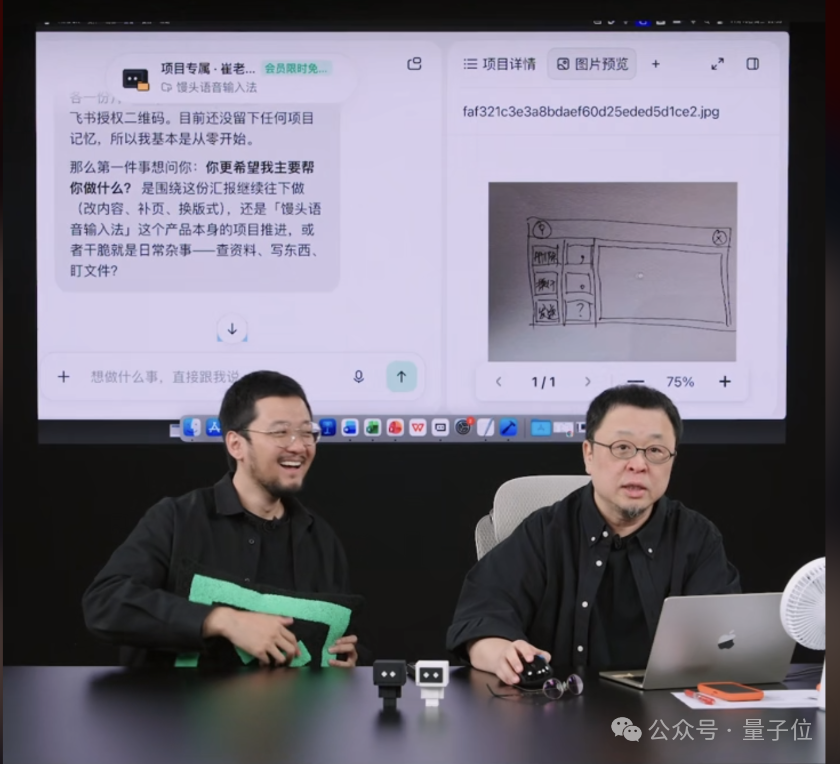
It wasn’t just a one-off finished product; TRAE can also export a project package at any time for further development.
Lao Luo realized that he had initially selected the wrong model, so he claimed he needed to switch computers (though that wasn’t actually the case...) and had TRAE package the source code and project documentation so he could conveniently switch devices.
Fortunately, TRAE had preserved all the project progress, saving this veteran product manager’s dignity...
The finished local software worked in browsers, chat windows, and even Feishu. Hold down the scroll wheel and speak, and the text appears onscreen accurately in real time; slide over to a button on the right and release, and a comma or question mark is inserted automatically. It can even trigger Enter to send the message directly.
Honestly, it’s an excellent product philosophy—we’re all fans of Long-ge’s technology (doge)
Think freely. Create freely.
After watching the livestream, most people’s first reaction was undoubtedly that it was exciting and novel, immediately followed by an itching curiosity:
I’m not a programmer. What can I actually do with it?
You can do plenty, and the barrier is far lower than you think.
In the past, making a small app meant either teaching yourself programming syntax for years until you burned yourself bald, or hiring a technical team to outsource the work, with startup costs often running into the tens of thousands of yuan.
Now, with TRAE deeply managing the underlying code, the cost for ordinary people to validate an idea keeps dropping. With just a few spare hours, at most, you can turn the idea in your head into a clickable, interactive prototype.
As of June this year, TRAE had surpassed 10 million registered users worldwide and 1.6 million monthly active users, with a substantial portion of users even opening it for work nearly five days a week.
So what are ordinary people using it for?
Two high school students who love badminton tell their story firsthand!
Because hiring a professional coach over the long term was too expensive, and they couldn’t normally make out the details of their own movements, they used TRAE despite having no programming knowledge whatsoever. By accessing sensor data from their phones, watches, and headphones, they built an app that analyzes their swing movements and provides guidance. It has even been officially launched on the app stores;
There was also a young man who agonized over whether to install a security camera for his grandmother.
Fine, set it up. We’d know promptly if Grandma fell, but the thought of her being watched by a camera all day long really makes me feel awful.
In the end, he used TRAE to build the Fanglian Care Assistant. It relies on no cameras for audio or video, assessing the situation solely through a pill organizer and a door-contact sensor. It sends alerts only when medication is missed or someone goes out abnormally, preserving the elderly person’s dignity and privacy in their later years.
GitHub, the global developer community, noted in its annual report *State of Octoverse*:
AI is lowering the barriers to development, and a growing number of citizen developers without traditional programming backgrounds are beginning to participate in building applications; more than 40% of PRs (pull requests) on the platform are initiated by AI agents, while open-source contributions from nonprofessionals are rapidly increasing.
A McKinsey study also points out that, for lightweight business scripts and prototype development, AI coding assistance can cut development cycles that would otherwise take days in half.
Although TRAE won’t take the bread out of senior system architects’ mouths or make you rich out of thin air, it genuinely fills the development gap for independent creators who lack a technical cofounder.
What stands between an idea and implementation is no longer terminal errors you don’t understand. As long as you keenly identify real pain points around you and clearly articulate them, you have a chance to bring them to life painlessly.
This is practically the most useful real-world tool in the age of the super-individual.
People in the livestream had already figured it out—
All you need to do is state your wish.
Administrative and operations professionals in offices, who are tormented daily by spreadsheets in all sorts of bizarre formats, can use it to whip up a custom batch data-cleaning script;
Independent photographers and illustrators no longer need to buy expensive website templates; with just a few rounds of natural-language interaction, they can build a portfolio page tailored to their own style;
Small e-commerce sellers can easily customize an automated bookkeeping plugin tailored to the unique commission rules of their own stores.
……
With just one person, a clear business idea, and the tool’s seamless execution, you can run a process that would previously have required a small team.
You know what? Watching the livestream, I actually spotted a need and immediately put TRAE to work!
I built a cliffside cabin with my bare hands and am getting ready to drag my “nemesis” over to work through our lingering grievances (doge).
What does everyone want to whip up?