 © Kiwi Campus
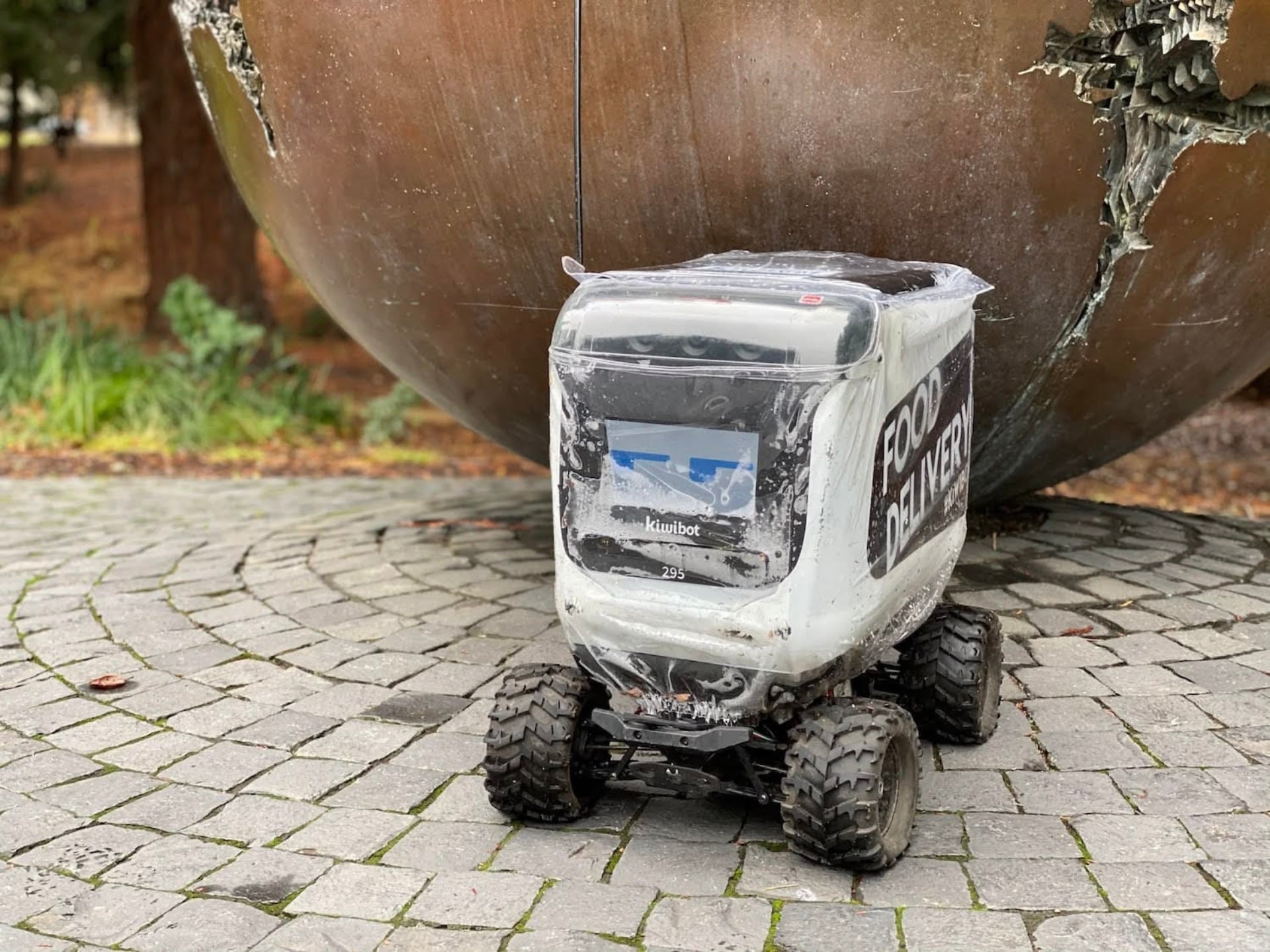
Graffiti, excrement, kicks: delivery robots are being systematically destroyed. And France has not yet seen a single one on its sidewalks.
Starship Technologies, Kiwibot, Coco: delivery robot manufacturers are hitting a wall. Not technological, not regulatory. Human. Vandalism incidents are multiplying in the UK and the US, with material losses starting to weigh heavily on the accounts.
From the sidewalks of Sheffield to those of Philadelphia, the same rejection
The latest episodes stand out for their geographical diversity. In Sheffield, UK, two Uber Eats robots were found covered in black graffiti. The words « off our streets » blocked the machines. Their signage flags had been torn off. The charging station was tagged and construction cones were placed behind the robots to immobilize them.
On the other side of the Atlantic, the situation is worse. In Philadelphia, a delivery robot was hit, ridden on, and vandalized over the St. Patrick's Day weekend. In Los Angeles, a resident photographed a robot covered in feces. Another was found gutted on a sidewalk. In Leeds, two pedestrians were filmed throwing a robot into a bush.
These incidents are not new. As early as 2020, Kiwibot had deployed its fleet on the Berkeley campus in California. Out of 80,000 deliveries, 1,600 resulted in vandalism. The unit cost of a Kiwibot robot is around $2,500.
🚨 Bizarre scenes on the streets of California as delivery robots become the target of nighttime vandalism pic.twitter.com/gZsgYy84jD
— Crime Net (@TRIGGERHAPPYV1) March 30, 2026
Does the economic equation still hold?
Starship Technologies claims it wants to get its robots back into service after repairs. The Estonian manufacturer insists that automated delivery reduces car trips and has allowed saving 500,000 kg of emissions in Europe. But the rhetoric hits a financial reality: each vandalized machine means an operational stoppage, a technical intervention, and a cost for repairs.
The model relies on a simple bet. A robot weighing a few kilograms costs less than a human delivery worker to transport a 2kg meal. Except that the human delivery worker isn't turned around, tagged, or filled with excrement. The physical resistance of the residents wasn't part of the specifications.
In Chicago, over 3,000 residents signed a petition to ban delivery robots. In France, no such large-scale fleet has been deployed yet. Given the reception elsewhere, manufacturers would be well-advised to reconsider their implementation strategy before attempting this venture.
Robots know how to avoid obstacles. It remains to be seen if they will survive those who want to make them disappear.
👉 Follow real-time tech news: add 01net to your Google sources, and subscribe to our WhatsApp channel.
Source : Futurism







- Google Play Store
- 4K Video Downloader Plus
- VLC Media Player
- Adobe Reader
- uTorrent
- WinRAR
- Xender
- Google Chrome
- CCleaner
- Mozilla Firefox
- Avast Free
- ChatGPT
- Microsoft 365









Download
- Google Play Store
- 4K Video Downloader Plus
- VLC Media Player
- Adobe Reader
- uTorrent
- WinRAR
- Xender
- Google Chrome
- CCleaner
- Mozilla Firefox
- Avast Gratuit
- ChatGPT
- Microsoft 365
- Opera One
- Avast One
- AirPods Pro 3
- Google Pixel 9a
- Google Pixel 10
- Google Pixel 10 Pro XL
- iPhone 17
- iPhone 17 Pro
- iPhone 16e
- Samsung Galaxy S25
- Samsung Galaxy S25 Ultra
- Samsung Galaxy A56
- Samsung Galaxy A26
- Samsung Galaxy A17
- Starlink
- Xiaomi Redmi Note 14 4G
- Xiaomi Redmi Note 14 Pro
- Xiaomi 15T Pro