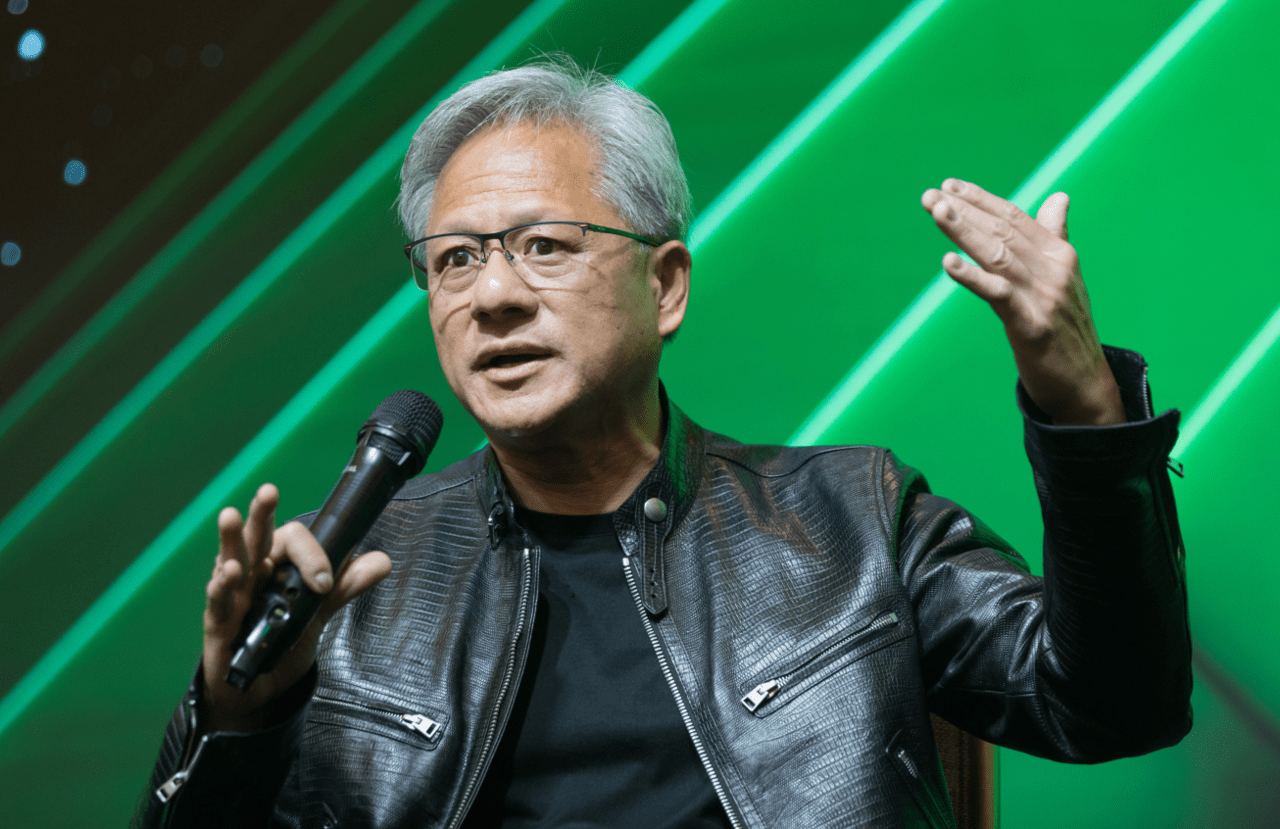
Jensen Huang, CEO of NVIDIA, resigned after a privacy controversy. The resignation of the founder who led the company for 33 years caused NVIDIA's stock to drop more than 14% during the day, and has increased uncertainty in AI industry investments and supply chains.
NVIDIA announced through an official statement on the 12th (local time) that Huang had immediately stepped down from his positions as chairman, CEO, and board member. Until a successor is decided, COO Collette Kress will serve as interim CEO, and the board will search for an official successor both internally and externally. Harvey Jones was appointed as the new board chairman.
Huang's resignation was decided after recent allegations of infidelity. Following his admission and apology regarding his relationship with a woman suspected of being linked to a Chinese intelligence agency, the pressure for him to resign increased further on the 11th when the New York Times reported on another inappropriate relationship with Kimberly Powell, a vice president in NVIDIA's healthcare division.
The board of directors discussed the resignation issue on that day, and the resignation was officially announced the next day. NVIDIA did not disclose the specific reasons for the resignation.
The market impact was immediate. NVIDIA's stock fell as much as 14.3% right after the New York stock market opened on the 12th, but later recovered to trade at around a 5% decline by noon. It had dropped about 32% from its peak at the beginning of October, and over $18 billion in market capitalization was lost during this period.
Major clients and AI-related companies were also affected. CoreWeave's stock rose about 25% after its earnings report the previous day, but fell 7.7% on this day. Oracle also showed weakness. Competitors AMD and Broadcom rose by about 6% and 5.7%, respectively.
In Asia, Taiwan's TSMC, NVIDIA's largest semiconductor supplier, fell 2.3%, while China's Alibaba and Tencent dropped by 6.8% and 2.6%, respectively. Z.ai and MiniMax, Chinese AI model developers, also fell by 9.1% and 7.8%, respectively.
The resignation of Huang has drawn attention because NVIDIA has been acting as a key investor in the AI industry, not just a simple AI semiconductor supplier. It has invested in cloud companies and AI model developers, and built an ecosystem where these companies purchase NVIDIA's semiconductors. He was a key figure in directly managing these investment relationships, technological development, and supply chains.
Especially in the current situation where doubts about the profitability of the AI industry are growing due to the massive investment costs and rising debt of AI companies, this resignation has become a new source of uncertainty. Analysts suggest that if NVIDIA's investment strategy changes, companies that have received funding to build AI infrastructure could also be affected.
Emma N. Cowie, head of equity strategy at Barclays, told the FT that this incident added another layer of uncertainty to AI investments, and raised the possibility of investment funds moving to markets with lower AI and tech stock exposure or other industries.
Some forecasts suggest that the growth of the AI industry itself will not be halted. Charles Henry Moncho, CIO of the Swiss-based Siz Group, explained that while this resignation will not halt the growth of the AI industry, the market's main concern is whether the successor can effectively lead the business as well as the predecessor.
The successor's management system has also drawn attention. Cres, the interim CEO, has been serving as CFO since 2013, and Reuters listed Ian Buck, who worked with him on CUDA development, as a key internal successor candidate.
It is also possible that the U.S. policy on semiconductor exports to China will be affected. Huang, the CEO, has long advocated for allowing AI semiconductor sales in the Chinese market while maintaining close ties with President Donald Trump. However, after the emergence of suspicions related to Chinese intelligence agencies, the call for strengthening export controls in the U.S. Congress has grown louder.
Mike Johnson, Speaker of the U.S. House of Representatives, stated that the selection of a successor is crucial and that there is growing consensus within Congress to restrict semiconductor exports to China. According to CNBC, Huang has agreed to testify before the U.S. Congress before Thanksgiving.
NVIDIA maintains that it will continue with its existing business and product development plans even after the management change. As the company is set to release its quarterly results on the 17th, attention is focused on the new management's business strategy and investment policies.
Reporter Im Dae-jun, ydj@aitimes.com


