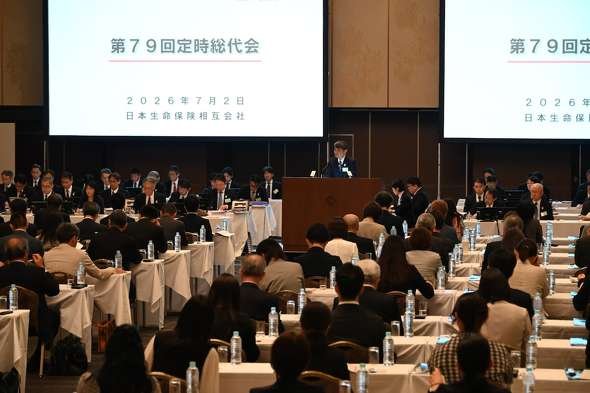
 Nippon Life’s annual general meeting, where questions were raised about its investment in Space X = the 2nd, central Osaka (photo provided by the company)
Space X is a space development company led by U.S. entrepreneur Elon Musk. It made its initial public offering (IPO) on June 12 and was listed on the U.S. Nasdaq market. On the 11th, it set its IPO price at $135 per share (roughly ¥21,600 at the time), raising approximately $75 billion (about ¥12 trillion), the largest IPO ever held worldwide.
Some media reports said that Nippon Life had invested in Space X for more than a decade and was expected to earn ¥100 billion to ¥500 billion in investment returns as a result of the IPO. Nippon Life is an institutional investor that manages insurance premiums paid by policyholders, and its investment in Space X is viewed as part of a pure investment strategy aimed at securing investment returns.
At the annual general meeting that day, a male representative delegate asked Nippon Life to confirm reports that it was expected to post substantial investment returns from its Space X investment and to explain the circumstances that led it to invest in the then little-known Space X.
Citing reasons including “the duty of confidentiality on investment managers,” Nippon Life did not explicitly confirm whether it had invested in Space X. However, it emphasized, “Compared with the past, we have been quite actively engaged in so-called unlisted stock investment.” It also explained that it had been investing in unlisted shares since the 1970s.
It further stated, “For venture investments such as Space X, we invest through Western venture capital (VC) firms. Through our longstanding relationships, we are creating routes to gain access to world-class investment managers.”
After hearing these explanations, the man who had asked the question said, “I get the impression that it is producing a significant positive return through our investments. There is inflation, too, and I think increased policyholder dividends or dividends that make policyholders feel they have profited would be perfectly acceptable.”
Meanwhile, Nippon Life maintained that dividends are determined by the combined results of the various advantages and disadvantages of investing. During the series of questions and answers, it said of overseas venture investing: “Although it has a high-risk, high-return aspect, we want to continue to focus on it while taking care to select investment managers carefully and diversify our investments.” (Kohei Inoue)

