Reported by Xinzhiyuan

At 11:42 p.m., the billing endpoint triggered an alert. It pulled the logs, found the root cause, proposed a fix, and attached a rollback plan, handling everything in one go. The fix was ready, but it stopped there, waiting for you to approve the deployment.
This is a demo from Perplexity’s official site.
Recently, Perplexity officially announced Teammates, giving Max members AI coworkers: assign them a task, and they will monitor and follow up on it themselves, pick up assignments in Slack and follow up with people, and only call you when they encounter a situation you have told them to escalate.
From “answering one question at a time,” AI has now moved on to “taking over shifts.” What remains for the human is the authority to decide at critical moments: which tasks it handles itself and which ones require waking me up.

Programmers call this on-call: when something breaks in production at night, whoever is on call gets up and fixes it.
In the demo, the person handed over the shift like this:
“You’re covering my shift tonight. When an alert comes in, pull the logs and call chain, find the root cause, propose a fix, and attach a rollback plan. Only call me in two cases: if the fix needs approval, or if you still haven’t found the cause after 15 minutes.”
That shift, it kept watch from 6 p.m. to 8 a.m. Eastern Time.
When the alert came in, its reply read: After the 11:30 deployment, the billing endpoint was returning 502; the root cause boiled down to one line: the new configuration had set the retry limit to 0. The fix and rollback plan were attached, and the final line said, “Your approval is required before deployment.”

Give it an instruction once, and it monitors it from then on
It remembers what it has been told.
If you tell it once, “This agency needs to be notified two weeks in advance,” it factors that into all future scheduling. It can be tasked with monitoring things like overdue invoices and missing materials before a deadline. The examples given by the company are all of this kind.
It also behaves like a coworker. Bring it into a Slack channel, and colleagues can assign it work and ask about progress; it can also follow up with people in Slack.
How long can it keep watch? The company says it runs in the background 24 hours a day, and the demo had it monitoring for 14 hours; as for whether it will go off track after watching continuously for several days or miss something a few times, they haven’t said.
Right now, only Max subscribers can access Teammates. An annual subscription works out to $167 per month, while the monthly option costs $200; it is available only on the web. There is no extra charge during the promotional period, after which it is deducted from Max’s monthly allowance of 10,000 credits.
But Perplexity isn’t the only company building AI coworkers.
xAI’s Grok Bot has a headline on its website that literally reads “AI teammates that finish the work”; under its official post, someone replied straight away: “This is your version of Grok Bot, right?” The two companies frame “when to involve a human” differently. Grok Bot’s website says to put several bots into the same conversation: “You watch them work; you don’t have to approve every step.” Perplexity’s product page says that each teammate has a role, a long-term brief, and a rule for “when to call you.”
Viewing the two demos side by side, that line is really about permissions: the on-call teammate can write fixes but can’t deploy them; the advertising teammate launches campaigns within budget on its own, and only comes back to report after preparing a proposal to increase spending. The advertising teammate’s brief says “don’t spend more than the cap,” while its work order includes “set a holiday budget cap.” The demo doesn’t say who set that cap. As for who takes responsibility when something goes wrong, Perplexity gives two answers. First, each teammate has a thread that stays open, recording what it did, what it completed, and what time it finished. Second, while it is working, a human can take over its desktop at any time or tell it to change direction. Each teammate also has its own separate environment and browser, which guard against account mix-ups and omitted passwords, but can’t prevent it from making the wrong judgment. Under the official post, one user asked: before it sends messages to coworkers, does it check first or send them directly? The official page doesn’t say. Another blogger with 38,000 followers said that an agent that starts acting before being told needs a log a manager can read in 30 seconds, clearly stating what it changed, what it did, and what it chose not to do. The first two are documented in that thread; “choosing what not to do” was not shown in the demo. In the past, we judged AI by whether it gave the right answers. Going forward, we’ll see how long it can cover a shift on its own, and how much slack people dare give it. References: https://www.perplexity.ai/hub/products/teammate Editor:Adam David
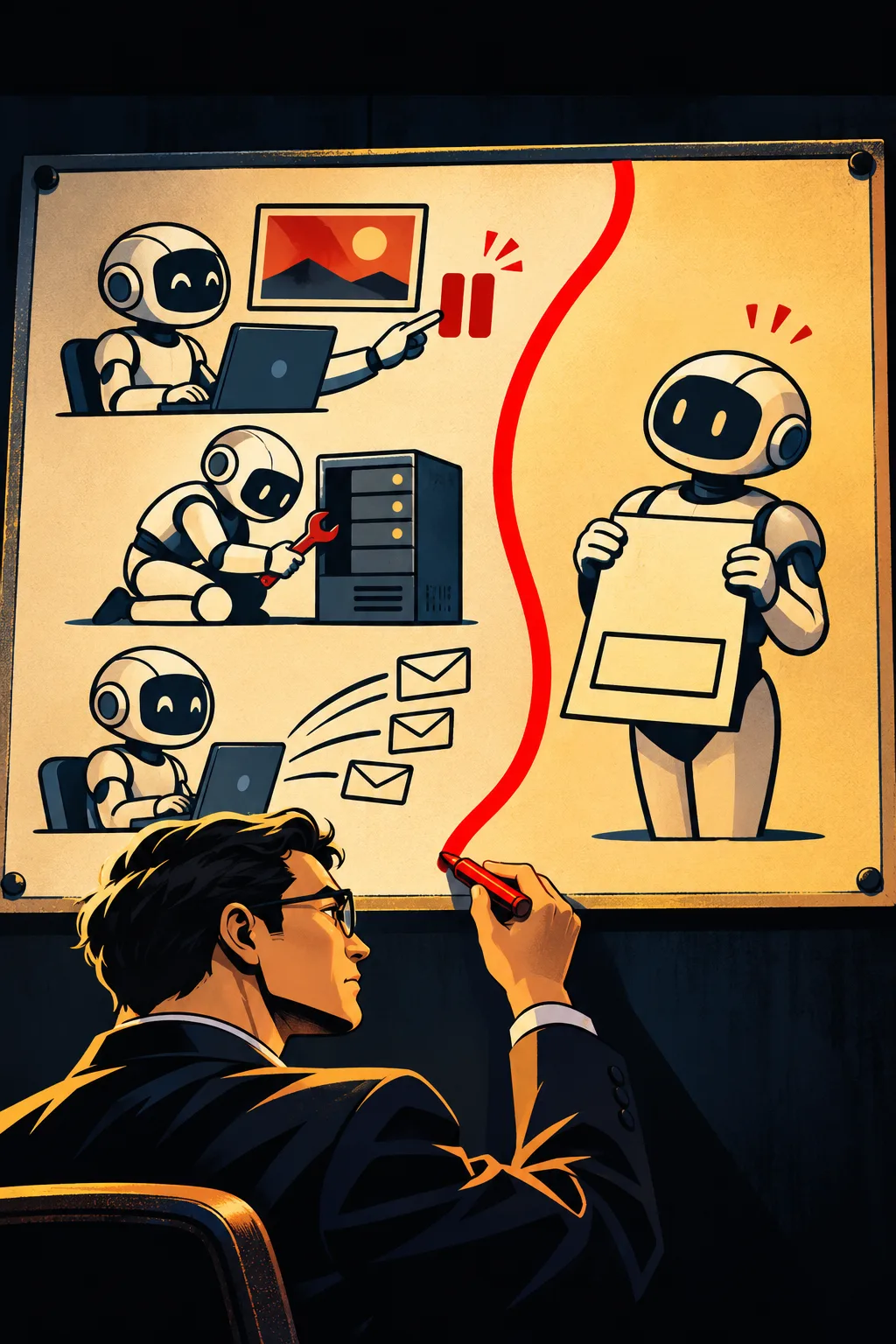
Where do you draw the line? Who takes responsibility when something goes wrong?
Follow ASI in seconds
⭐Like, share, and recommend—all in one click⭐
Light up the star and never miss New Zhiyuan’s lightning-fast updates!