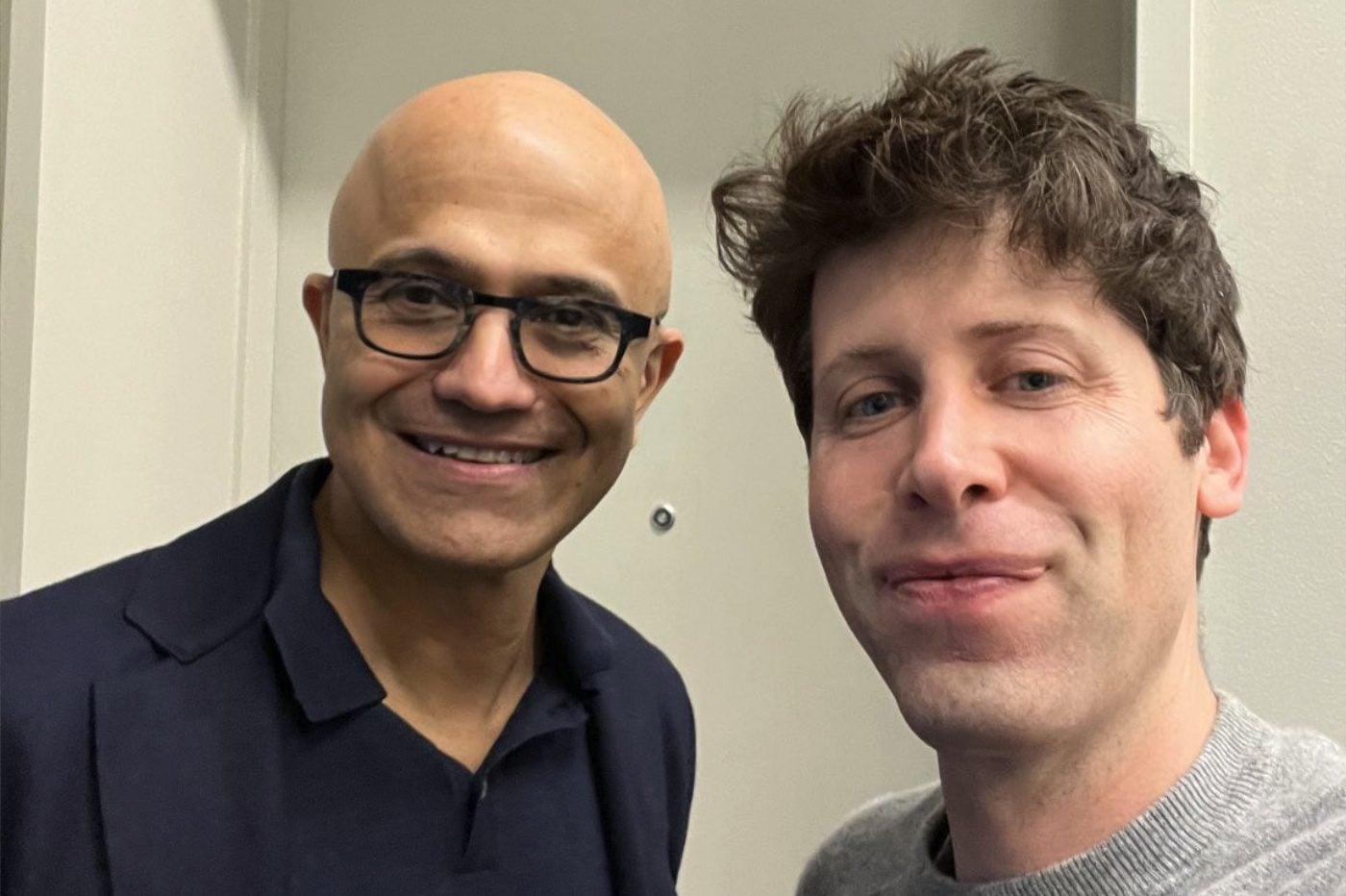
 Sam Altman and Satya Nadella respectively head OpenAI and Microsoft © X / Sam Altman
Defend AI training in court during the day, call it “theft” in internal messages in the evening. The documents unsealed in the New York Times trial provide a memorable stark contrast for Microsoft and OpenAI.
The legal showdown between the New York Times and the OpenAI-Microsoft duo enters its third year. Filed in late 2023, the copyright infringement lawsuit was largely proceeding behind closed doors, with a substantial portion of the evidence remaining sealed.Freshly unsealed documents lift the veil on internal exchanges that the two companies would have been only too happy to keep under wraps.
“An astounding heist,” it states in black and white
In January 2024, Brent Hecht, Microsoft’s director of applied science, set out his diagnosis in writing: the mass collection of content that feeds large models amounts to “an astounding theft on an unprecedented scale”. A few lines further down, the phrase grows even bigger, becoming “the greatest theft of labor in the history of humanity”. The phrase would make an excellent slogan for an authors’ rally; it comes from within a group that has poured billions into OpenAI.
The documents submitted in the case present equally damning evidence. The training datasets contained more than 91,692 copies of articles from the New York newspaper. The complaint also alleges that OpenAI teams bypassed paywalls using an in-house trick and that copyright notices were deliberately removed from scraped texts. Nick Turley, the head of ChatGPT, is said to have acknowledged internally that news publishers faced an “existential” threat.
Yet the public line of defense has not shifted an inch in three years: training the models would fall under fair use (the famous fair use), that exception under U.S. law (an interpretation the Trump administration has also adopted).In court, internal messaging services will not settle the merits; fair use will remain a matter for lawyers. On the visual side, however, the exercise is turning into a painful ordeal.
Meanwhile, your blue links evaporate
According to estimates submitted to the court, Copilot could reduce clicks to the newspaper’s website by as much as 93% when it summarizes information instead of taking users to the original page. Every internet user has already encountered the phenomenon: generated answers are taking the top spot in search results, and the traffic that sustained newsrooms is dwindling (including the visits that brought you here).
Microsoft’s internal memo also adds to an already well-stocked pile of precedents: Hachette and two other publishers accuse Gemini of pillaging millions of books, while Amazon has chopped up books to train its models. The most popular music AI, for its part, was trained on millions of tracks. The sequence is always the same: collection first, explanations afterward, and then, possibly, the bill.
If the court follows the New York Times’s reasoning, the business model for training will have to pass through the licensing stage, and therefore through agreements billed at a premium (and, ultimately, AI subscriptions that are a little more expensive still—guess for whom).The trial has not delivered its verdict, but the case file has already settled one question: what the AI giants really thought of their own methods.
👉🏻 Follow tech news in real time: add 01net to your sources on Google, and subscribe to our WhatsApp channel.
Source: Ars Technica








- Google Play Store
- 4K Video Downloader Plus
- VLC Media Player
- Adobe Reader
- uTorrent
- WinRAR
- Xender
- Google Chrome
- CCleaner
- Mozilla Firefox
- Avast Free
- ChatGPT
- Microsoft 365
- Opera One
- Avast One











Download
- Google Play Store
- 4K Video Downloader Plus
- VLC Media Player
- Adobe Reader
- uTorrent
- WinRAR
- Xender
- Google Chrome
- CCleaner
- Mozilla Firefox
- Avast Free
- ChatGPT
- Microsoft 365
- Opera One
- Avast One




