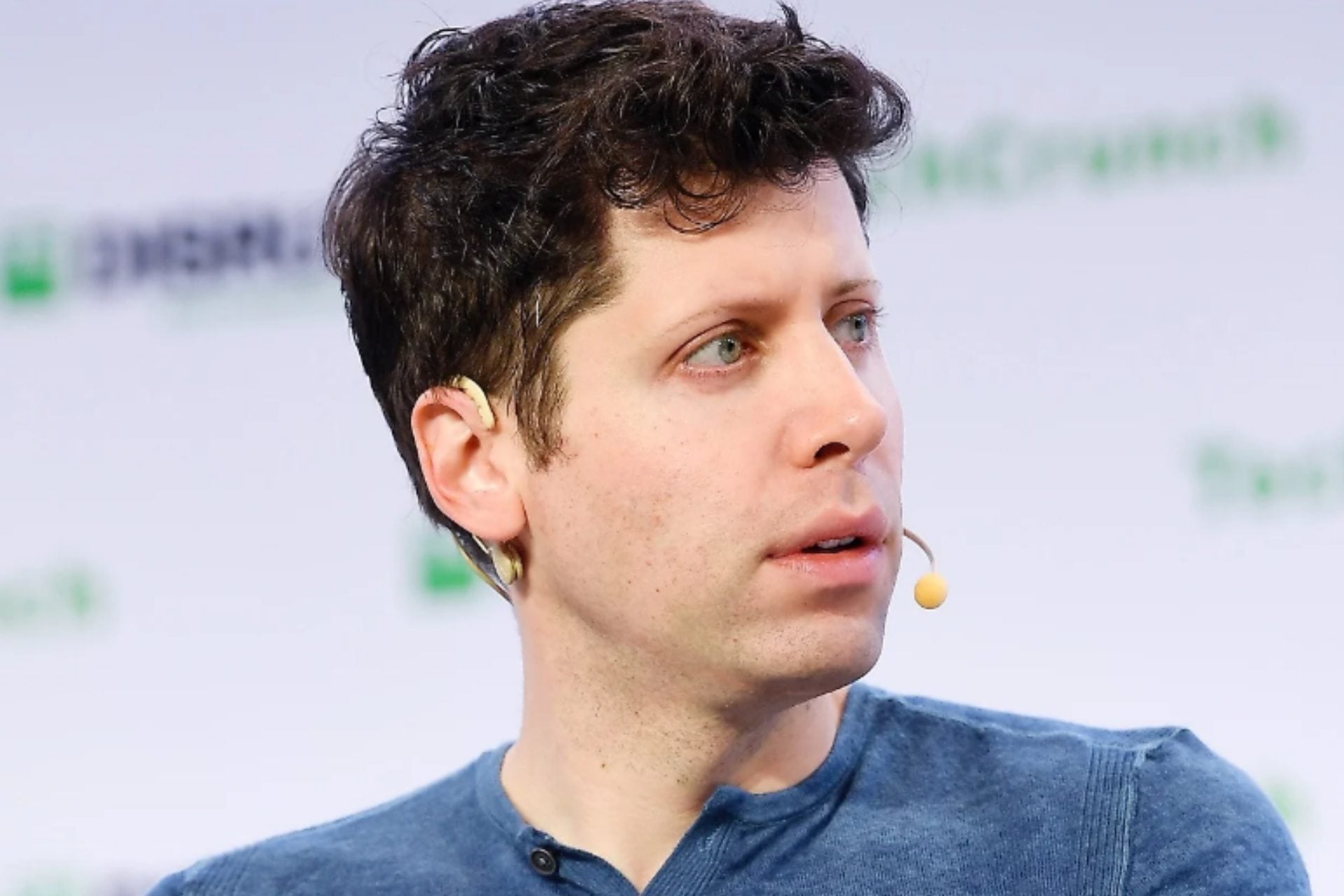
 © TechCrunch, CC BY 2.0
Sam Altman believes that the world must accept some of the negative consequences of AI. The OpenAI executive also believes that artificial intelligence will bring far more positives than negatives. Sam Altman has thus somewhat contradicted the position held by Dario Amodei (Anthropic).
For reference, Dario Amodei, an Anthropic executive, advocates strict control over AI development. On September 12, he had even published an essay calling for the industry to slow down. For his part, Sam Altman, CEO of OpenAI, said he was “in agreement with Dario,” while clarifying that he did not want to be the only one to pull back.But although the two men both seem to want some form of AI regulation, they do not appear to be exactly on the same wavelength. In fact, in an interview with the media outlet Politico, Sam Altman revisited the differences that set him apart from Dario Amodei (Anthropic) regarding AI regulation.
For Sam Altman, certain negative consequences of AI must be accepted
Speaking to Politico, Sam Altman defended an accessible and open vision of AI: “ We have always believed that this technology should be democratized and put into people’s hands.” He then clarified that this approach inevitably entails risks that must be accepted: “I think that one of the main differences between us and some advocates of a stricter approach to AI safety is that we believe the world must accept certain negative consequences in exchange for the benefits brought by this technology and the opportunity it gives people to decide for themselves.”
The head of OpenAI then took an indirect jab at Anthropic, which advocates strict control of AI: “I disagree, but I understand the viewpoint of those who say to themselves: ‘This technology is going to become so powerful that a single laboratory in San Francisco should control it, ensure that nothing bad happens and, in some sense, determine what benefits we can derive from it.’ I think that would be a completely unacceptable trade-off from the standpoint of freedom, individual autonomy and people’s ability to decide their own future.” Sam Altman caricatures it by speaking of “a single laboratory in San Francisco” that would control AI, but therefore points to the centralization of this sector, in the name of safety and at the expense of widespread deployment.
Accept the negative consequences, but not all of them either
Sam Altman was firmly optimistic during the interview, explaining that AI would bring far more good than harm: “I would therefore not be willing to accept a compromise like: ‘We are going to make sure there are no major hacks, no form of misuse of this technology, no scams, nor any of the other problems that could arise,’ because I think people will do vastly more positive things than negative things, and by a considerable margin..”
The head of OpenAI nevertheless set some limits in his vision of an artificial intelligence accessible to the widest possible number of people and not centralized, particularly in the event of a major loss of control in favor of AI and in the case of “truly catastrophic risks.” It now remains to define where the risks associated with the development of AI begin.
👉🏻 Follow tech news in real time: add 01net to your sources on Google and subscribe to our WhatsApp channel.
Source: Politico








- Google Play Store
- 4K Video Downloader Plus
- VLC Media Player
- Adobe Reader
- uTorrent
- WinRAR
- Xender
- Google Chrome
- CCleaner
- Mozilla Firefox
- Avast Free
- ChatGPT
- Microsoft 365
- Opera One
- Avast One











Download
- Google Play Store
- 4K Video Downloader Plus
- VLC Media Player
- Adobe Reader
- uTorrent
- WinRAR
- Xender
- Google Chrome
- CCleaner
- Mozilla Firefox
- Avast Free
- ChatGPT
- Microsoft 365
- Opera One
- Avast One

