 © Dassault Aviation
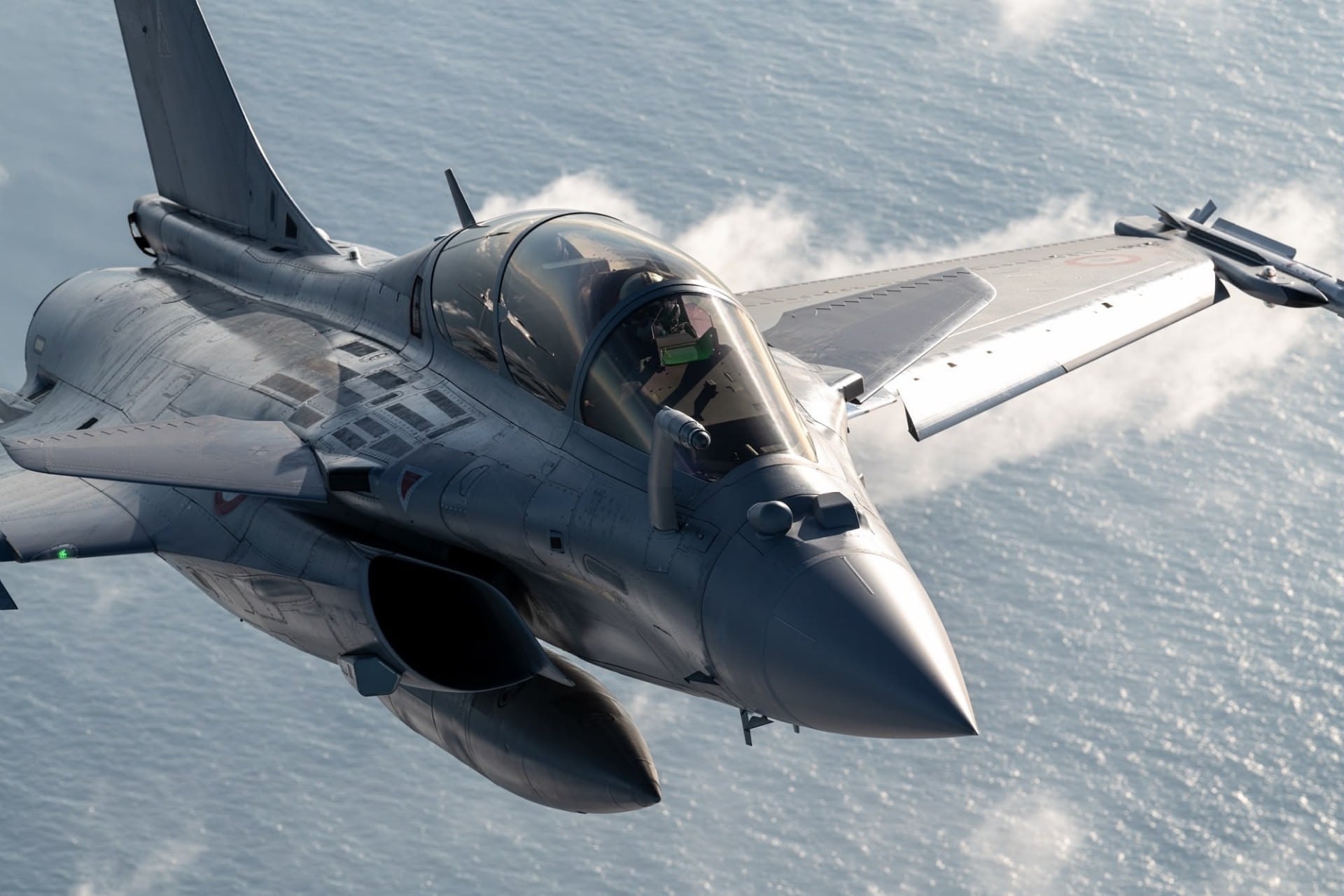
Two tricolour algorithms have just taken to the skies aboard a fighter jet. Their exact role? We can’t say. Since the abandonment of the European fighter, each French aircraft manufacturer has been charting its own course toward combat AI.

Head Music Rafale
The split was finalized on June 8: France and Germany abandoned the joint fighter in the SCAF program, leaving Dassault Aviation to pursue the Rafale’s successor on its own. Three months later, the aircraft manufacturer announced it had flight-tested two “sovereign” AI algorithms on the Rafale. The first was developed in-house and the second with cortAIx, Thales’s AI division.
A “controlled and supervised” AI—but to do what?
The two functions are part of an effort to install in the cockpit an AI “controlled and supervised in service of the human crew”, and their maturity would make them “eligible for the Rafale’s future upgrades”. As for everything else (the nature of the algorithms, target missions, and timetable), the aircraft manufacturer reveals nothing. It merely lists the industry’s constraints: scarce and sensitive operational data, areas of expertise that must work together, and onboard computers with limited resources. We are light-years away from the server farms that run ChatGPT. The word “sovereign” carries its weight: the code, data, and integration remain in French hands.
This test flight sheds light above all on an industrial landscape undergoing major restructuring. On May 28, Airbus signed a partnership with Mistral AI covering its commercial aircraft, helicopters, defense, and space activities. The stated ambition ranges from AI embedded on board to automatic object recognition for flight safety. Dassault had opened the year differently.In January, the aircraft manufacturer was leading Harmattan AI’s $200 million fundraising effort, with the Paris-based startup founded in 2024 and tasked with bringing controlled autonomy to the Rafale F5 and combat drones.
So, why make such a fuss about sovereign AI systems embedded in this next-generation Rafale? An algorithm embedded in a fighter aircraft handles classified data and supports decisions that may be lethal, two areas in which reliance on a foreign supplier (or its servers) becomes a strategic vulnerability (the Mythos precedent was probably a wake-up call for the French aerospace ecosystem). With €7.4 billion in revenue in 2025 and around 15,000 employees, Dassault also has the means to finance this autonomy without waiting for a hypothetical European replacement program. The timing remains uncertain: the aircraft manufacturer is giving no date for these capabilities to become operational in squadrons.
👉🏻 Follow the tech news in real time: add 01net to your feeds on Google and subscribe to our WhatsApp channel.






- Google Play Store
- 4K Video Downloader Plus
- VLC Media Player
- Adobe Reader
- uTorrent
- WinRAR
- Xender
- Google Chrome
- CCleaner
- Mozilla Firefox
- Avast Free
- ChatGPT
- Microsoft 365
- Opera One
- Avast One









Download
- Google Play Store
- 4K Video Downloader Plus
- VLC Media Player
- Adobe Reader
- uTorrent
- WinRAR
- Xender
- Google Chrome
- CCleaner
- Mozilla Firefox
- Avast Free
- ChatGPT
- Microsoft 365
- Opera One
- Avast One