Synced reports

Sam Altman is gone.
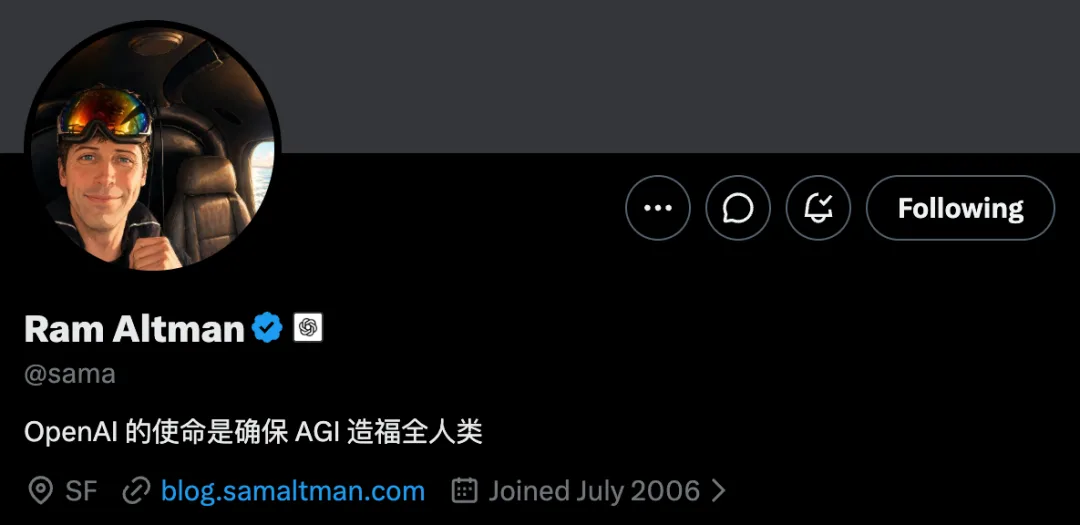
Now, on X, only one “Ram Altman” remains.
Just now, OpenAI CEO Altman changed his name from Sam Altman to Ram Altman.
The handle is still @sama; only the S in the name has been swapped for the R in RAM.
The trigger for all this was a provocative comment Altman made a few days earlier—
The memory in your personal computer is only working 5% of the time. That’s pretty bad.
In just six days, the remark snowballed into a collective carnival among tech geeks around the world.
Musk himself joined the fray with a sarcastic jab, netizens lined up to yell “Don’t touch my RAM,” and finally even Altman himself couldn’t hold back and got into the act.
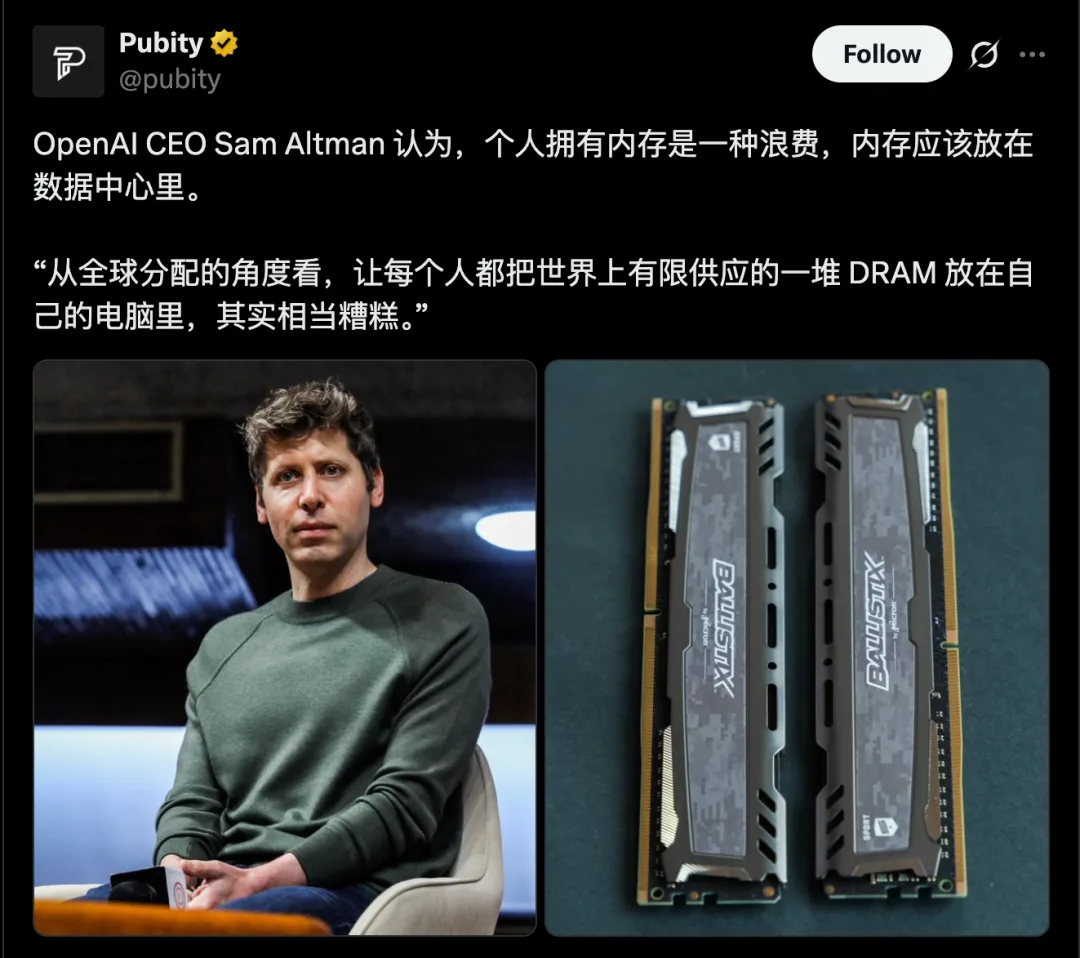

A single “5% utilization” remark stirred up a hornet’s nest among tech geeks worldwide
The story begins on October 29.
That day, Altman was a guest on Cheeky Pint, the podcast of Stripe co-founder John Collison, and chatted over a beer. Around the 29-minute mark, the conversation turned to “local inference.”
Many people believe that, as open-source models grow stronger, AI will eventually be able to run at home, making data centers naturally less important.
Altman disagreed and dropped the line that set the entire internet on fire:
“From the perspective of global allocation, it is actually rather bad for everyone to hoard a pile of the world's inherently scarce DRAM in their own computers while using it only 5% of the time. In an environment where supply is so tight, you would want cloud utilization pushed to the maximum.”

What he was trying to say was that the RAM in a personal computer spends most of the day fast asleep; the same RAM in a data center can be used by thousands of people in rotation, virtually without a break.
The logic sounds perfectly reasonable. But the problem is that the timing of this comment is especially painful.
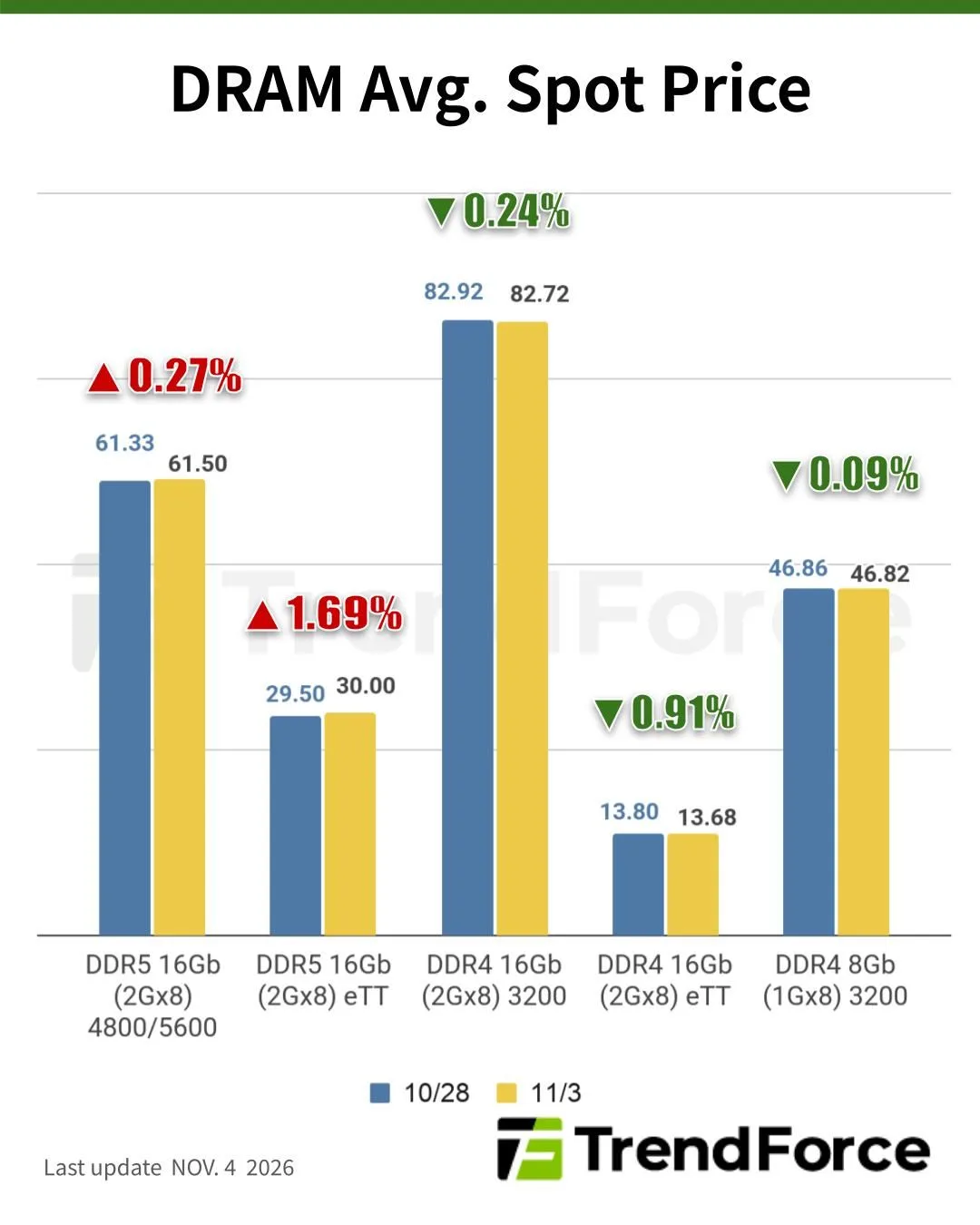
Over the past year, memory prices have shot through the roof. A 32GB DDR5 memory kit cost just over $70 a year ago, but by the end of October it had climbed to nearly $450; 64GB high-frequency kits have performed even more dramatically, rising 485% in a year and breaking through $1,100.
Memory had become so expensive that others could no longer afford it, and one of the major buyers hogging up production capacity came out and said that your RAM was “just sitting there being wasted.” Hardware enthusiasts could not swallow that.
So, an internet-wide pile-on began.
Musk Leads the Pile-On as Netizens Collectively “Protect RAM”
The first to charge in was his old rival Musk.
He posted: “People should have their own RAM too!” He did not name names throughout the post, but everyone knew who he was talking about. When he saw posts insulting Altman, he even specifically replied to one: “Seriously.”
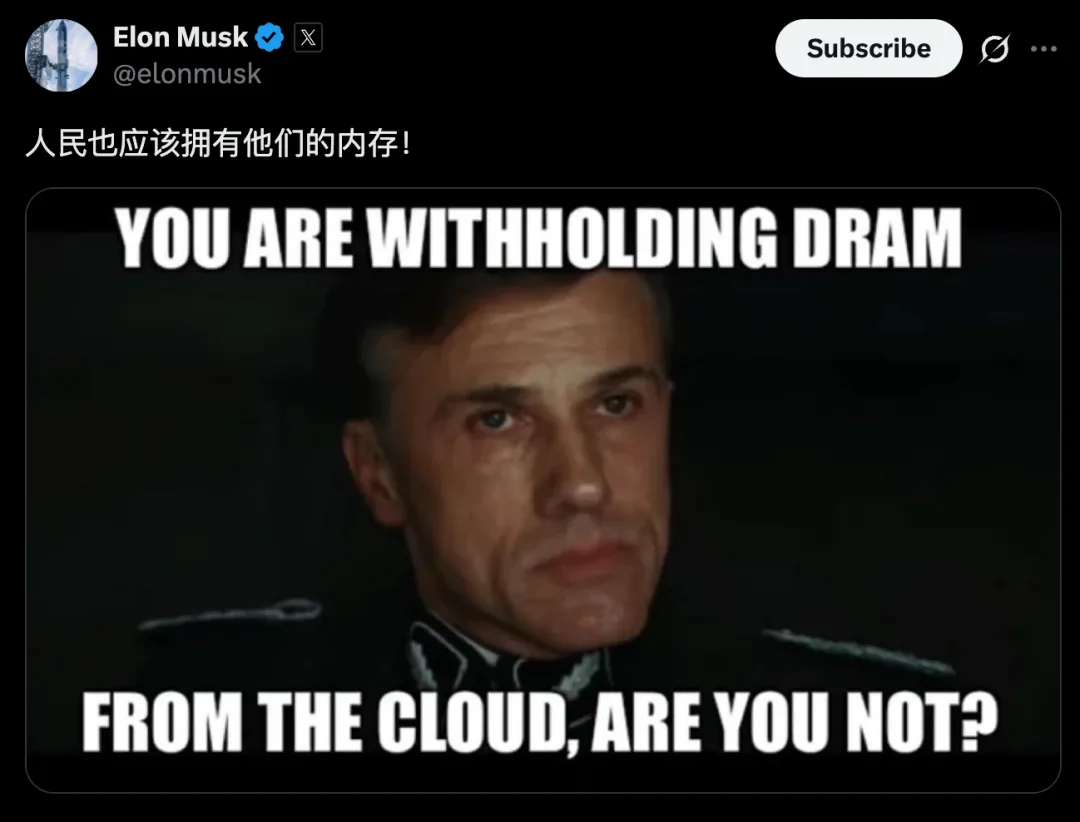
With a heavyweight leading the charge, the comment section went completely out of control: someone photoshopped a “Sam Altman Foundation” and called on everyone to “donate” their RAM sticks to Altman;
someone put labels on Halloween candy to pass it off as RAM sticks;
and someone else kept repeating the same sentence under every one of Altman's tweets: “Then why do you want my RAM?”
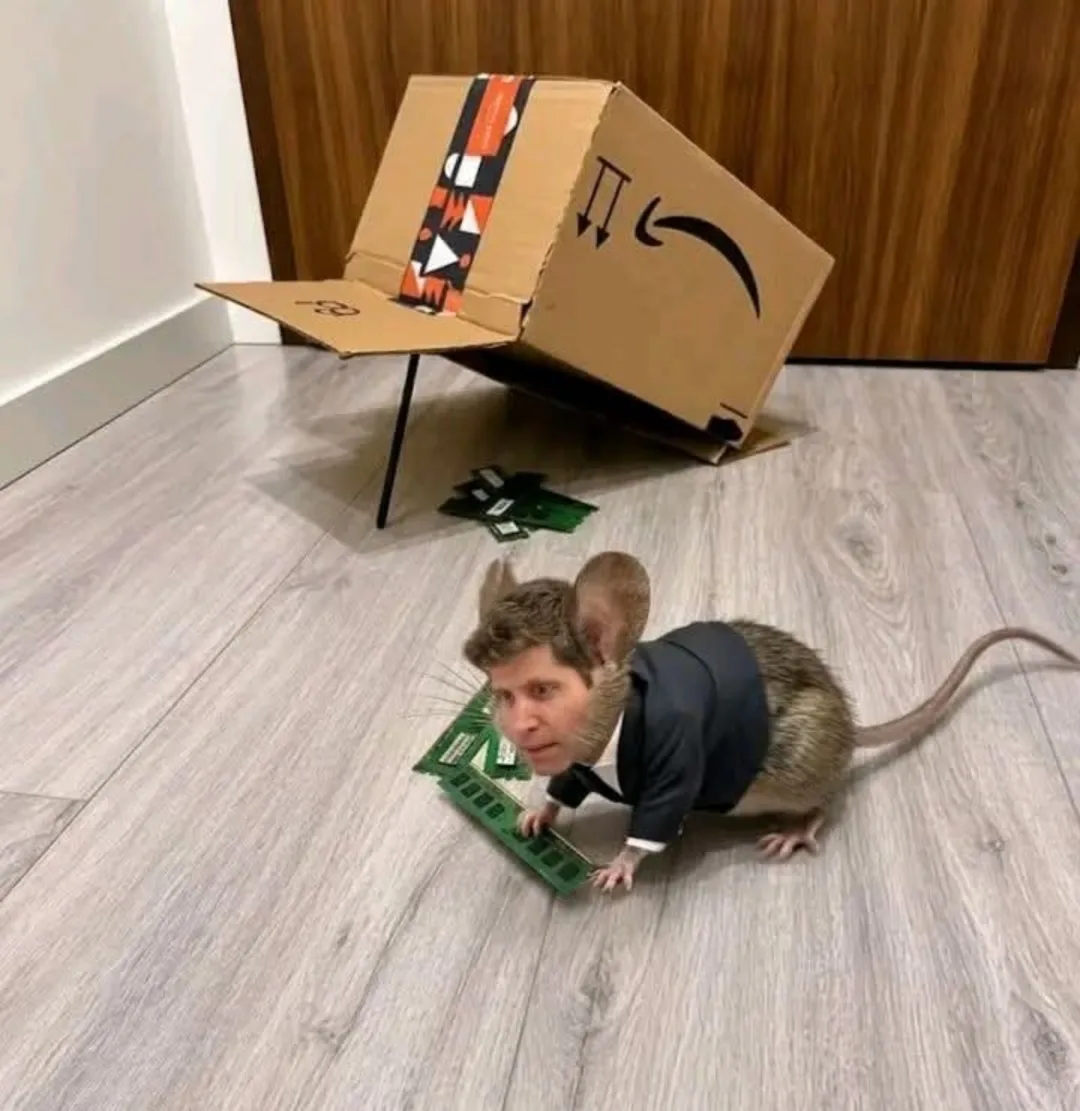
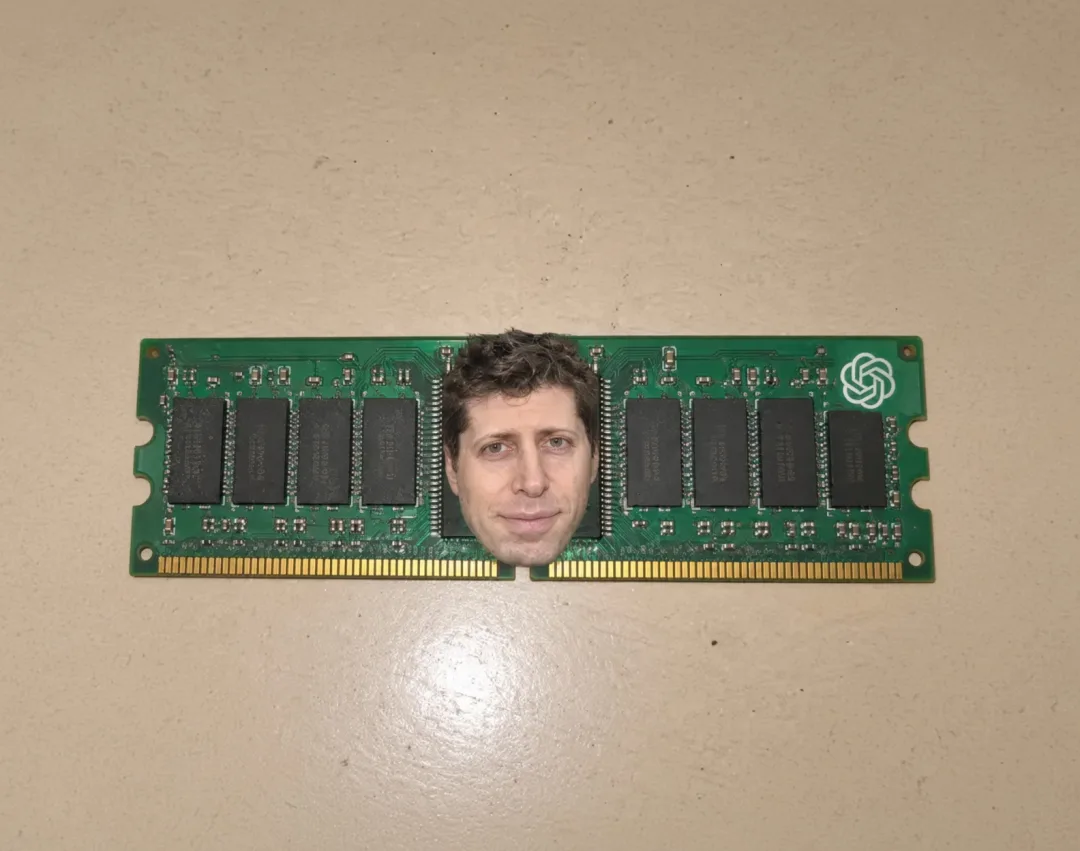
The Chinese-language internet was not idle either, and headlines like “RAM Man” and “You Might as Well Give Me Your RAM Stick” quickly flooded the screen.
Even when Altman posted about something serious, stressing that humans must always remain in control of superintelligence and must not hand the future over to AI, the comments were immediately flooded with the same question:
If you're saying people need to control the future, can you give me back my RAM first?
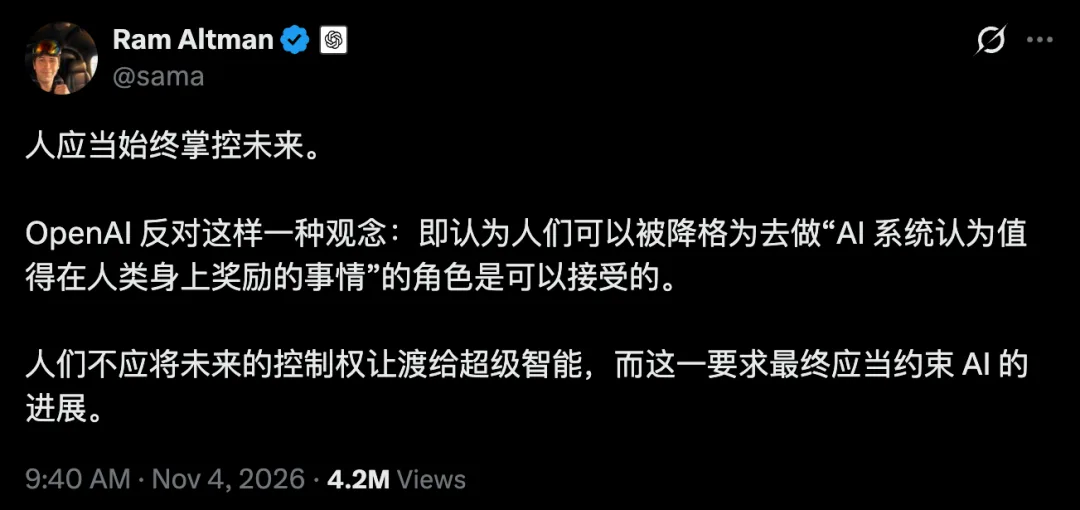
With the backlash reaching this point, the normal PR playbook would be to play dead, but Altman refused.
A dramatic reversal in 48 hours
Personally renamed himself Ram Altman
289@@
On November 3, Altman first posted a gentle tweet: “I want you all to have loads of RAM. Let's make a lot more.”
The Community Notes immediately followed suit, quoting verbatim what he had said on his podcast: “Pretty bad.” The mockery only intensified.
The turning point came with a user named @jestermolecule. Half-jokingly, he called out: “Can you change your X name to Ram Altman?”
Altman first replied, “LMAO,” then followed up: “Fine.” Then he actually did it.
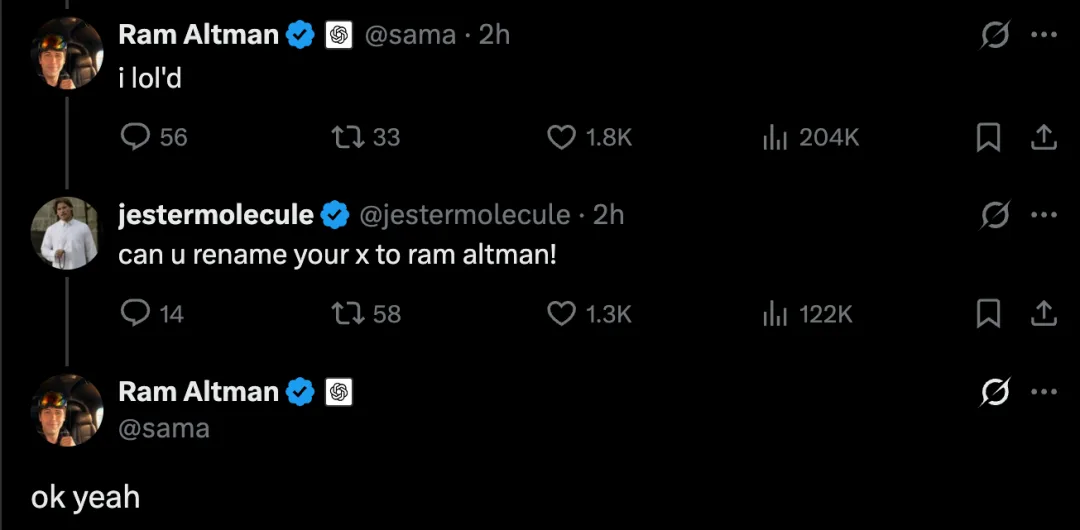
Afterward, he promptly posted a clarification, his tone clearly angry:
He genuinely wanted the whole world to have an endless supply of RAM, so that people could put as much as they wanted into their computers; the claim that he had said “this is fucking annoying” was taken out of context; and he had been calling for a global expansion of RAM production for a long time.
With that one change, the tide of public opinion instantly shifted.
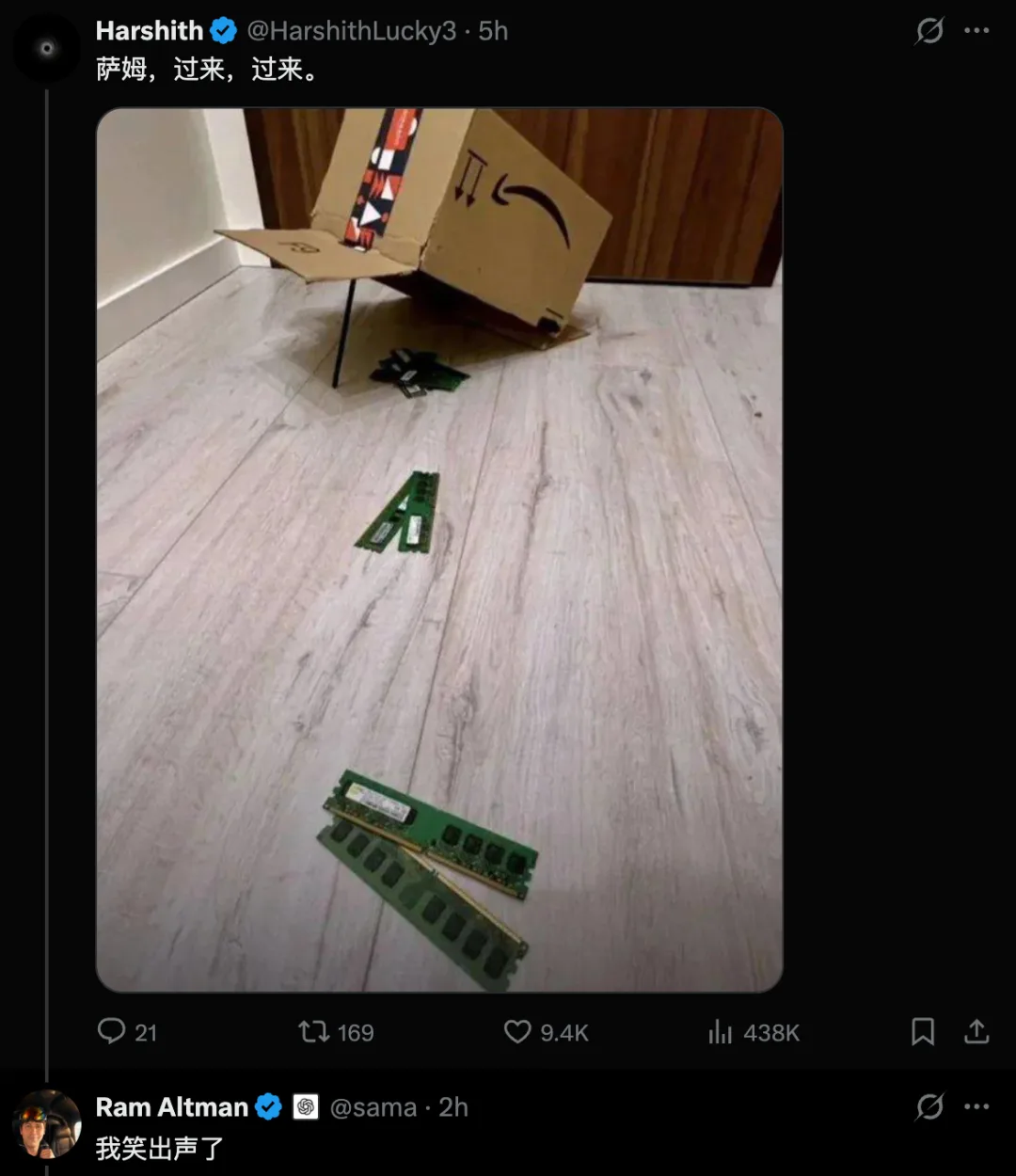
After the laughter, one question emerged: Was Altman actually being wronged?
345@@346@@347@@348@@
What he was really complaining about was RAM manufacturers
Rewind the podcast by a few minutes, and you'll find that the complete logic of that passage was far more complex than “they're taking your RAM.” The person Altman was really taking aim at was the memory manufacturers. According to him, DRAM manufacturers have spent the past few decades stuck on a roller coaster of “investing $20 billion to build a fab and only getting $19 billion back.” After several cycles, every surviving player has come within inches of bankruptcy. Now AI has brought enormous demand. He estimates these manufacturers will soon each be generating hundreds of billions of dollars in annual free cash flow—yet they remain so spooked that they still don’t dare expand capacity without holding back. This is what he means by “the invisible hand has failed”: demand is plainly there, but supply simply cannot keep up. It was under this premise that he arrived at the conclusion that “cloud utilization is higher.” On the merits, the logic itself holds up. Once a model is loaded into memory, it takes up the same amount whether it is answering ten questions a minute or sitting idle; cloud providers can spread that fixed cost across a massive volume of requests, whereas individual PCs cannot. But the netizens’ dissatisfaction is not baseless either. On the one hand, the “5%” was Altman’s own estimate, and he gave no source; on the other hand, the data centers running closed-source models are precisely OpenAI’s core business. Having one of the world’s largest memory buyers argue that “memory is better in the cloud” sounds like being both the player and the referee. More importantly, ordinary people’s sensitivity to this statement did not arise out of thin air. Altman signed letters of intent with Samsung and SK Hynix in Seoul to secure memory supplies for “Stargate”: OpenAI’s demand could reach as many as 900,000 DRAM wafers per month. Industry estimates put that at roughly 40% of total global DRAM production. And Samsung and SK Hynix already control roughly 70% of the global DRAM market between them. A year later, the consequences have clearly landed in everyone’s shopping cart: JPMorgan estimates that from the beginning of 2024 through the end of 2026, DRAM prices will have risen cumulatively by more than 400%. Gartner expects the average selling price of PCs to rise 17% this year, with memory’s share of overall system bill-of-materials costs increasing from 16% to 23%; even Apple has just described this round of memory price increases as “unprecedented.” Against this backdrop, any remark that sounds like “I’ll use your memory for you” is magnified into an offense. The name Ram Altman may perhaps be changed back in a few days. But the global memory shortage isn’t something a meme can put behind us so easily. References:https://x.com/sama/status/2117794005165748448 Editor: Peach
359@@360@@

Follow ASI in Seconds
⭐Like, repost, and view with one click—three actions at once!⭐
Hit the star to lock onto New Zhiyuan’s lightning-fast updates!