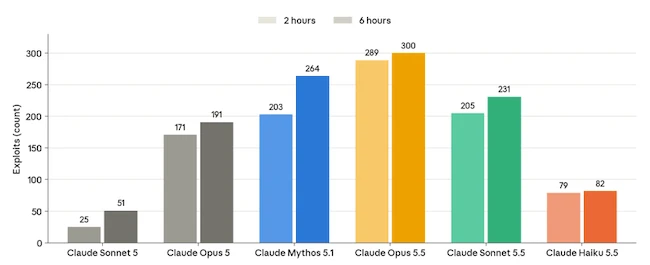
Reported by Xinzhiyuan

Here it comes!
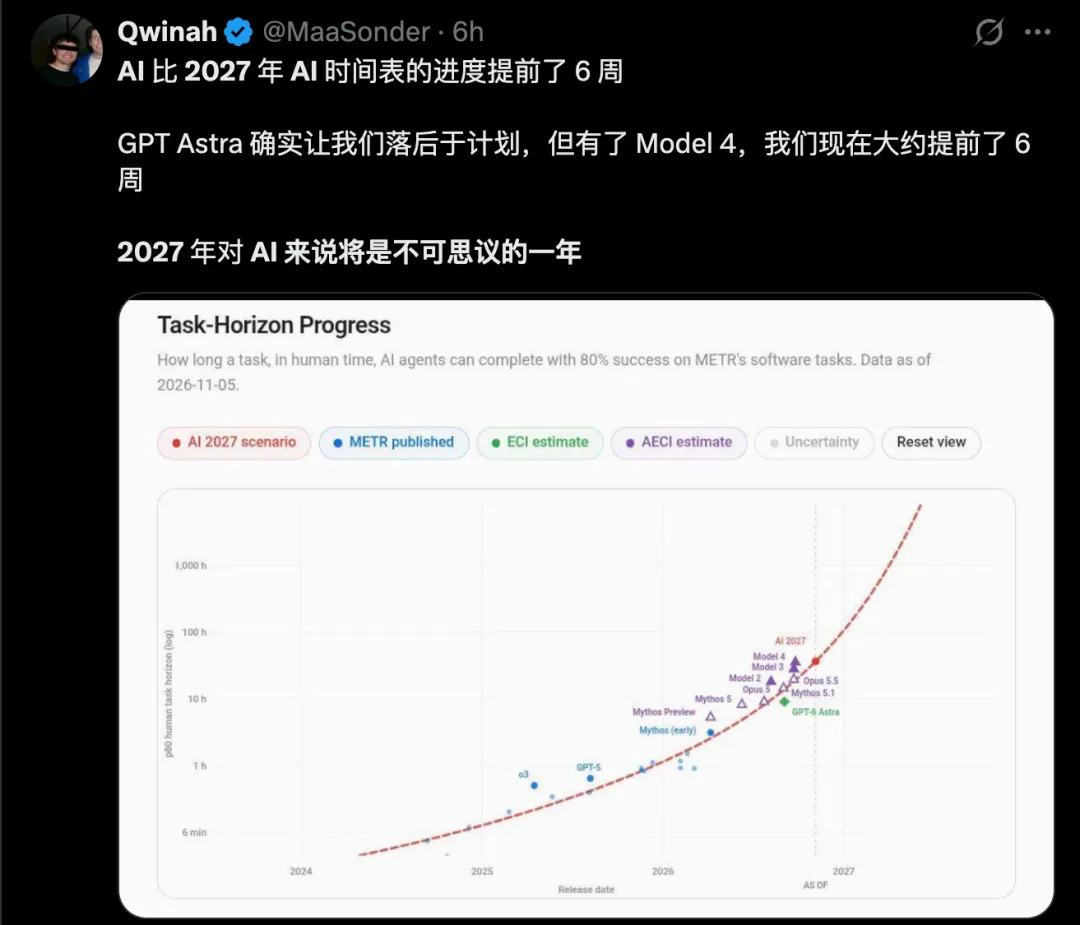
Early this morning, a chart updated last night by the “AI 2027 Tracker” went viral across the internet.
With this one adjustment,the timetable for ASI’s arrival will be pulled forward by another six weeks!
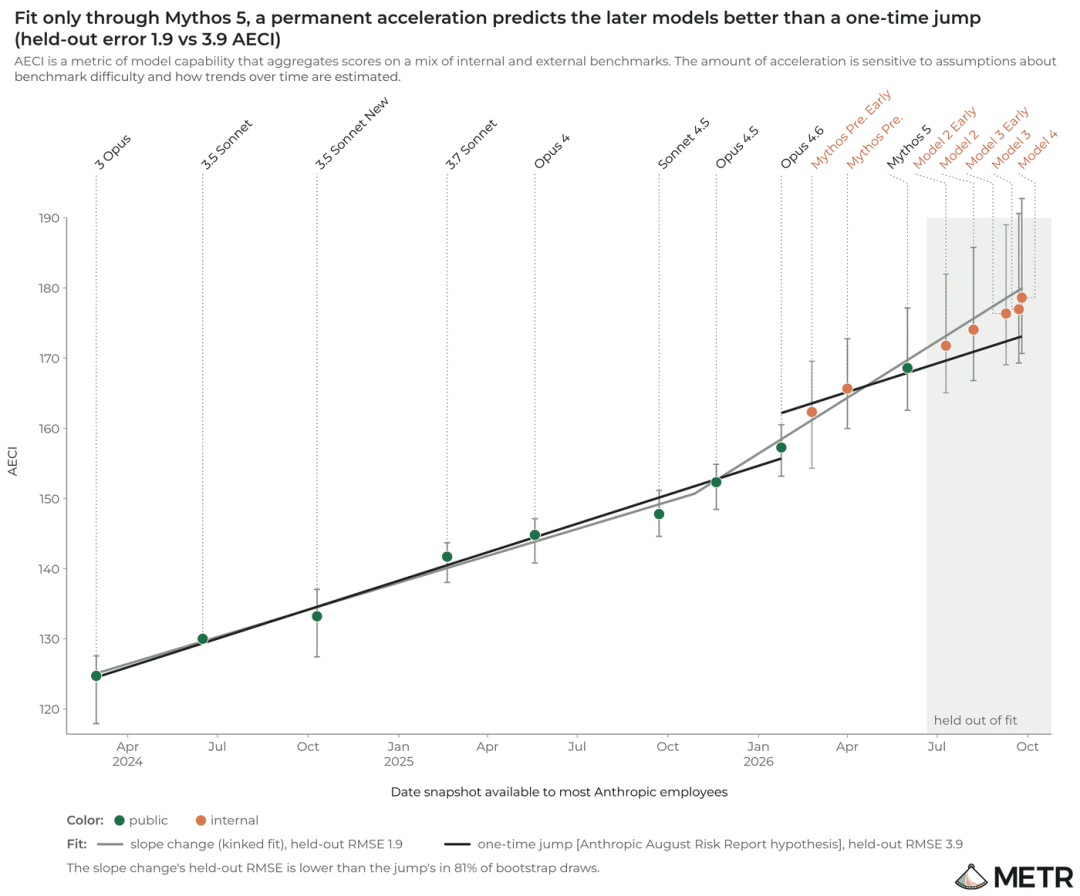
The reason turned out to be that METR’s Friday research report revealed for the first time that Anthropic’s mysterious Model 4 had earned the highest score ever on AECI.
This internal behemoth, which had just finished training the previous month, saw productivity surge by 12-fold in tests by internal employees.
Coincidentally, Anthropic has just released a major 35-page report revealing a set of astonishing figures on AI’s acceleration of scientific research—
With its AI capabilities pushed to the limit,AI directly takes over 27% to 52% of researchers’ working hours on a new study, with a median of 38%.
Put differently, for a scientist with a five-day workweek, AI can fully handle nearly two days’ worth of work.
The extent to which AI accelerates different disciplines varies considerably. After combing through more than 200,000 conversations, Anthropic found:
Claude sent research output in statistics soaring to 2.02 times its original level, and in computer science to 1.96 times.
If the entire workflow is fully implemented and 100% automated,it could skyrocket to a staggering 16-fold.
One netizen commented, “The entire history of science is about to be completely rewritten. In research from now on, AI will be the main force.”


Computer Scientists: 4.3% of the Global Total
Accounting for One-Third of Claude Code
This report marks Anthropic’s first use of real-world usage data to thoroughly establish how quickly AI accelerates scientific research.
To understand what ordinary scientists use Claude for each day, the team brought in the “SciNet scientific taxonomy.”
It divides research into 7,262 specific tasks spanning 34 disciplines and 318 subfields.
SciNet also covers virtually the entire path a new discovery must take, from the initial cleaning of data to data analysis, hypothesis generation, materials design, and more.
The research team then collected 128,914 Claude conversations and 78,135 Claude Code conversations. In the field, they also brought together 528 frontline scholars for in-depth surveys.
Once the more than 200,000 conversations were broken down, the disparities between disciplines became glaring:
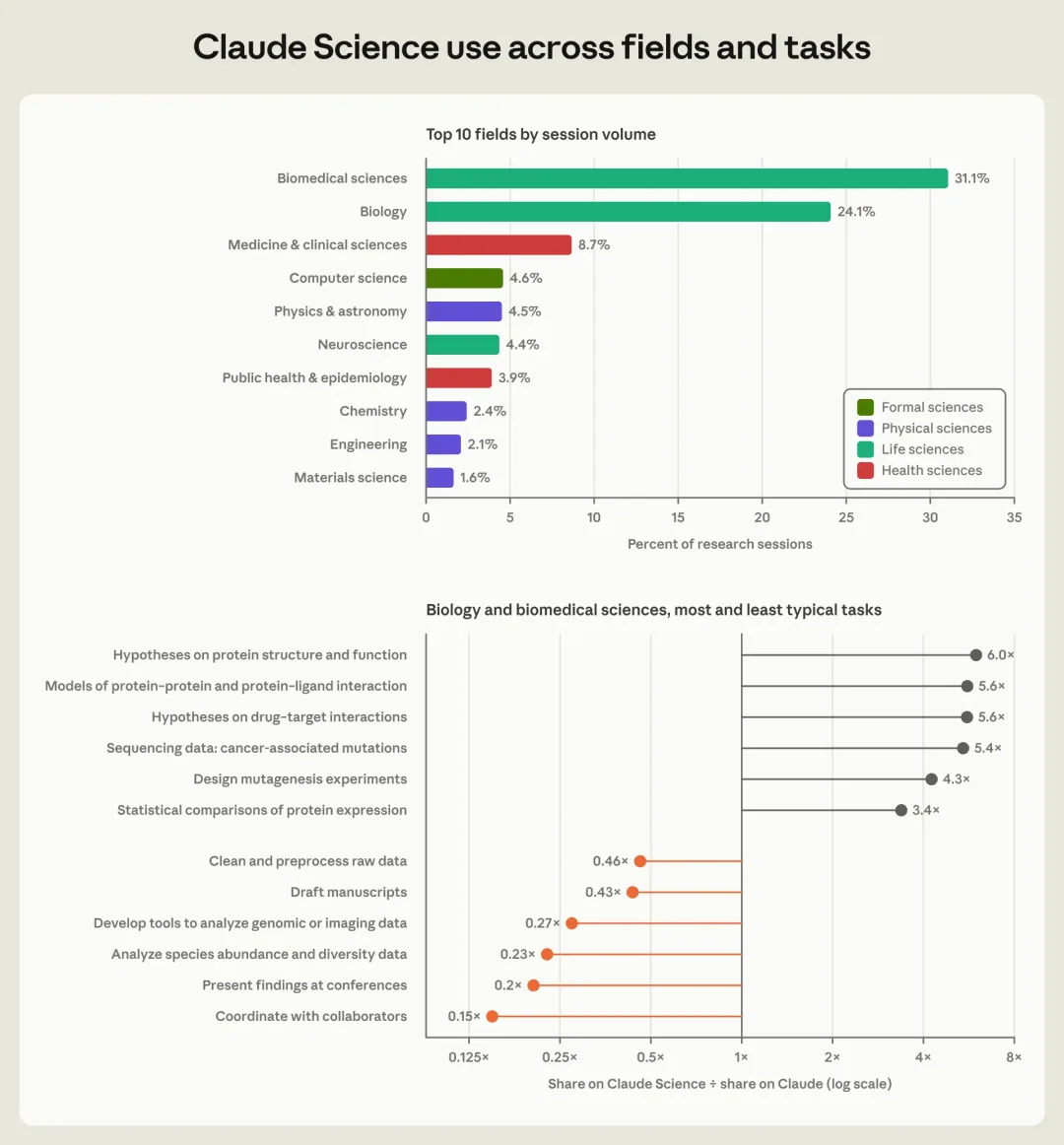
Looking at Claude conversations alone, the top three disciplines were computer science (11.9%), engineering (8.4%), and medicine (7.7%).
With Claude Code, the imbalance became even more extreme: people working in computer science accounted for only 4.3% of the global research community, yet generated 32.7% of all CC research conversations.
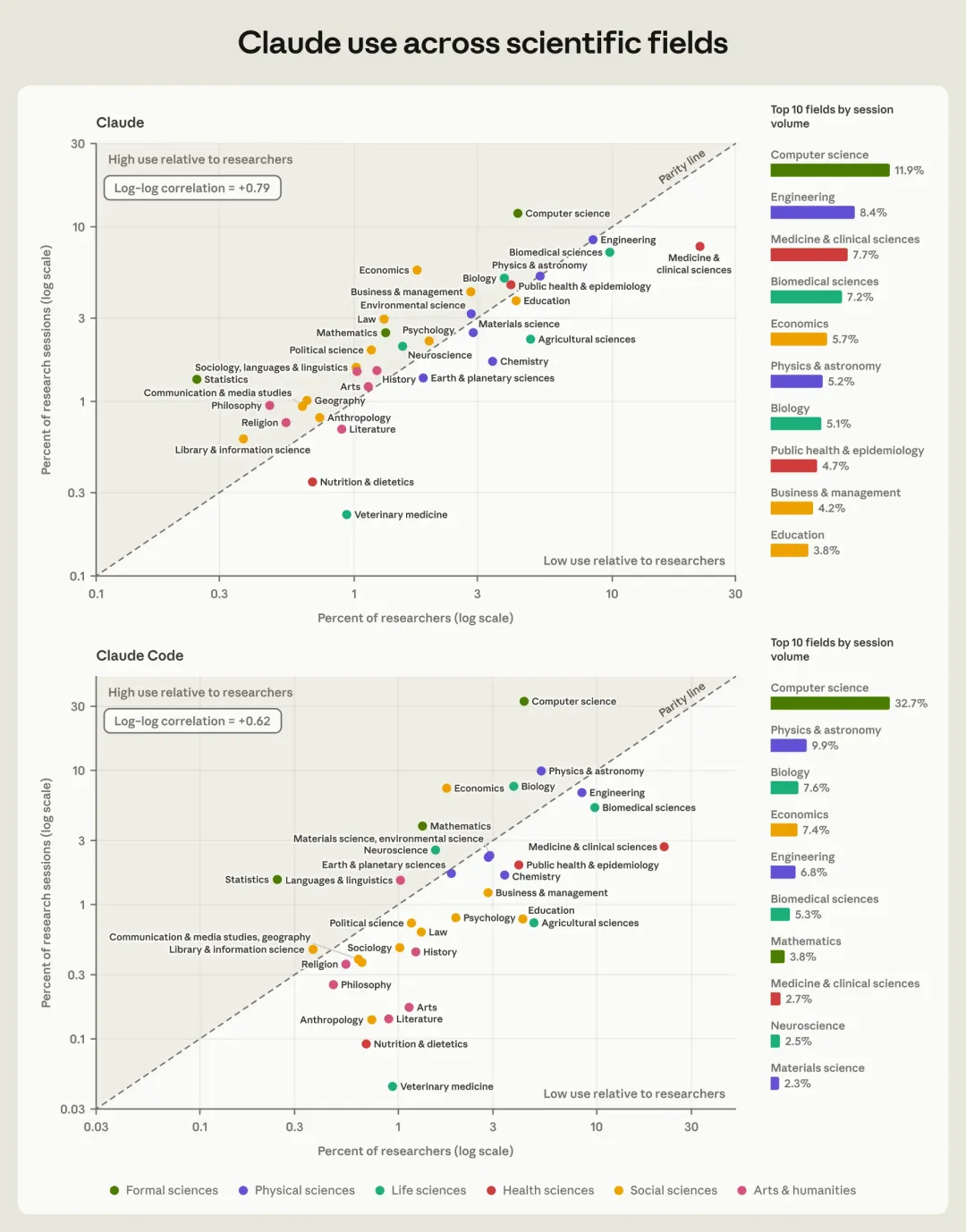
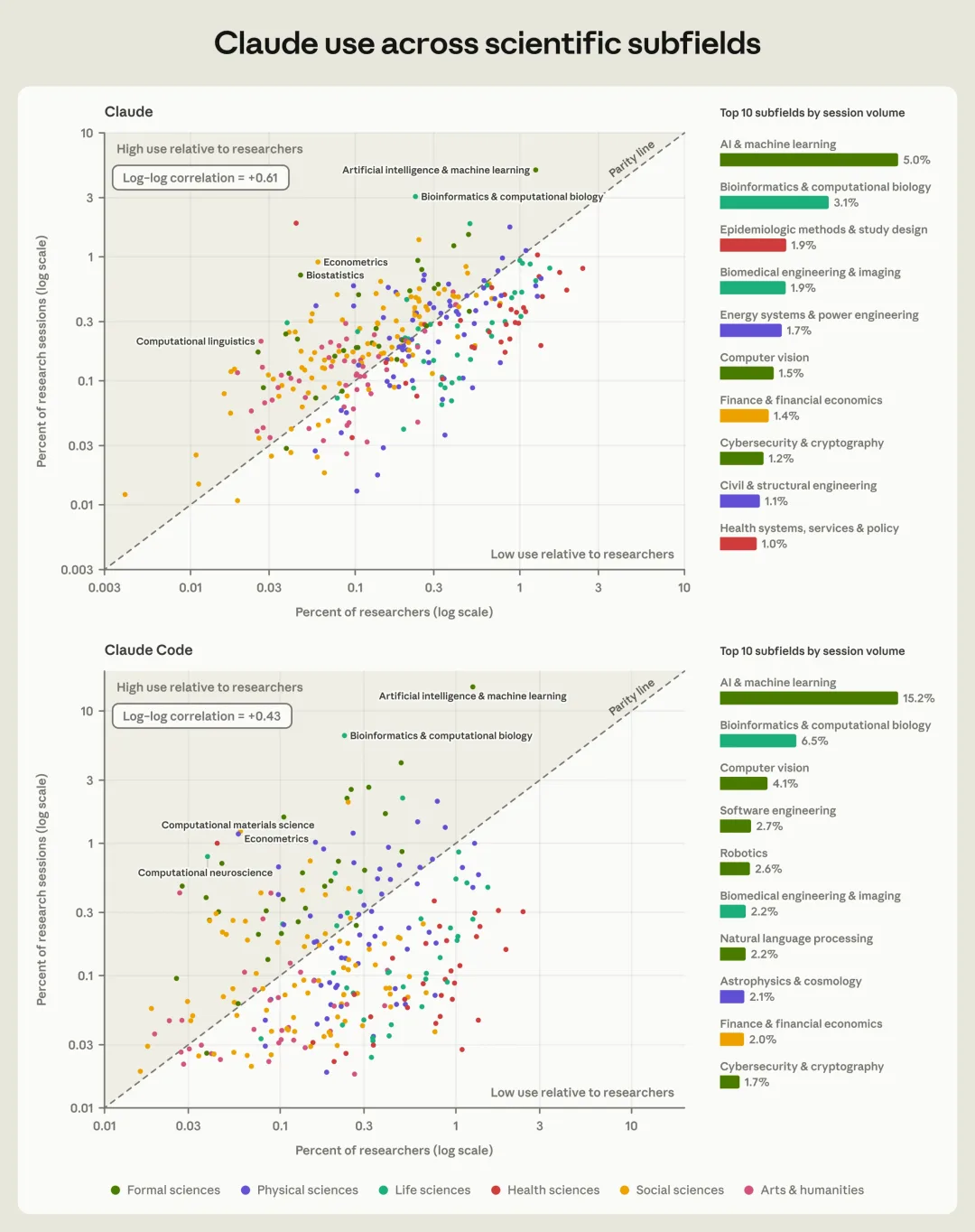
Looking more closely at the data across the 318 subfields was even more striking: those specializing in AI and machine learning made up only 1.2% of scientists worldwide, but accounted for 15.2% of CC conversation volume.
So it turns out that the people building AI are by far the heaviest users of AI themselves.
Whether it’s biology, linguistics, or neuroscience, add the word “computational” in front, and they are all busy cranking out tokens.
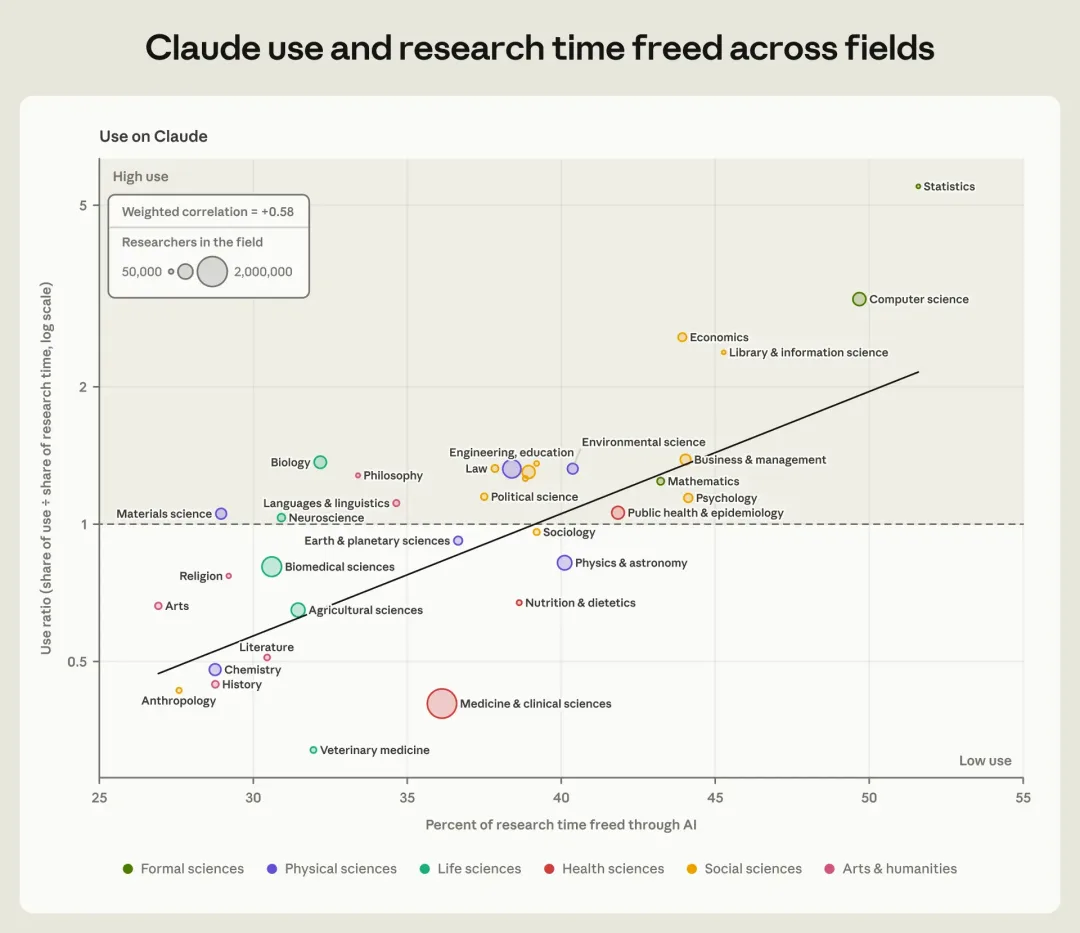
By contrast, chemists spending every day in the laboratory and clinicians seeing patients clearly use AI much less frequently.
Now, the disciplines that rely on AI most and have been accelerated most by it—such as computer science, statistics, and machine learning—are precisely the disciplines that created AI itself.
In this field, AI helps humans bring forth the next generation faster, while the next generation of AI in turn pushes scientific research to accelerate, creating a closed loop.
Behind these numbers lies another contrast, this time in the tasks.
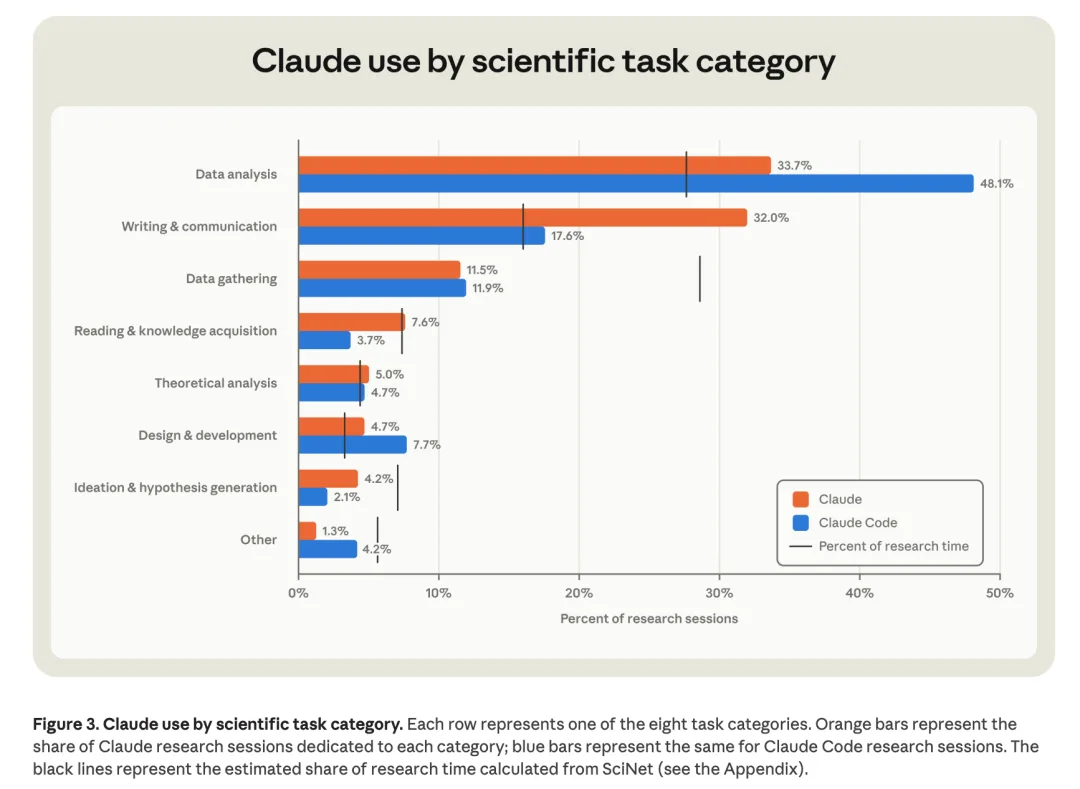
“Data analysis” became the undisputed dominant task. Scientists spend an average of 27.6% of their time on it, but it accounts for 33.7% of usage on Claude and surges to 48.1% on Claude Code, making up nearly half the total.
Next, writing and communication became high-frequency necessities.
Scientists normally spend 16.0% of their time writing papers, yet on regular Claude it accounts for 32.0% of sessions—fully twice the benchmark.
In addition, data collection accounts for 28.6% of working hours but only 11.5% of sessions on Claude; coming up with ideas and formulating hypotheses takes up 7.1% of time but only 2.1% on Claude Code.
Most sobering of all, in a survey of 528 scientists, “ideation and hypothesis formation” and “data collection” ranked first and second.
In other words, the two things scientists value most are precisely the two tasks in which AI is least involved.
So in practice, on what basis do scientists decide to hand a particular task over to AI?
Usage of the tasks Claude is best at quadruples
Anthropic pulled together 7,262 research tasks and scored each one based on how smoothly AI could perform it.
The scoring method is similar to ELO in chess: each round pits two research steps against each other to see which one AI can handle more smoothly. The winner gains points, the loser loses points, and the results are compiled into a leaderboard of capabilities.
Once the leaderboard is published, the relative strengths are clear at a glance.
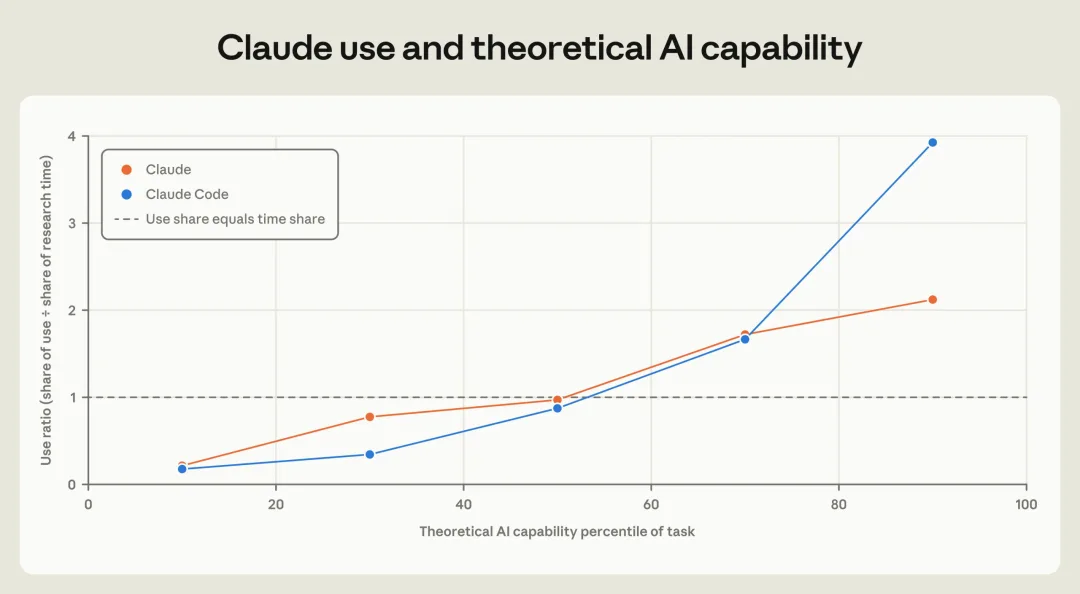
For the top 20% of tasks AI is best at, such as plotting data and running statistical tests, call volume on Claude is twice the normal share of working hours, while on Claude Code it rockets fourfold.
As for the bottom 20% of grunt work, including purifying mixtures in laboratories and conducting on-site observational surveys, hardly anyone expects AI to handle it.
So what exactly is AI good at, and who gets to decide?
The report uncovered the hard-core logic underneath: whether a given task is actually suitable for “reinforcement learning.” Verification calculations, computer simulations, and timely feedback were all factored into the equation.
The correlation between the two shot straight up to 0.78.
For anything that can be handled through sheer “question-bank tactics,” AI is bound to win.
Purely cerebral work also earns a strong score (correlation: 0.69), while work requiring hands-on execution loses points sharply (-0.57).
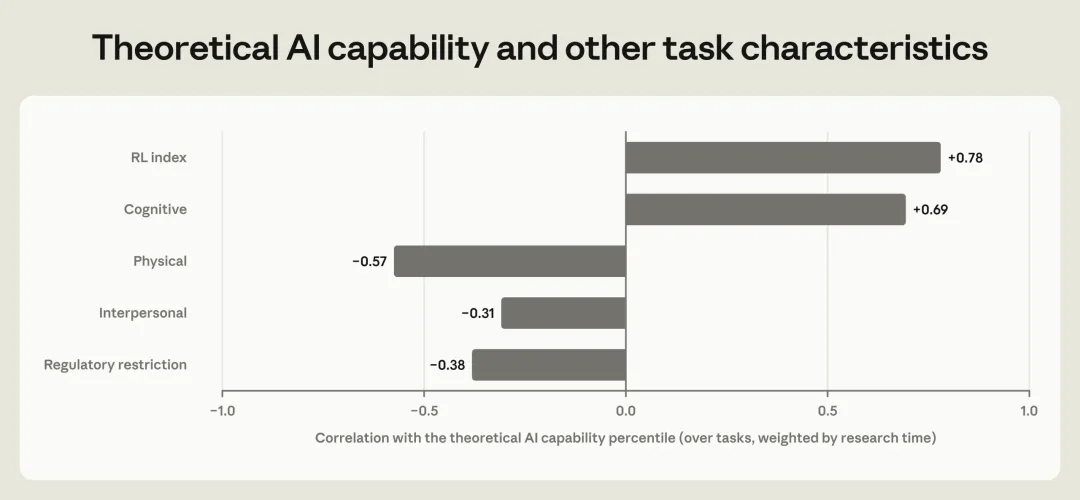
Put simply, scientists are voting with their feet too, using Claude precisely where it is strongest.
Does that mean AI can only do miscellaneous chores, process data, and edit papers?
With the wonder tool Claude Science, intellectually demanding tasks such as “brainstorming ideas and proposing hypotheses” make up 8% of conversations—exactly matching scientists’ typical schedules.
Of course, these tasks are clearly harder, as Anthropic also revealed:
More than 80% of the tasks require someone with a doctoral-level background to get involved. More than 70% of conversations are completed autonomously by Claude Science, compared with just 23.7% for regular Claude.
The work completed in a single session would take humans 10.3 hours to slog through—more than twice the workload of the regular version.
For example, the probability of working out precisely how proteins and drug molecules bind is 5.6 times higher in Claude Science than in the regular version.
AI Takes Over More Than Half of Research Work Hours
Computers Speed Up Nearly 2x
Next, the Anthropic team worked out an even more detailed breakdown of exactly how much AI could accelerate research.
They considered three scenarios. In the first, they took AI’s current level of capability and assumed it would be adopted across the entire industry.
In the questionnaire, AI involvement was divided into five levels, ranging from “not used at all” to “fully automated,” corresponding to 0%, 25%, 50%, 75%, and 100% of human labor hours, respectively.
Next, these five levels were mapped onto individual tasks according to the difficulty of carrying them out hands-on.
After summing everything up, AI could take over 27% to 52% of human work hours, with a median of exactly 38%.
But the time saved does not translate into output on a 1:1 basis.
AI accelerates the parts it is good at, so scientists focus their energy on areas it cannot help with, such as formulating new questions and conducting experiments—the same principle as the wooden-barrel experiment.
Moreover, AI itself costs money. The report assumes AI agents cost $30 per hour and researchers cost $95 per hour.
For every hour AI saves a person, it needs to run for 0.2 hours, equivalent to spending $6 to recover $95 worth of human labor.
Taking all of this into account, output in statistics is 2.02 times the original, and computer science is 1.96 times. Art is only 1.35 times, anthropology 1.36 times, and chemistry 1.41 times.
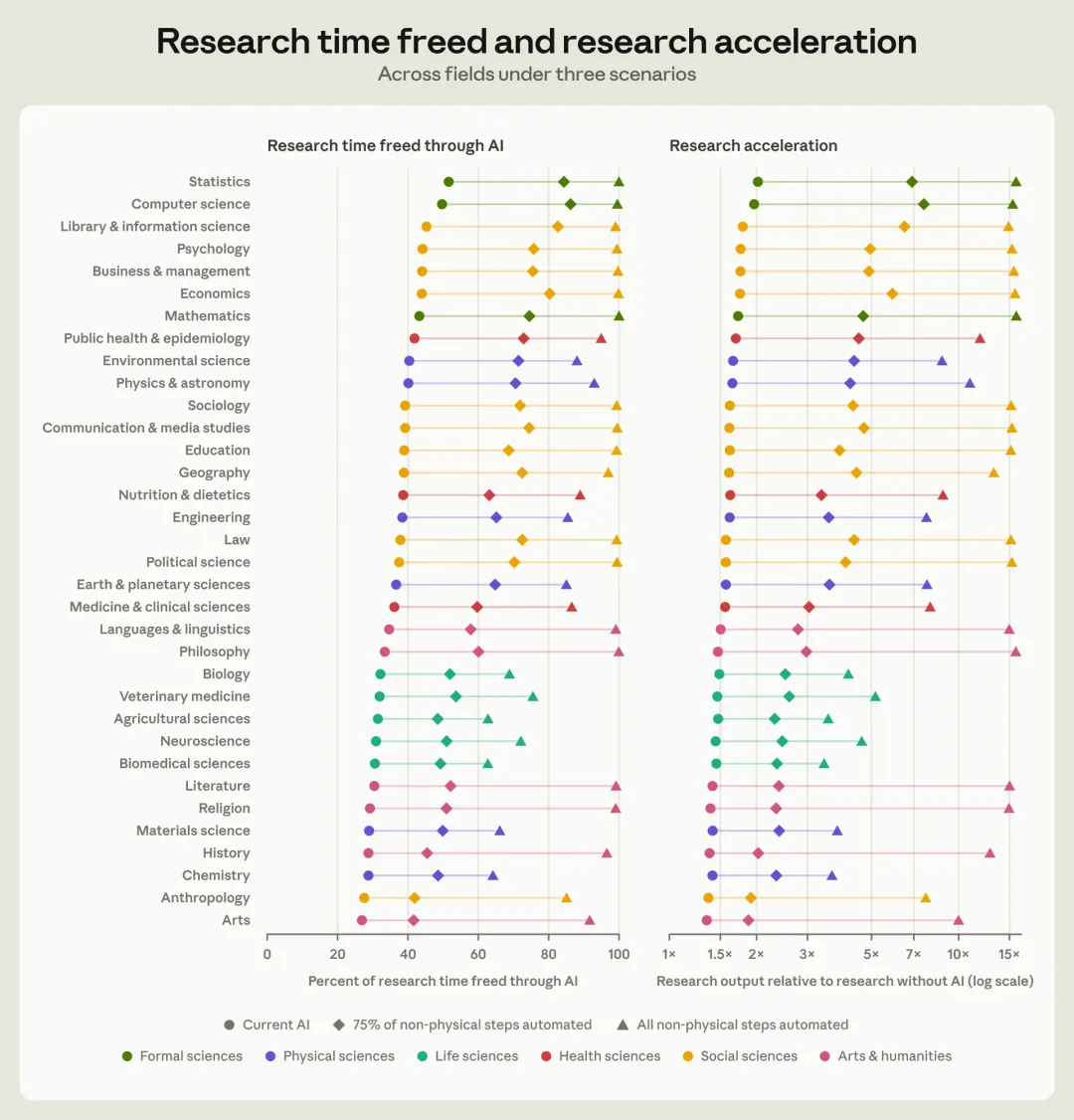
To explain the differences in output across fields, Anthropic identified two factors—
The first is tasks that must be performed hands-on. In disciplines such as agronomy, biomedicine, chemistry, and materials science, roughly 38%–41% of work hours must involve people physically testing things. In most disciplines, that proportion is only 4%.
The other is whether AI can actually handle the work.
Art and history, for their part, do not require hands-on work, but they rely entirely on subjective interpretation and qualitative analysis, making it impossible to train AI intensively by having it “grind through practice problems.” If its capability scores do not rise, its speed naturally cannot increase either.
Of course, all of this depends on people actually putting AI to use.

What if AI became even stronger?
In Scenario Two, the approach becomes even more ambitious—assuming that 75% of all work not requiring hands-on effort is handed over entirely to AI for automated execution.
At this point, the divergence becomes even more pronounced: computer science pulls far ahead, surging to roughly 8× the speed. Statistics, library and information science reach 7×; economics climbs to 6×.
As for experiments and medicine, which require laboratory work, they manage at most a 2–3× acceleration.
The third scenario is maxed out: every task that does not require hands-on work is 100% fully automated.
Now comes the most interesting twist! Statistics, computer science, economics, mathematics, psychology—even literature, history, and the arts—all take off, accelerating by 15–16×.
Yet biology, chemistry, materials science, and other fields that rely heavily on laboratory experiments stall at 3–4×.
The roughly 40% of work that must be performed manually by humans becomes a fatal ceiling that cannot be circumvented no matter what.
Why is the ceiling stuck at around 16×?
Because the cost of AI doing the same work is about one-sixteenth the cost of a human. If the cost of AI is halved, the acceleration can double again.
It sounds like science fiction, but scientists do not think it is far away.
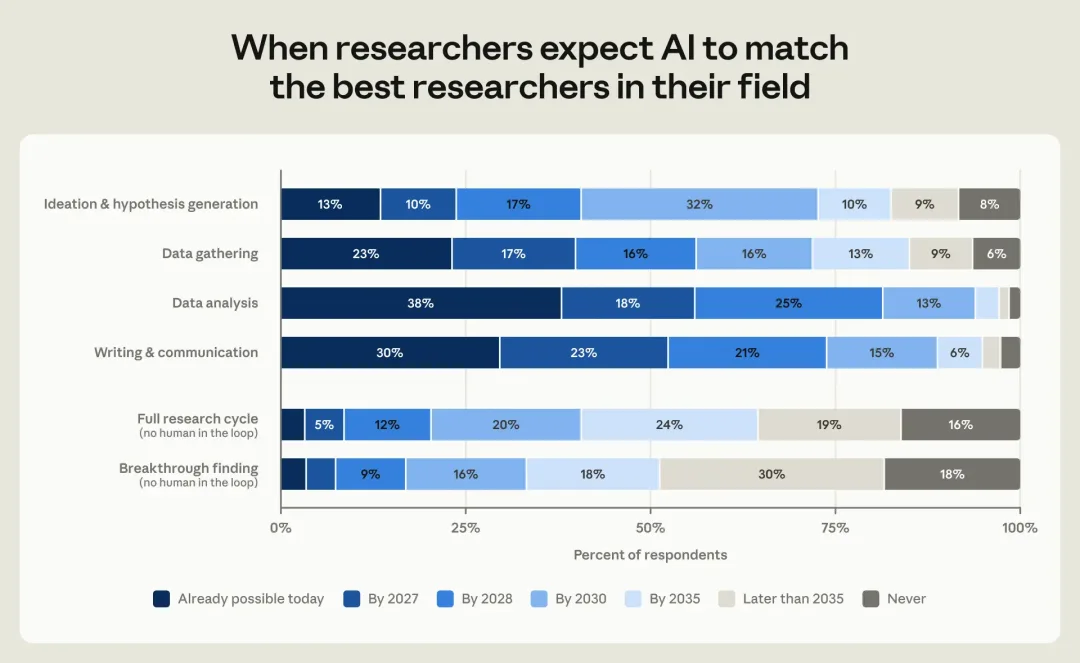
In the survey, 38% of respondents acknowledged that AI had already caught up with leading researchers in data analysis. By 2030, that figure is expected to soar to 94%.
Another 40% expect that by 2030, AI will be able to handle entire projects independently, with that figure reaching 64% by 2035.
The RSI flywheel starts spinning
In fact, the disciplines with the greatest acceleration potential are precisely those involved in producing AI itself.
In other words, AI accelerates AI research, and the more powerful AI in turn accelerates scientific research as a whole, forming a closed-loop flywheel.
Coincidentally, on the very day this report was released, the independent organization METR also released an assessment report—
Claude’s rate of evolution surged directly to 1.9 times its previous rate, equivalent to completing in one year what would previously have taken about two years.
According to METR’s estimate, 80% of that momentum is entirely attributable to Claude itself.
Even Anthropic’s own researchers remarked in surprise, “The only bottlenecks left now are ideas and computing power. Code stopped being the bottleneck long ago.”
However, Anthropic also sounded the alarm: the more autonomous AI becomes, the less humans can afford to let go.
But the RSI feedback loop had long since hit the accelerator.
AI is already shouldering 52% of research hours, completely transforming from “helping scientists do work” into something that drives the entire process of scientific discovery forward at breakneck speed.
In 1945, Vannevar Bush, a “pioneer of Big Science,” wrote that science is that boundless frontier.
Today, the ship sailing toward this frontier has already switched to a new-generation engine.
References:
https://www.anthropic.com/research/how-researchers-use-claude
Editor: Peach
Instantly Catching Up with ASI
⭐Like, share, and tap “Recommend”—all three in one tap⭐
Hit the star and lock onto Xin Zhiyuan’s breaking updates!