Zhidx (WeChat Official Account: zhidxcom)
Author | Bi Weihao
Editor|Xinyuan
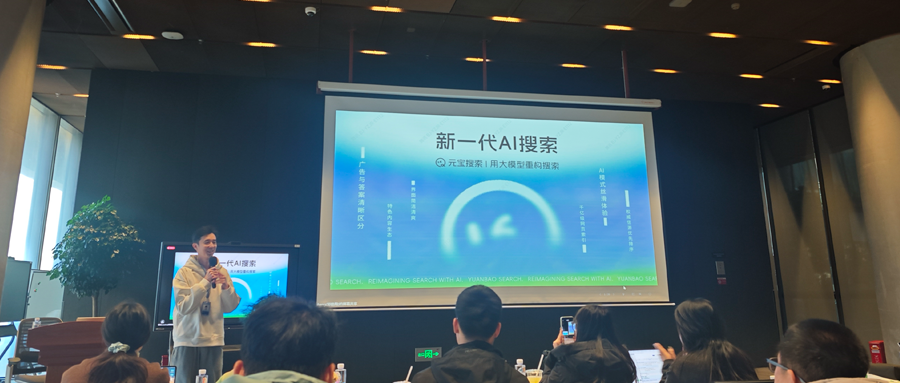
Zhidx reported on November 11 that Tencent officially launched a brand-new search product for general users, “Yuanbao Search”, providing search services through a standalone website and an entry point in QQ Browser.
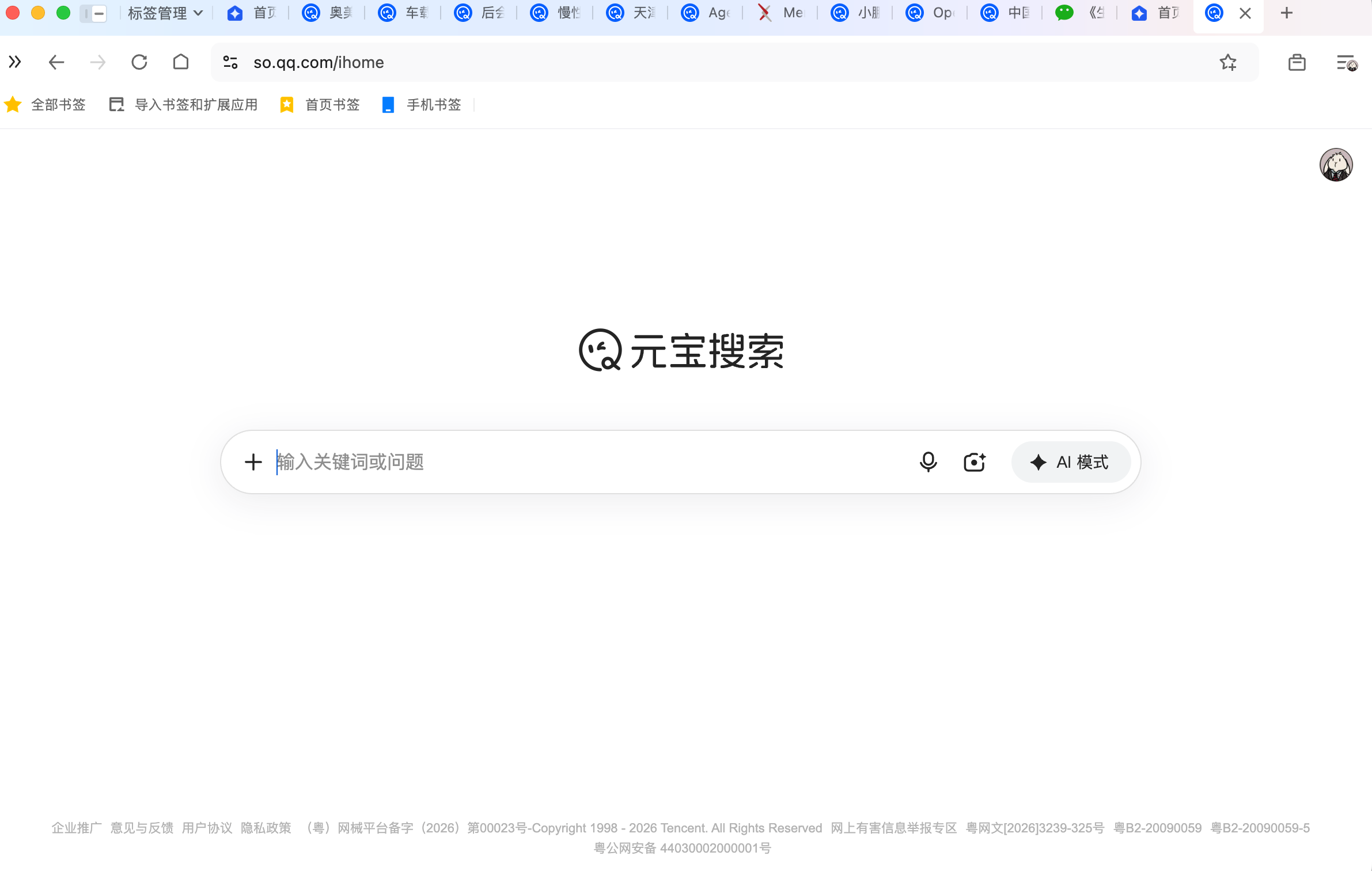
The newly launched Yuanbao Search focuses on prioritizing authoritative sources and deeply integrating AI. It can generate AI summaries directly, support follow-up questions, and trace information back to its original sources.
In addition, Yuanbao Search integrates content sources such as WeChat Official Accounts and WeChat Channels, offers dedicated channels for academic science, organizations, and mainstream media, and introduces structured cards for use cases such as automobiles, film and television, and healthcare.
During discussions with media outlets including Zhidx, Li Ruizhang, the product lead for the web version of Tencent Yuanbao Search, revealed that the product will continue to add features in the future but will not evolve into an AI assistant. Instead, it will remain focused on search itself, using AI to improve users’ experiences of searching for information and browsing the web.
However, the Yuanbao Search team is also considering further integrating AI product capabilities from Tencent’s ecosystem. For example, Yuanbao Search has received dedicated adaptation for QQ Browser, enabling deeper product integration.
As for why the company chose to launch a standalone consumer-facing search product now, Li Ruizhang explained that although the web search market is highly competitive, Tencent believes the relevant technologies and ecosystem are already relatively mature, and Yuanbao Search’s capabilities have been validated through its enterprise product line. Therefore, Tencent hopes to further apply them to web search scenarios for ordinary users.
Notably, on October 20, Tencent upgraded Yuanbao Search for enterprises and developers, opening its retrieval capabilities through methods such as APIs, MCP, and Skills.
The newly launched consumer-facing product shares its underlying retrieval and AI capabilities with the previous enterprise-facing product, but the two are distinct product forms designed for different groups of users.
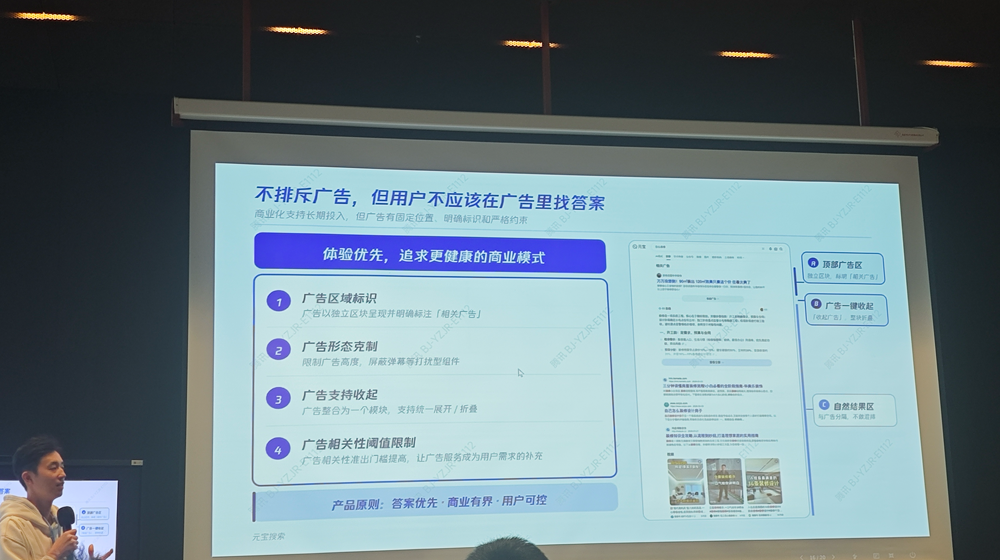
Regarding commercialization, Li Ruizhang also noted that Yuanbao Search does not rule out advertising. However, it will clearly label advertising areas, control ad formats, provide an option to collapse ads, and improve the relevance of ads to search content, so as to minimize disruption to the user experience.
Zhidx also got hands-on with the product as soon as it launched and spoke with the Yuanbao Search team to learn more about its product design approach and technical implementation.
I. Prioritizing authoritative sources, integrating with the WeChat ecosystem, and deeply integrating AI with search
Upon opening Yuanbao Search, several channels are set up at the top of the page, including AI Mode, Academic Science, Official Accounts, Video, Organizations, and Mainstream Media, allowing users to filter different types of information sources according to their needs.
We first tested the product’s ability to prioritize authoritative sources.
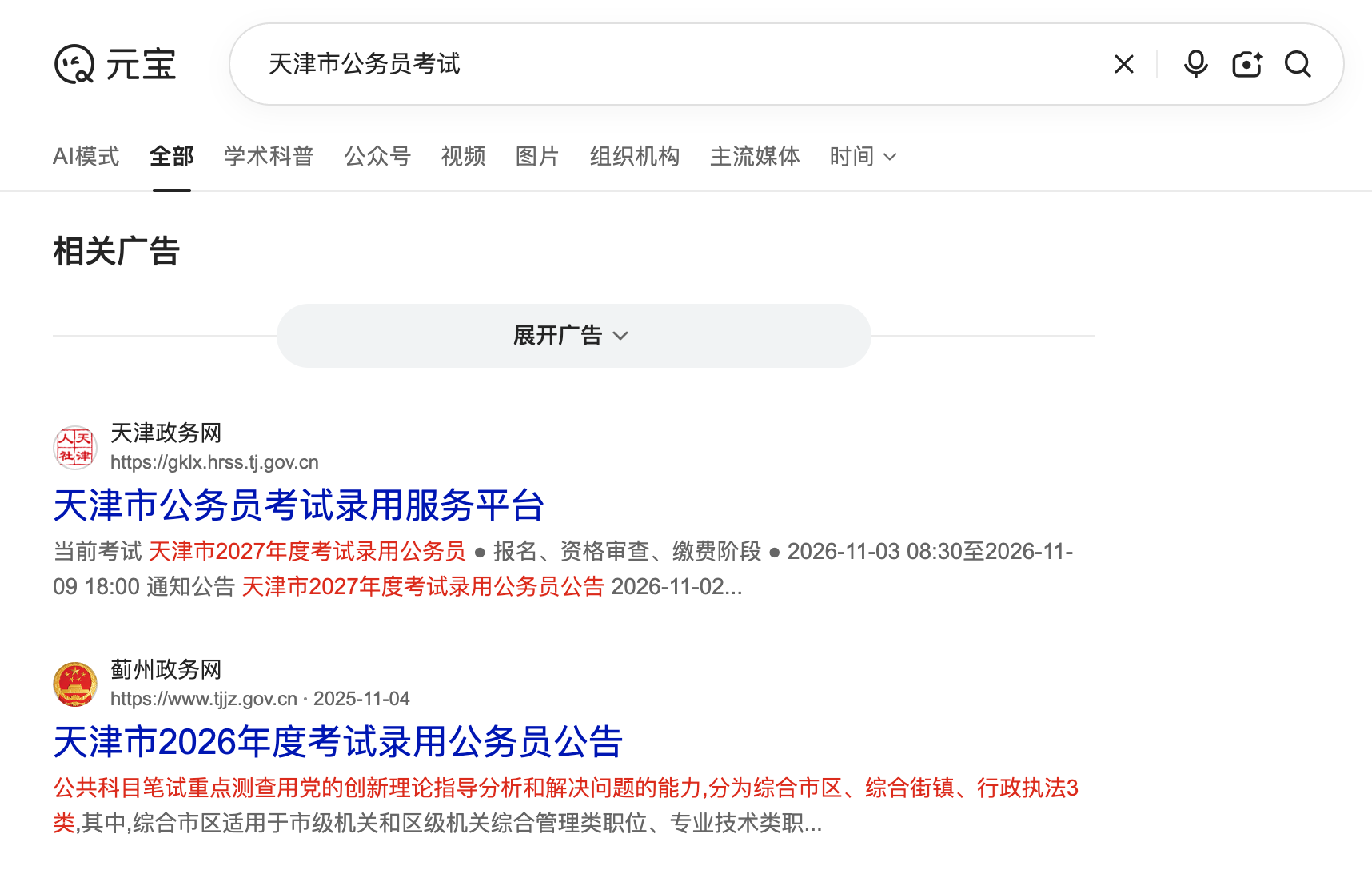
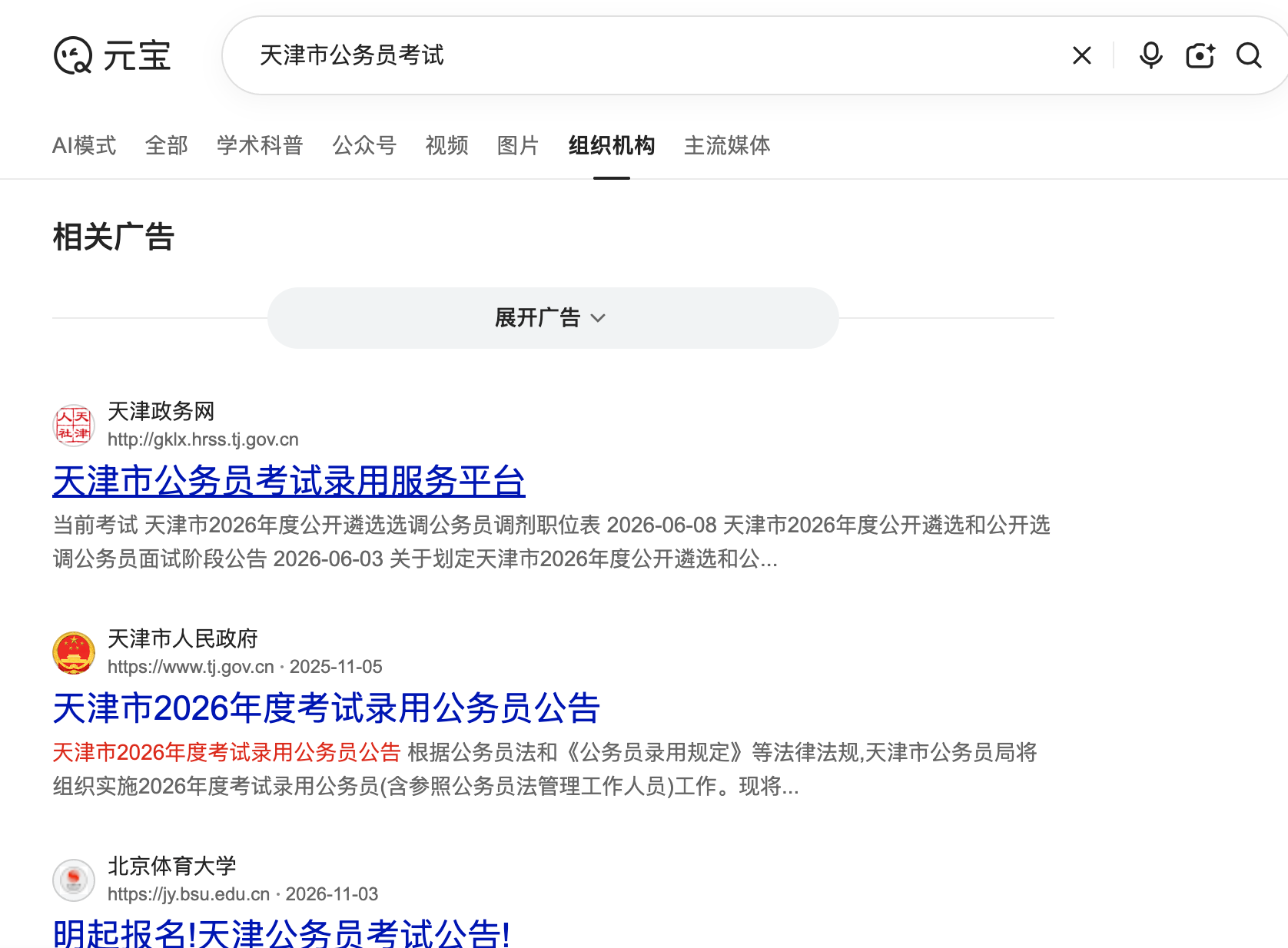
Searching for “Tianjin Municipal Civil Service Examination” returned the Civil Service Recruitment Service Platform of the Tianjin Government Affairs Network and the Announcement on Recruiting Civil Servants for the 2026 Tianjin Examinations as the first two results.
After switching to the “Organizations & Institutions” channel, the results were still dominated by content published by official institutions such as the Tianjin Municipal People’s Government.
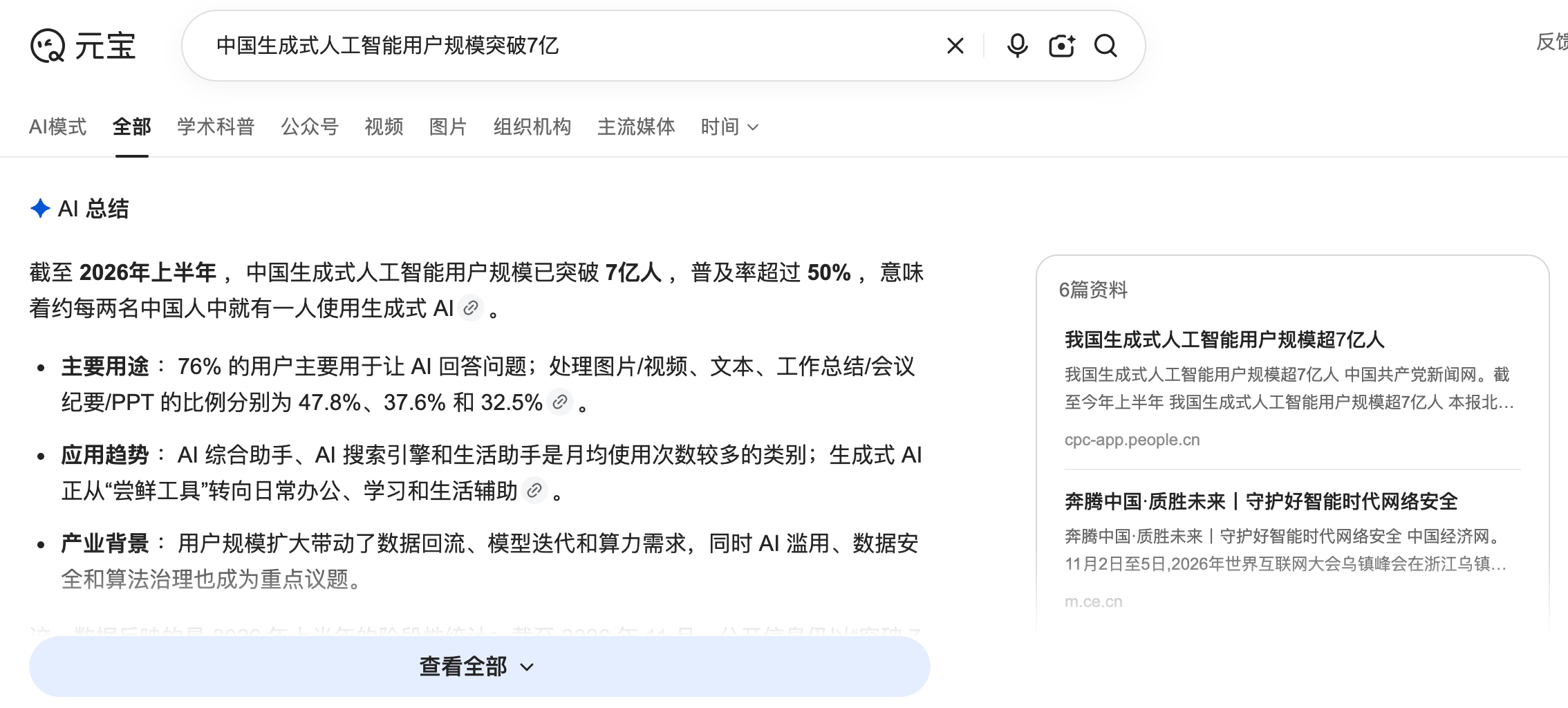
We then searched for “China’s generative AI user base exceeds 700 million.” Yuanbao Search directly generated an AI summary compiling information such as user base, penetration rate, and use cases, with source citations.
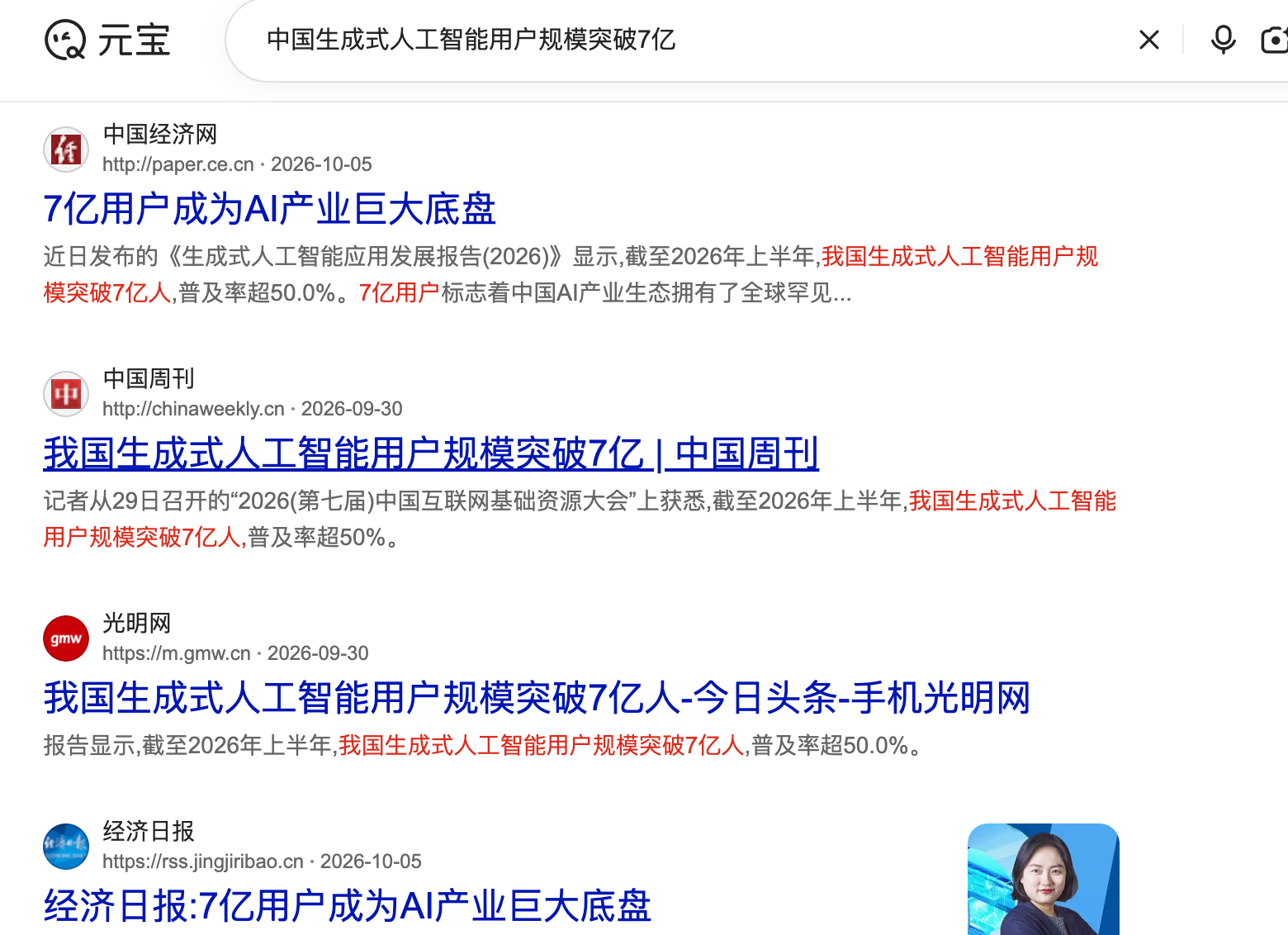
The results page mainly drew from authoritative sources such as China Economic Net and Guangming Online.
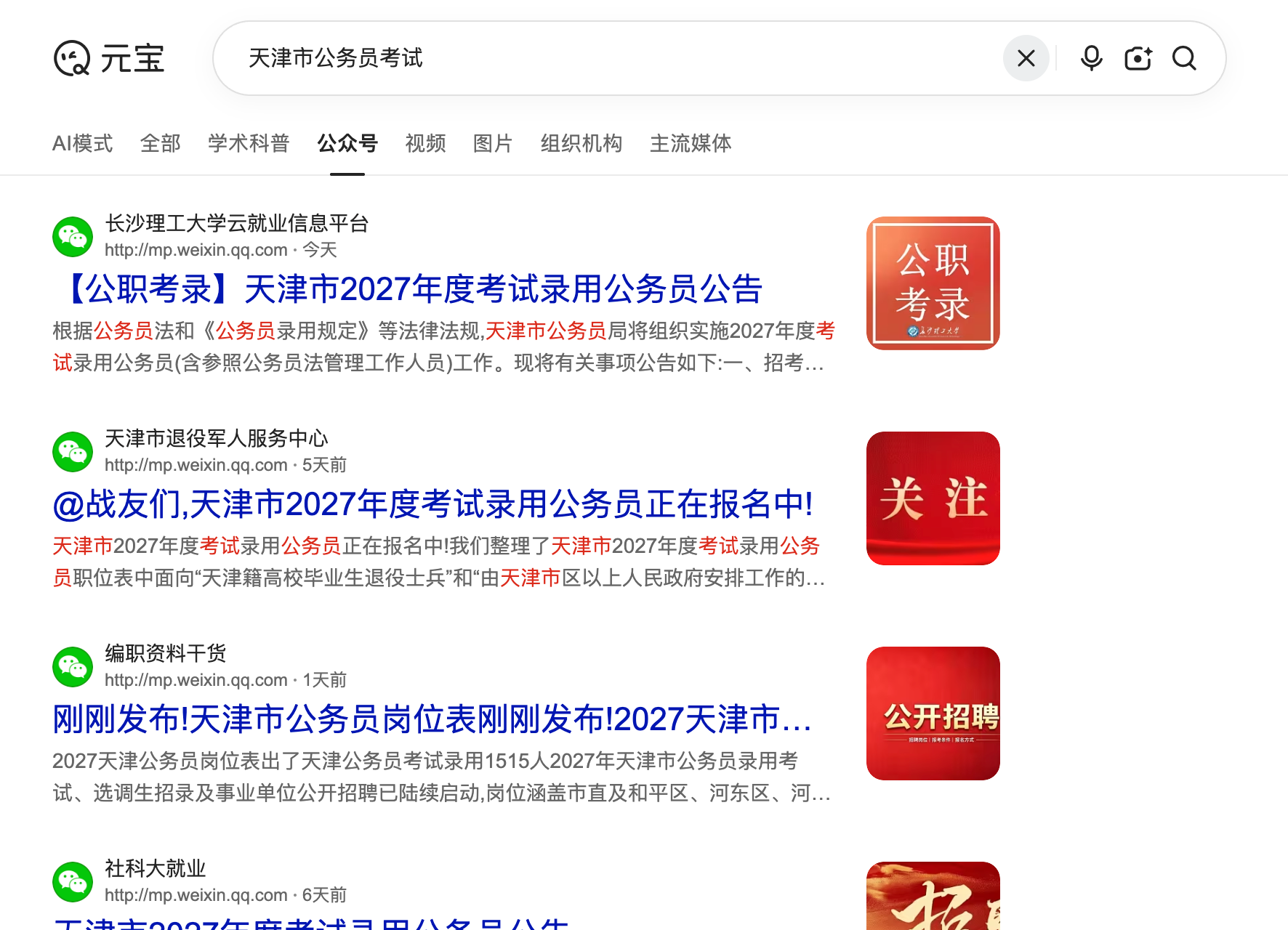
The integration of WeChat Official Account, WeChat Channels, and other content from across the Tencent ecosystem is also a major feature of Yuanbao Search.
For example, when searching for the “Tianjin Municipal Civil Service Examination,” the Official Account channel could already retrieve the latest information on the 2027 recruitment cycle, including the recruitment announcement published that day, a registration reminder posted five days earlier, and analyses of the relevant positions.
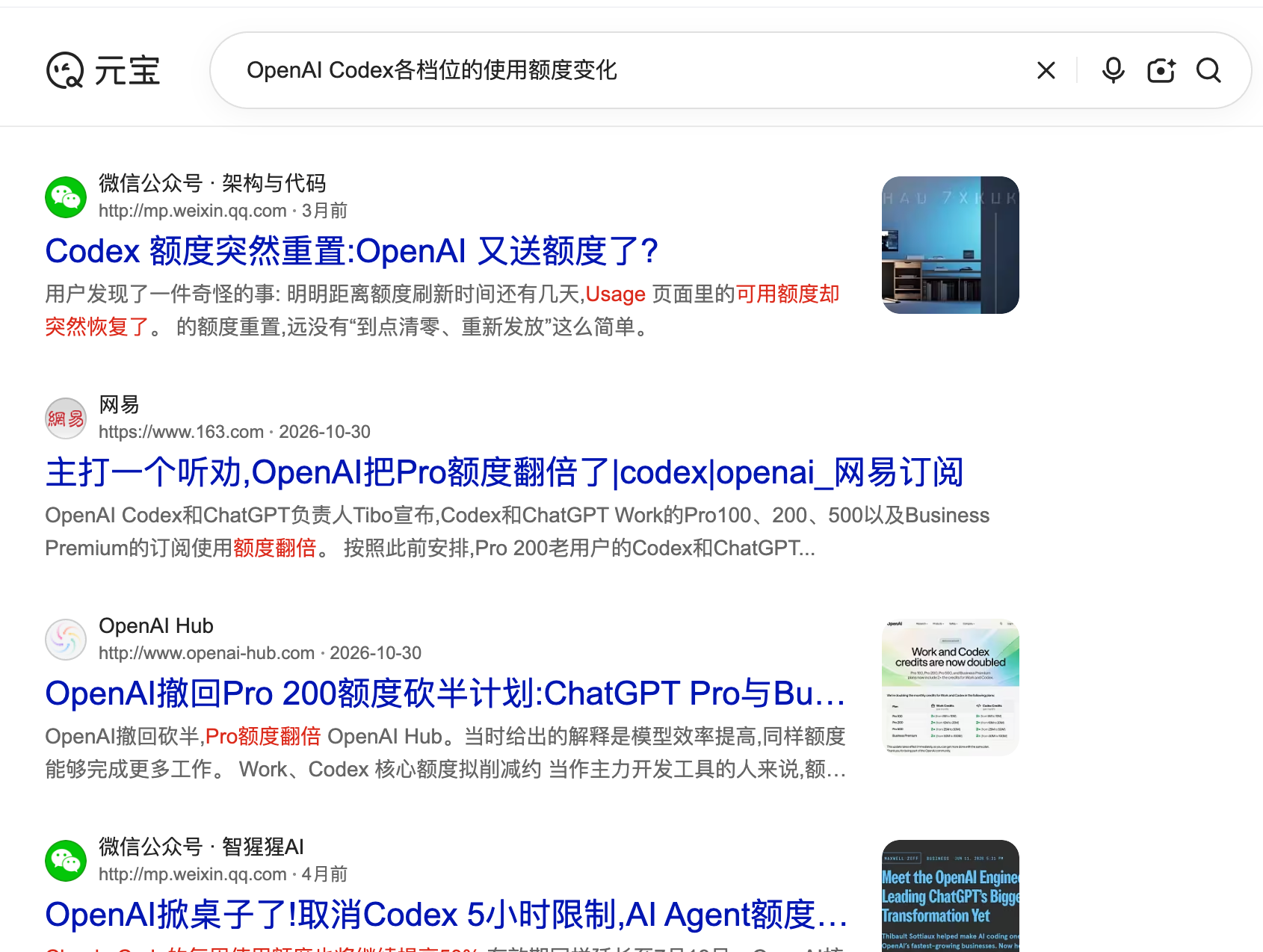
Searching for “changes in usage quotas across OpenAI Codex tiers” also surfaced relevant technology reports published by Official Accounts.
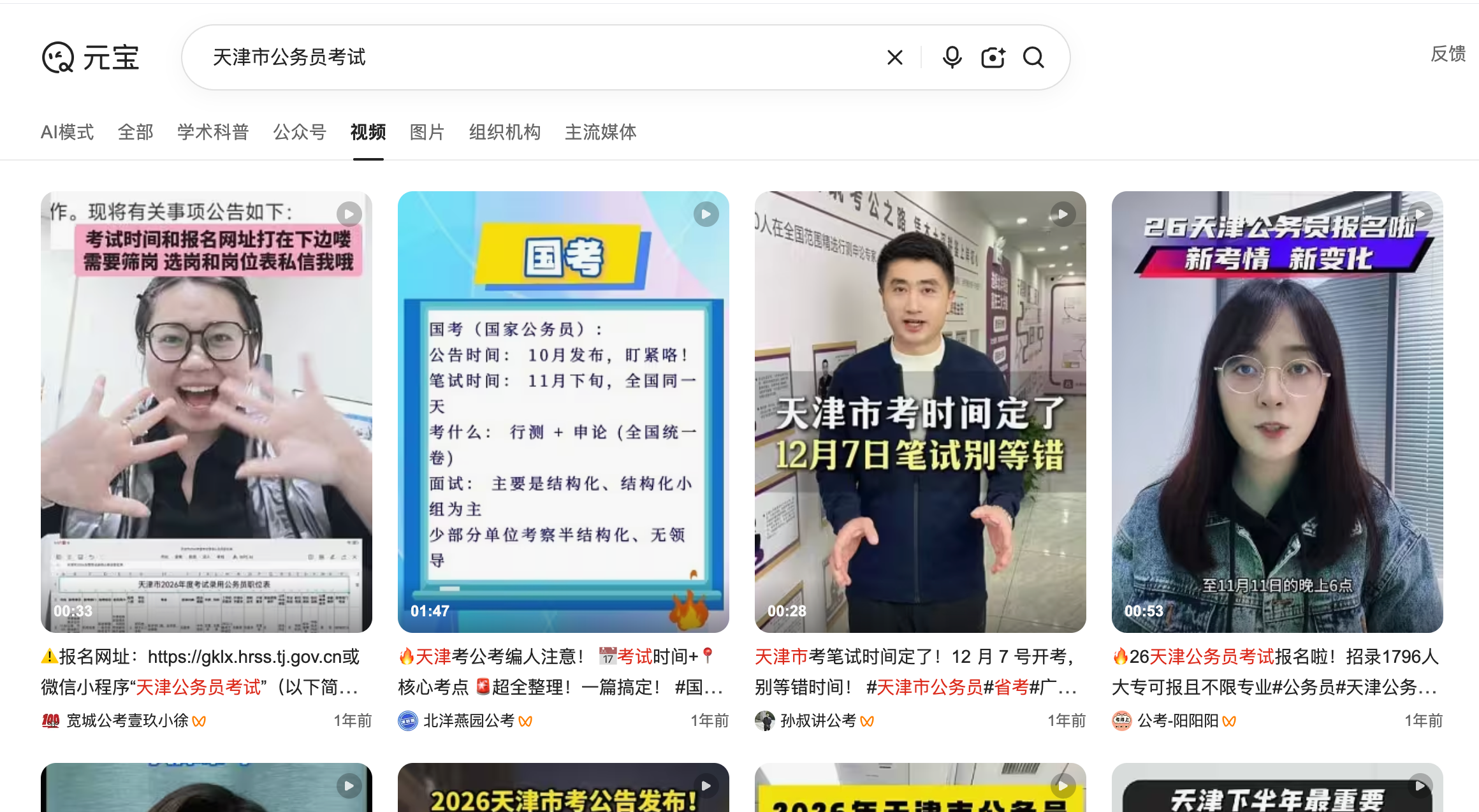
However, the video channel’s content is not yet comprehensive enough. When searching for the “Tianjin Municipal Civil Service Examination,” all videos on the first screen were labeled “1 year ago.” There were also relatively few videos, mixed with content from external sites.
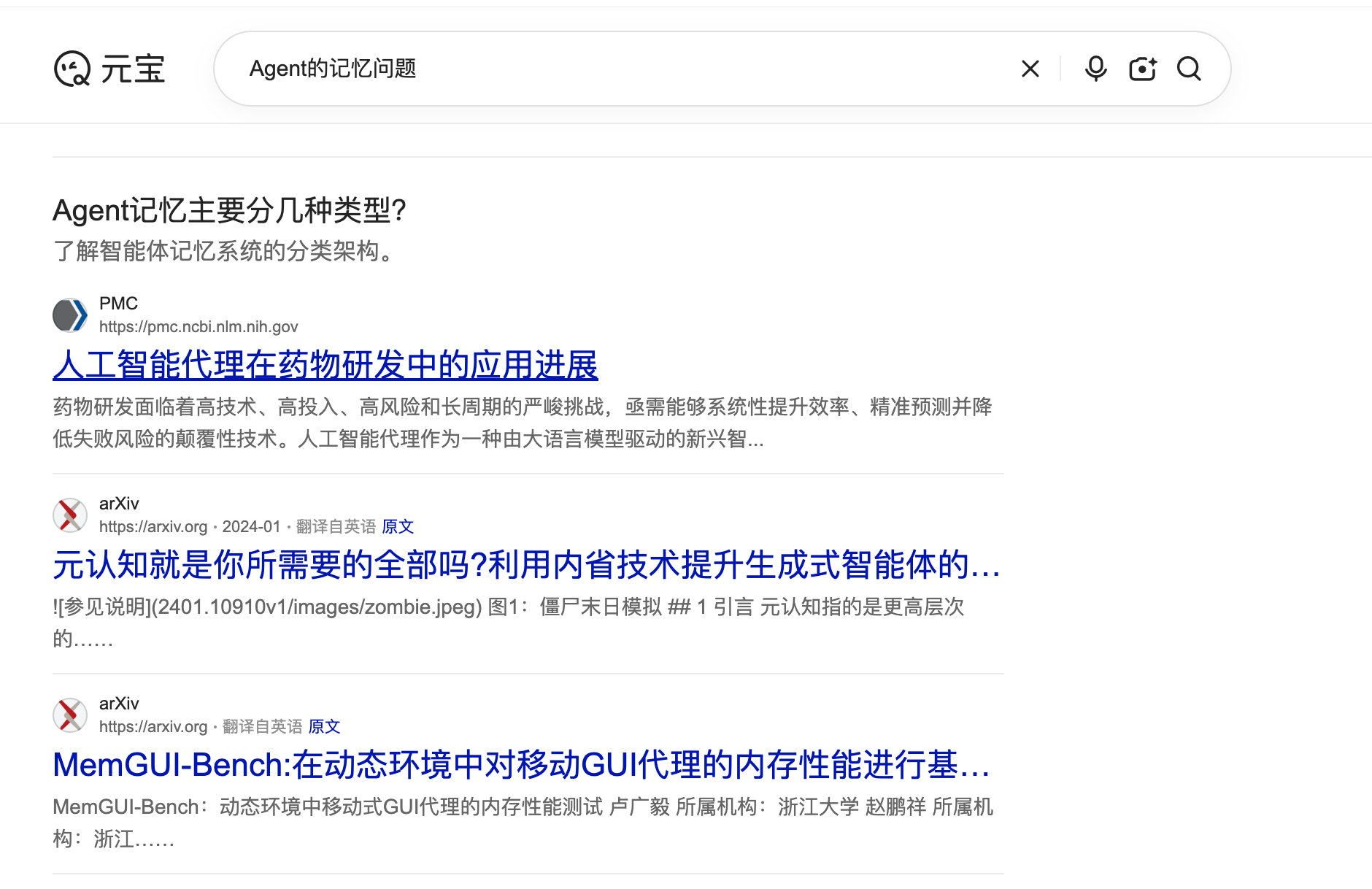
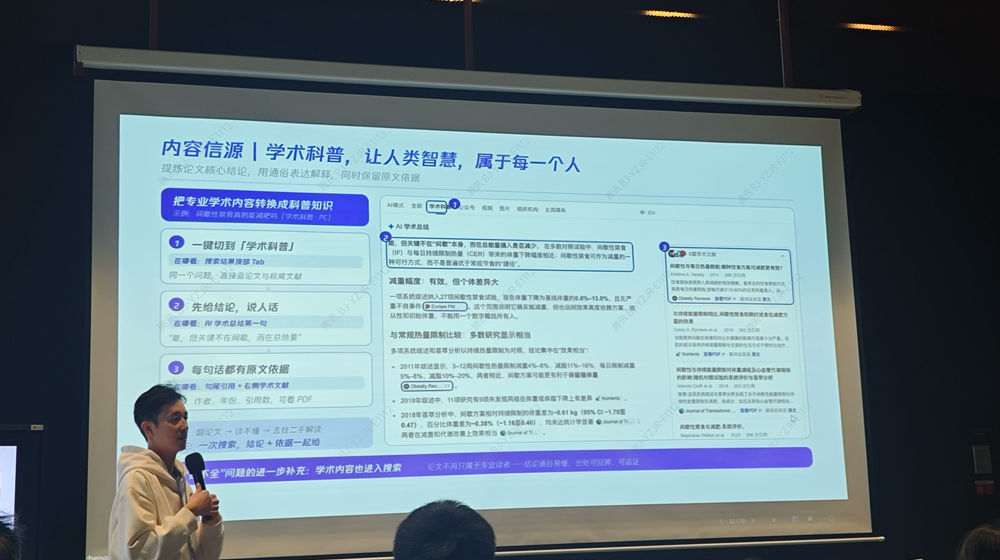
We also searched for “Agent memory issues” and entered the “Academic & Science” channel.An AI-generated academic summary appears at the top of the page,while information such as the titles, authors, publication years, and citation counts of related papers is displayed on the right.
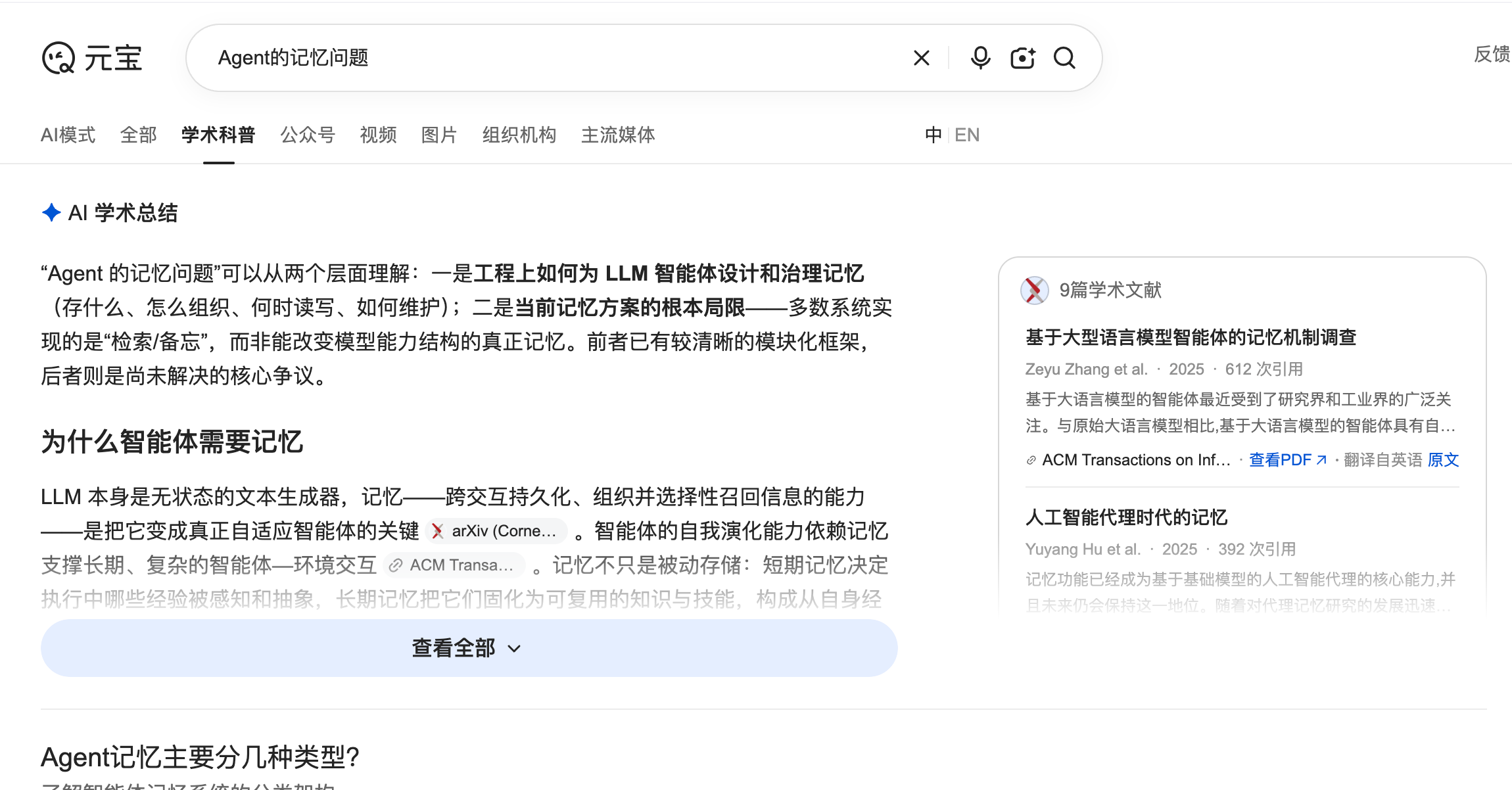
Notably, the Academic & Science section of Yuanbao Search canprovide both easy-to-read AI summaries and links to academic papers.
In addition, the Yuanbao Search team is internally testing a quick-reading feature for AI academic summaries that enables users to rapidly read academic papers and extract their key highlights.
II. Structured cards provide direct access to services, with little advertising presence
In addition to its search capabilities, Yuanbao Search has introduced a generative UI design approach,organizing answers in different formats according to the type of search query. For example, searches in areas such as stocks, film and television, and academic research highlight market trends, content-viewing entry points, and supporting paper evidence, respectively.
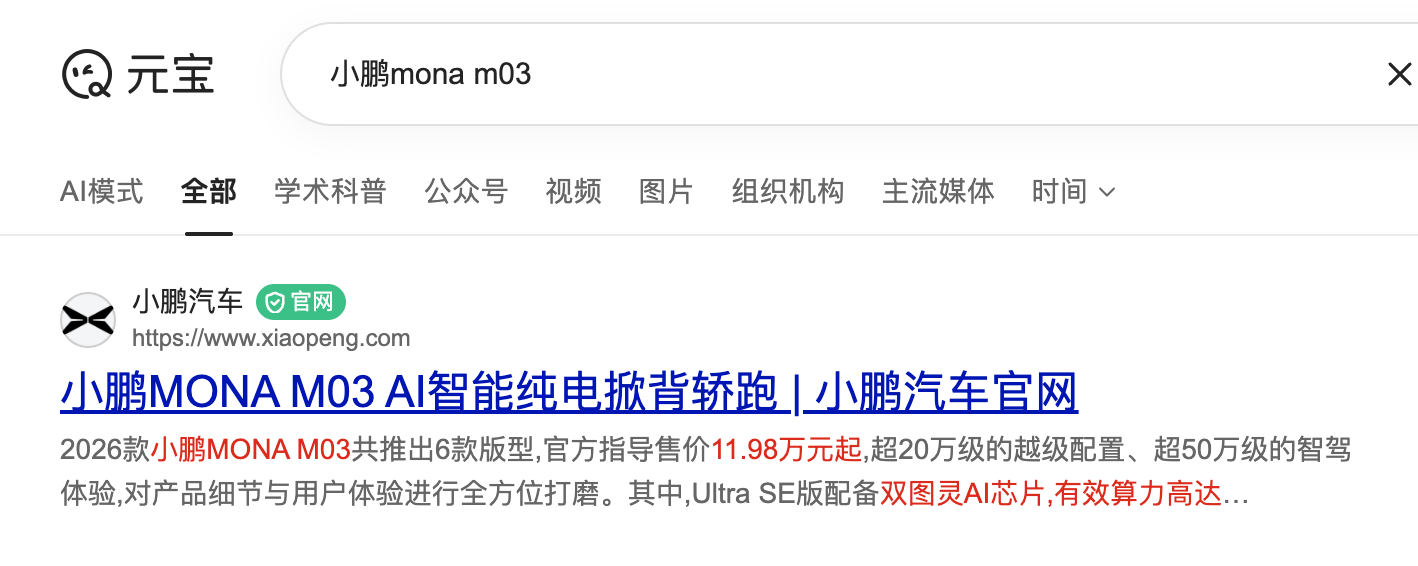
For example, when we searched for “XPeng MONA M03,” the first result was XPeng’s official website, marked with an “Official Website” label. An AI summary containing information on the model’s positioning and pricing was generated below it.
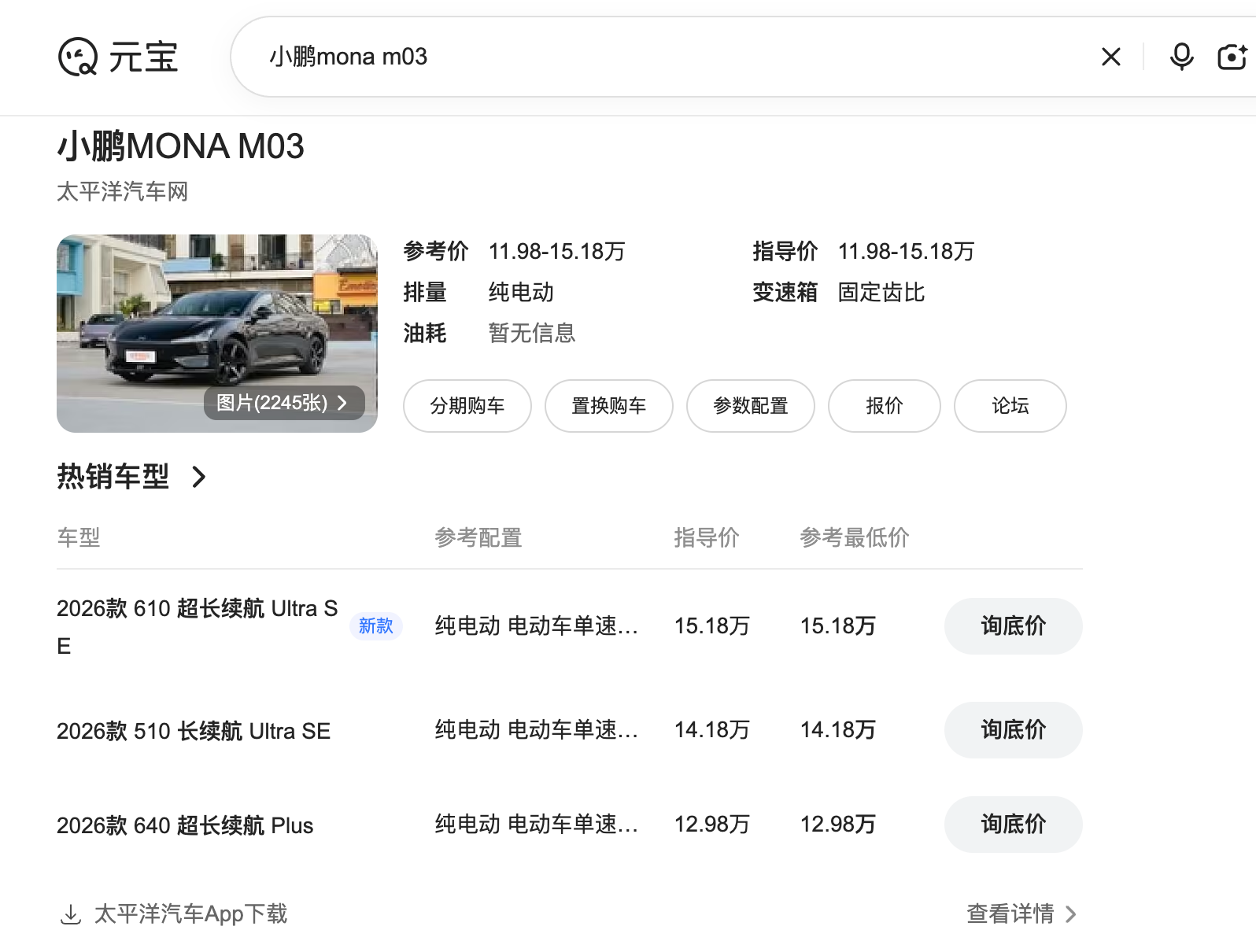
Further down the page,a dedicated vehicle cardis displayed, including model images, reference pricing, powertrain type, and different variants and configurations, with access to quotes, specifications, and installment purchase options.
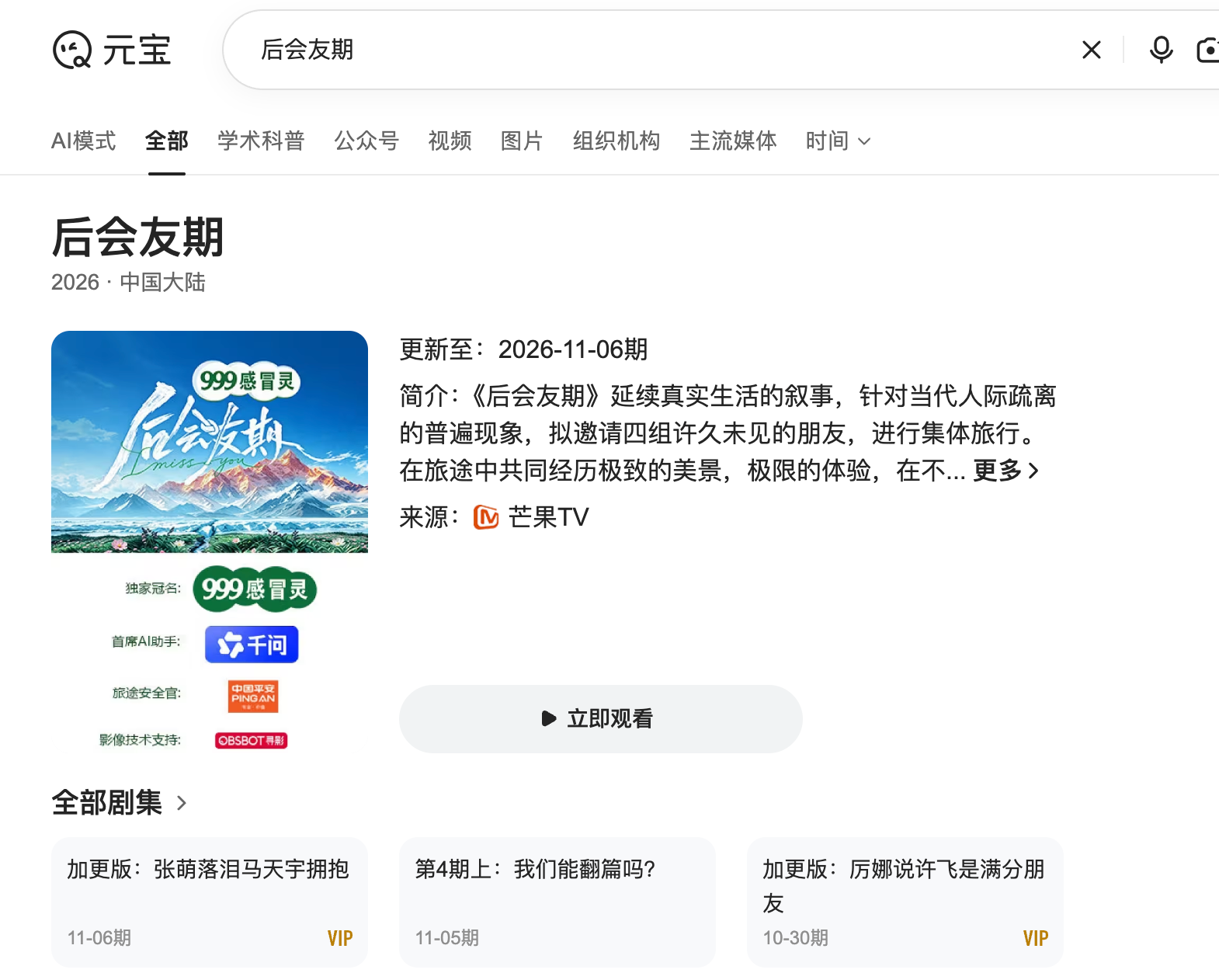
The same applies to film and television searches. When searching for “Hou Hui You Qi,” Yuanbao Search directly displays the show’s artwork, synopsis, latest updated episode number, and episode list, along with a viewing entry point.
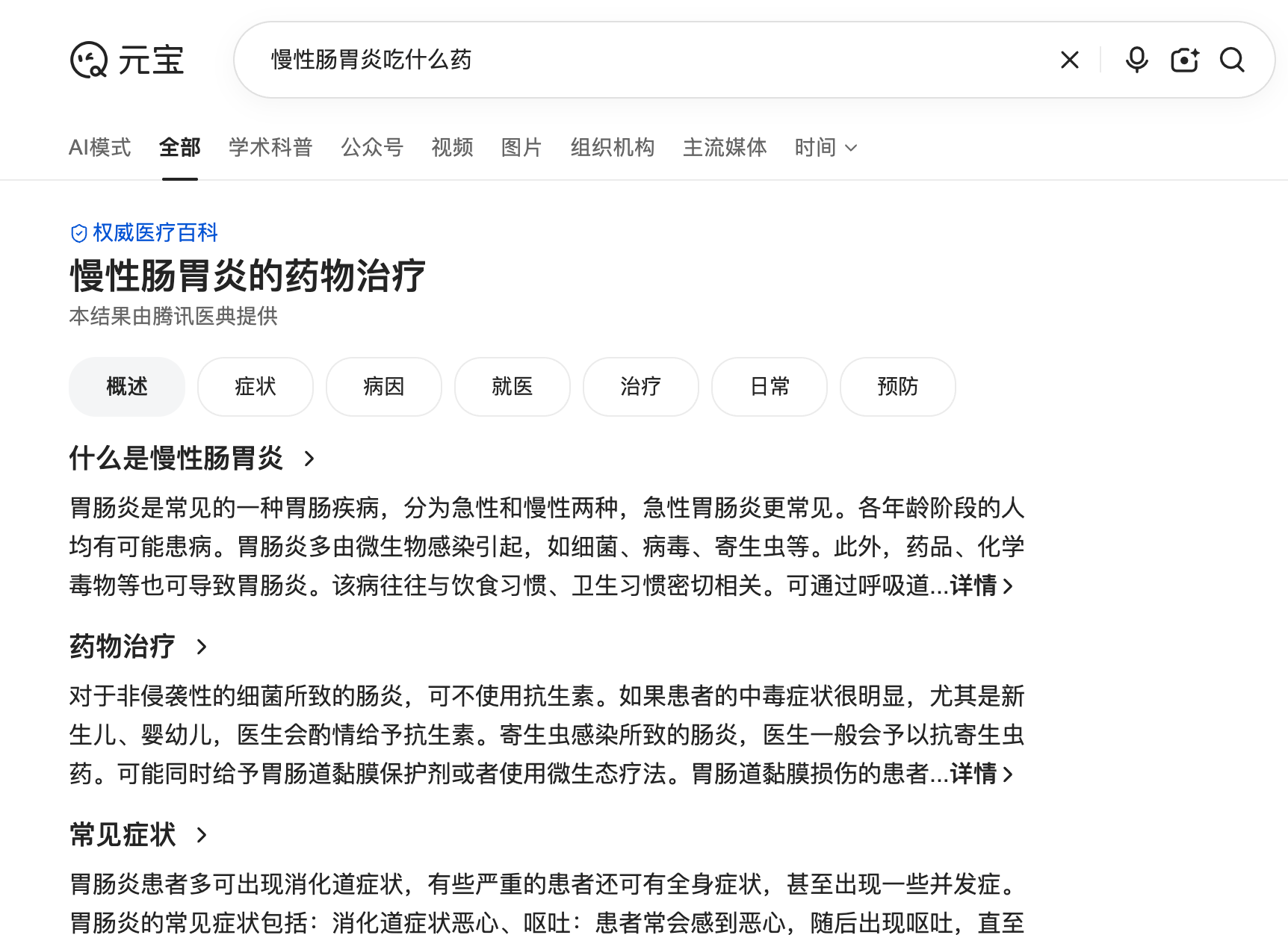
For medical and health searches, when we searched for “what medication to take for chronic gastroenteritis,”a health encyclopedia entry from Tencent Medical Encyclopedia appeared at the top of the page,covering symptoms, causes, seeking medical care, and treatment.
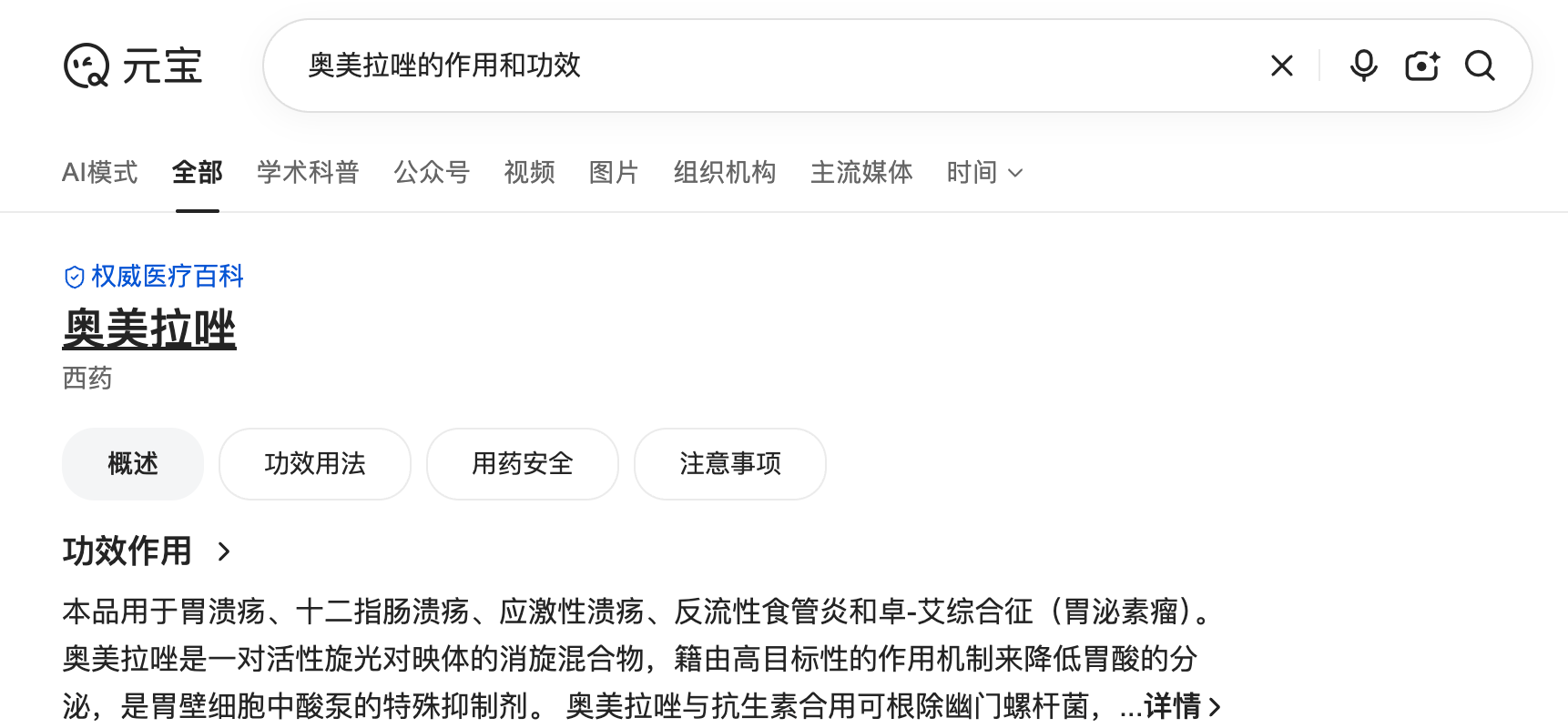
Searching for “the effects and benefits of omeprazole” brings up a drug encyclopedia that organizes information such as efficacy, dosage and administration, medication safety, and adverse reactions, and identifies the professional pharmacists who participated in the review.
In addition, our hands-on testing gave us another clear impression:ads had very little presence.
We searched for different types of questions in areas such as automobiles, film and television, medical care, and health. Even for commercially oriented keywords such as “the effects and benefits of omeprazole” and “car vacuum cleaner,” wedid not find any obvious advertising slots or paid search promotions; ads appeared only when we searched for civil service examinations, but they occupied relatively little of the screen, had little impact, and could be dismissed.
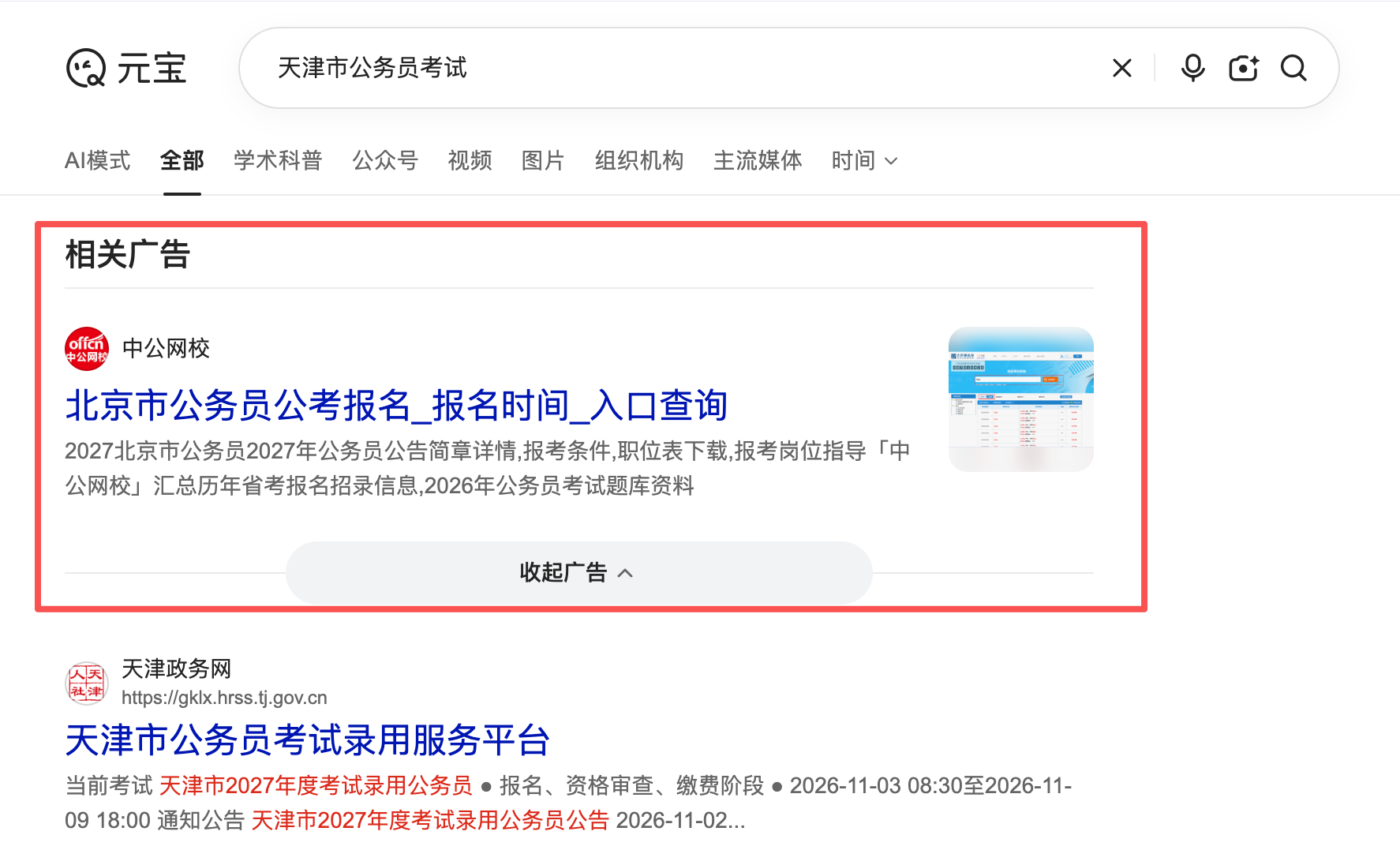
According to Tencent, Yuanbao Search uses a relatively restrained advertising strategy and, even when it does show ads, tries to avoid interfering with users’ normal browsing of search results.
Of course, limited hands-on testing cannot prove that a platform is completely ad-free, but based on the current experience, Yuanbao Search does maintain a relatively streamlined results page.
Overall, our hands-on testing showed that Yuanbao Search performs well in terms of content accuracy, ecosystem richness, source authority, and more, but there are some problems, such as WeChat Official Account links that cannot be opened and slow updates to the content database.
III. A 100-billion-scale index, 157 authoritative sources, and RSI self-evolution
Yuanbao Search’s launch of a standalone product for consumers is underpinned bythe underlying retrieval technology system that Tencent upgraded previously.
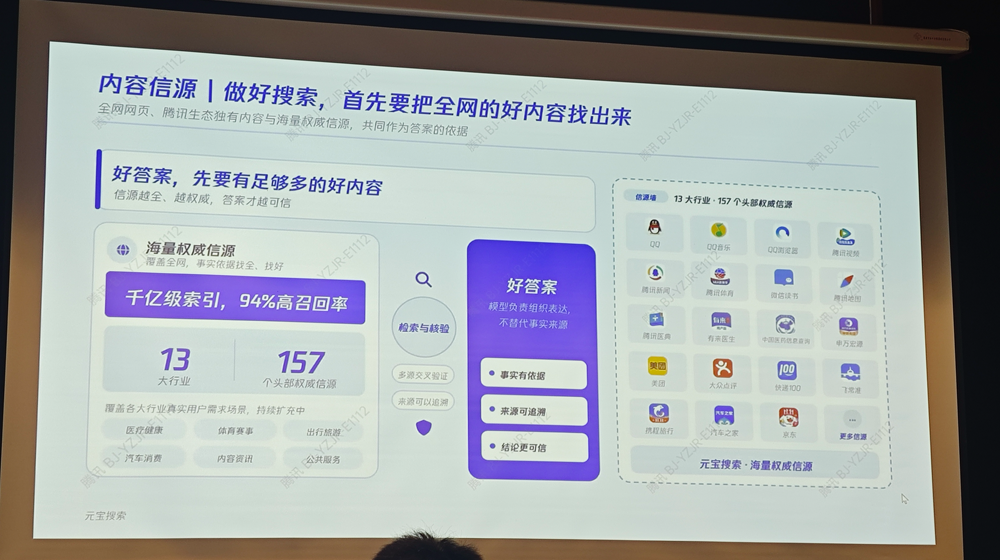
On October 20, Tencent upgraded the Yuanbao Search retrieval service for enterprises and developers, exposing its capabilities through Tencent Cloud in forms such as APIs, MCP, and Skills to provide search support for AI products and agents.
Its core highlights includea 100-billion-scale index, 157 authoritative sources covering 13 vertical industries, and a mechanism integrating vector retrieval with inverted indexes, large-model-based ranking optimization, and low-quality content identification, with the aim of providing AI applications and agents with high-quality, low-latency search services.
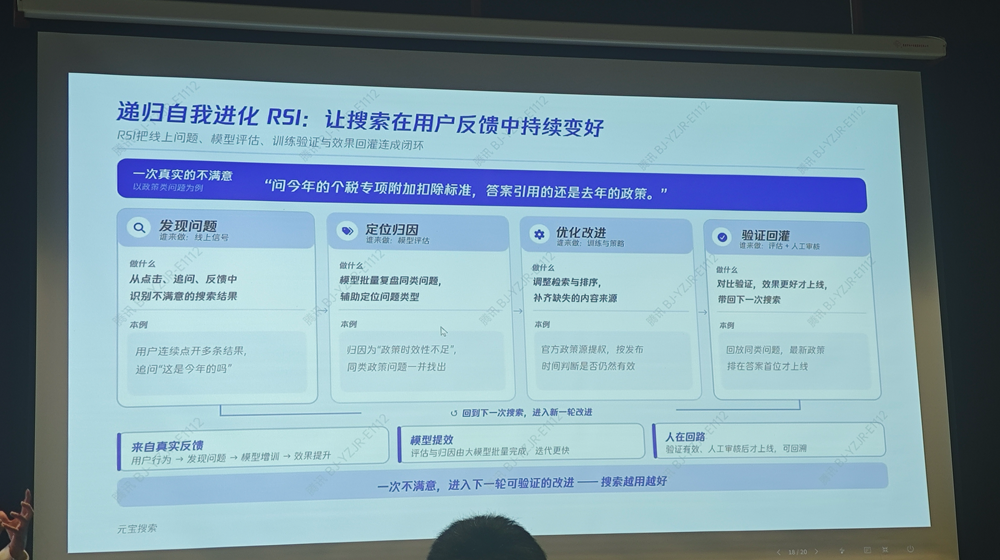
In addition, Yuanbao Search also introduceda self-evolution mechanism based on the learning capabilities of the RSI large model. This mechanism can continuously optimize the search experience through steps such as identifying unsatisfactory search results, automatic annotation by agents, and further model training.
According to Tencent, the consumer-facing Yuanbao Search product is built on its underlying retrieval capabilities, with content sources covering public web pages and the WeChat ecosystem. Its rankings prioritize sources such as authoritative institutions and official websites, and it uses official-site badges and dedicated channels to help users identify the source of information. It also providesa dedicated section for making academic knowledge professionally accessible to the public.
However, based on Zhidx’s hands-on testing, Yuanbao Search still shows differences in retrieval performance across different content sources.
For example, in searches for the Tianjin municipal civil service examination, the WeChat Official Account channel was already able to retrieve recruitment information published that day, but the first-page results in the video channel were still dominated by content from a year earlier. Whether the relevant technical mechanisms can further improve the timeliness and ranking performance for different content types remains to be seen.
From an industry perspective, AI is changing the way competition in the search market operates. Traditional search engines are continually introducing capabilities such as AI summaries and conversational Q&A, while AI assistants are obtaining real-time information through web-connected searches and gradually extending to the execution of complex tasks.
The product boundaries between search engines and AI assistants are becoming blurred, and Yuanbao Search’s choice this time to combine web retrieval with AI interaction also reflects this trend.However, Li Ruizhang noted that, although Yuanbao Search will continue to expand functions such as task execution in the future, they will all serve the search itself.
Conclusion: A dual-track strategy for enterprise and consumer markets as Tencent competes for the AI search entry point
From opening up its retrieval capabilities to enterprise clients to launching a standalone consumer-facing search product, Tencent is extending Yuanbao Search from a foundational technical service into an information gateway for the general public.
Behind this strategy is the competitive landscape of the search market being reshaped by AI. Traditional search engines are rapidly integrating AI, while AI assistants are entering the search space through online retrieval, and the boundaries between their products are becoming increasingly blurred.
For Tencent, underlying retrieval technologies, the WeChat content ecosystem, and consumer traffic channels constitute important advantages in competing in this new round of competition.
However, competition in the search market is not something that can be achieved overnight. Whether Tencent can translate its technological and ecosystem advantages into a stable search experience and further establish user habits will determine how far Yuanbao Search can go in the contest for the AI search entry point.


