Beating DeepSeek to the punch! A Chinese team in Silicon Valley has built the next-generation Agent Harness!
Single Session has been a pain for too long; two major Agent players have independently converged.
Mengyao, reporting from Aofeisi
QbitAI | Official WeChat Account QbitAI
No one is alone on this path.
DeepSeek's newly proposedSuper-agent and its philosophy immediately sparked heated discussion.
It was amid this heated discussion that the earlier work of a Chinese team in Silicon Valley began to be truly understood.
Behind this technological resonance across the ocean lies the same underlying challenge in human-AI collaboration—
At present, humans are becoming the bottleneck for AI.
Imagine AI advancing 1,000, 10,000, or even 100,000 tasks simultaneously—more than people can keep track of. What exactly should an Agent become?
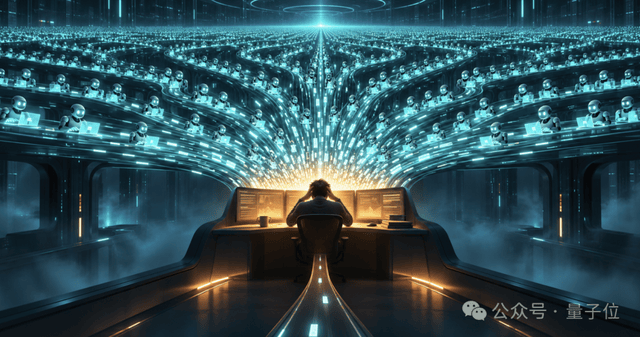
AI-generated
Just a few days ago, the DeepSeek Harness team released a major article presenting an architectural vision for the next-generation Super-agent to address this pain point:
A super-agent with continuous context, capable of autonomously orchestrating multiple Agents to work in parallel, and even staying online 24/7.
Free up humanity’s limited attention, let Agents take over enormous volumes of tasks, and manage themselves.
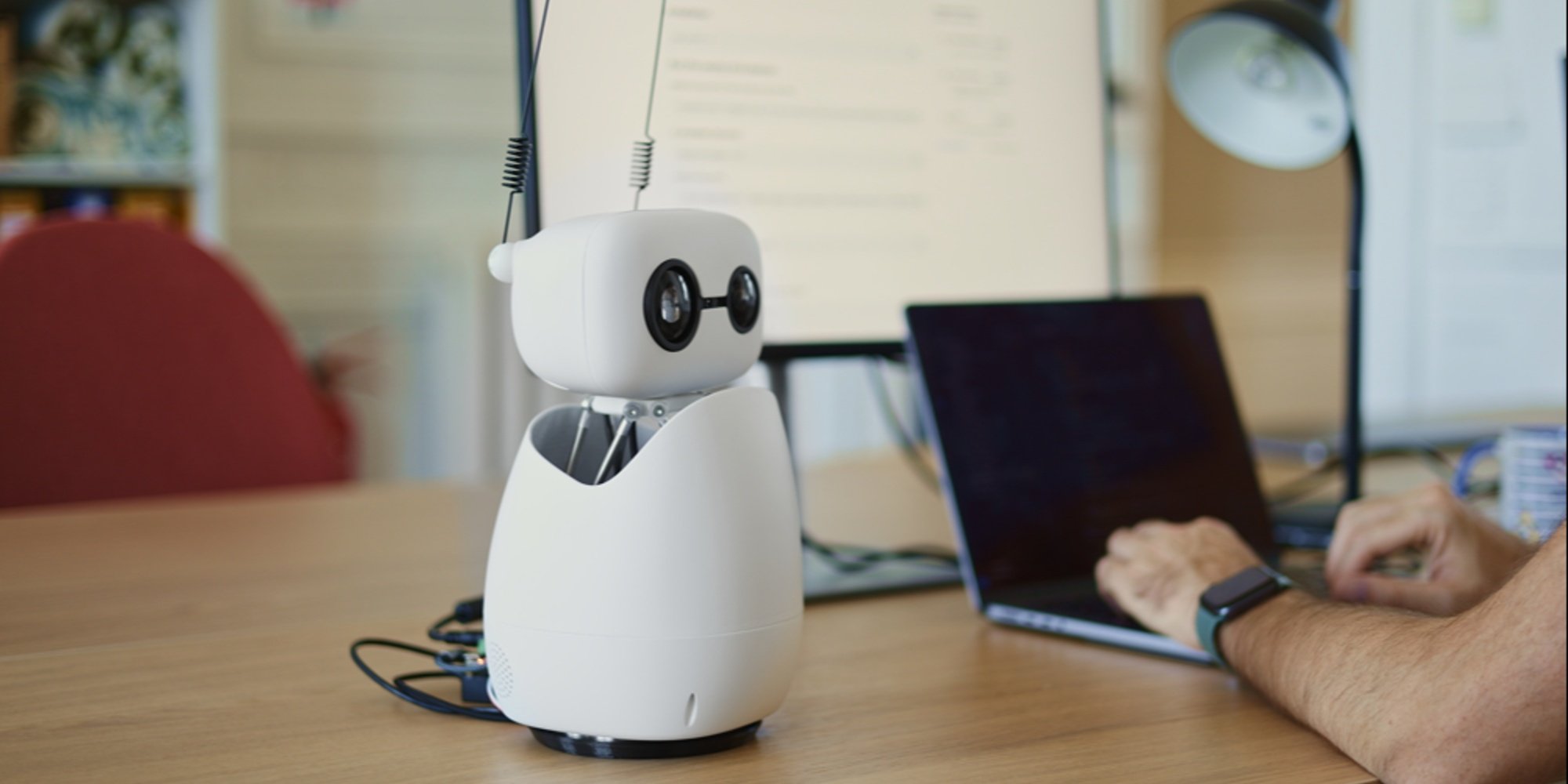
Reality is indeed this surreal. What many people do not know is that, on the other side of the ocean, there is a Chinese team in Silicon Valley calledAFK AI—
As early as the beginning of the year, it had already implemented the“single Router + multiple Workers”architecture underlying the Super-agent and its four core characteristics in its own product, Comma.
They went even further, directly tackling the curse of context that arises when a single Session takes over everything, enabling the Agent to have long-term memory, keep learning, and remain online at all times:
Even more remarkable is the fact that this system is already publicly available, with even its code open-sourced. (Open source... source god?)
In an era when everyone is shouting about Personal Agents, a Chinese team in Silicon Valley brought the science-fiction movie’s “JARVIS” into reality ahead of time.
Single Session has been a pain for too long; two major Agent players have independently converged
I guess everyone is familiar with the following chaotic and headache-inducing study-and-work scenarios—
You have AI modifying a piece of code, but the tests still have another ten-odd minutes to run, sad...
At that moment, the client suddenly comes up with a new requirement and urges you to quickly produce a project proposal. You open another AI chat window and start assigning tasks again.
Of all times, the boss suddenly pops up again in the work chat and asks about yesterday’s project progress. Panic!!
So you keep frantically switching windows and digging through past conversations. When you finally look back, your screen is full of Agent sessions and countless tasks awaiting follow-up. Now that’s truly overwhelming.

This “can’t keep a straight face” scene points precisely to the core pain point mentioned by the DeepSeek Harness team in its Super-agent article:
According to the team’s observations, an ordinary person’s attention can typically keep track of only three to five active Sessions at once.
It’s not that Agents lack the capability; the key reason is thatan Agent’s concurrency can expand without limit, but human attention has a hard “upper limit.”
The approach Super-agent takes to break through is refreshingly straightforward: let’s simply outsource human attention and have Agents manage Agents.
To that end, they also proposed four criteria for Super-agent:continuous, efficient, proactive, and persistent.
Continuity means connected memory and context; efficiency comes from multiple Workers collaborating in parallel; proactivity means autonomously advancing tasks; and persistence enables long-term online operation and autonomous self-repair.
Users interact through a single conversational entry point, allowing the primary Agent to orchestrate multiple Agents that process massive amounts of information in parallel and keep tabs on work across different scenarios, while humans only make top-level decisions:
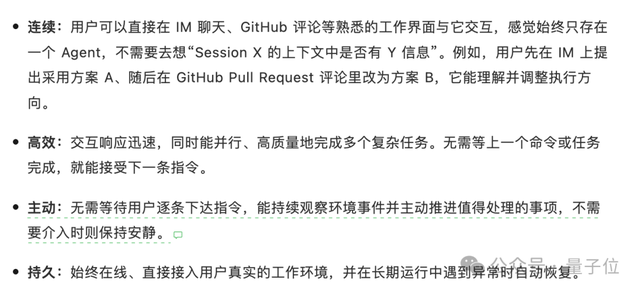
A few days ago, this judgment from DeepSeek Harness left everyone stunned, dizzy, and slumped in their seats. But the even more exciting part is—
The next-generation Agent blueprint painted by DeepSeek had already been pursued by a Silicon Valley Chinese-founded team,AFK AIhalf a year earlier along a similar path, withComma.
This team even proposed a highly forward-looking concept:one team, one conversation.
Users only need to deal with a single long-running main conversation, while a Router coordinates tasks and dispatches Workers with independent contexts to execute them in parallel.
At the underlying architecture level, the two players in the Agent space also reached a rather tacit consensus: a single
Session + Router (the main brain) + multiple Workers (the executors).
A persistently running Router receives instructions and coordinates the overall workflow, while multiple Workers work in parallel within independent contexts and report back their results.Even if dozens of Agents are working simultaneously in the background, users only need to give instructions in one chat window and review the results—no more switching between windows all over the screen or chasing each one for progress.
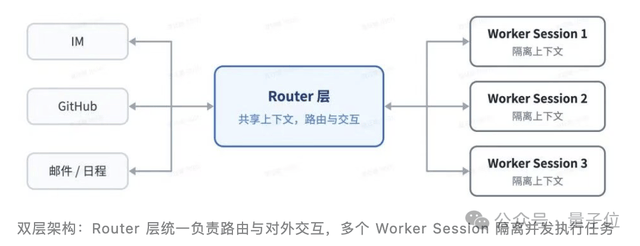
Of course, this brings a new question: once Agents begin taking over human attention, an even thornier problem emerges—
Who manages the Agents’ own memory? (Good question.jpg)
After all, the more things a Session has to keep track of, the more its context window eventually becomes constrained.
Once a long-running Session starts taking on more and more work, the problem of human attention is solved, but the Agent’s own memory bottleneck appears.
The truly difficult challenge is giving Agents a system capable of continuous learning, long-term online operation, and instant retrieval of key memories.
And this is precisely what strikes at Super-agent’s deeper technical proposition:
A personal Agent that is omnipresent like Jarvis, always online, and can even accumulate experience through long-term work.
And this vision of the future of Agents has, in fact, taken root in Comma, becoming a real experience that every user can feel firsthand.
From architectural consensus to product implementation, the Super-agent makes its way into a real product
Continuity and efficiency: one conversation lets the Agent lead the team and get things done
Let's first talk about“continuity”and“efficiency.”
As mentioned earlier, one of the Super-agent’s key architectural features is that a persistent Router coordinates the overall workflow, while multiple Workers with isolated contexts execute tasks in parallel.
Here’s the key: this isn’t just about multitask execution within a single session, but also cross-environment execution, understanding and responding to changes in user intent, and so on.
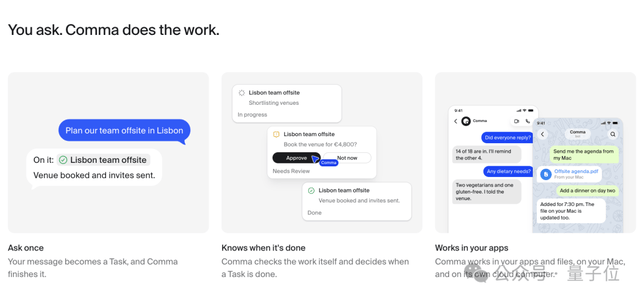
And this seemingly idealized interaction model has now become a real product experience in Comma.
For us ordinary users, the part I find most satisfying is:Finally, no more creating group chats for the Agent every day, assigning personas, and briefing it on tasks one by one.
No more separate chat windows for every task, no more queuing tasks to run one after another, no more repeatedly pasting background information—we can say goodbye to all of it!!!

Well, recently I’ve been hooked on playing *Overcooked*, but it never felt quite satisfying, so inspiration struck: I just told Comma to whip one up.
But the problem is that I also have my weekly review hanging over me, along with the task of organizing information on recent AI model releases, plus quite a few other things waiting to be done.
Previously, at a time like this, I’d have had to open three Agent sessions at once, explain the background for each, assign the tasks, and then monitor their progress one by one.
This time, I decided to slack off and just stay in the same Comma chat window, dumping all three tasks in at once.
And the result? It really left me stunned—the three tasks were assigned to different Workers.
All three Agents got to work at once without getting in each other’s way. I could even jump in at any time and add tasks on the fly, while everything kept running at full throttle in the background—seriously, nothing was held up at all???
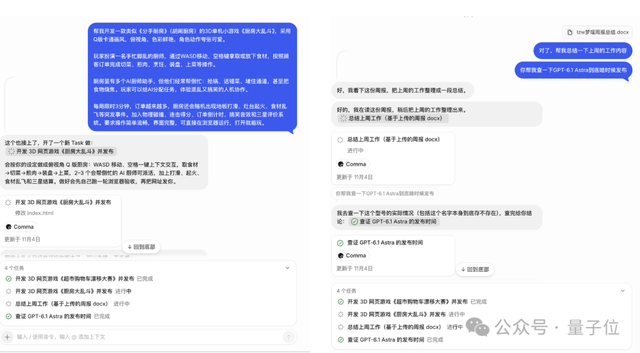
Of course, watching the bustle in the background isn’t enough; in the end, the results have to speak!!
Everyone, take a look at what Comma made for me:ten minutesto make my hand-crafted *Overcooked*.
WASD movement, a three-minute timer, grabbing pots, delivering the wrong dish, blocking the pathways… every gameplay feature I requested was included, a complete 1:1 match to my requirements.
Meanwhile, theweekly reviewwas also fresh off the press, with the work organized clearly and logically and the key updates and next steps all neatly laid out. Not bad:
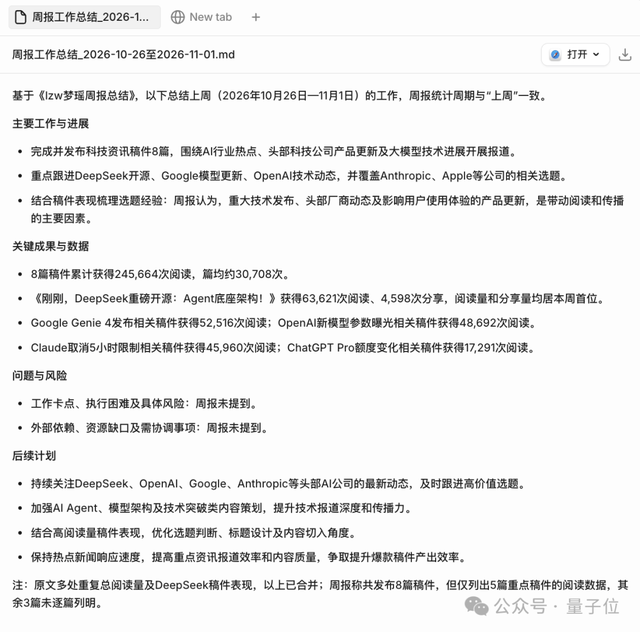
Throughout the whole process, all I had to do was state my requirements, check progress, and review the results.
Comma handled all task assignment, parallel execution, and status updates in the background, and I didn’t have to lift a finger.
This was also the first time I truly felt what it means for humans to finally break free from multitask coordination and attention allocation.
Managing Agents has finally shifted from “monitoring the process” to “managing the results.”
Cross-environment: taking on, assigning, and delivering work across apps, all in one seamless flow
But being able to work simultaneously in a single chat window is only the first half.
The real test for Super-agent is whether it can keep working after a user's task moves beyond that chat window.
This is precisely the greater demand Super-agent places on “continuity”: cross-environment.
In the architecture proposed by DeepSeek, this depends on an underlying multi-channel interaction mechanism—
Router centrally receives messages from different platforms, Worker executes independently in the background, and then returns results according to the interaction conventions of different channels.
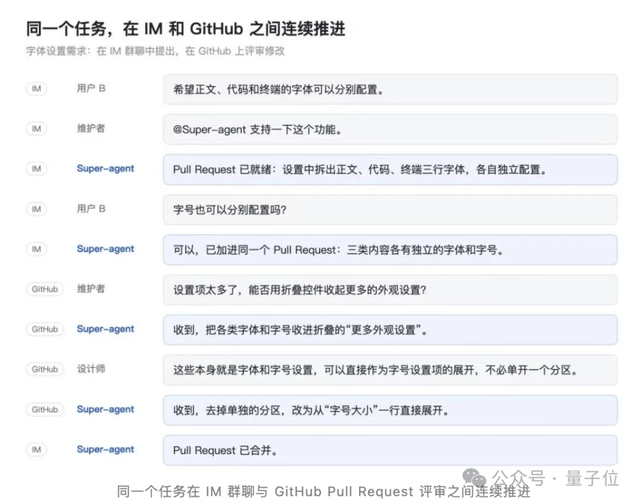
One official example they gave was seamlessly advancing the same development task across IM and GitHub, with the AI proactively monitoring group chats and automatically submitting PRs, be like:
Worth mentioning is that Comma had already turned this efficient, continuous “cross-environment” capability into a user-perceivable experience—
At its core is the team's in-house distributed Agent runtime framework Salix.
Through third-party app connectors, Comma can receive events from different platforms, while a programmable Loop continuously monitors them and wakes the Agent to handle them when needed.
Comma's integration coverage is also extensive. Channels like WeChat, Signal, iMessage, and Linear can all be connected~
On top of that, Comma supports secure self-deployment, BYOK, and integration with Codex and Claude Code, enabling centralized task oversight and cross-device collaborative management.
Even in enterprise settings, tasks can be assigned through Comma Bot in an IM, allowing connected employee computers to provide the required local work environment while permissions and information-flow controls constrain the scope of access.
Since I've had quite a few drafts to write lately, I also connected Comma to Linear and entered the project requirements for Linear directly in Comma:
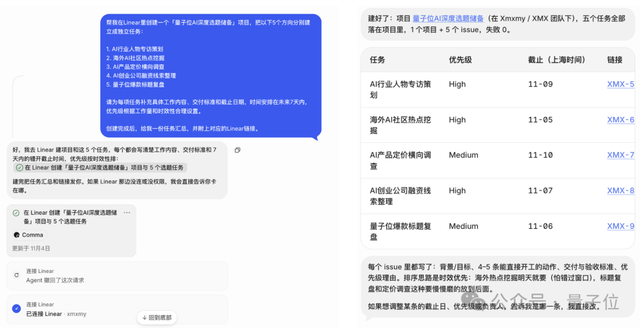
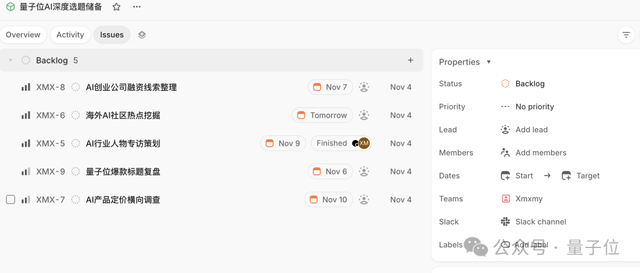
When I opened Linear, the Issue was already there. It had clearly worked out which specific tasks to split it into and how to arrange the follow-up work—it really laid everything out for me:
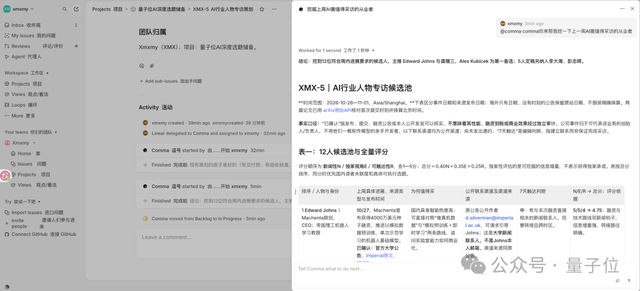
But what I really want to emphasize is that an Issue in Linear can also be handed back to Comma for execution, with progress and results synced back to the original task!!
Work assigned in Comma can be picked up by Linear, and tasks in Linear can be carried on by Comma, with the granularity of information kept aligned on both sides.
Tasks can now be handed off across different platforms. At last, we no longer have to chase around among all the major platforms and Agents. Big tech companies should really take notes:
A proactive Agent, a continuously learning, always-online memory system
In DeepSeek's vision, Super-agent also has two highly imaginative traits: “proactive” and “persistent”.
Put simply, it means evolving the Agent from passively taking on work to proactively identifying problems and finding work for itself, while remaining online 7×24 hours a day.
Remarkably, Comma offers something similar and can even have the Agent write its own on-duty program to keep tabs on things around the clock on users' behalf—
Even if the large model isn't running and the user has logged out of the client, the system can still remain on standby 24/7 and wake the Agent at critical moments.
Speaking of which, I recently gave Comma a try as an “AI topic editor.”
I connected it to WeChat and assigned it a long-term task: every day at noon and 9 p.m., proactively search for the latest AI news, organize it into topic ideas, and push them to me.
As it turns out, the messages arrived on their own right on time, complete with topic ideas, summaries, and primary sources. I no longer have to worry about having no topic ideas to submit to the editor-in-chief—

Of course, what makes a true Jarvis is itsubiquity.
Memory is perfectly consistent across devices, isn't bound to any single app, and yet can command every information stream.
Even if I ask about the progress of a Linear task in the Comma client, Comma responds accurately. Its cross-device memory capability is truly impressive:
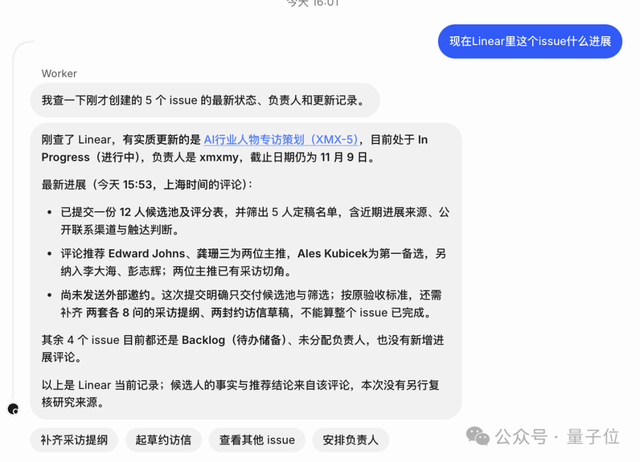
At the foundational level of its memory management design, Comma does have some real substance—
it stores long-term state outside the model's context, then uses the division of labor between the Router and independent Workers to prevent vast amounts of task detail from continually crowding out the main conversation.
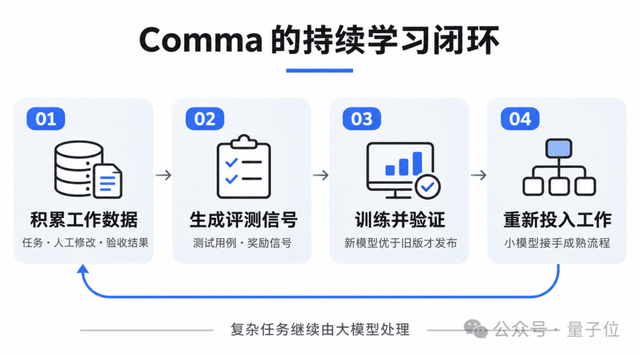
Going a step further, Comma has also incorporated “continuous learning” deep into the product, enabling the Agent to accumulate experience from every task.
Comma records the Agent's task results, manual edits, and acceptance feedback, converts them into training signals, and continually iterates its dedicated small model.
Even more interestingly, a new model must outperform the previous version in the team's own tests before it can officially take over.
For example, the v3 model originally misclassified refund requests as bugs. After learning from the human corrections, its upgrade to v4 enabled it to correctly identify them as billing issues.
AI-generated
In fact, this mechanism also refreshes the evaluation data on a monthly basis, allowing small models to gradually take over mature workflows while complex tasks continue to be handled by large models.
In other words, every time an Agent completes a round of work, it has a chance to turn that experience into capability for the next task, truly becomingsmarter with every task.
From Bridge to Comma: Continuously Exploring Long-Term, Autonomous Agents
Finally, what I want to say is that Comma's architecture was actually born earlier than many people imagine.
Let's rewind to April 2026.
At the time, “super-agents” had not yet become a hot industry topic, but the Silicon Valley-based Chinese team AFK AI had already defined its technical direction—
to have a long-running primary Agent take over users' tasks centrally, then dispatch multiple independent Workers to execute them.
On April 28, the team officially unveiled Comma's predecessor: Bridge.
The product presentation at the time already featured an architectural design comprising a Lead Agent and Subagents.
The concept then began to be implemented at an accelerated pace.
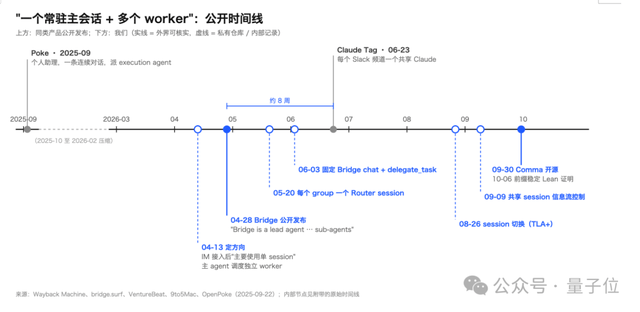
On May 20, the team established “one Router Session per group”; on June 3, the fixed main conversation and task-delegation mechanism officially went live.
Coincidentally, just 20 days later, Anthropic also launched Claude Tag, enabling a Slack channel to share the same Claude.
AFK AI's exploration, however, continued.
In August, the team advanced its Session-switching capabilities.
In September, it introduced an information-flow control mechanism for shared Sessions, addressing the circulation of sensitive information in multi-person collaboration.
On September 30, Comma was officially open-sourced, and its security mechanism based on Lean formal verification was subsequently made public.
From a single main session with multiple Workers collaborating to cross-Session management and security controls, Comma took nearly half a year to turn its initial architectural vision step by step into a real product.
If DeepSeek outlined the concrete form of the Super-agent for the industry, Comma offered another answer through a product that had already been running for a long time—
a Personal Agent truly capable of accompanying users over the long term and autonomously coordinating tasks had already entered reality ahead of its time.
See the subtle and know the whole; discern trends before they emerge.
Looking back, the architectural convergence of DeepSeek and AFK AI essentially reflects the consensus judgment formed by the two teams, looking beyond surface-level applications,on the underlying bottlenecks of multi-agent systems and the real pain points of production.
At this point in the current AI wave, the industry's expectations for Agent Harness are undergoing a critical shift—
The industry's expectations for Agent Harness have made a critical leap, with the focus moving from task throughput to the responsibilities it can shoulder and the scale of complex tasks it can support.
Comma has already taken the lead in providing a practical example along this path, enabling Agents to continually accumulate experience through long-term use and truly become smarter the more they are used.
A permanently online Jarvis that grows alongside its users is no longer a science-fiction dream.