 © 01net
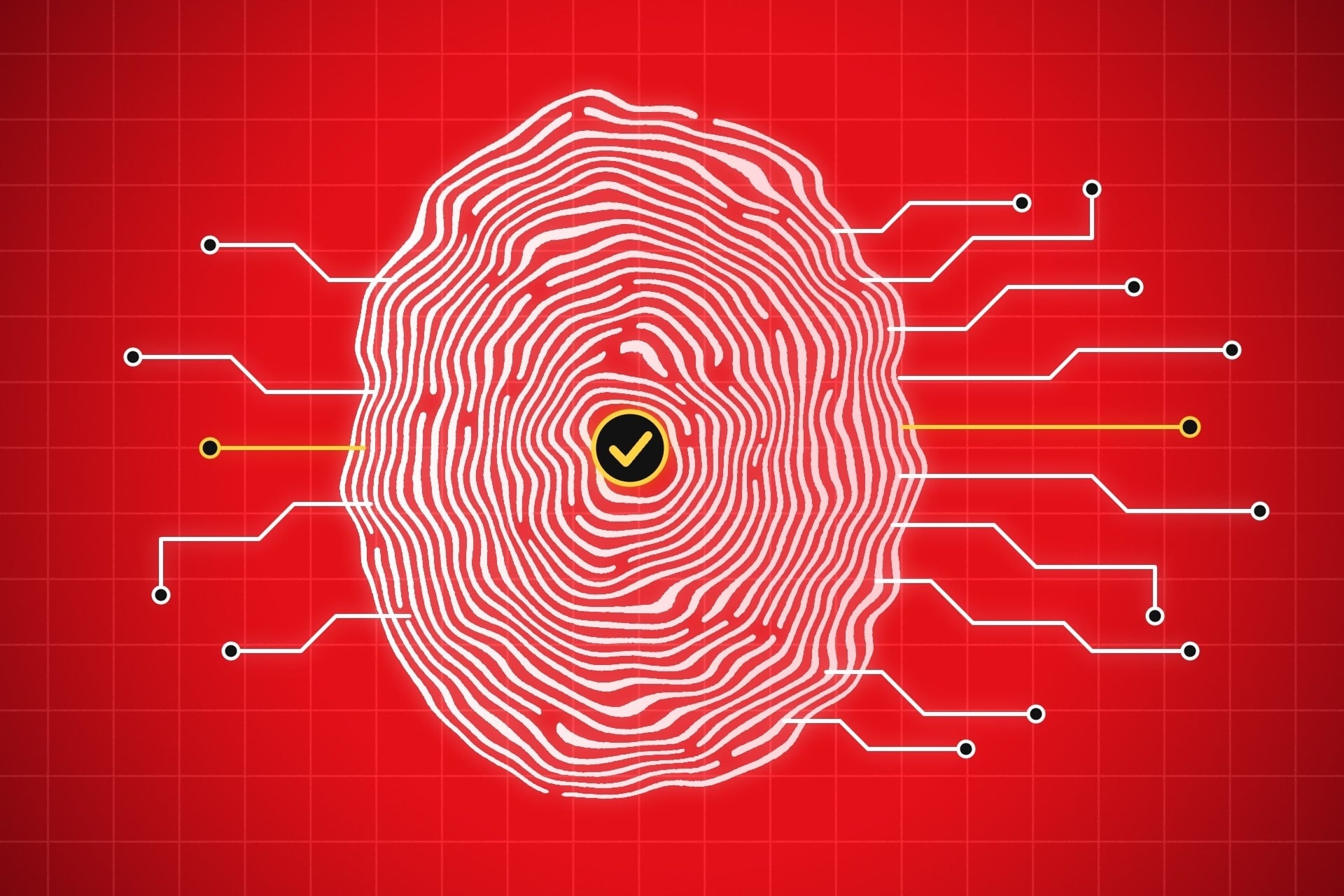
Who is really answering you when an AI responds to you? Anthropic publishes FlashProve, a cryptographic proof designed to unmask models in disguise. It then immediately shelves the tool in the research section.
On Tuesday, November 3, Anthropic posted a research paper accompanied by its open source code: FlashProve, a system designed to prove that a response indeed comes from a given AI model. The laboratory speaks of “provable inference”: each response can be cryptographically linked to the model that produced it, much like a signature at the bottom of a letter.The company warns right from the outset that no deployment is planned, at the company itself or elsewhere.
How can a model’s identity be established?
The system is based on a fingerprint that each laboratory would publish for each of its models, and against which any response could subsequently be compared. This fingerprint reveals nothing about the weights or the internal settings where a model’s value is concentrated and that the industry keeps under lock and key. The most secretive players (OpenAI is cited as an example) could therefore play along without opening their vaults. The most striking analogy comes from email: the digital signatures that confirm to the recipient the identity of an email’s sender. The verification is ultimately intended to be lightweight enough to run on a simple local device, including an individual’s computer.
A provider could today quietly slip a less costly model behind a subscription billed at full price, or inflate a ranking by having a model more powerful than the one advertised do the heavy lifting. FlashProve would make the deception detectable. Summer indeed provided a textbook case, when third-party services passed off Claude’s responses as those of DeepSeek or Kimi, before being exposed by Anthropic. “How can a user verify these claims?”: the question posed by researchers extends even to the security audits that AI agents claim to have carried out. When it comes to paying for the service, there is currently nothing to distinguish the promised large model from a cheap stand-in.
Why is no one using it at the moment?
Anthropic describes the whole thing as “intermediate progress, not a completed research program”, and announces no deployment plans, not even for its own models. The technical specification and code are published on GitHub under an open-source license; the lab says it shares them so that other teams, competitors included, can build on them.
The approach builds on work started this summer, when the company detailed the labeling of texts generated by Claude and promised a detector accessible to everyone. The label indicates that a text was written by an AI; the model fingerprint goes one step further and identifies which one. In concrete terms, a subscriber could one day run the verification from their own machine and confirm that the answer billed at the latest model’s rate really does come from it.
👉🏻 Follow tech news in real time: add 01net to your sources on Google, and subscribe to our WhatsApp channel.
Source: Anthropic








- Google Play Store
- 4K Video Downloader Plus
- VLC Media Player
- Adobe Reader
- uTorrent
- WinRAR
- Xender
- Google Chrome
- CCleaner
- Mozilla Firefox
- Avast Free
- ChatGPT
- Microsoft 365
- Opera One
- Avast One
- AirPods Pro 3
- Google Pixel 9a
- Google Pixel 10
- Google Pixel 10 Pro XL
- iPhone 17
- iPhone 17 Pro
- iPhone 16e
- Samsung Galaxy S25
- Samsung Galaxy S25 Ultra
- Samsung Galaxy A56
- Samsung Galaxy A26
- Samsung Galaxy A17
- Starlink
- Xiaomi Redmi Note 14 4G
- Xiaomi Redmi Note 14 Pro
- Xiaomi 15T Pro









Download
- Google Play Store
- 4K Video Downloader Plus
- VLC Media Player
- Adobe Reader
- uTorrent
- WinRAR
- Xender
- Google Chrome
- CCleaner
- Mozilla Firefox
- Avast Free
- ChatGPT
- Microsoft 365
- Opera One
- Avast One




