Synced reports

Without warning, Anthropic released its next-generation flagship Fable 5.2 late at night, charging straight into the physical world.
It comprehensively outperformed Opus 5.5 across the board and demonstrated astonishing generalization capabilities—it could easily handle even previously unseen new tasks.
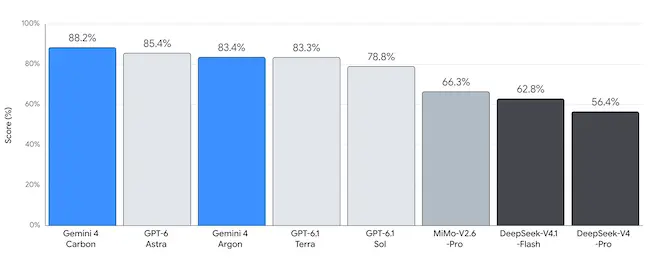
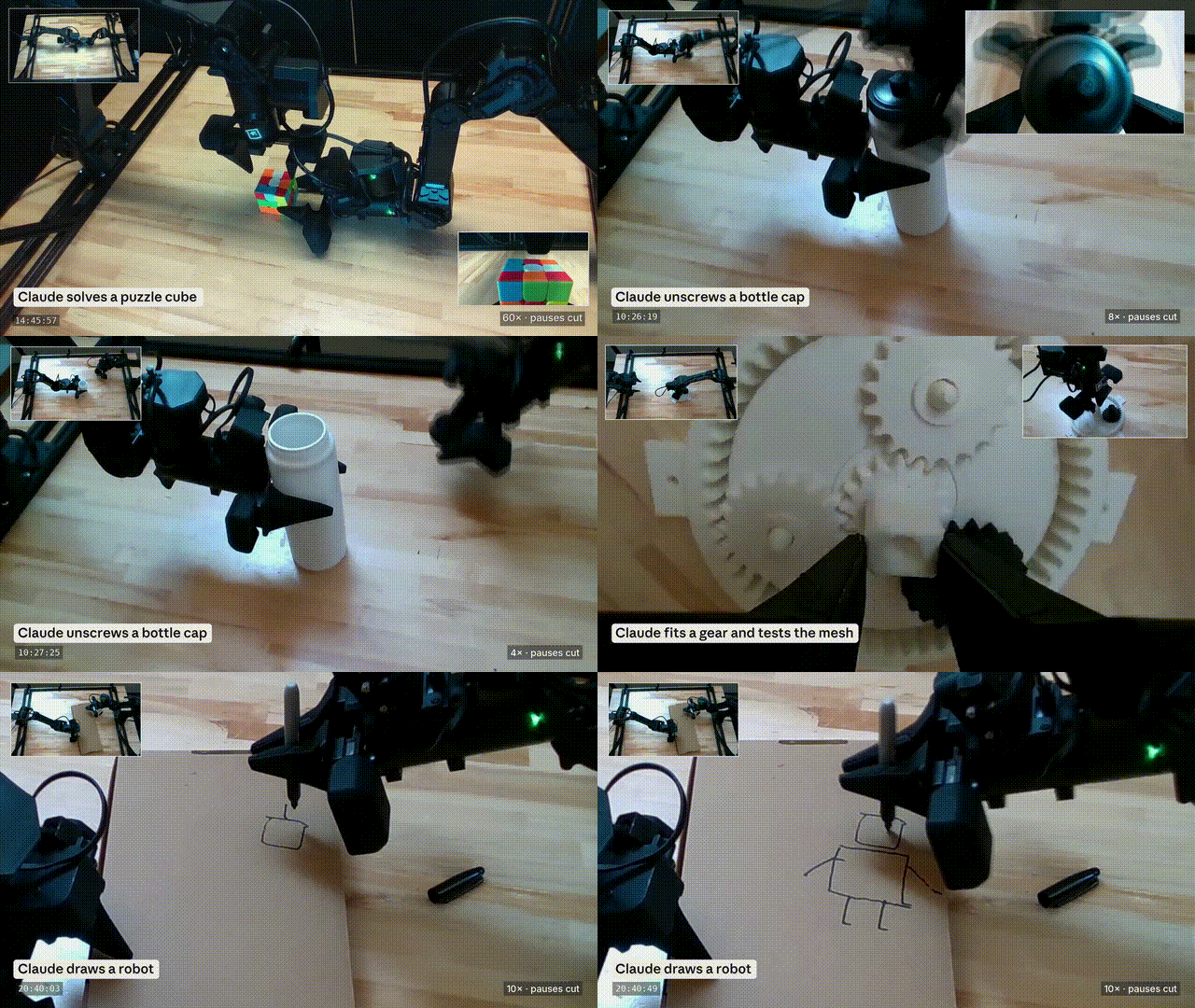
Solving Rubik's cubes by hand, twisting bottle caps, drawing robots, installing gears and testing gear meshing,Fable 5.2 achieved a 64.9% success rate, easily crushing a host of rivals in the RoboDojo test,more than twice as high as GPT-6 Astra's.
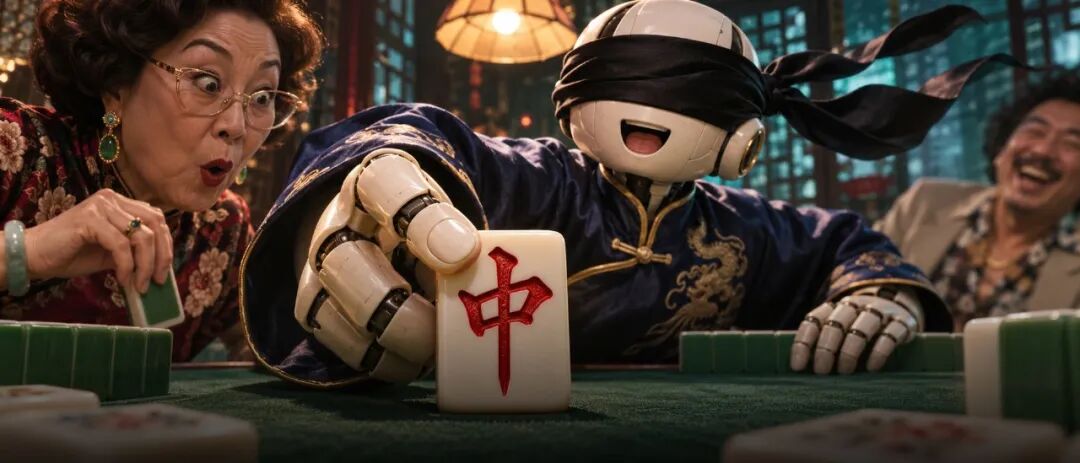
Just two months ago, GPT-6 Astra likewise pulled off a mind-blowing feat—after a geek connected it to dual dexterous hands, it immediately played a Chopin nocturne.
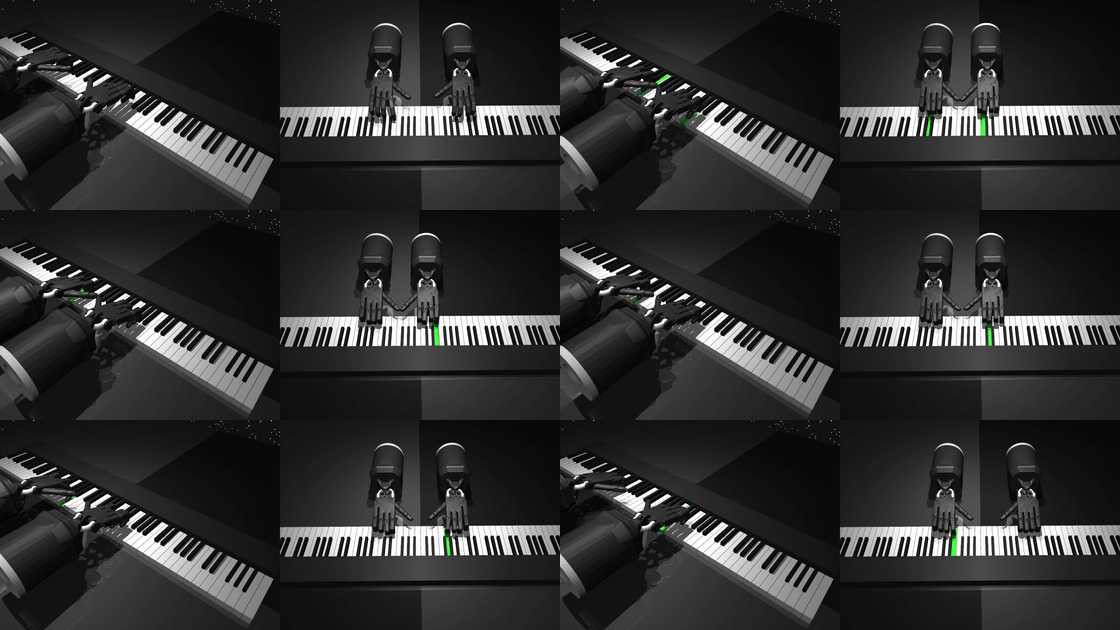
Does this make you think large models are about to take over the physical world?
In the very same evaluation, the RoboDojo test team put the former "leaderboard champion" Astra on a physical robot to tackle plugging in a charger and inserting a test tube.
As a result, because it had only vision and no sense of touch, even though the plug had become skewed and jammed, it could not feel the resistance at all.
So the oblivious robotic arm pushed ahead in accordance with the visual instructions and immediately rammed the physical hardware until it broke!
The researchers panicked and quickly threw the switch for an emergency stop. In the end, across 33 tests on real hardware, it did not complete either task even once,with its success rate flatlining at zero (0%).
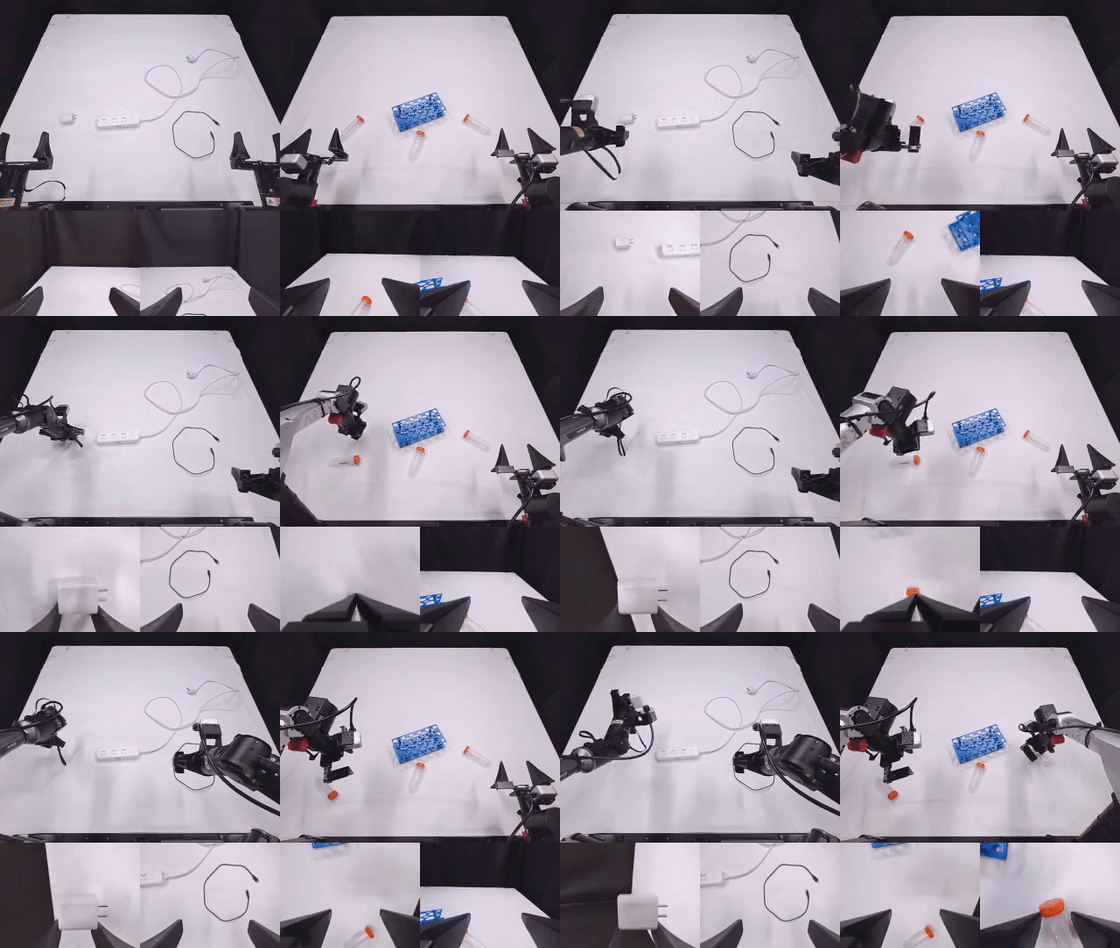
Why is the contrast so stark?
Because tasks like solving Rubik's cubes and drawing only require "vision," but when it comes to delicate work with the hands, a camera alone simply cannot react in time or see what is needed.
On the one hand, the moment a cup starts slipping from the fingertips, by the time the camera captures the image, it has already shattered.
On the other hand, whether the bottle cap has actually been turned or the fingers are just spinning in place looks exactly the same on camera, and the point of contact is often obscured by the fingers themselves.
This is precisely why jobs such as plugging wiring harnesses in auto factories still lack the tactile feedback of the fingertips, and Audi admitsthat, to this day, the industry-wide automation rateis still below 10%.
Ultimately, what today's robots lack is no longer better eyes, but a sensitive “sense of touch.”
Just moments ago, Ant Lingbo Technology officially released and open-sourceda general-purpose tactile foundation model,LingBot-Touch, filling this most critical gap in one move!
Project homepage: https://technology.robbyant.com/lingbot-touch
Technical report: https://github.com/Robbyant/lingbot-touch/tree/main/paper
GitHub: https://github.com/Robbyant/lingbot-touch
Hugging Face: https://huggingface.co/collections/robbyant/lingbot-touch
ModelScope Community: https://www.modelscope.cn/collections/Robbyant/LingBot-Touch
For the first time, it unifiedvisuotactile, magnetotactile, and piezoresistivetactile signals into“general-purpose tactile Tokens”.
With this, the robot can finally develop a “feel” that carries over even when fitted with a different dexterous hand.

5.32M parameters, plug and play
All 26 precision manipulation tasks see dramatic gains
On physical hardware, tactile feedback is highly time-sensitive.
Therefore, to avoid competing with the vision and action models for computing power, the team simply deployed the lightest-weight Tiny version, with only 5.32M parameters.
As a result, when connected to three major action models, it adds only 0.13% to 0.16% to the parameter count0.13% to 0.16%, placing virtually no additional burden while instantly giving the dexterous hand a sense of “precision.”
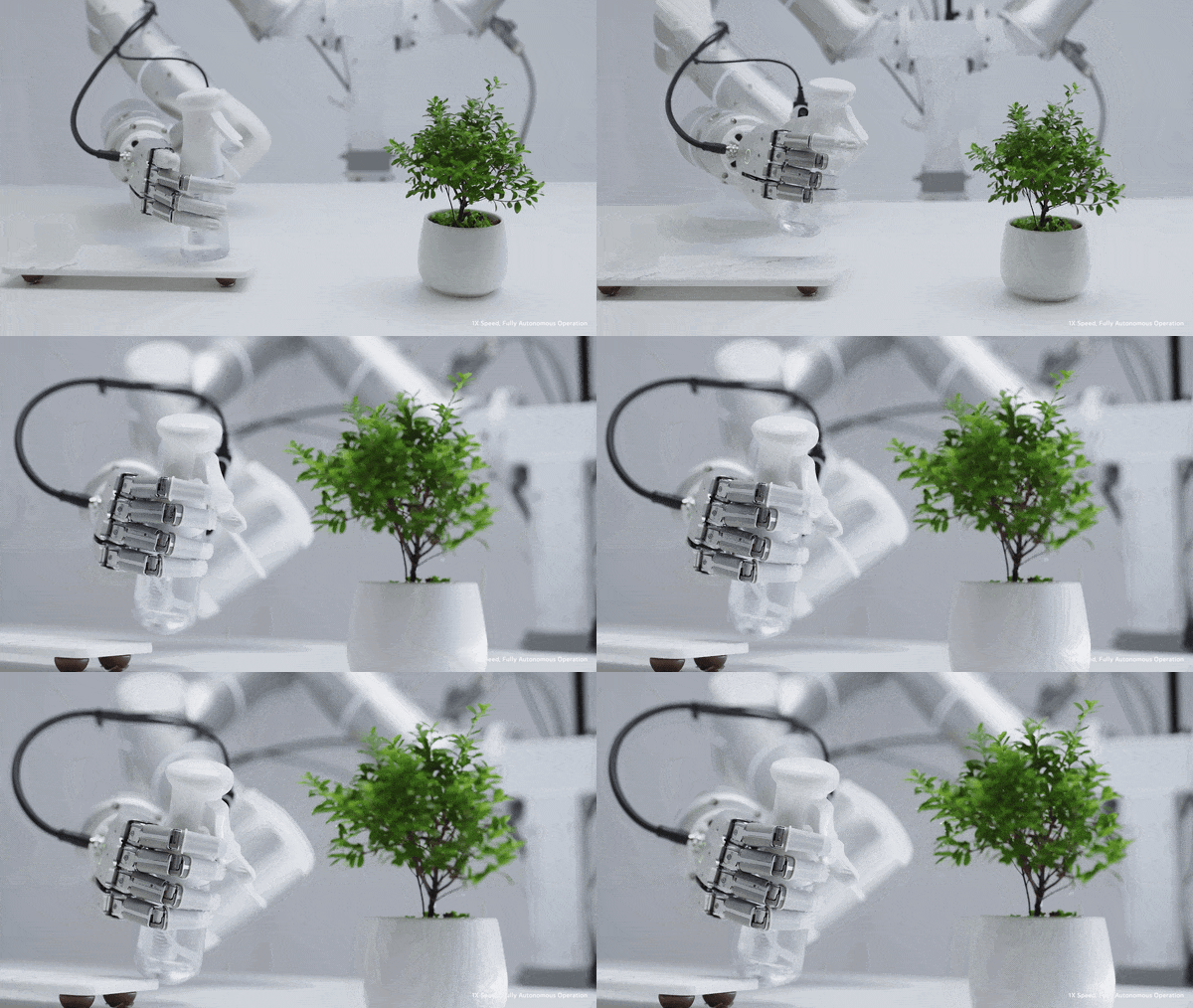
Take “gripping a spray bottle and spraying” as an example. The plastic bottle is slippery, and relying on vision alone, the index finger slips and loses its grip as soon as force is applied.
With LingBot-Touch connected, the slightest slip at the fingertips immediately triggers fine adjustments to the grip, firmly pressing the trigger. The success rate leaps from 42.50% to87.50%.
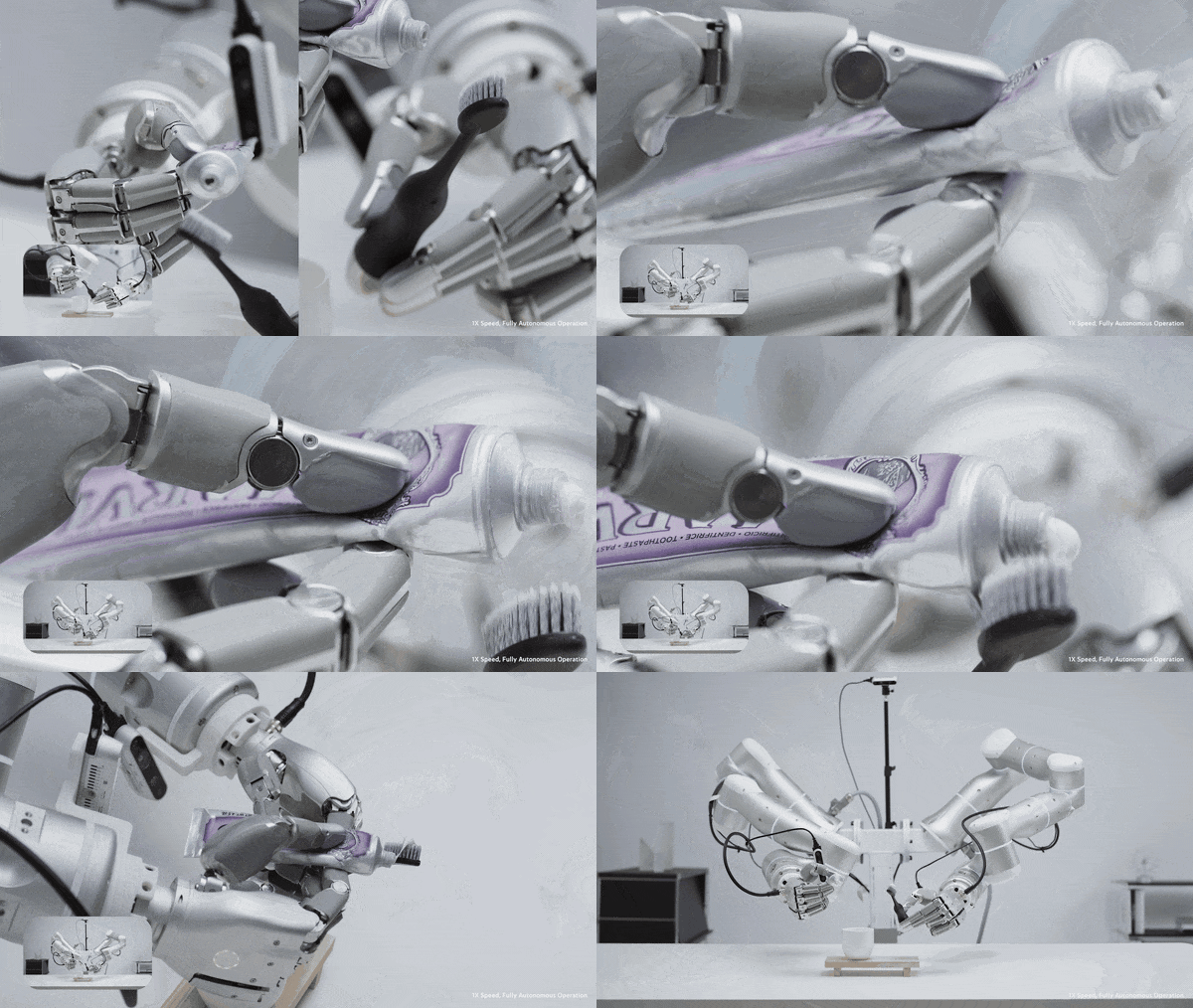
Now consider “squeezing out toothpaste,” an even more demanding test of bimanual coordination. Squeezing the tube too gently produces nothing, while squeezing too hard makes the toothpaste squirt everywhere.
With the help of tactile Tokens, the two arms can not only steadily align the narrow brush head but also use their thumbs to apply fine pressure in response to the tube’s resistance, squeezing the toothpaste precisely onto the bristles:
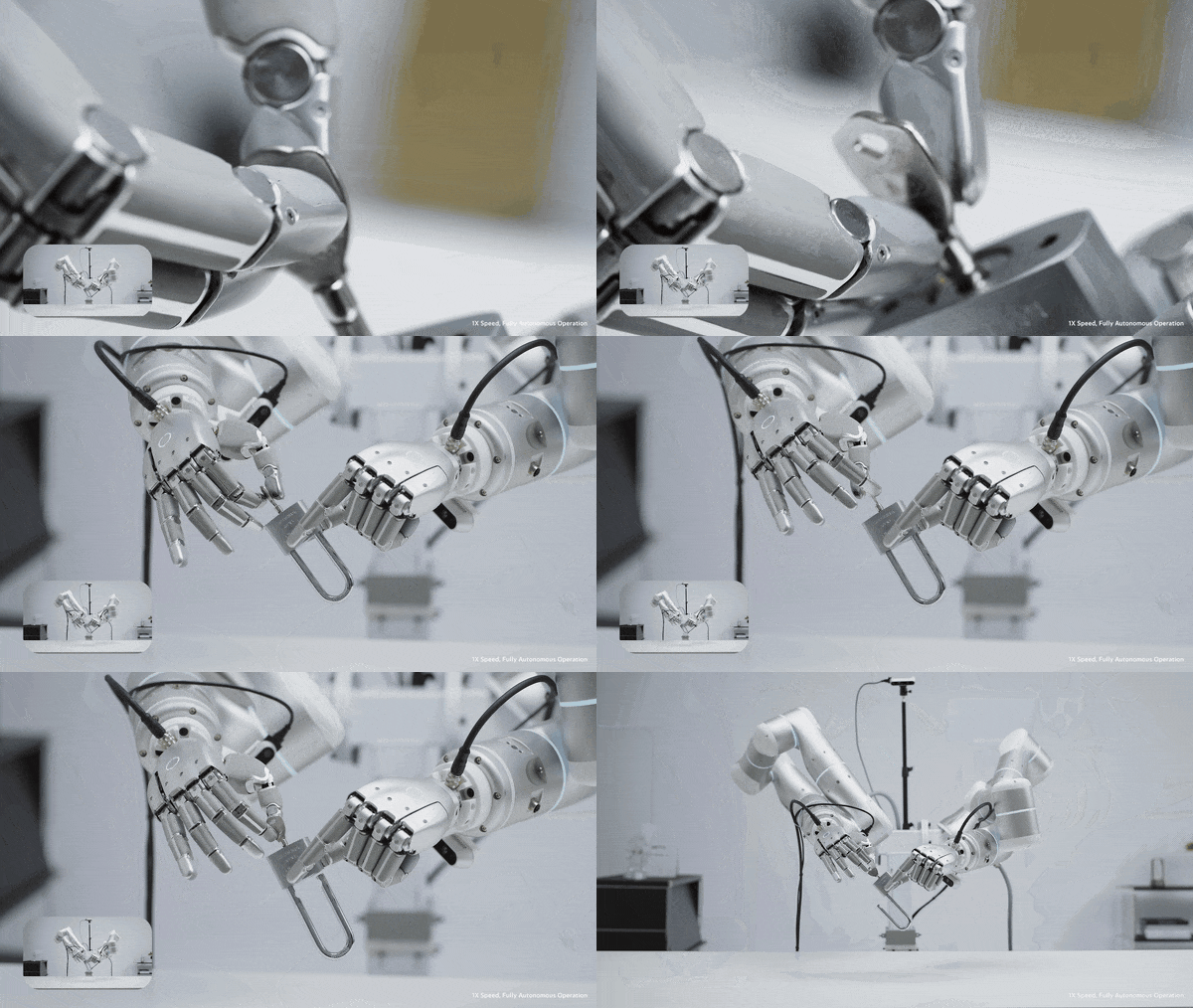
Even “socket alignment,” which made the vision model crash the physical robot at the beginning, is easily handled when switched to the more delicate task of “unlocking a lock with a key.”
The fingertips grip a small key, probing and making fine adjustments based on the faint resistance felt at the lock hole. Once aligned, they decisively twist the padlock open in one smooth motion:
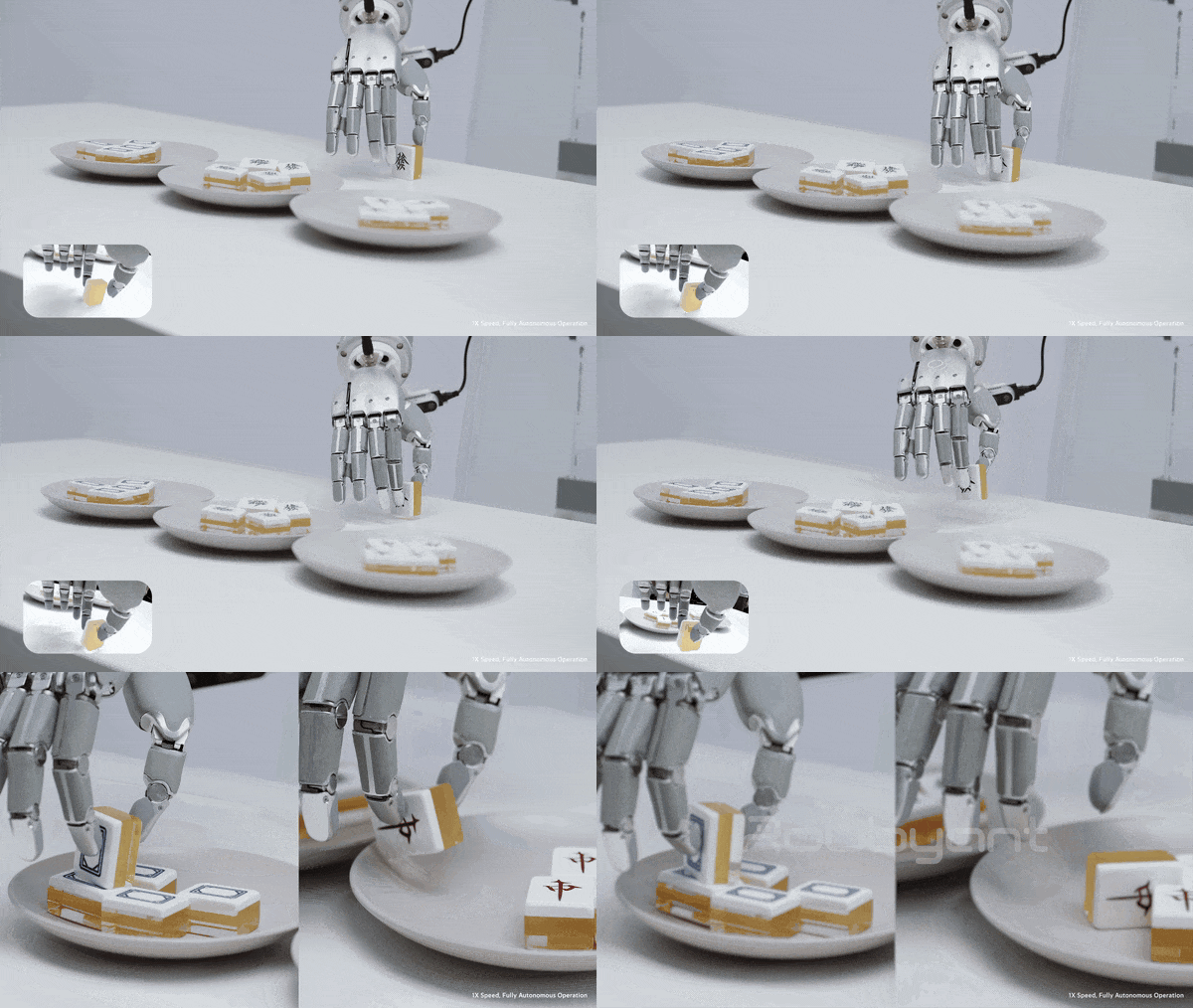
More interesting still is “blind mahjong,” whose rules are so strict that if the face of a tile is exposed to the camera for even a single glance, it is immediately given a zero score.
The dexterous hand operates entirely without sight; with a gentle press of the fingertip, it can feel out the raised patterns and sort the tiles into different trays, doubling the success rate and sending it soaring to70%:
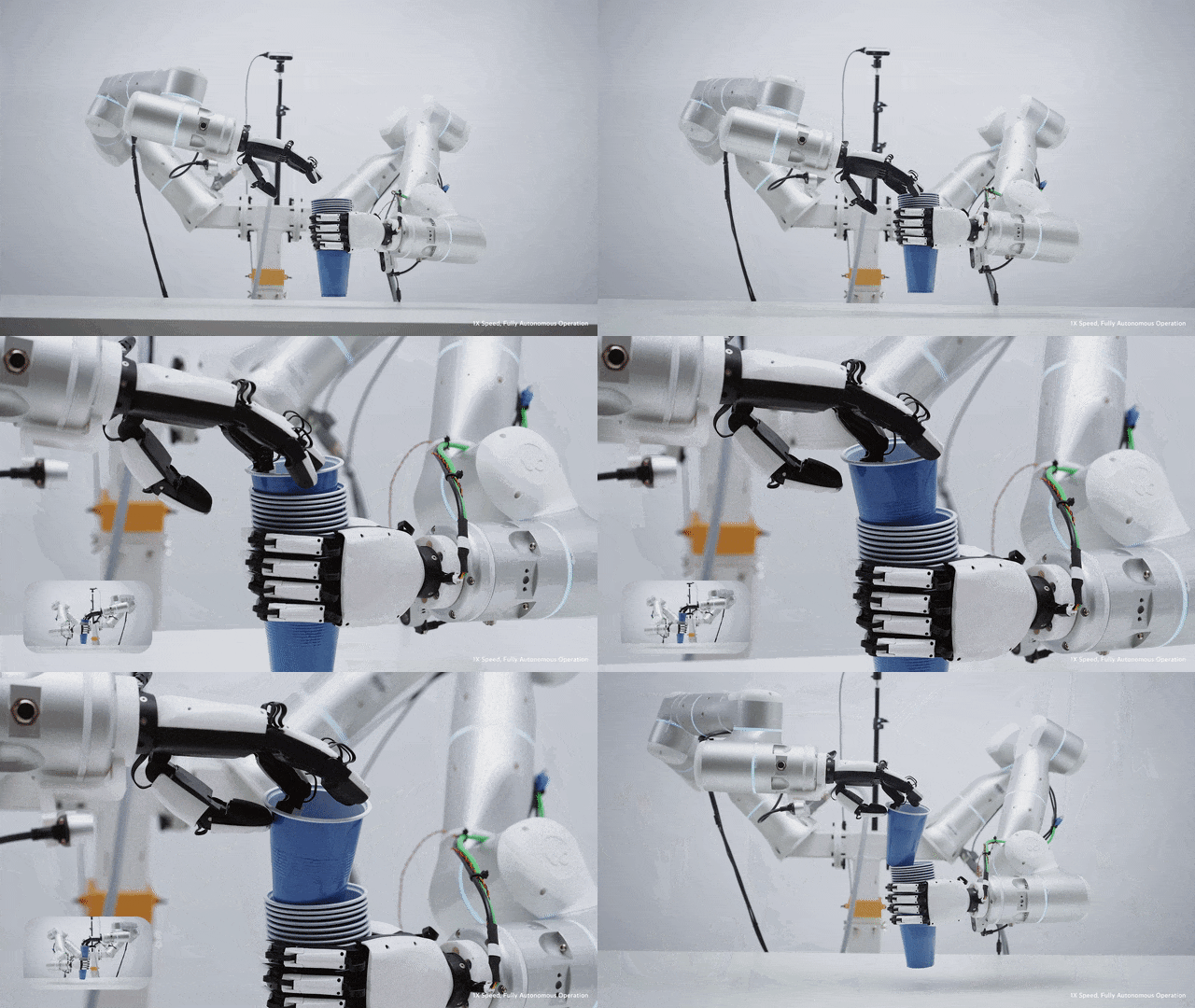
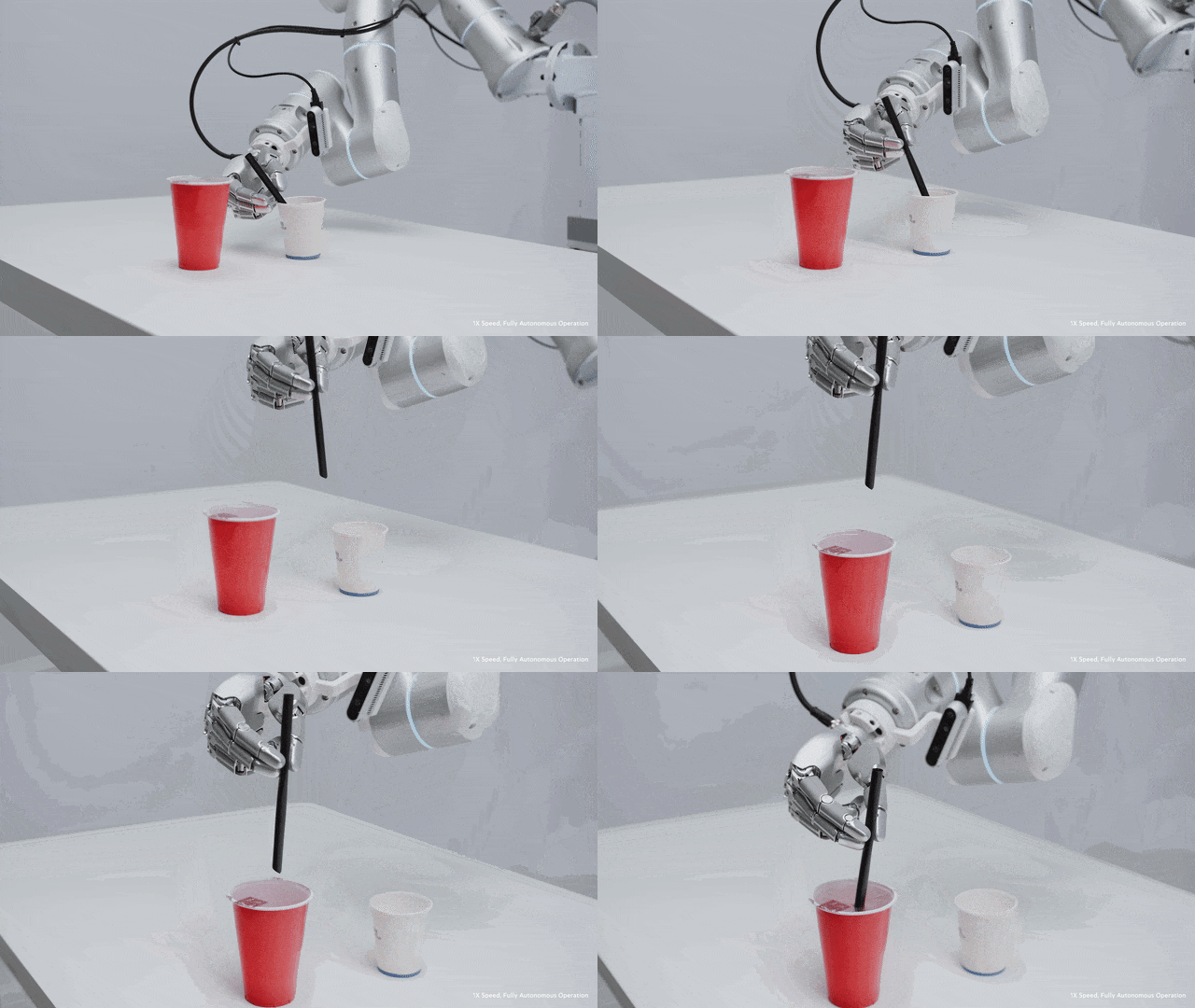
Another example is separating two stacked paper cups: the fingers completely block the camera’s view, and squeezing too hard crushes the cup, while squeezing too gently makes it impossible to pull the inner cup out.
But with tactile tokens helping out, the dual arms can follow subtle changes in friction at the fingertips and gently twist to pull out the inner paper cup.
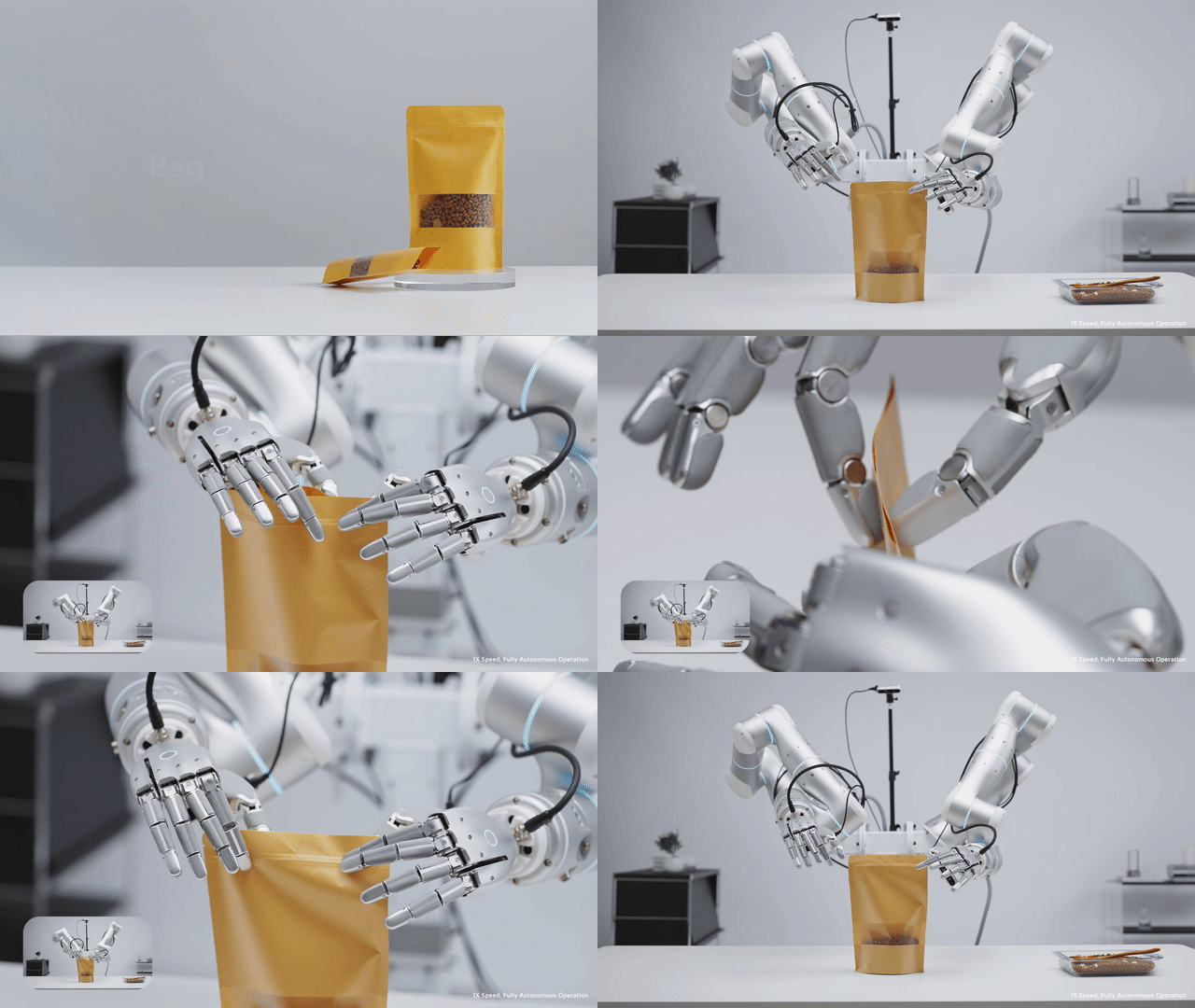
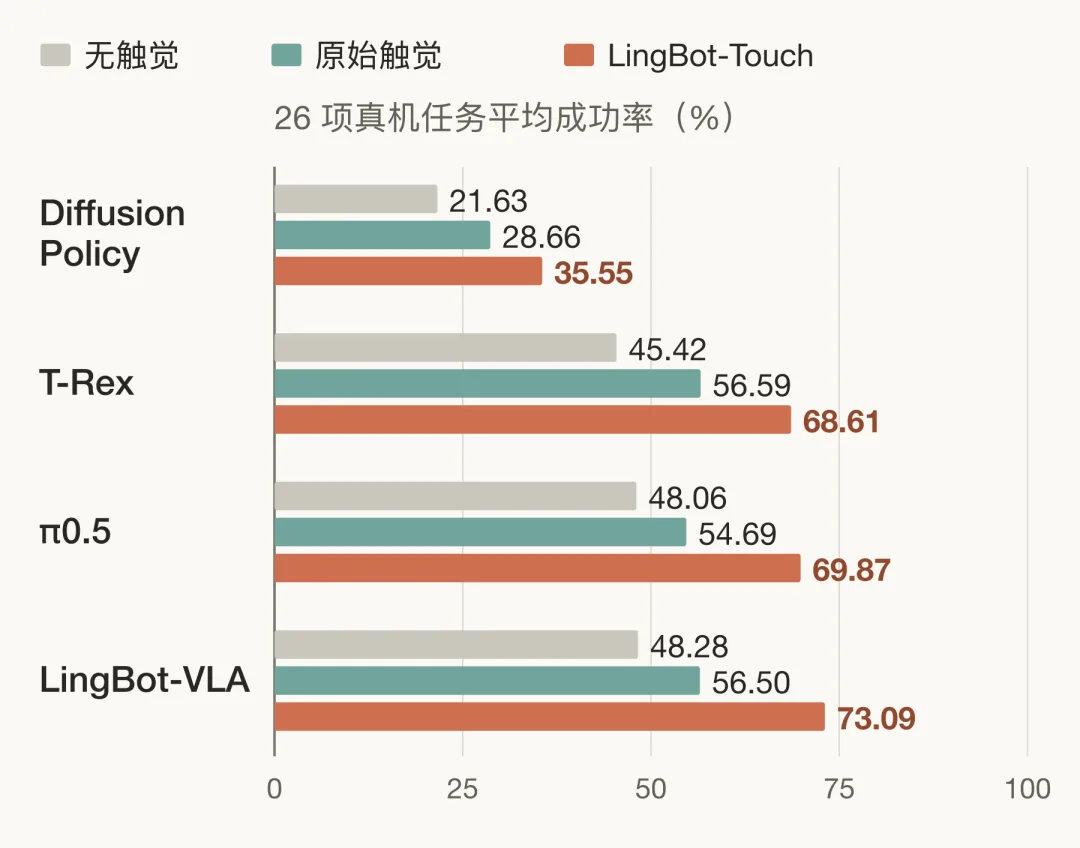
These everyday tasks are just the beginning. The team paired two dexterous hands of different designs with four mainstream action models, evaluating26 real-robot tasksand12 simulated operationsin one go. Every combination featuring LingBot-Touch took the top spot:TAG440@@
-
All three action models improved across the boardTAG450: the average success rates of T-Rex, π0.5, and LingBot-VLA surged by23.18, 21.81, and 24.81 percentage points, respectively;
-
Fine manipulation was steady, precise, and ruthless: turning a single page climbed toTAG47991.25%, pressing to eject an SD card soared toTAG490@@92%TAG494@@, and transporting paper cups achieved a perfectTAG499100%;
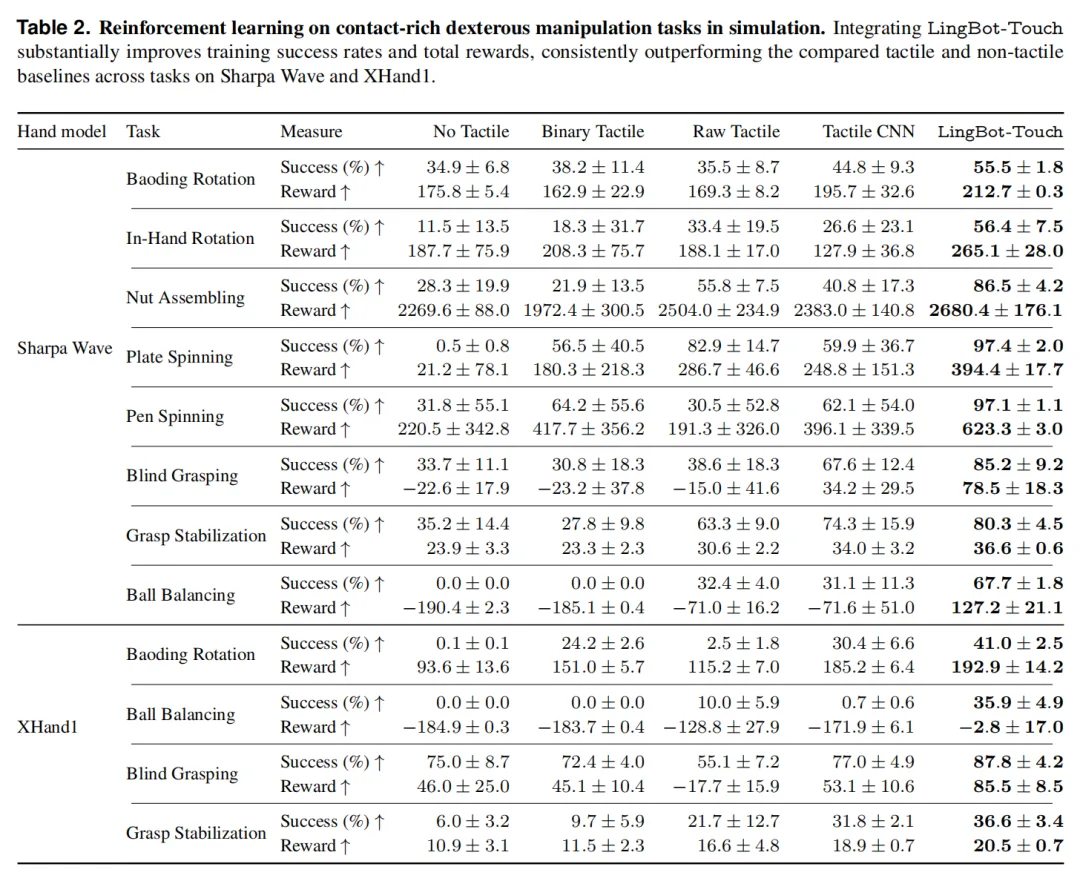
Successfully completed 12 simulated manipulation tasks with high scores, with both plate-spinning and pen-twirling success rates exceeding97%, while the “carry a tray while balancing a rolling ball” task, which scored 0 with vision alone, also reached67.7%.
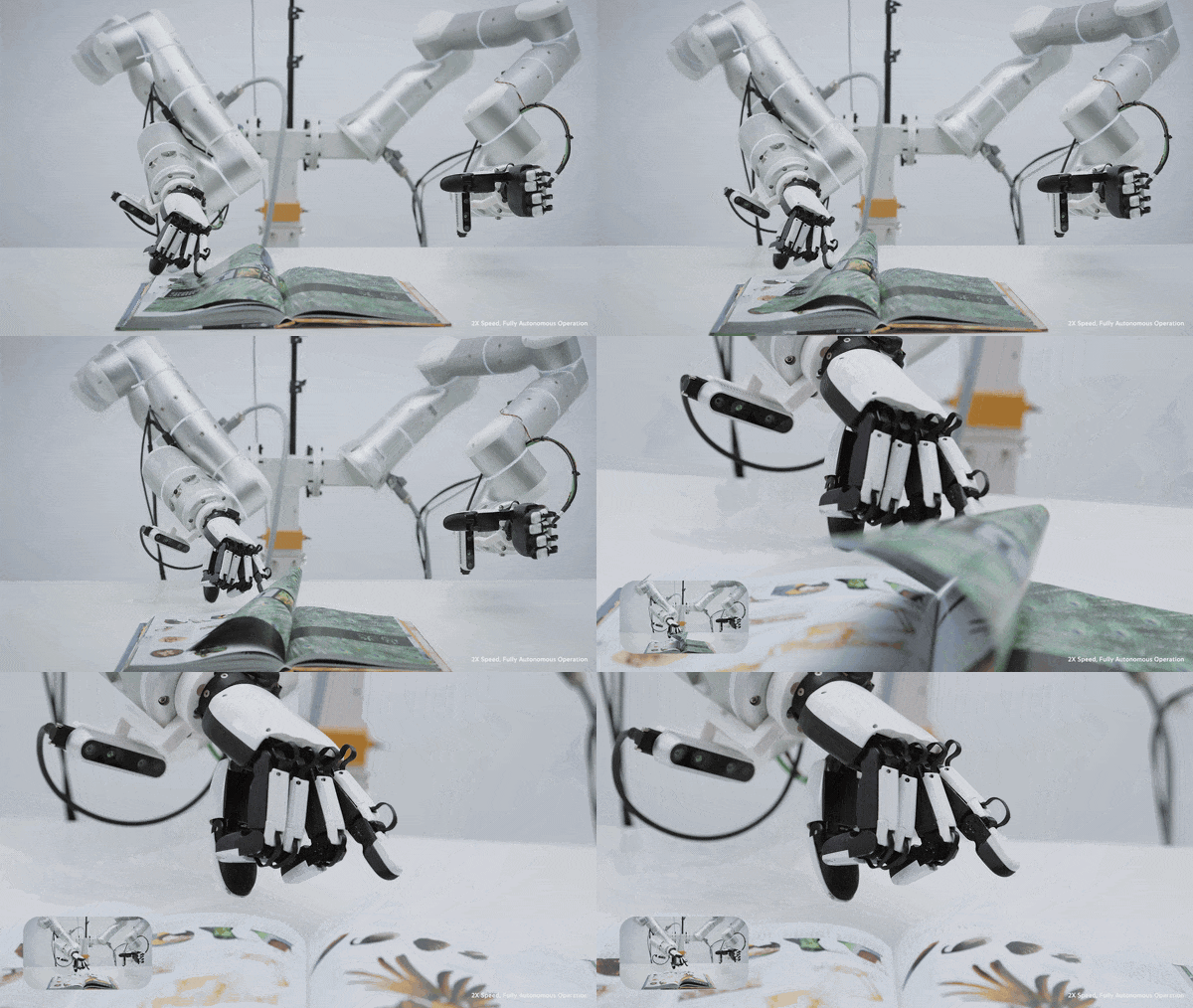
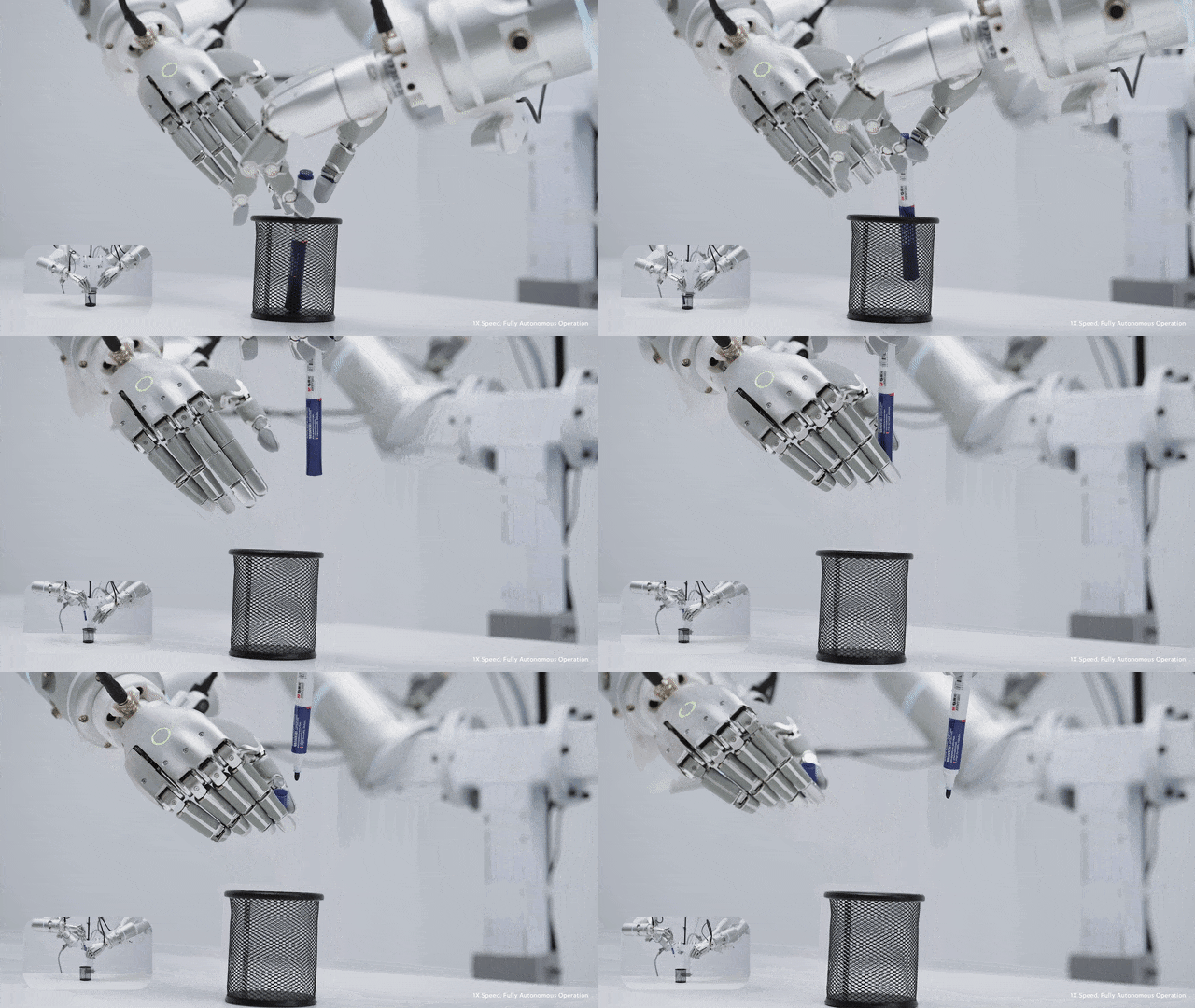
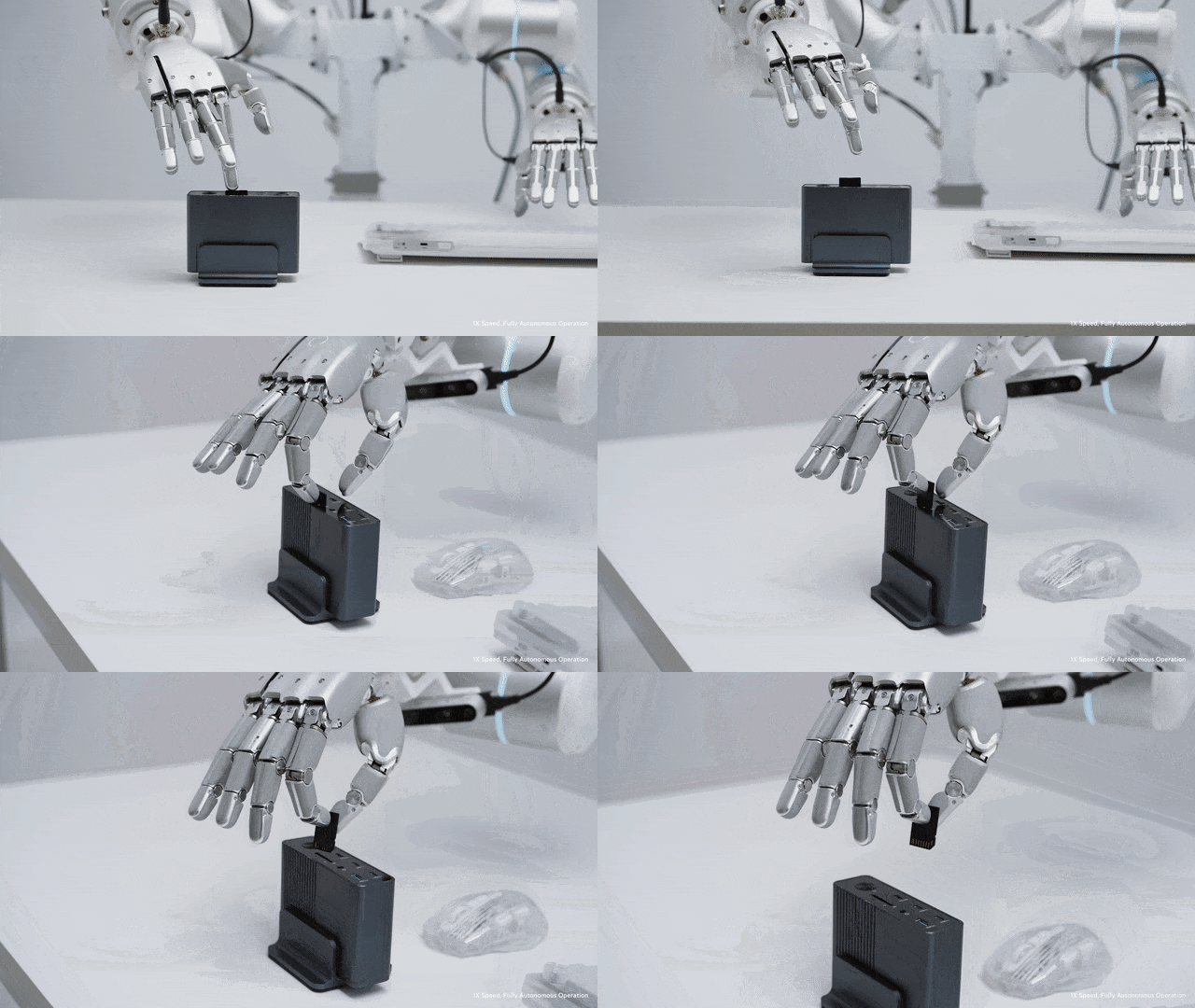
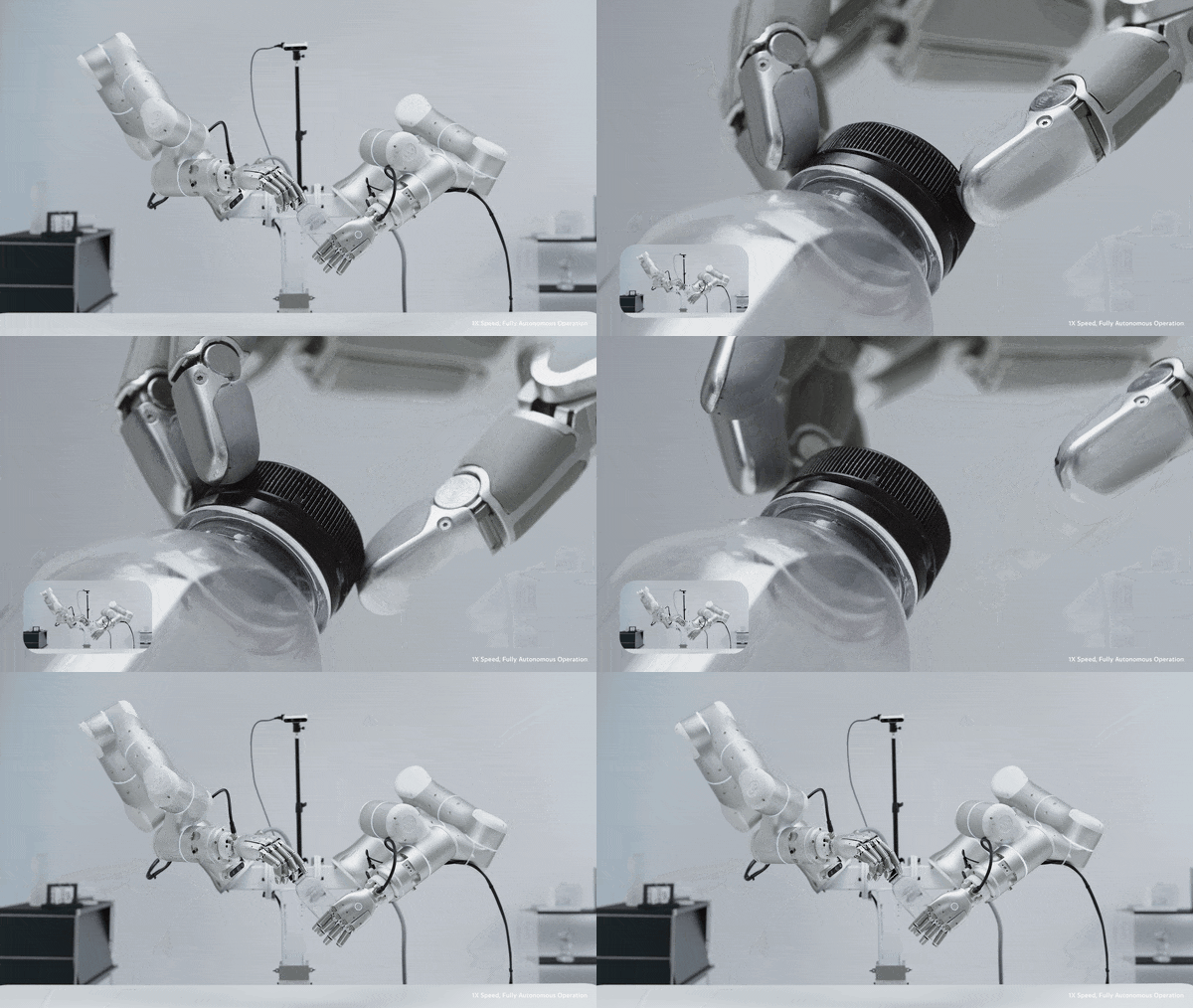
Swipe left or right to view
5000 hours of real-world tactile data
Dexterous hands ready to use out of the box
Since tactile sensing is so effective, why is it so difficult to train general-purpose large models? The main bottlenecks are“sensorsspeak different languages”and“an extreme shortage of real-world data”.
First, let's look at the hardware. The three mainstream types of tactile sensors today have completely different underlying principles:
-
Visuotactile sensing hides a tiny camera at the fingertip to image soft-gel deformation, making extremely fine contacts visible. It is well suited to twisting bottle caps, but its response is not fast enough because it is constrained by the frame rate;
-
Magnetic tactile sensing uses the fact that force applied to a soft magnetic material changes its magnetic field. It excels at sensing multidirectional forces and sliding, making it suitable for zipping zippers and inserting plugs, but it is susceptible to interference from nearby magnetic fields;
-
Piezoresistive sensing, by contrast, relies on a material’s resistance changing when compressed. It can be deployed across the fingers and palm at low cost, at the expense of limited resolution.
This means that even when all three are simply pressing against the wall of a cup, the three types of sensors record three completely unintelligible “dialects”; switching to a different hand means starting over and retraining from scratch.
An even bigger headache is the lack of real-world data. In the past, it all had to be collected by people teleoperating robotic arms, which was slow and expensive and nowhere near enough to feed large models.
To solve the data problem, Ant Lingbo came up with a clever solution— have real people wear lightweight tactile gloves and directly collect “human feel” in everyday life!
This way, when twisting bottle caps, wiping tables, or inserting plugs, the gloves record exactly how the human hand applies force.
By combining glove data collected from human hands with teleoperation of real robots, the team ultimately amassed the world’s largest collection of nearly 5,000 hours (4,983 hours) and 1.33 billion frames of real tactile data, nearly5,000 hours (4,983 hours), 1.33 billion frames of real tactile data, of which fully two-thirds came from the human gloves.
However, human hands and dexterous robotic hands do not have the same morphology. Will the data collected this way be useful for robots?
Real-world tests gave a welcome surprise in response— the “feel” accumulated from human hands could actually be transferred directly, zero-shot, to a brand-new dexterous robotic hand!
You see, the magnetic tactile data used in pretrainingwas 100% from human gloves, and the model had never seen the new magnetic tactile dexterous hand used for testing.
But after the team completely froze the tactile model’s parameters and directly mounted it on the new dexterous hand, π0.5’s average success rate immediately surged from 48% to74.17%, and transporting soft paper cups jumped from 58% to90%!
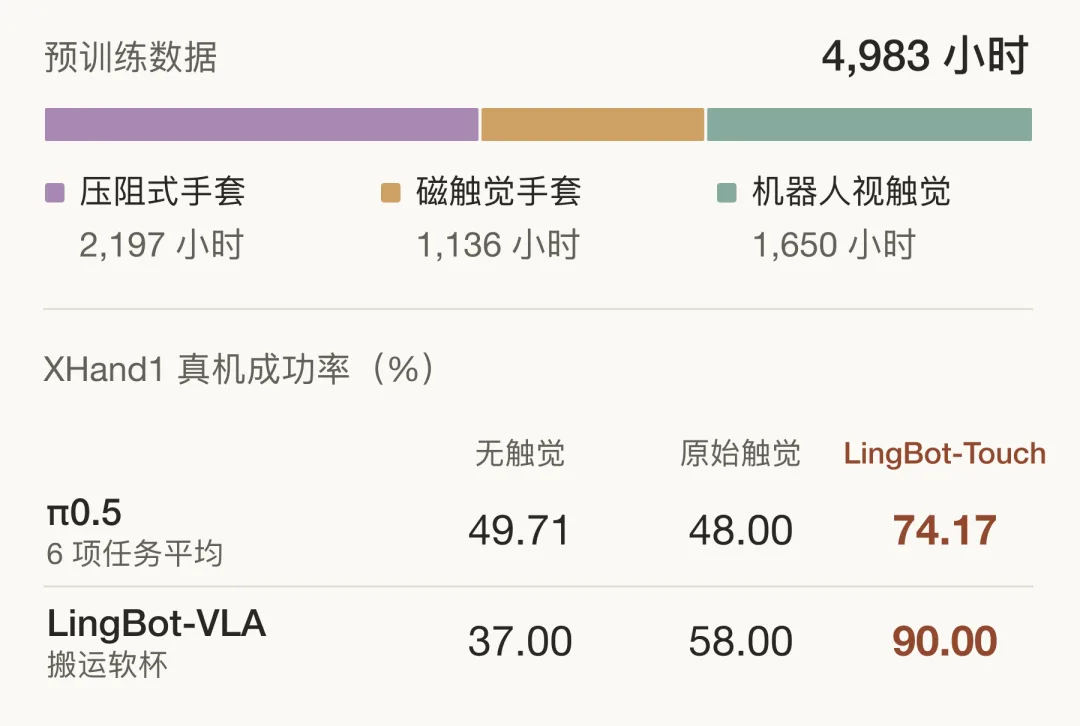
This means that the ability to understand physical contact has transcended hardware form and been transferred intact from human hands to dexterous hands.
Unifying Three Types of Tactile Signals
Developing a Real Sense of Touch by Predicting Force
So at the underlying level, how can data from three types of sensors, human hands, and dexterous hands be fitted into a single model? The Lingbo team identified the most essential commonality:
Regardless of whether thesensormeasures images, magnetic fields, or electrical resistance, they all ultimately answer the same four questions—where the finger is touching, how much force was applied, which direction the force is moving, and whether it is slipping.
Since the questions are the same, the team isolated “contact understanding” and developed a general-purpose foundation model for it in three steps.
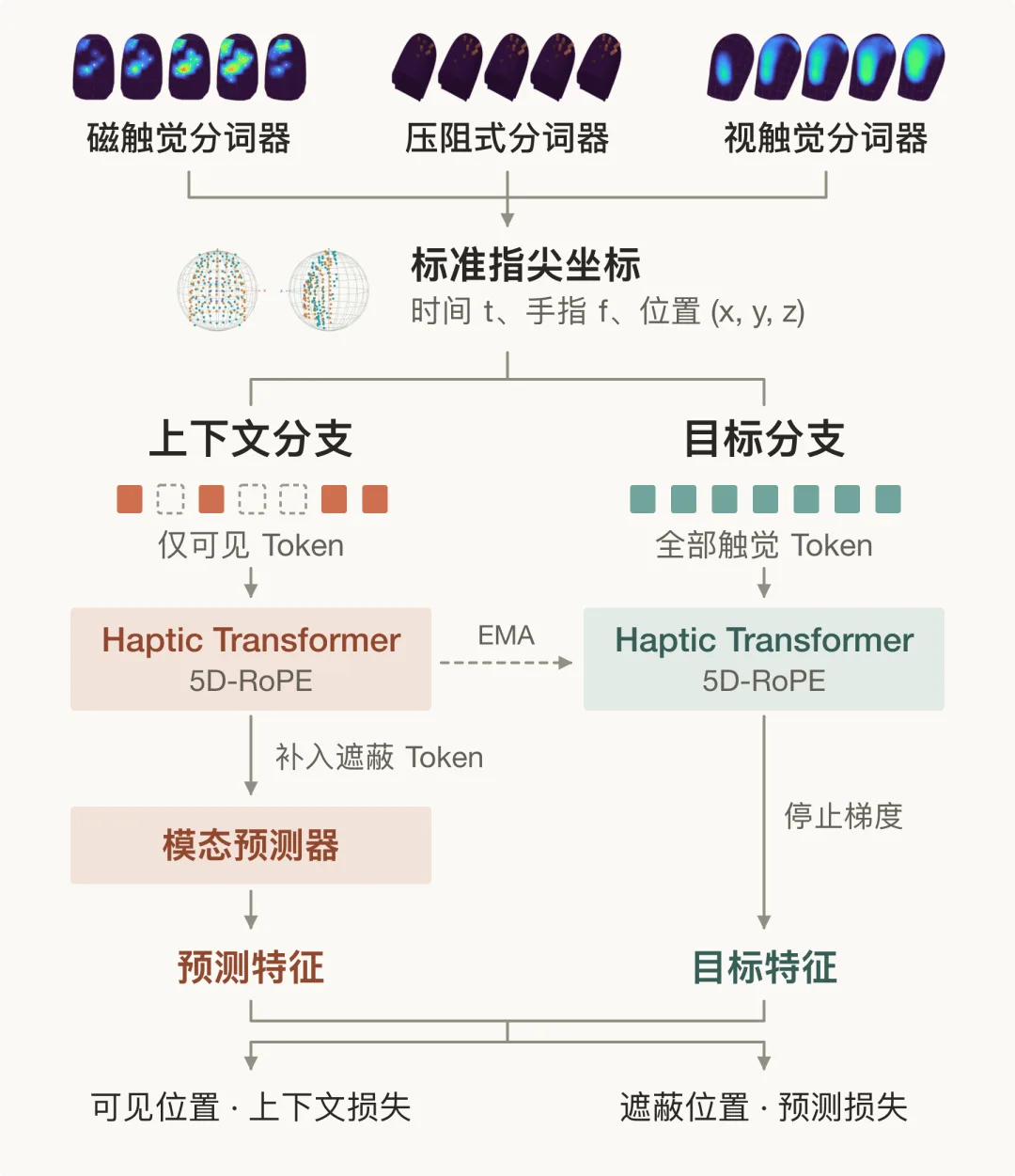
First, “receive” each type separately according to its operating principle.
Specifically, the team set up a minimalist input interface for each of the three sensor types. After converting the data into a unified format, it was fed into the same tactile backbone network for learning, allowing new hardware based on the same principle to be connected directly.
Second, place all fingertips on the same “map” (5D-RoPE).
Unifying the optical format is not enough; the arrangements of touchpoints on different dexterous hands also vary widely.
Therefore, the team mapped all touchpoints to unified three-dimensional spherical fingertip coordinates and randomly fine-tuned their density and positions to prevent the model from simply memorizing the layout of a single piece of hardware.
Step three: create a “contact completion” task (Tactile-JEPA).
Why design this task specifically? Because when grasping an object, more than 90% of the touchpoints do not actually touch anything, and the readings consist entirely of zeros and background noise.
If you simply copy the visual-model approach of masking a region to reconstruct the original readings, the model canfill everything with zeros and get 90 points for free..
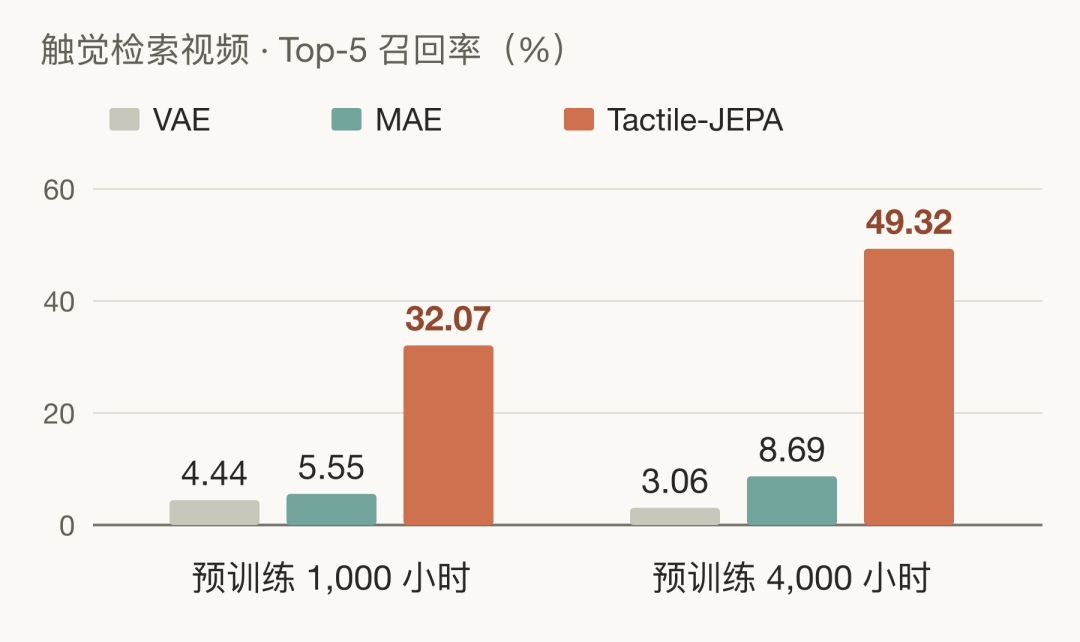
As a result, with 4,000 hours of data, the top-5 recall of cross-modal retrieval for the conventional approach was only3.06% and 8.69%!
Therefore, LingBot-Touch drew on the JEPA architecture championed by Turing Award winner LeCun and directly masked up to 90% of the region.
Building on this, instead of asking the model to reconstruct the zero readings and background noise, it asks the model to infer the forces acting on the masked region, boosting retrieval recall to49.32%!
Blind-touch localization is accurate to 0.12 mm
Tactile sensing can scale, too
How accurately, exactly, can this architecture perceive physical contact?
Therefore, in the five physical contact tests, the team allowed the mainstream open-source modelFTP-1 to attach a dedicated hardware adapter, while LingBot-Touch kept its weights locked throughout, without changing a single parameter.
Even after conceding the opponent an advantage, LingBot-Touch still brought the fingertip blind-touch localization error down from the opponent’s 2.19 millimeters to0.12 millimeters, and down to0.16 millimeters on the new magnetic-tactile dexterous hand.
Meanwhile, fingertip 3D force-sensing error was also reduced by approximately65%. When installed in the same action brain and tested on five real-robot tasks, it decisively outperformed the competition in average success rate,82.2% versus 67.5%.
More importantly, the team observed that tactile sensing also exhibits a scaling phenomenon on the scale of 5,000 hours, identifying two key trends:
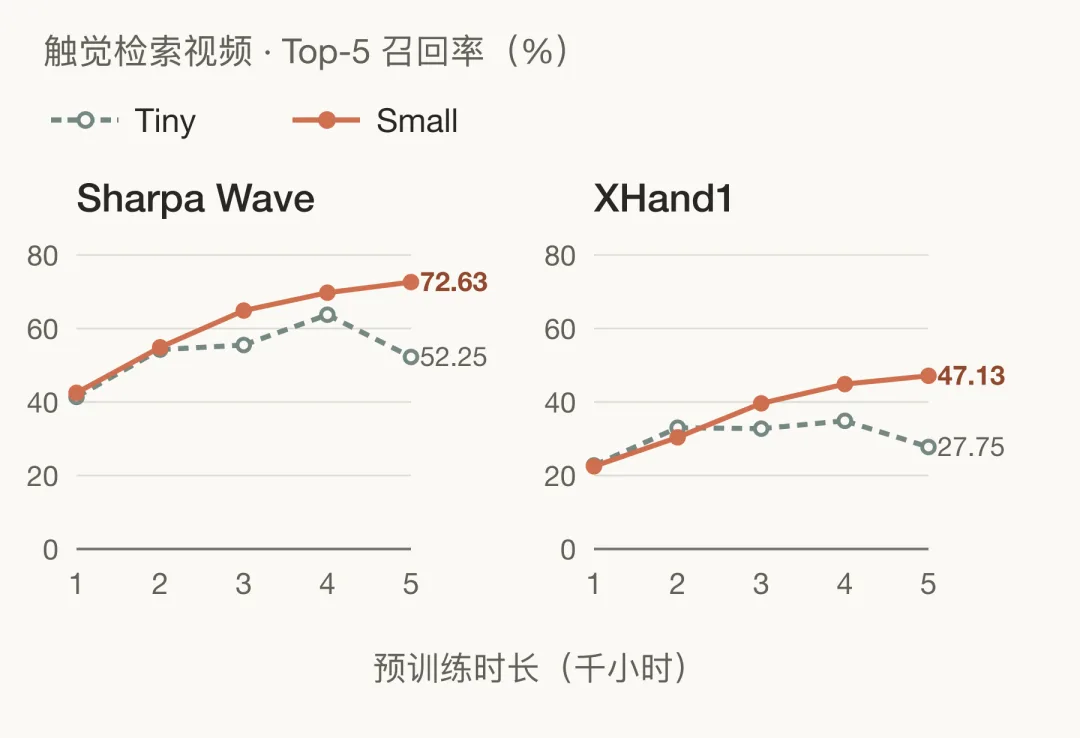
On the one hand, training with data from three different sensor types mixed together outperformed training on each alone across every metric, allowing data from the different hardware approaches to finally come together and achieve the “1+1+1>3” effect.
On the other hand, as the data accumulated to nearly 5,000 hours, the lightweight Tiny version gradually saturated after 4,000 hours, while the higher-capacitySmall version continued to improve.
This shows that the larger the model and the more data, the stronger the robot’s “feel” becomes!
Hardware need not be unified; intelligence can be shared
The value of LingBot-Touch lies not merely in giving robots an additional sense.
The key point is that touch is a quintessential“physically native modality”—Text and images are everywhere online, yet large models in the digital world have never truly “touched” anything. This is also why Astra was completely unaware at the outset that its plug had gotten stuck.
Moreover, sensing principles differ from one another to such an extent that touch has long remained fragmented and scattered, never forming unified representations.
Today, LingBot-Touch demonstrates that even touch, which depends most heavily on hardware, candistill a unified representation.
This has been validated in touch and, more broadly, can be extended to embodied intelligence as a whole.
The difficulty of generalizing physical manipulation stems to a large extent from hardware constraints: robot embodiments, dexterous hands, and sensors all follow different technical paths, and all the hard-won experience is locked into the respective hardware.
Ant Lingbo's approach to this is very clear:Hardware need not be unified; intelligence can be shared.
What it aims to build is the intelligence layer between hardware and scenarios—converting the physical experience accumulated by different embodiments and sensors into unified representations that can be shared, and then making them available in anopen-source, decomposableform.
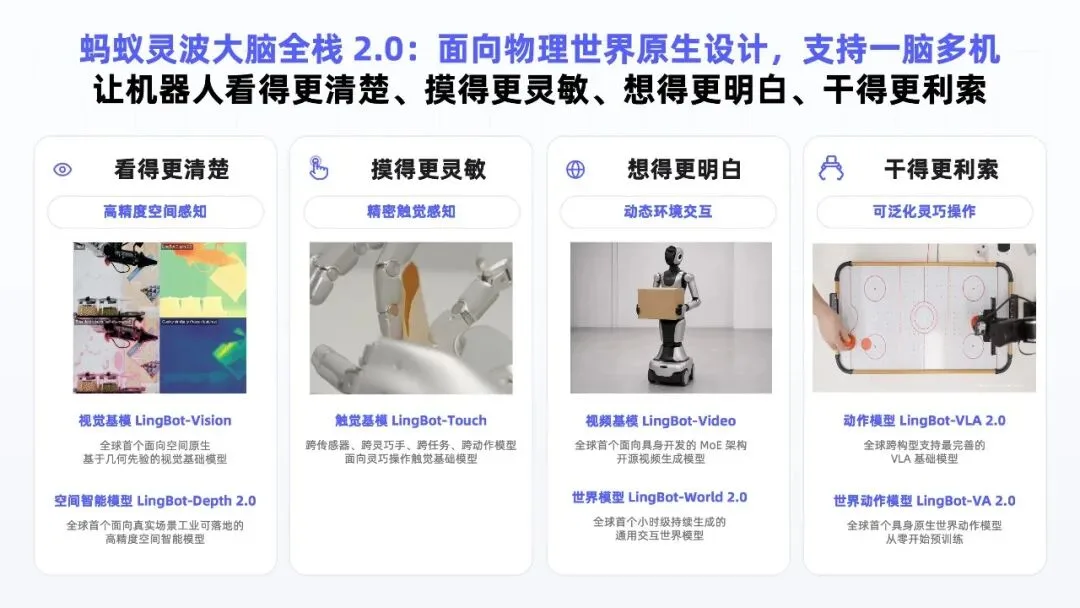
This year, Lingbo has successively open-sourced the spatial perception model responsible for seeing more clearly, the world model responsible for thinking more clearly, and the cross-embodiment action model responsible for doing things more efficiently.
This open-source release of LingBot-Touch not only fills in the missing piece of the “Embodied-Native” Brain Full Stack 2.0—more sensitive touch—but also applies the same methodology to touch, the sensory modality that depends most on hardware. If the touch pipeline can be made to work end to end, it means that the methodology can also be applied to other new sensing modalities.
When it comes to industry, this shared-intelligence layer directly saves upstream and downstream players the effort of reinventing the wheel.
For tactile sensor manufacturers, in the past, every time they released a new sensor, they had to collect their own data and train a tactile model from scratch before an action model could use it, resulting in a high technical barrier and a long development cycle.
Now, new hardware can be plugged directly into LingBot-Touch to produce general-purpose tactile Tokens, allowing manufacturers to focus on precision, durability, and cost, while making their products easier for robots from different manufacturers to adopt.
For dexterous-hand makers and robot OEMs
, the biggest change is that they can finally choose components freely.Different parts of a single hand naturally have different requirements: the fingertips handle fine movements such as pinching, twisting, and rubbing and need high resolution to discern subtle contacts; the palm is primarily responsible for supporting and gripping and needs large-area, low-cost force sensing.
The ideal approach would naturally be to let each part play to its strengths, but in the past, using two types of sensors on a single hand required two separate tactile models to be trained, adding an extra set of development and maintenance costs.
Now, a single LingBot-Touch can understand tactile signals based on different principles,including “fingertip visuotactile sensing + palm piezoresistive array”, a cost-effective combination that can finally be mounted on the hand with confidence and put to genuine use.
At present, Ant Lingbo has already joined forces with multiple robot body manufacturers and industry partners to bring this embodied-brain capability into retail pharmacies, warehousing and logistics, and factory production lines and get it working in the real world.
Looking back, the explosive rise of large models in the digital world was made possible by the fact that vast amounts of text and images could be learned in a unified way and reused repeatedly.
Today, even the “sense of touch,” which depends most heavily on hardware, can be pre-trained and reused, and physical intelligence finally has the potential, just like linguistic intelligence, tobuild up over time.
Hardware can take many forms, while intelligence can keep growing on the same layer.
The inflection point at which robots truly make their way into industries across the board may begin right here.
Editor: Moses Peach
Keeping Up with ASI in Real Time
⭐Like, repost, and tap “Wow”—all with one click⭐
Hit the star to subscribe to New Intelligence Yuan’s real-time updates!