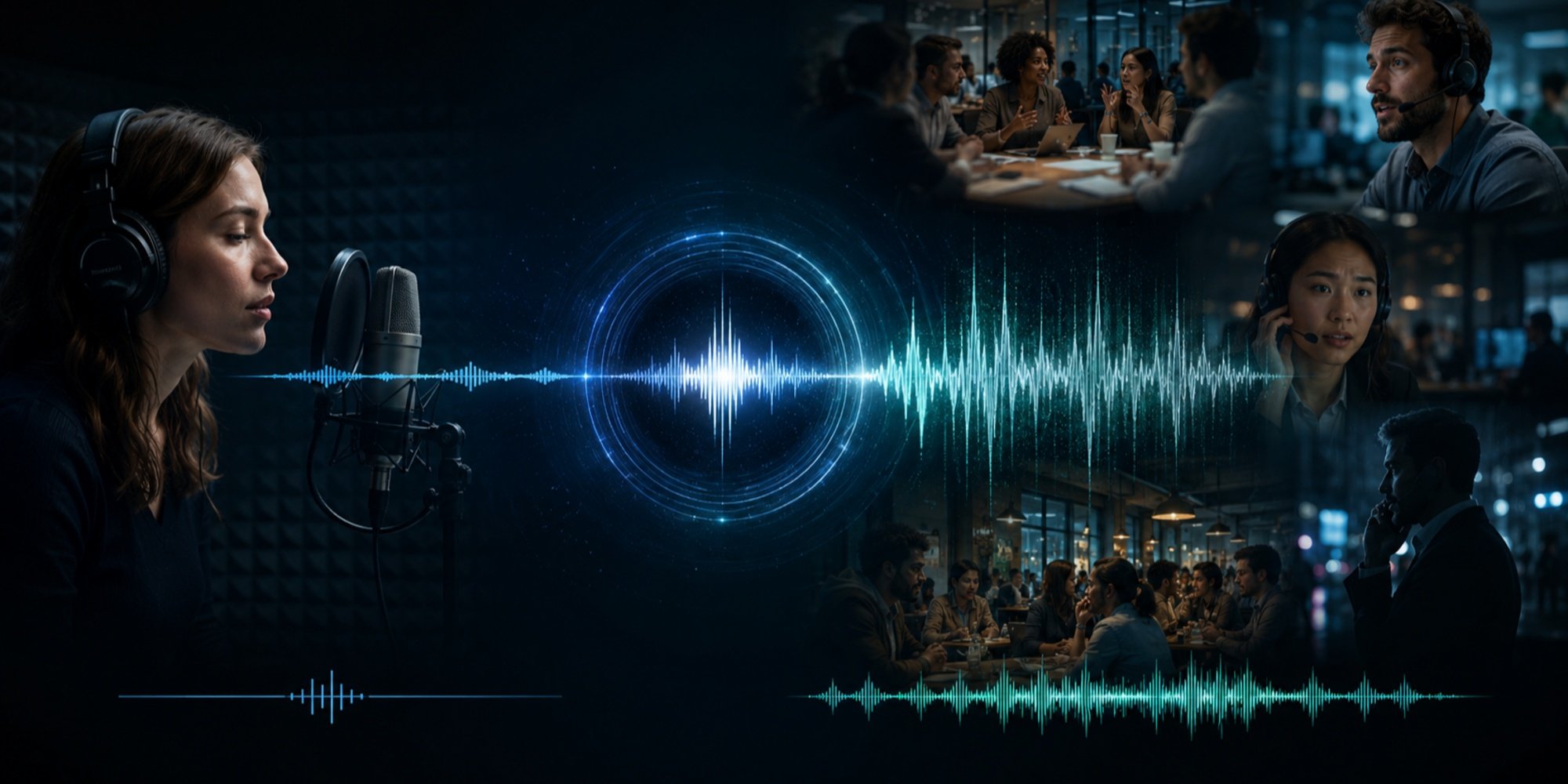
In 2004, Zhang Yimou captured an unforgettable water-sleeve drum dance in *House of Flying Daggers*. (Leifeng Network (official account: Leifeng Network))
 The dancer portrayed by Zhang Ziyi stood at the center of a drum formation. Leaping and spinning to the music, she sent two long water sleeves billowing through the air, sometimes tracing immense arcs and sometimes whipping them toward the drums surrounding her. The performer's movements, the trajectory of the silk fabric, and the dense drumbeats came together in a way that remains one of the most recognizable scenes in the film to this day.
Replicating this performance was no easy task in the first place. The dancer, the water sleeves, and the drum formation have to work together in perfect harmony, while filmmaking can draw on camera choreography and editing to make every drum strike look crisp and clean. Now, condensing all these requirements into a single prompt and having AI generate 15 seconds in one go sounds a little too much to ask of it.
But we still wanted to give it a try. After all, one of Kling 4.0's key upgraded capabilities is complex motion generation.
On October 15, Kling 4.0 officially launched, extending native video generation duration to 30 seconds and introducing updates to complex motion, reference control, and video editing. In addition to this water-sleeve drum dance, we also brought in the classic solo from *Singin' in the Rain*, asked it to film a 30-second slice-of-life short of an ordinary woman strolling through an old neighborhood, and tried editing a video it had already generated.
In this hands-on test, we wanted to see how well Kling 4.0 could meet these requirements and whether, in actual use, it really is as easy as the official sample footage makes it appear.
01
To have AI recreate the water-sleeve dance, we went through seven or eight rounds of revisions
Water-sleeve drumming is inherently a highly demanding performance. On film, it also requires accounting for the performer's physical technique, the movement of the fabric, the positions of the drums, and camera movement. For a video generation model, this means figuring out how to make this entire sequence of actions work within a single scene.
We had originally expected the truly difficult part to be the dancer's leaps and flips through the air. But after several rounds of generation, what gave us the biggest headache turned out to be how to make her hit the drumheads correctly.We first prepared reference images of the character's design and the drum formation, briefed Kling on the red dance costume, the long pale-pink water sleeves, and movements such as turning, shifting, leaping, and whipping the sleeves to strike the drums. We hoped that a single 15-second generation would capture the main features of the dance.Judging from the visuals, this version did reasonably well.The red-clad dancer’s look has largely come together, the silk fabric now billows and swirls dynamically in the air, and the scene as a whole already evokes the original film. But when it comes to actually striking the drum, the dancer reaches out and touches the drumhead directly with a hand, while the water sleeves sometimes merely flutter along with the arms and do not serve the function of striking the drum.We then repeatedly adjusted the prompt in response to this issue, explicitly requiring that the drum remain fixed and that only the ends of the sleeves be allowed to make contact with the drumhead. Considering that the model might not have understood the full choreography, we also divided the 15 seconds into several stages—the opening stance, aerial leaps and flips, and continuous drumming—hoping that the latter half would show noticeable changes in speed and force.After nearly seven or eight rounds of readjustment and testing, we stillcould not use the ends of the water sleeves to strike the drum throughout, which had been our goal.In some versions, the dancer still used their hands instead of the water sleeves to strike the drum; in others, although the long sleeves were swung around, the dancer merely turned slowly in place, lacking the anticipated leaps and movement through space. Stranger still, in some shots the drum moved by itself in an effort to achieve the “drumming” specified in the prompt.Of course, this was not a rigorousprofessional motion-choreography test.We did not draw shot-by-shot storyboards like professional film and television practitioners. The fact that it succeeded as a recreation of a scene from a film made 20 years ago was itself closely related to editing, storyboarding, and visual effects. This does not mean that the model lacks the ability to complete this video. It only means that, with a creative process that relies on reference images and natural-language descriptions, even repeated emphasis on the same requirement may not allow complex movements to be reliably refined in the intended direction.For those hoping to use AI to assist in producing film and television content, this is also an issue worth paying attention to.
02
AI Dancing to “Singing in the Rain” — The First Version Looks the Best
By contrast, the test of “Singing in the Rain” showed us what Kling is better at.Released in 1952, “Singing in the Rain” features one of the most famous song-and-dance scenes in cinematic history. Dressed in a suit and wearing a top hat, Gene Kelly holds an umbrella and dances solo on a street on a rainy night, spinning and tap-dancing to the music before finally leaping into a puddle by the roadside. The interplay among the character’s movements, the musical rhythm, and the camera turns an ordinary street into an engaging performance space.
 This time, we provided four reference images from classic clips and asked the model to generate a solo dance in the rain with the look and feel of a vintage Hollywood musical, retaining the black umbrella, top hat, streetlights, and wet street, while incorporating turns, umbrella flourishes, tap dancing, and splashing through puddles.
 The first version was already remarkably polished.The camera remains focused on the protagonist throughout, with no obvious abrupt changes in the brick wall and street behind him. The colors and lighting of the rainy night, as well as the texture of his soaked suit, all look natural. The jazz also largely stays in time with the final steps through the puddles, giving the entire clip a touch of an old-fashioned musical-film feel.
We particularly like an easily overlooked detail: as the character dances under a streetlamp, shadows appear on the wall behind him and shift with his movements. This makes the image more than just one person dancing in the rain; it also establishes a connection between the character and his environment.
However, Kling clearly has not managed every detail perfectly. On one occasion, the male lead tilts his head back and his hat falls off; by the time he raises his head again, the hat has inexplicably reappeared. During the final few steps through the puddles, the splashes also look far too regular, almost always spreading symmetrically outward from the exact same center. The smile on the male lead's face is likewise a little too perfect, lacking the natural changes in expression that a real person would display during continuous movement.
Visual quality has always been one of Kling's more widely recognized strengths, but as Seedance continues to iterate, attractive imagery is no longer the exclusive forte of any one company.
In July, Seedance 2.5 became the first to support 30-second generation and upgraded its multimodal reference and video-editing capabilities. Less than three months later, Kling 4.0 launched, with its update likewise focusing on 30-second generation, complex motion, and reference control. Recent same-prompt tests by some creators have elicited different reactions: some prefer Seedance's more realistic characters, while others give greater credit to Kling's motion performance. The two have their own strengths, and it is now difficult to judge which is better based on a single polished sample clip.
For Kuaishou, this competition also brings commercial pressure. In the second quarter of this year, Kling AI's revenue exceeded RMB 850 million, an increase of more than 200% year over year. It needs to retain not only users who want to try something new, but also paying creators who actually use it to produce content such as advertisements and short dramas.
And for these people, once the video has been generated, the work has often only just begun.
TAG221@@03
TAG226
TAG228TAG230@@
Want to change just the suit—can you preserve the entire video?
TAG235@@
TAG237@@TAG239@@
The generated *Singin' in the Rain* looks pretty good, and we wanted to try Kling 4.0's newly upgraded video-editing features. If a video's action, composition, and setting are already satisfying, and you only want to change the character's clothing, do you have to reroll from scratch?
TAG243@@
We used the previously generated *Singin' in the Rain* as the source footage and made a simple request:
Change the male lead's dark suit to burgundy, preserving the original cut, and do not alter the character's facial features, dance movements, hat, umbrella, setting, or sound.
Image before editing
 TAG260@@
Image after editing
 TAG267@@
In the video modified by Kling 4.0, as in the original, only the male lead's clothing was replaced. Notably, despite using the video-editing feature, the credit consumption for this edit was not significantly different from regenerating a video.
To add a point of reference, we also gave the same video to HeyGen Video Agent, making exactly the same request.
 The results were somewhat unexpected: the suit did turn burgundy, but the male lead was no longer the same person, and even the rainy-night street scene was changed. The dance sequence we had originally wanted to keep could not be fully preserved either.After further questioning, HeyGen explained that the Video Agent workflow currently in use can cut excerpts from the original footage, add text, or regenerate assets, but cannot yet modify only the suit in the uploaded video while ensuring that the rest of the footage remains unchanged.
 Here, we need to distinguish between two kinds of “editing”: trimming a shot, replacing a segment of footage, or adding subtitles falls under arranging the video’s content; changing the outfit of the person dancing in the frame, by contrast, requires modifying the original footage while preserving other details during continuous motion. HeyGen Video Agent supports the former kind of operation, but in the interface we used, it did not complete the latter task.During our earlier hands-on tests, we also went through several rounds of gacha-style generation attempts. In commercial production, this experience is no longer merely a matter of individual patience. In a previous interview by Yicai, Mansen Culture’s founder Huang Haorong revealed that the team needed about 10 people to produce high-quality AI short dramas, with roughly half of the manpower responsible for gacha-style generation attempts.According to the team’s figures at the time, it took an average of five generations to obtain a satisfactory clip.AI has indeed reduced production costs for some film and television content, but how much it actually costs to produce a video cannot be determined by looking only at the listed price of a single generation. The costs of repeated generation, manual screening, and subsequent revisions all have to be factored in.This time, Kling successfully recolored the suit and at least preserved the performance sequence we were already happy with, which deserves credit. However, since a single edit still consumes about as many credits as a full regeneration, when editing costs will truly come down is probably another question these video models cannot avoid going forward.
04
30 Seconds: An Ordinary Girl’s Life Vlog
In addition to high-difficulty movements, we also wanted to test another upgrade in Kling 4.0:native video generation of up to 30 seconds.Seedance 2.5 had already supported this duration. Compared with the previous generation of Kling, whose maximum generation length was 15 seconds, this still means creators can try to fit more content into a single generation.We came up with an idea that even an ordinary person might have: have the AI shoot a personal short film about daily life with an artistic touch.The short is titled “No Plans for Today, Either.” The protagonist is a woman in her twenties who, wearing headphones, walks alone into an old neighborhood in southern China.As she walked along, she looked at the flowers by the wall and the cats sunning themselves, and a young man riding past caught her attention. The sun gradually set, and eventually she happened into an old bookstore and opened a book by the window.We wanted it to have the visual texture of old-school DV footage: warm colors, with the marks of real life. The characters should also feel real. We added a small touch to the opening title sequence, briefly flashing the film's title in cute handwritten lettering across the screen, like a self-edited diary of life.The finished video did have a pleasant overall atmosphere. Kling captured the old-neighborhood feel we wanted and created different types of shots, including a character strolling, street-scene details, and the interior of a bookstore. Compared with the flowing-sleeve dance, which required precise physical contact, this kind of short film centered on observing everyday life clearly gave the model more room to exercise its abilities.
Even so, there were still a few moments that broke the illusion. In the preceding shot, the girl had just turned her head, but in the next shot she suddenly looked to the other side, and her movement did not connect naturally. At the bookstore entrance, she reached out to push open one door, but another door beside it inexplicably opened by itself. The lettering on the bookstore sign was incorrect, and although the street featured old buildings, small shops, and plants, it was too clean and orderly, lacking the pedestrians and clutter commonly seen in real neighborhoods.Individually, some shots were genuinely beautiful. But once strung together into a 30-second clip, it was no longer enough simply to test whether the model could generate a few attractive moving images. How characters carried through from one shot to the next, and what interactions took place between people and their surroundings, all affected whether the finished video felt natural.
Making a Video and Making the Video You Want
Click keyword to view the corresponding hands-on test content
Moonshot AI Kimi
Kimi K3|Kimi K2.6Kimi K2.7 Code
Zhipu AI GLM
GLM 5.3 Flash|GLM 5.2
GLM 5.1 vs DeepSeek V4 Pro vs Kimi K2.6 vs Qwen 3.7 Max vs MiniMax M3
DeepSeek
DeepSeek V4 ProTAG600@@DeepSeek Harness Plugin CommunityDeepSeek V4 Pro & Harness
Alibaba Qwen
Qwen 3.8 Max丨Qwen 3.8 FlashQwen 3.7 Max丨Qwen 3.6 PlusByteDance
Doubao 2.1 ProSeedance 2.5 vs Kling 3.0
MiniMax H3 vs Seedance 2.0 Fast
WorkBuddy vs Doubao Work vs Qwen Office
More Reviews

This is an original article from Leiphone. Unauthorized reprinting is prohibited. See the Reprinting Guidelines for details.